Table of Contents
- How to Prepare for a Bond Hearing
- What Is A Bond Hearing?
- 1. Confirm Whether The Person Is Eligible For A Bond Hearing
- 2. Understand What The Judge Usually Cares About
- 3. Gather Evidence That Speaks To Flight Risk And Community Safety
- Evidence Of Stability And Reliability
- Evidence Addressing Criminal History Or Negative Facts
- 4. Prepare A Clear Sponsor Plan
- 5. Anticipate The Government’s Arguments
- 6. Know The Basic Filing And Hearing Logistics
- 7. Be Ready For The Bond Amount Issue
- 8. Prepare The Person In Detention To Speak Carefully
- 9. Do Not Treat The Bond Hearing As The Entire Case
- 10. Understand Why Representation Often Changes The Process
- A Simple Bond Hearing Checklist
- Final Thoughts

Type
Great Grandchild
Status
Approved
Title (YouTube)
Images Failed (Social)
Images Failed (Social)
Do not index
Publish Date (TikTok)
Apr 24, 2027 12:15
Videos Post IDs (Social)
Hashtags (Social)
#LegalAdvice #LegalHelp #Immigration #ImmigrationBond
Caption
Caption X
Cover

OG Image

Alt Image Text
Flat vector illustration of bond hearing and immigration detention preparation with a family, attorney, documents, and judge bench in a minimal courtroom setting.
Images





Videos
Publish Date (Social)
Feb 18, 2027 11:30
Scheduled (Social)
Scheduled (Social)
Images Posted (Social)
Images Posted (Social)
Videos Posted (Social)
Videos Posted (Social)
Featured
Created time
Apr 7, 2026 12:02 AM
Sub-item
Authors
CTA Practice Area (Social)
Immigration
TikTok Failed (Social)
TikTok Failed (Social)
Videos Post Links (Social)
TikTok Post Links (Social)
Images Post IDs (Social)
YT Post ID
Video Pending Manual (Social)
TikTok Posted (Social)
TikTok Posted (Social)
TikTok Post IDs (Social)
Video Cover (Social)
Images Post Links (Social)
First Comment (Social)
Videos Failed (Social)
Videos Failed (Social)
YT Embedded
Images Delete (Social)
Videos Delete (Social)
Carousel Video URL (Social)
How to Prepare for a Bond Hearing
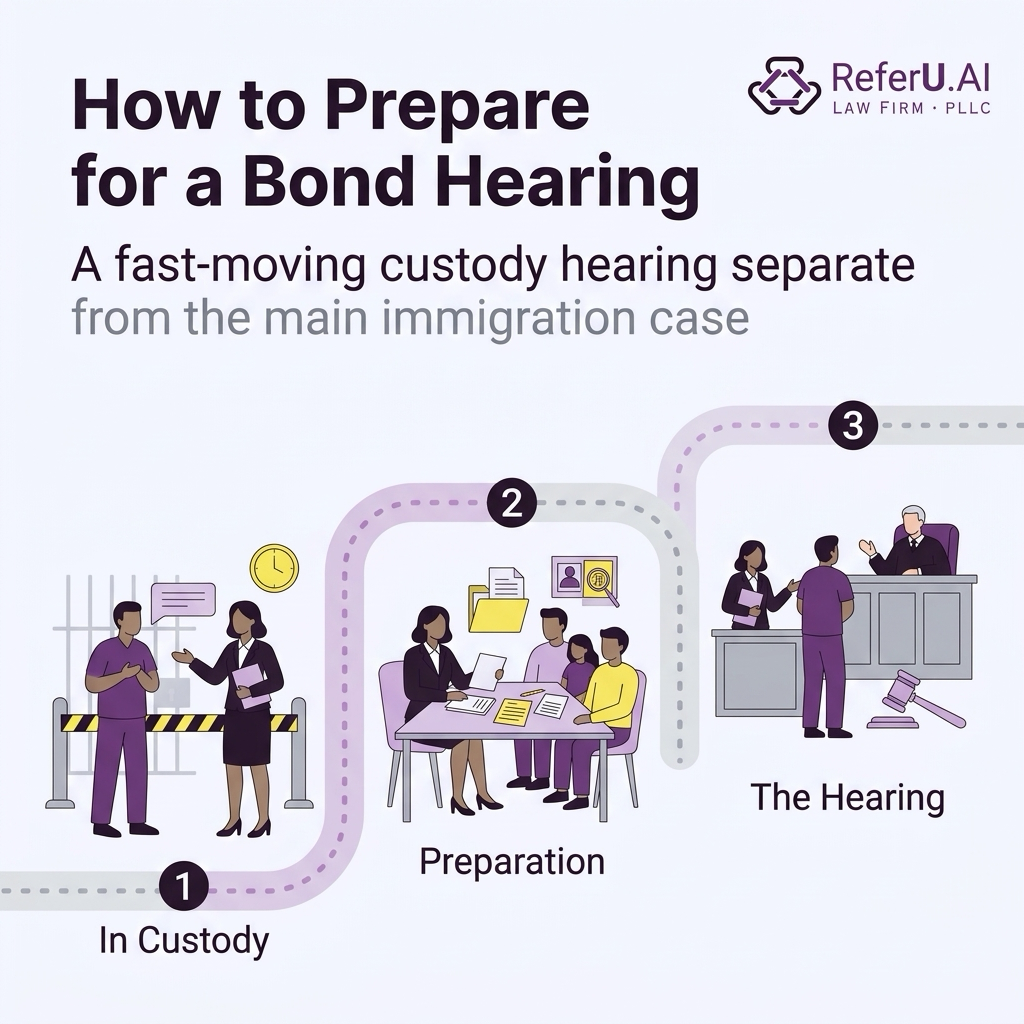
When someone is in immigration detention, a bond hearing can become one of the first major opportunities to ask for release while the case continues. It is also one of the fastest-moving parts of an immigration case, which can make families feel like they are trying to catch up while the clock is already running.
A bond hearing is not the same as the main immigration case. It is a separate hearing focused on whether the person can be released, and if so, under what bond amount. The immigration judge generally looks at issues like bond eligibility, danger to the community, and whether the person is likely to return for future hearings. The hearing is often brief and less formal than a merits hearing, but the preparation behind it can make a major difference in how clearly the judge sees the person’s circumstances. The Department of Justice’s EOIR Policy Manual explains that bond proceedings are separate from removal proceedings, that requests are ordinarily made in writing, and that supporting documents filed in the removal case may need to be submitted again for the bond case. The governing regulation, 8 C.F.R. § 1003.19, also lays out key custody and appeal rules.
In this post you’ll learn how a bond hearing works, what evidence often matters most, how families can help prepare, and where legal representation can change the picture. If you are still getting oriented, it may help to start with this broader overview of how detention, custody decisions, release options, and case strategy fit together.
Scroll to the bottom for every post in this series.
What Is A Bond Hearing?
A bond hearing is a custody proceeding before an immigration judge. The judge may decide whether the detained person is eligible for bond and, if eligible, whether release is appropriate and at what amount. EOIR explains that bond hearings are generally less formal than removal hearings, may be requested in writing or sometimes orally, and are usually scheduled for the earliest possible date after the court receives the request. EOIR also notes that the judge’s decision may be based on any information available to the judge or presented by the parties. EOIR Policy Manual
That “less formal” label can be misleading. In practical terms, the hearing is often short, the judge may expect a focused presentation, and the government attorney may already be prepared with criminal records, ICE paperwork, or arguments about public safety or flight risk. In many cases, preparation is really about organizing the person’s life into a clear, credible, document-backed story.
1. Confirm Whether The Person Is Eligible For A Bond Hearing
The first step is figuring out whether the immigration judge has bond jurisdiction at all. Not every detained person can receive a bond hearing before an immigration judge.
EOIR states that immigration judges generally have jurisdiction when a person is in DHS custody, but there are exceptions. For example, the judge generally does not have bond jurisdiction over certain arriving noncitizens, some people held on security-related grounds, and some people detained on certain criminal grounds. EOIR also explains that if there has already been a bond ruling, a later request usually requires a written filing showing that circumstances have materially changed. EOIR Policy Manual
This area has also changed rapidly in recent years because of litigation, agency policy shifts, and appeals involving who gets access to bond hearings and who does not. If someone is being told they are not eligible, that answer can turn on details like manner of entry, detention history, criminal allegations, or the specific legal basis for custody. In general terms, that is one reason families often look for counsel as early as possible.
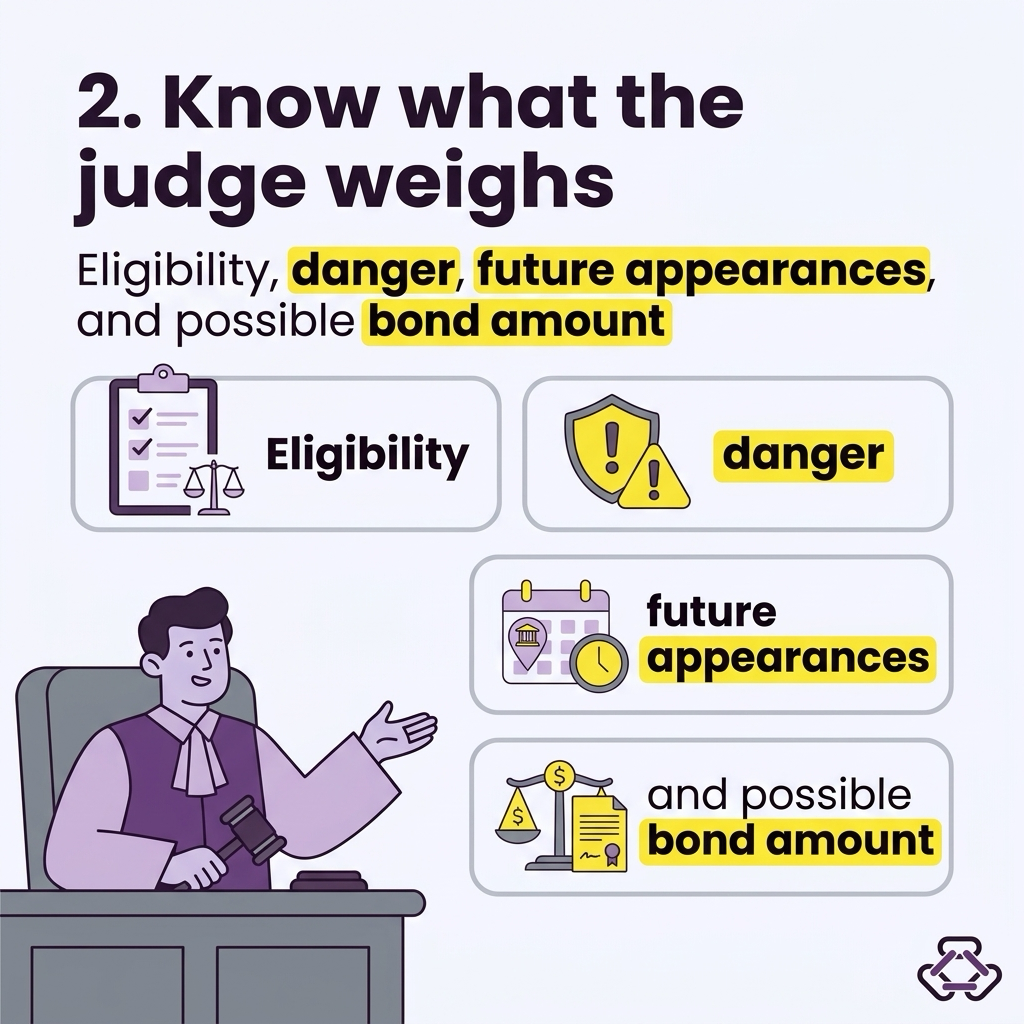
2. Understand What The Judge Usually Cares About
At a bond hearing, the judge is commonly focused on a relatively narrow set of questions:
- Is the person legally eligible for bond?
- If eligible, would release create a danger to people or property?
- Is the person likely to appear for future immigration hearings?
- If release is granted, what bond amount is appropriate?
EOIR says the immigration judge considers whether release would pose a danger to property or persons, whether the person is likely to appear for future proceedings, and whether the person poses a threat to national security. EOIR Policy Manual
The Board of Immigration Appeals has long treated bond decisions as a balancing exercise that can include criminal history, immigration history, family ties, employment history, community ties, record of appearing in court, and other discretionary factors. A federal court opinion discussing Matter of Guerra summarizes that immigration judges may weigh multiple factors and may give different weight to different facts depending on the case.
That is why raw facts alone are often not enough. The same arrest record, for example, can be framed very differently depending on whether the person also has completion certificates, treatment records, stable housing, long-term employment, and a documented support system waiting outside.
3. Gather Evidence That Speaks To Flight Risk And Community Safety
For most bond hearings, evidence tends to fall into two broad categories:
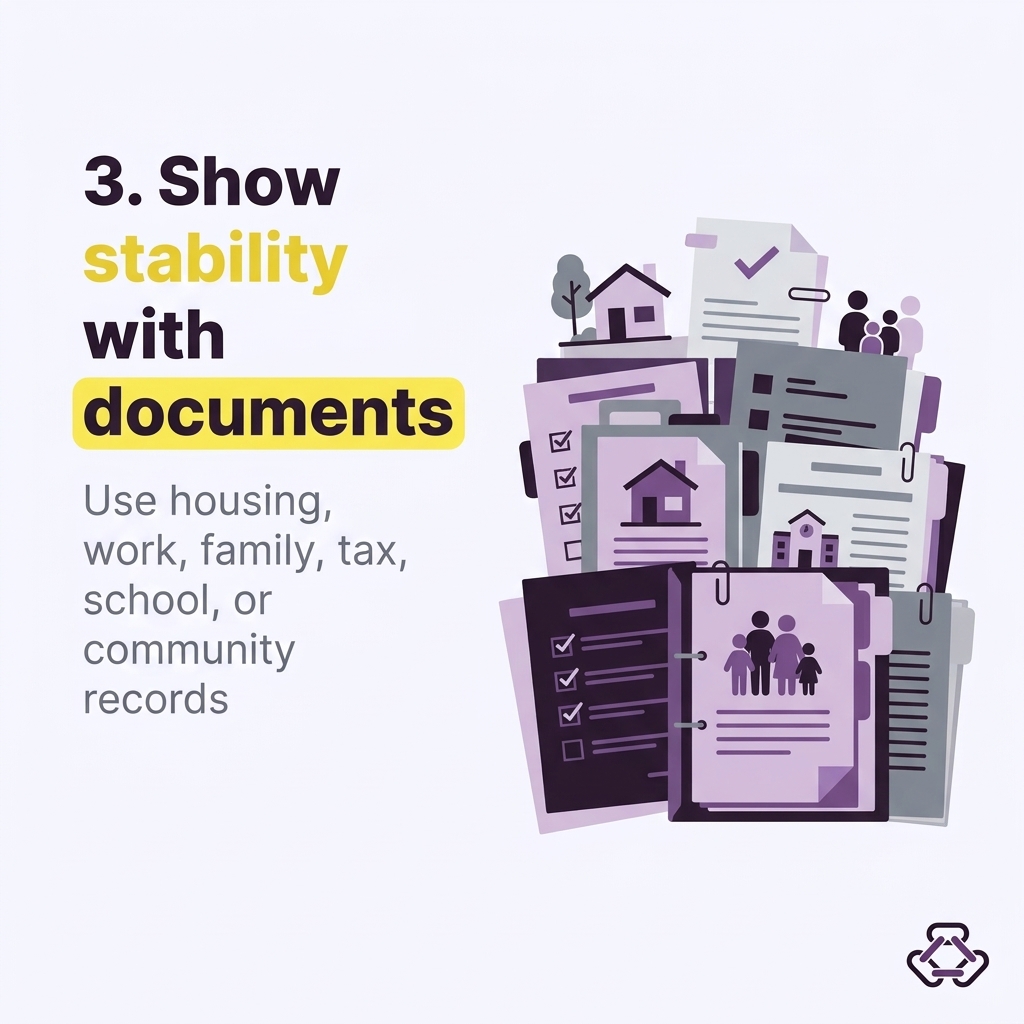
Evidence Of Stability And Reliability
This kind of evidence tries to show that the person has a real place to live, people who know them, and reasons to appear in court. Helpful materials can include:
- Proof of a fixed address
- A sponsor letter from the person offering housing
- Family letters
- Employment letters or proof of prior work
- Proof of property ownership
- Tax records
- School records
- Community or church letters
- Records showing long residence in the United States
A recent National Immigrant Justice Center detention guide lists useful bond evidence such as property titles and recent tax returns, and it notes that family members bringing documents to court often bring three copies so the judge, DHS attorney, and detained person can each have one.
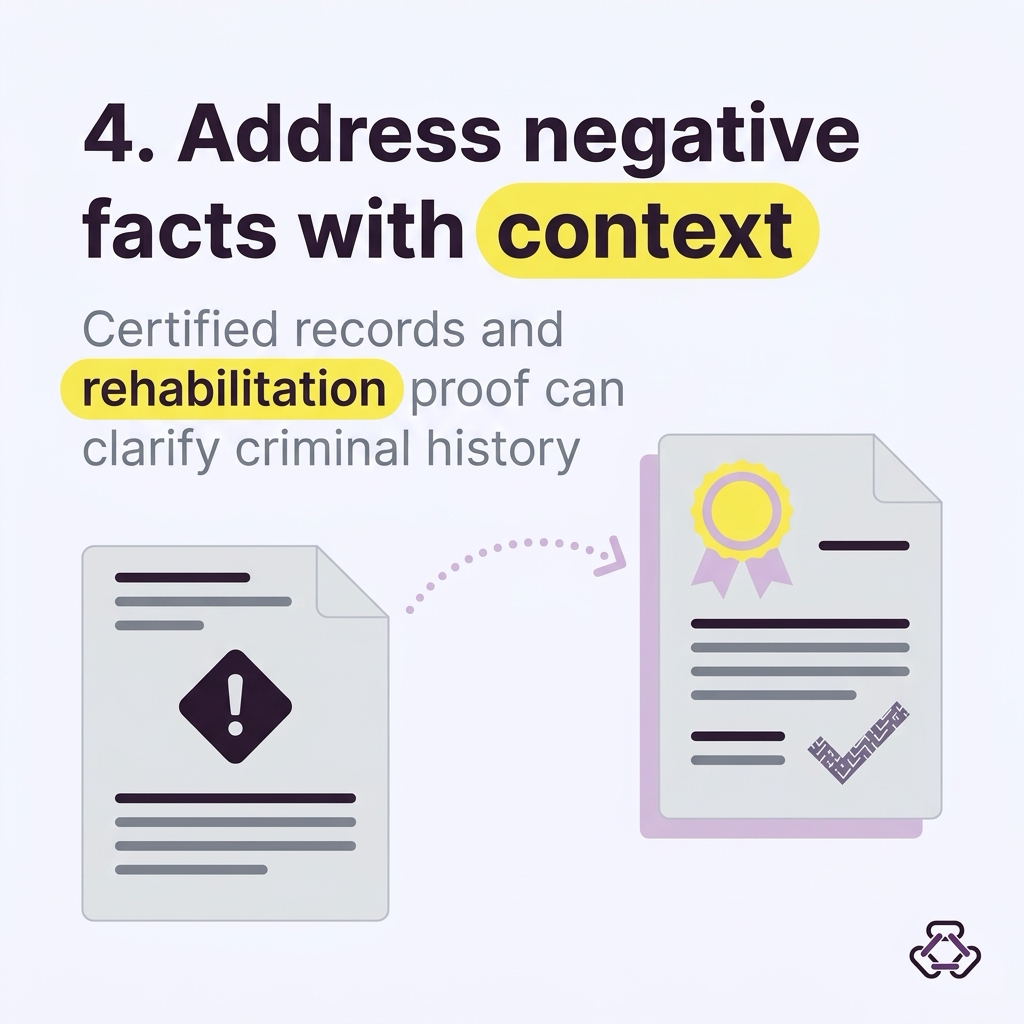
Evidence Addressing Criminal History Or Negative Facts
If the government may argue that the person is dangerous, documentation that provides context can matter a great deal. The same NIJC guide explains that when deciding danger to the community, the judge may look at the seriousness of the offense and whether the person has made efforts to rehabilitate. It gives examples of rehabilitation evidence such as participation in drug or alcohol treatment, course-completion certificates while detained, a counselor statement, affidavits from family members, letters from probation officers, and proof of employment. NIJC Guide
This is often where preparation becomes very case-specific. If there is an old conviction, dismissed charge, probation history, or allegation involving alcohol or domestic conflict, an attorney may help sort out what documents tell the full story and what language is least likely to create new problems.
If you want a deeper breakdown of supporting documents, it may help to read more about putting together evidence that supports release from detention, especially if the family is collecting records under time pressure.
4. Prepare A Clear Sponsor Plan
Judges frequently want to know what the person’s life will look like if released. A strong sponsor plan often answers practical questions before the court asks them.
A sponsor packet often includes:
- Full name and immigration status of the sponsor
- Address where the person will live
- Copy of lease, utility bill, or ID showing that address
- Statement explaining relationship to the detained person
- Confirmation that transportation to court will be available
- Information about work, childcare, medical appointments, or family support
- Contact information
The point is not to overwhelm the court with paper. It is to make release look structured and realistic. If the judge is concerned about appearance at future hearings, a detailed housing and transportation plan may help reduce uncertainty.
5. Anticipate The Government’s Arguments
In many hearings, DHS focuses on one or both of the following:
- Danger to the community
- Flight risk
If there is any criminal record, prior removal order, missed court hearing, or history of immigration violations, it may come up quickly. Sometimes the most helpful preparation is not pretending a bad fact does not exist, but preparing the explanation and supporting documents that place it in context.
For example:
- A missed hearing may require records showing notice problems, address changes, or circumstances around the absence.
- A DUI or other criminal matter may require certified dispositions, treatment proof, letters of support, and evidence of time passed without further incidents.
- A past removal or departure may require a careful explanation of family ties, fear-based claims, or why the person returned.
This is also where many families discover that bond strategy and defense strategy are connected but not identical. Saying too little can leave the record thin. Saying too much in the wrong way can create issues for the main case later. That tension is one reason legal representation can be especially valuable in detention cases.
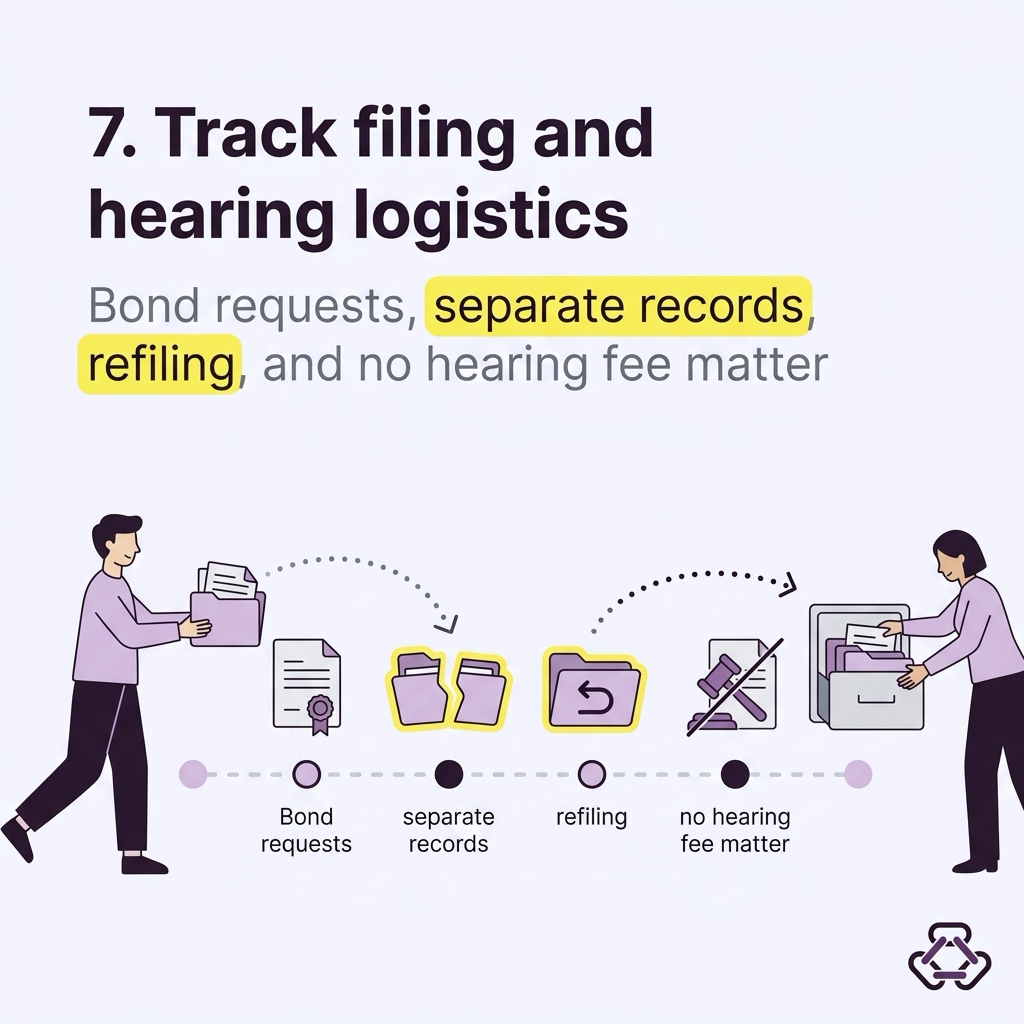
6. Know The Basic Filing And Hearing Logistics
EOIR’s policy manual includes several practical details that often catch families off guard:
- A bond hearing request ordinarily is made in writing.
- The request generally includes the person’s full name, A-number, bond amount set by DHS, and detention location.
- There is no filing fee to request a bond hearing.
- The court generally schedules the hearing for the earliest possible date.
- Bond records are separate from the main removal case.
- Documents filed in removal proceedings may need to be re-filed for the bond case.
- Bond hearings are generally not recorded. EOIR Policy Manual
That last point matters. Because these hearings are generally not transcribed or routinely recorded, a clear, organized presentation at the hearing itself can carry extra weight. The BIA practice materials also explain that bond proceedings are less formal and that appeals from immigration judge bond decisions follow separate procedures. BIA Practice Manual
7. Be Ready For The Bond Amount Issue
Winning release is only part of the question. The bond amount can become a second hurdle.
The regulation discussed in 8 C.F.R. § 1003.19 includes rules about custody appeals and automatic stays in some situations. If DHS has set a bond of $10,000 or more, and the immigration judge orders release, DHS may trigger an automatic stay by filing Form EOIR-43 within one business day while it appeals. That can delay release even after a favorable ruling.
ICE also provides current public guidance on posting an immigration bond through CeBONDS or at bond-acceptance offices. Families often learn at this stage that logistics matter almost as much as the hearing itself: who is eligible to pay, how payment will be made, and how quickly the detention facility processes release after the bond is posted.
The NIJC guide notes that the person in detention cannot pay their own bond and that an adult who can establish U.S. citizenship or lawful permanent residence may be able to post it. It also explains that families often look into bond funds or community support if the amount set is not realistically affordable. NIJC Guide
8. Prepare The Person In Detention To Speak Carefully
In some cases, the attorney does most of the talking. In others, the judge may ask the detained person direct questions. Either way, preparation often helps the person answer in a way that is calm, brief, and consistent with the documents.
Common topics may include:
- Where will you live if released?
- Who is your sponsor?
- How long have you lived in the U.S.?
- Do you have family here?
- What work have you done?
- Have you ever missed court?
- What happened in the criminal case?
- Why do you believe you will return for future hearings?
The goal is usually not a dramatic personal speech. Judges often respond better to answers that are direct, respectful, and supported by paperwork.
9. Do Not Treat The Bond Hearing As The Entire Case
A bond hearing can be emotionally huge, but it is still only one stage. Release from detention does not end the removal case. EOIR expressly says bond proceedings are separate from removal proceedings, and documents in one record may not automatically carry over into the other. EOIR Policy Manual
That separation matters for strategy. A person may obtain bond and still face a difficult underlying case. A person may also lose bond and still have strong defenses to removal. Families sometimes confuse these two tracks because they happen so close together.
For that reason, many people look for representation that is not just generally “immigration law,” but documented experience with detention, bond work, and the specific defense issues in the case.
10. Understand Why Representation Often Changes The Process
National data has repeatedly shown that detained immigrants face major disadvantages in navigating court without counsel. TRAC reported in July 2025 that only 21.6% of immigrants had an attorney in immigration court cases where a removal order was issued that month. TRAC
That statistic does not mean every detained person without a lawyer will lose a bond hearing, and it does not tell the full story of any individual case. But it does reflect the reality that detention compresses time, limits document access, complicates family coordination, and makes legal preparation harder.
A lawyer handling a bond hearing may be able to:
- assess eligibility issues
- gather certified criminal dispositions
- prepare a sponsor packet
- frame negative facts without overexposing the merits case
- argue for a lower bond amount
- respond quickly if DHS appeals
- coordinate next steps for release and the underlying removal proceedings
If the family is still in the information-gathering phase, it can also help to read about common mistakes that can hurt release efforts and the questions families tend to ask first when a loved one is detained.
A Simple Bond Hearing Checklist
Before the hearing, families often try to collect:
- Full name and A-number
- Detention location
- Copy of Notice to Appear, if available
- ICE custody paperwork, if available
- Sponsor letter
- Proof of address
- Sponsor ID and proof of lawful status or citizenship, where relevant to bond payment logistics
- Family support letters
- Employment letters or pay records
- Tax returns
- Property records
- School or medical records if relevant
- Certified criminal court dispositions
- Rehabilitation records or certificates
- Three copies of each document for court use, where possible
- A short summary of the person’s ties, history, and release plan
This kind of preparation often helps the judge see a whole person instead of a thin detention file.
Final Thoughts
Preparing for a bond hearing is partly legal work and partly organization under pressure. The court is often looking at a narrow set of questions, but the answer to those questions usually comes from many small details: where the person will live, who will support them, how criminal history is documented, whether rehabilitation can be shown, and how clearly the full story is presented in a short hearing.
In general terms, early preparation tends to give families more room to gather records, coordinate sponsorship, and identify an attorney with relevant detention experience. And because bond proceedings move quickly and remain separate from the main immigration case, finding counsel with demonstrable experience in highly similar matters can make the process easier to navigate.
Visit ReferU.AI to get matched with an attorney who has demonstrable experience in cases like yours — for free.
