Table of Contents
- How to Understand Unlawful Presence and Why It Changes Strategy
- What Unlawful Presence Actually Means
- Why Unlawful Presence Is Different From Unlawful Status
- When The 3-Year And 10-Year Bars Come Into Play
- Why Departure Changes Strategy So Much
- Common Situations Where People Miscalculate Unlawful Presence
- Minors Under 18
- Pending Bona Fide Asylum Applications
- Family Unity Beneficiaries
- Timely Filed Extension Or Change Of Status Requests
- Duration Of Status Cases
- The Difference Between A Bar And A Waiver Strategy
- Why Case Strategy Is Often About Timing, Not Just Eligibility
- What “Extreme Hardship” Often Means In These Cases
- Why Families Often Underestimate The Record Review Stage
- The Additional Risk Of More Than One Inadmissibility Ground
- Why Objective Matching Matters In Unlawful Presence Cases
- Final Thoughts

Type
Great Grandchild
Status
Approved
Title (YouTube)
Images Failed (Social)
Images Failed (Social)
Do not index
Publish Date (TikTok)
Apr 23, 2027 16:15
Videos Post IDs (Social)
Hashtags (Social)
#LegalAdvice #LegalHelp #Immigration #InadmissibilityWaivers
Caption
Caption X
Cover

OG Image

Alt Image Text
Flat vector illustration of unlawful presence and immigration strategy, showing a family and advisor reviewing a timeline with departure, waiver planning, and warning barriers representing legal consequences.
Images

Videos
Publish Date (Social)
Feb 18, 2027 08:00
Scheduled (Social)
Scheduled (Social)
Images Posted (Social)
Images Posted (Social)
Videos Posted (Social)
Videos Posted (Social)
Featured
Created time
Apr 7, 2026 12:02 AM
Sub-item
Authors
CTA Practice Area (Social)
Immigration
TikTok Failed (Social)
TikTok Failed (Social)
Videos Post Links (Social)
TikTok Post Links (Social)
Images Post IDs (Social)
YT Post ID
Video Pending Manual (Social)
TikTok Posted (Social)
TikTok Posted (Social)
TikTok Post IDs (Social)
Video Cover (Social)
Images Post Links (Social)
First Comment (Social)
Videos Failed (Social)
Videos Failed (Social)
YT Embedded
Images Delete (Social)
Videos Delete (Social)
How to Understand Unlawful Presence and Why It Changes Strategy
When people hear the phrase unlawful presence, they often assume it means the same thing as “being out of status.” In immigration law, those ideas can overlap, but they are not always the same. That distinction can change timing, waiver options, consular processing plans, and even whether leaving the United States creates a new problem.
In this post you’ll learn what unlawful presence is, how the 3-year and 10-year bars work, why departure is often the trigger that changes the case, and how families often build strategy around waivers, evidence, and timing. If you want a broader overview of how waiver cases fit together, it may help to start with this guide on how unlawful presence waivers and hardship strategy fit together.
Scroll to the bottom for every post in this series.
What Unlawful Presence Actually Means
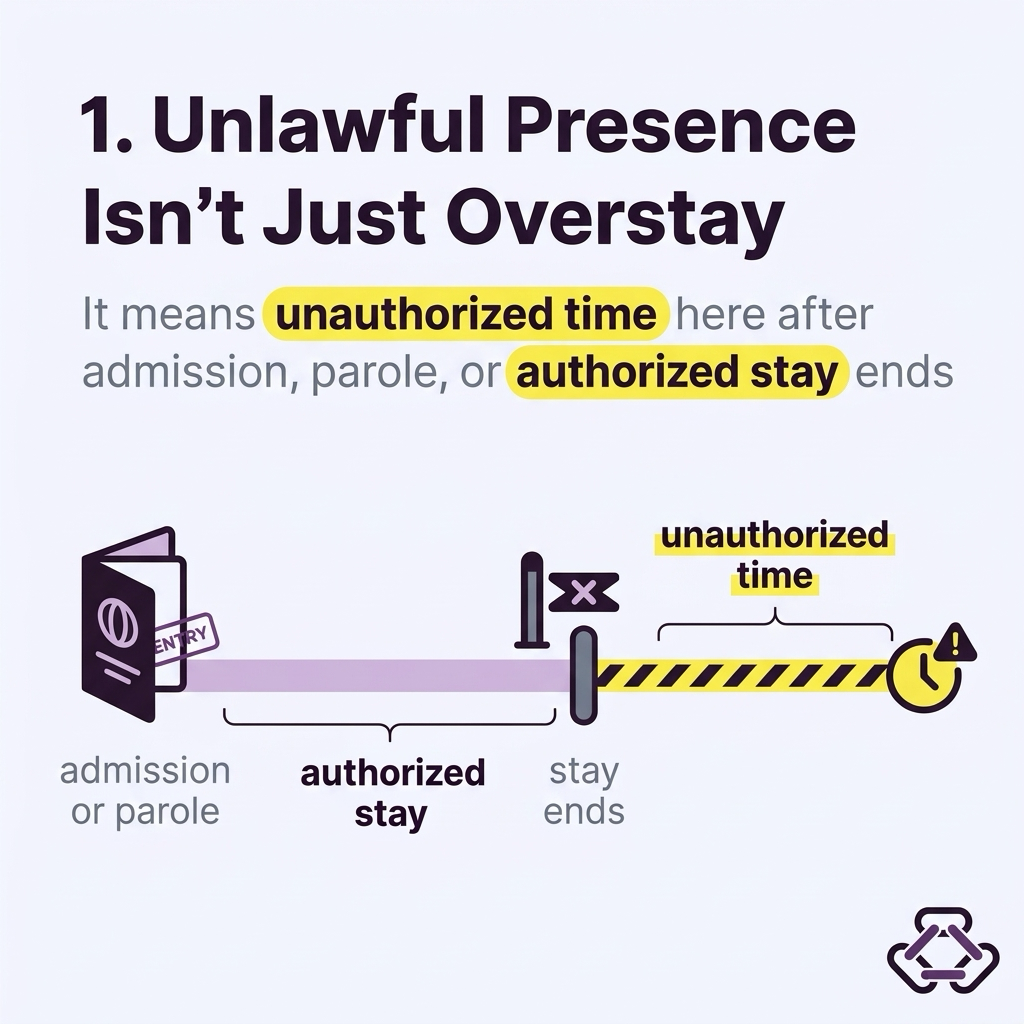
Under U.S. immigration law, unlawful presence generally refers to time spent in the United States without being admitted or paroled, or time spent here after a period of stay authorized by the government has expired. USCIS explains that the issue becomes especially important under INA § 212(a)(9)(B) and INA § 212(a)(9)(C), which can make a person inadmissible after enough unlawful presence has accrued and the person later departs or tries to return. USCIS’s unlawful presence overview is one of the clearest official summaries.
That is why unlawful presence is not just a vocabulary term. It is a case-structure term. It can affect:
- whether consular processing is realistic without a waiver,
- whether leaving the United States may trigger a 3-year or 10-year bar,
- whether a provisional waiver might be part of the roadmap,
- whether a person may want to avoid assumptions about “fixing it later” after departure, and
- whether other inadmissibility issues need to be analyzed at the same time.
Why Unlawful Presence Is Different From Unlawful Status
This is where a lot of confusion starts.
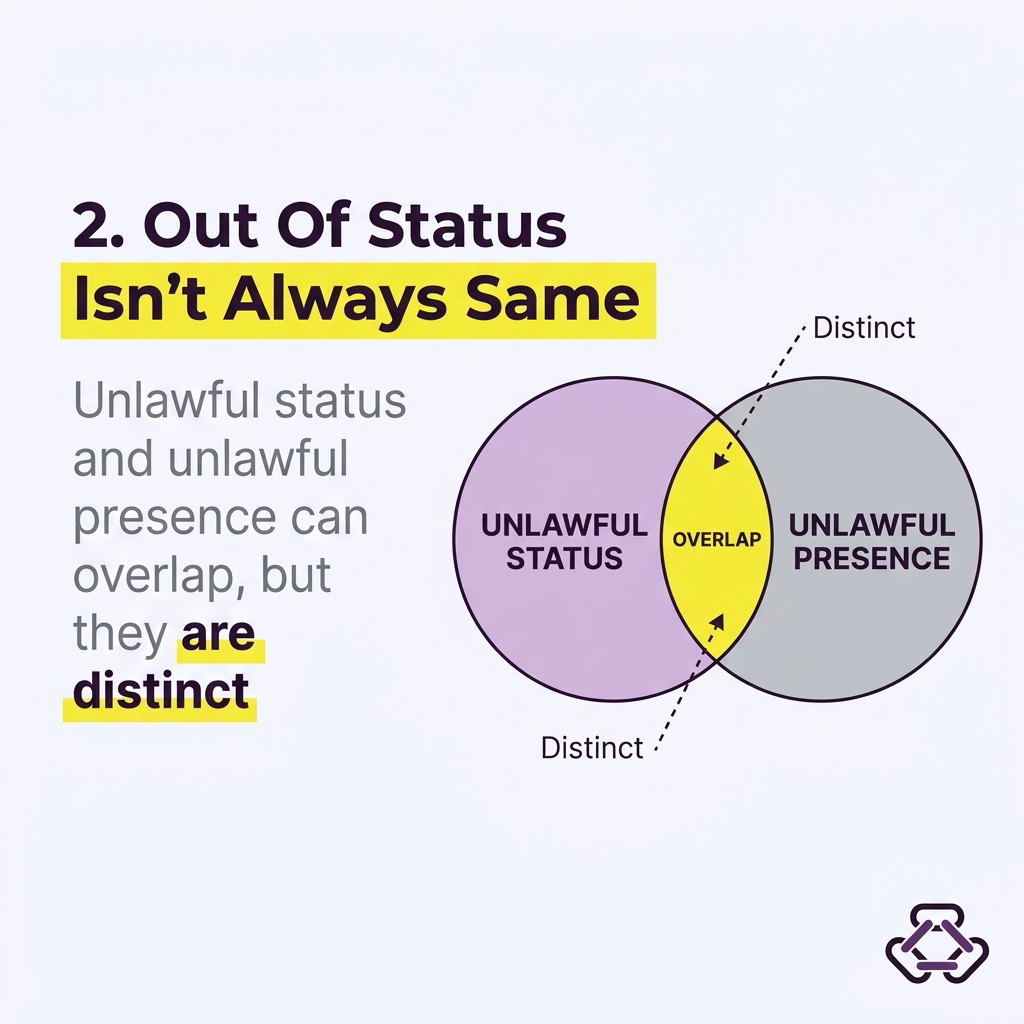
A person can be out of status without necessarily accruing unlawful presence in the same way people often assume. USCIS policy and State Department guidance both recognize that unlawful status and unlawful presence are related but distinct concepts. That difference can matter in family-based cases, employment-based cases, student cases, and waiver planning. USCIS policy materials and the State Department’s Foreign Affairs Manual discuss this distinction in detail.
For example, certain noncitizens with a timely filed, nonfrivolous extension or change of status application may remain in a period of authorized stay while that request is pending, even if they do not have active lawful nonimmigrant status during that same period. USCIS has explained this point in its policy guidance and public materials on extensions, changes of status, and emergency-related relief. See USCIS’s explanation of authorized stay during a timely filed extension or change request and related policy discussions in the USCIS Policy Manual.
In practical terms, that means two people with similar immigration histories may face very different inadmissibility risks once someone maps the dates correctly.
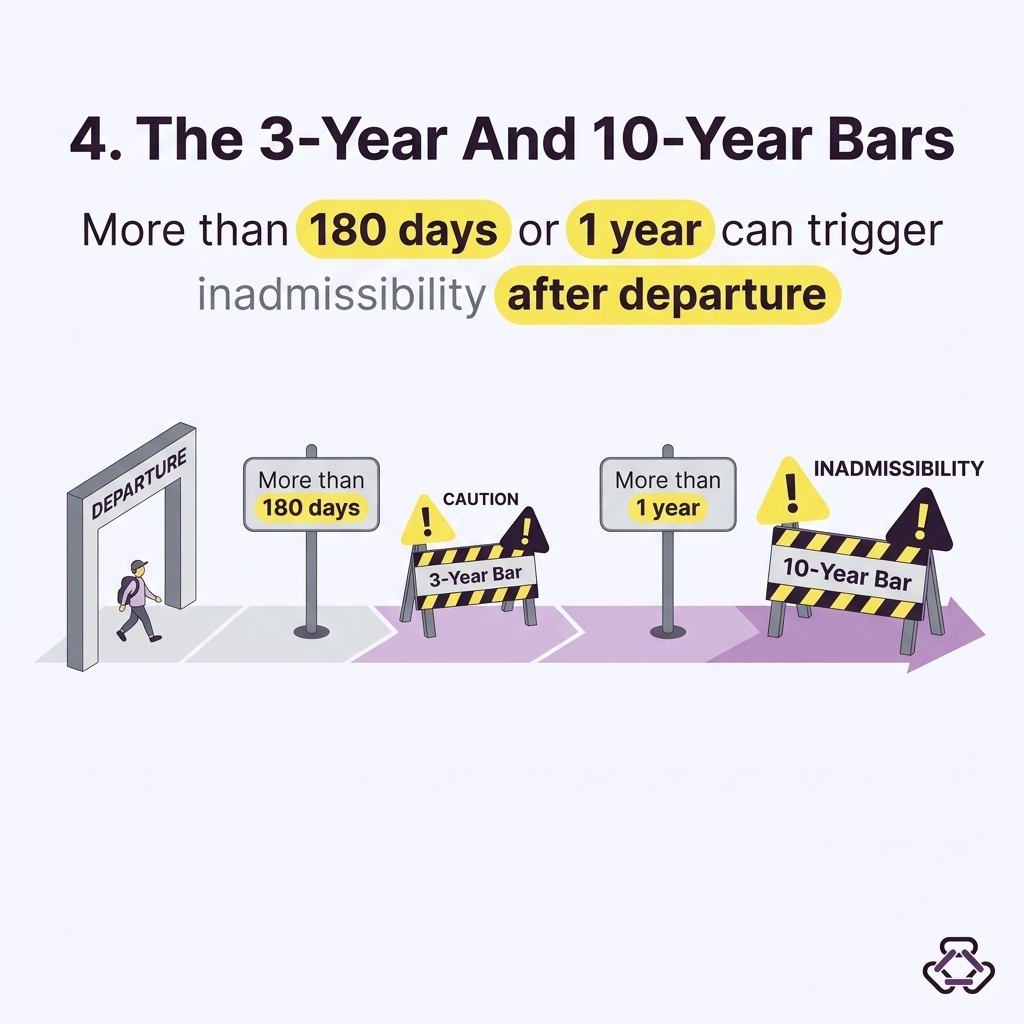
When The 3-Year And 10-Year Bars Come Into Play
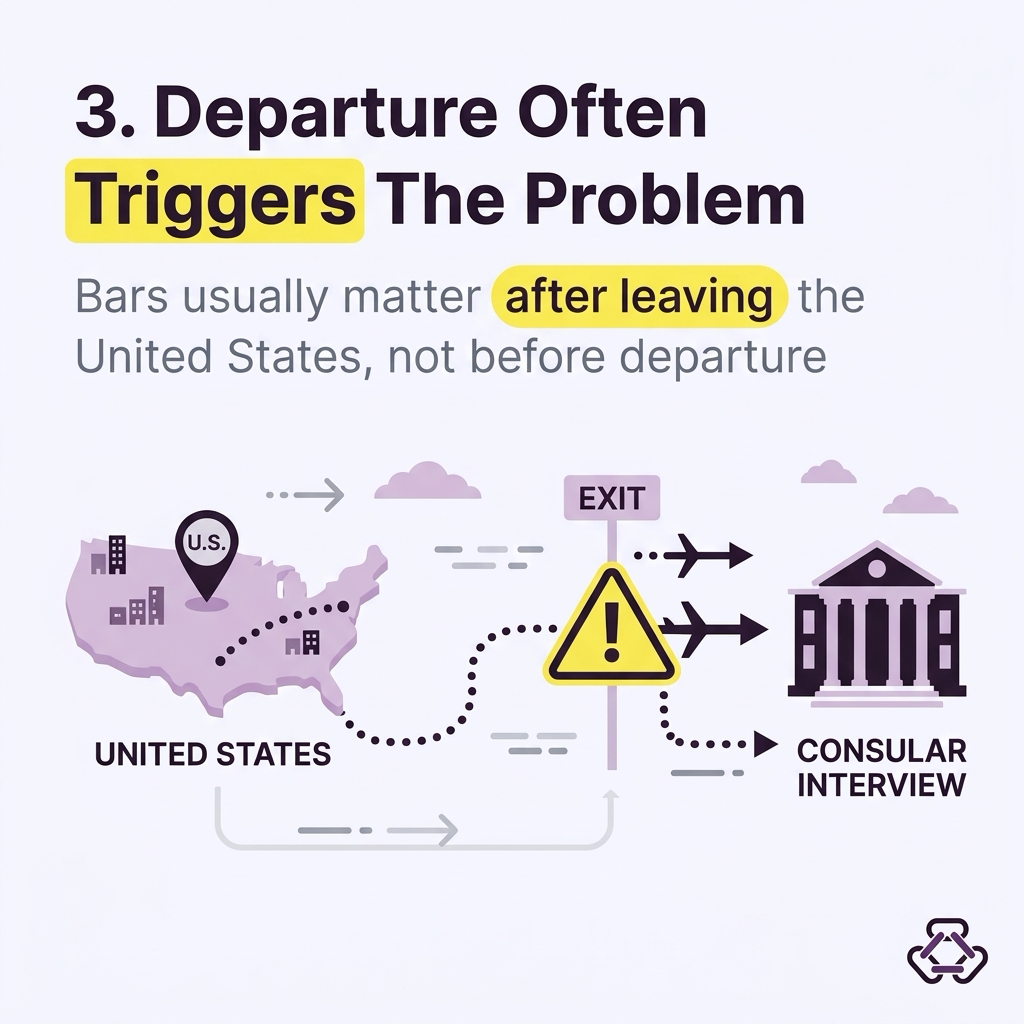
The unlawful presence bars usually matter after departure.
According to USCIS, a person may become inadmissible for:
- 3 years if they accrued more than 180 days but less than 1 year of unlawful presence during a single stay and then departed before removal proceedings began; or
- 10 years if they accrued 1 year or more of unlawful presence during a single stay and then departed or were removed.
This framework appears in USCIS’s page on unlawful presence and inadmissibility.
That is one reason lawyers often spend so much time on the departure question. In many cases, the issue is not just how much unlawful presence exists, but what event activates the consequence.
For families pursuing immigrant visas through a consulate abroad, that timing issue can completely change strategy. A person may appear eligible for an approved petition, but the moment they leave for the interview, the unlawful presence bar may become active. At that point, the case may depend on a waiver process rather than moving forward in a straightforward way.
Why Departure Changes Strategy So Much
For many people, unlawful presence does not become the central issue until they are preparing to leave the United States for consular processing. That is often when families first hear terms like I-601A provisional waiver, extreme hardship, or inadmissibility.
USCIS explains that if a person accrued 180 days or more of unlawful presence and then departs, that departure can trigger the 3-year or 10-year bar. USCIS also notes in its INA 245(i) adjustment page that even a person who may have another path to permanent residence can run into serious problems if departure activates an unlawful presence bar.
This is why strategy often turns on a few key questions:
- Is the person actually accruing unlawful presence, and from what date?
- Would the case require departure for consular processing?
- Is there a path to adjustment of status inside the United States instead?
- If departure is part of the process, is a waiver available?
- Are there additional inadmissibility issues beyond unlawful presence?
Those questions may sound technical, but they are often the difference between a case that moves in a planned way and one that runs into a major delay.
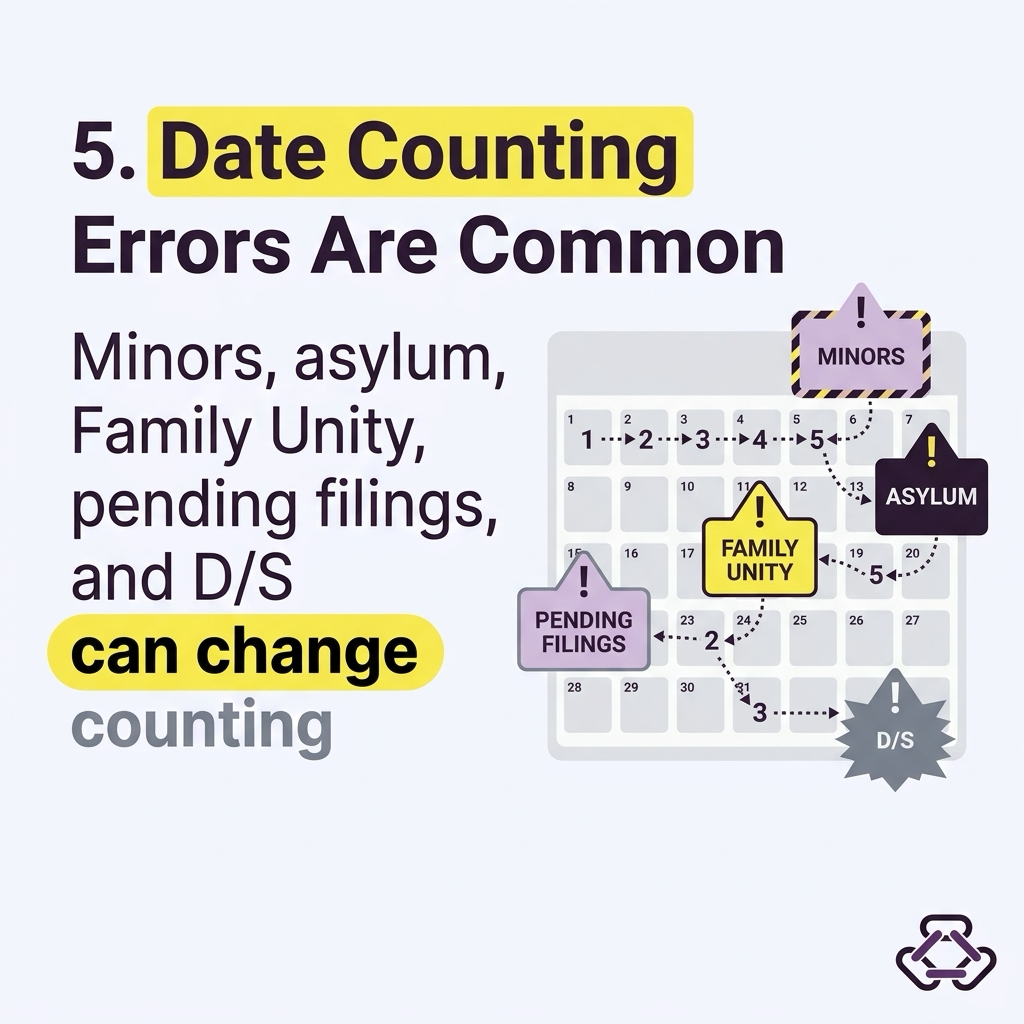
Common Situations Where People Miscalculate Unlawful Presence
Minors Under 18
USCIS states that noncitizens under age 18 do not accrue unlawful presence for purposes of these bars. That exception is one of the most important date-counting rules in this area. It appears directly in USCIS’s official unlawful presence guidance.
Pending Bona Fide Asylum Applications
USCIS also explains that, generally, time while a bona fide asylum application is pending does not count as unlawful presence. That word “generally” matters because immigration cases often turn on facts, timing, and procedural posture rather than shortcuts. The official USCIS page on unlawful presence and inadmissibility lists asylum applicants among the statutory exceptions.
Family Unity Beneficiaries
People with protection under the Family Unity program are also listed by USCIS as not accruing unlawful presence during the protected period. Again, that comes from the same USCIS unlawful presence resource.
Timely Filed Extension Or Change Of Status Requests
As noted above, USCIS guidance recognizes that a timely filed, nonfrivolous extension or change of status request can create an authorized stay period while the case is pending. That point often becomes critical in date reconstruction. USCIS discusses this concept in the Policy Manual and in public guidance on immigration relief in emergencies or unforeseen circumstances.
Duration Of Status Cases
Some students and exchange visitors admitted for Duration of Status (D/S) have special unlawful presence rules that can differ from what people expect. The State Department’s Foreign Affairs Manual addresses how unlawful presence is evaluated in these scenarios, and USCIS has separately referenced policy changes affecting certain students and exchange visitors. See the State Department’s Foreign Affairs Manual section on prior removal and unlawful presence and USCIS’s OPT guidance.
The Difference Between A Bar And A Waiver Strategy
Once unlawful presence is identified, the next question is often whether the case is only about counting days, or whether it is really about waiver eligibility.
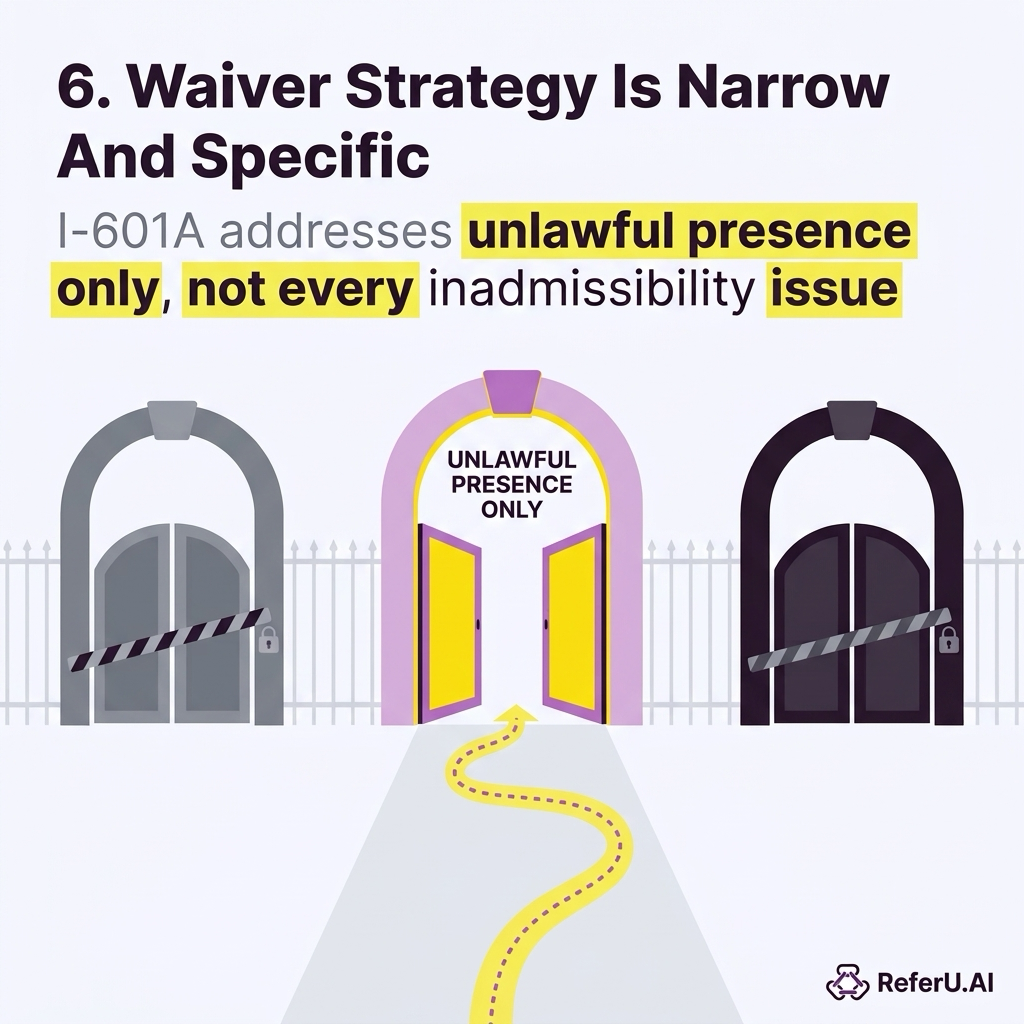
A person who will trigger the 3-year or 10-year bar upon departure may, in some cases, pursue a waiver. USCIS explains that the I-601A provisional unlawful presence waiver exists for certain people who are seeking immigrant visas and want USCIS to decide the unlawful presence waiver request before they depart for consular processing. USCIS’s main resources on this are the Form I-601A page and the agency’s page on provisional unlawful presence waivers.
That process can be significant because it allows families to address the unlawful presence issue in advance, rather than leaving the United States first and waiting abroad for a standard waiver decision. But the waiver framework is narrow in an important way: USCIS notes that the provisional waiver addresses only unlawful presence inadmissibility under INA § 212(a)(9)(B)(v). If a consular officer later identifies another ground of inadmissibility, a separate waiver analysis may still be required. USCIS explains that limitation in its provisional waiver materials and Form I-601A instructions.
That is why unlawful presence often changes strategy beyond the unlawful presence issue itself. It forces a broader screening of the whole admissibility picture.
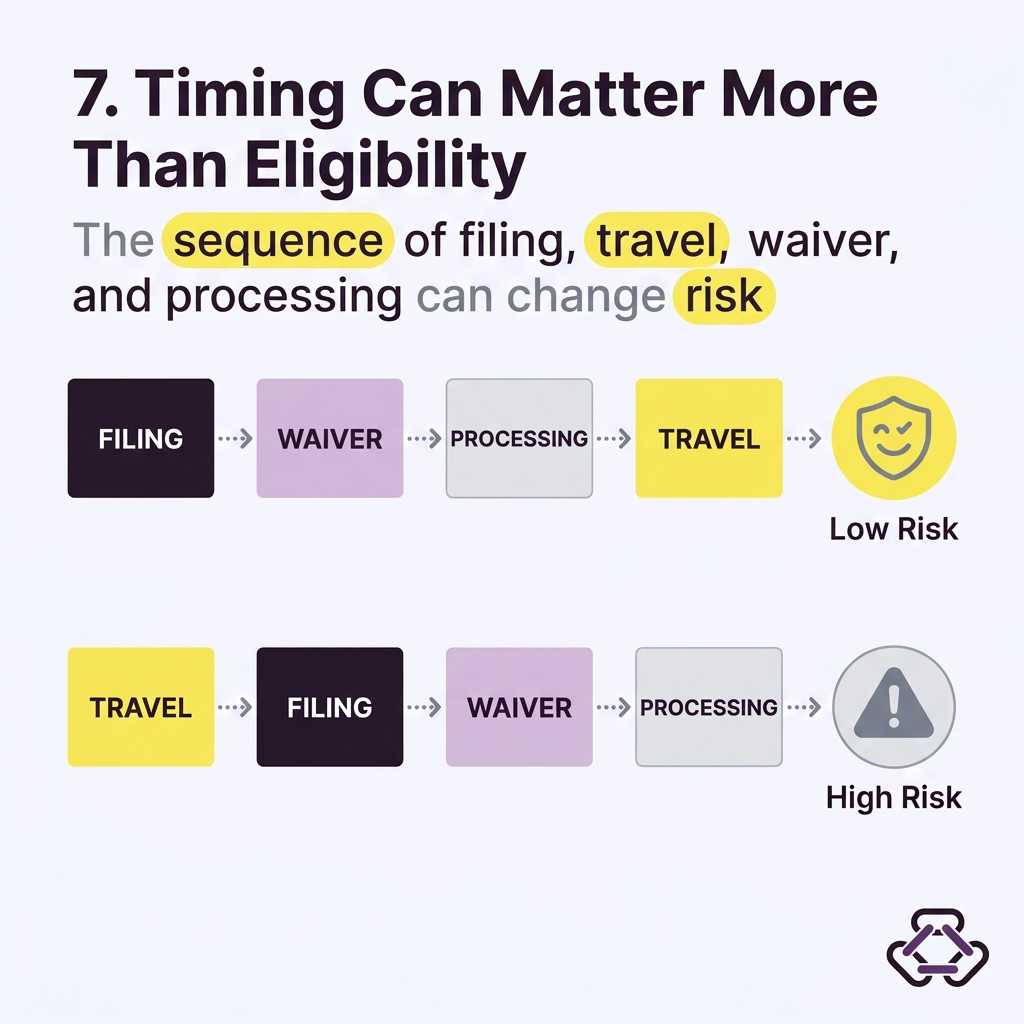
Why Case Strategy Is Often About Timing, Not Just Eligibility
Many people approach immigration cases as a simple yes-or-no question: “Am I eligible?” In unlawful presence matters, the more accurate question is often: “Eligible for what, when, and under which sequence of steps?”
A person may be eligible for an immigrant petition and still face a major problem if the process requires leaving the United States. Another person may have overstayed but still be positioned to adjust status in the United States, depending on the category, entry history, and other facts. Someone else may require a waiver package built around hardship evidence before departure becomes part of the plan.
That sequencing issue is exactly why unlawful presence changes strategy. It can affect:
- whether to file now or after additional record review,
- whether travel creates risk,
- whether waiver evidence should be developed first,
- whether family hardship needs to be documented in detail, and
- whether the person may be dealing with more than one inadmissibility ground.
For readers trying to place unlawful presence into the larger waiver framework, it often helps to read more about how hardship evidence and unlawful presence interact in waiver planning.
What “Extreme Hardship” Often Means In These Cases
When a waiver is available for unlawful presence, the analysis often turns to extreme hardship to a qualifying relative. USCIS has long treated this as a fact-intensive inquiry, not a checklist. The details usually matter: medical issues, financial disruption, caregiving burdens, country conditions, educational disruption, psychological effects, and the practical consequences of separation or relocation can all become part of the picture, depending on the facts. USCIS’s waiver materials, including the Form I-601A page and waiver-related guidance, frame hardship as an evidence-based determination.
That often means unlawful presence strategy is not only about the immigration timeline. It is also about document development. A case can rise or fall on how clearly the hardship story is supported by records, declarations, treatment notes, financial documents, school records, and other evidence.
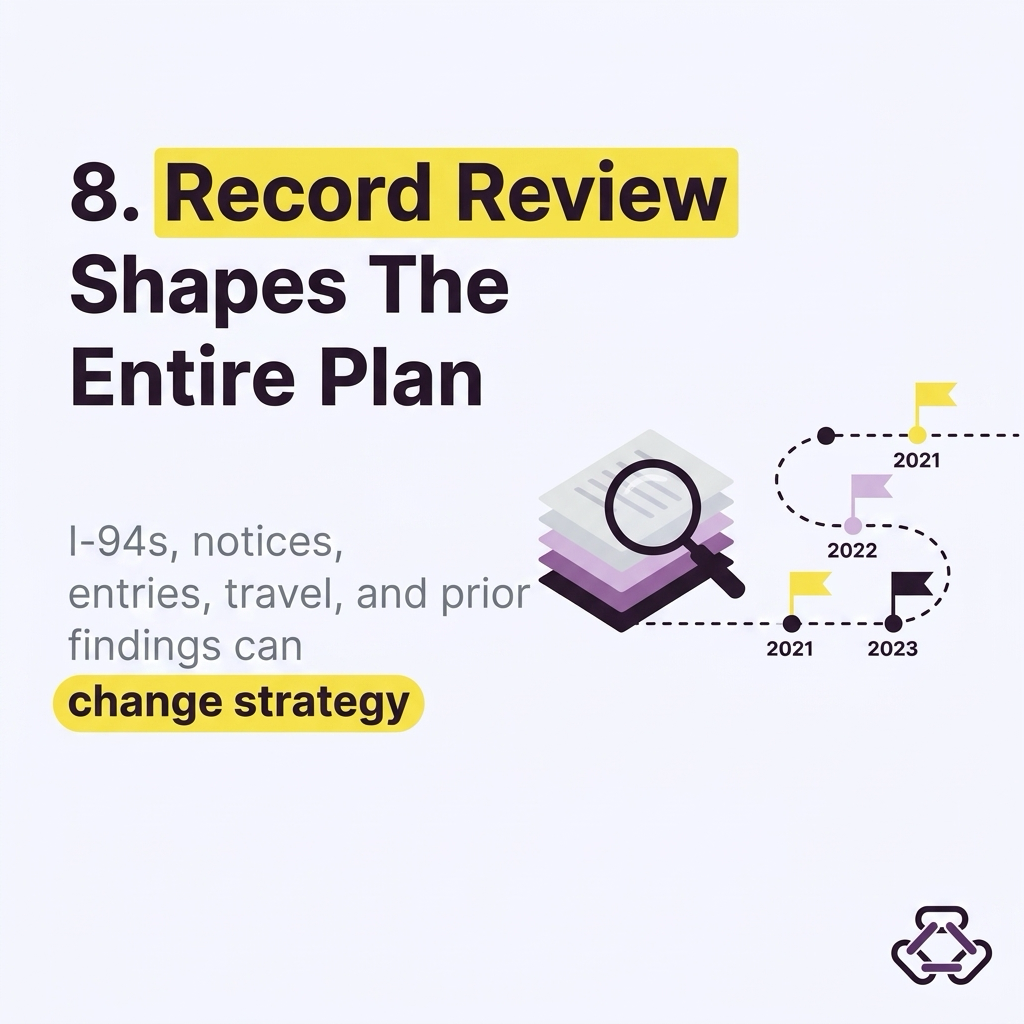
Why Families Often Underestimate The Record Review Stage
One of the hardest parts of unlawful presence cases is that people often rely on memory: dates of entry, visa expiration, a filing that “was probably submitted,” a denial notice that was misplaced, or a period they assumed counted one way when the government may view it another way.
In these cases, strategy often begins with reconstructing the file:
- I-94 history
- prior petitions and applications
- approval and denial notices
- entry records
- removal history, if any
- school or program records for D/S admissions
- evidence of timely filed extensions or changes of status
- travel history
- prior consular interactions
That reconstruction is not just administrative. It is often where the real legal analysis begins. A difference of a few days can matter. A pending filing can matter. A formal finding of a status violation can matter. A departure can matter even more.
The Additional Risk Of More Than One Inadmissibility Ground
Another reason unlawful presence changes strategy is that it can distract people from other possible inadmissibility issues. USCIS makes clear that the provisional unlawful presence waiver process is limited. If another ground is triggered, the case may not move forward on the path the family expected. See USCIS’s pages on provisional unlawful presence waivers and Form I-601A.
In general terms, lawyers often screen for issues such as:
- prior removal or expedited removal,
- misrepresentation or fraud,
- criminal history,
- unlawful reentry after prior unlawful presence,
- health-related grounds,
- smuggling-related issues,
- prior visa findings at a consulate.
That broader screening can change whether a provisional waiver makes sense, whether a standard I-601 analysis is more realistic, or whether the case may involve risks that need a different approach entirely.
Why Objective Matching Matters In Unlawful Presence Cases
Unlawful presence cases can look simple from the outside: count the days, file the waiver, attend the interview. In reality, many of these cases are built around fact patterns, not slogans. The details matter:
- Was there an inspection and admission?
- Was the person admitted for a date certain or D/S?
- Was there a timely filing?
- Did the person depart already?
- Is consular processing required?
- Is a qualifying relative available for waiver purposes?
- Is the case only about unlawful presence, or is there more in the record?
That is why attorney fit matters so much here. Families are often not looking for generic immigration help. They are looking for counsel with documented experience in highly similar waiver and inadmissibility matters, based on actual case history and objective criteria.
Final Thoughts
Unlawful presence changes immigration strategy because it is rarely just about whether someone overstayed. It is often about when unlawful presence began, whether it actually accrued, what event triggers inadmissibility, and whether the case can be structured around adjustment, consular processing, or a waiver path.
For some families, the turning point is departure. For others, it is discovering that unlawful status and unlawful presence are not the same thing. For many, it is realizing that hardship evidence and admissibility screening are part of the same strategic picture.
Visit ReferU.AI to get matched with an attorney who has demonstrable experience in cases like yours — for free.
