Table of Contents
- Inadmissibility Waivers Explained: Unlawful Presence, Hardship, and Case Strategy
- What An Inadmissibility Waiver Actually Does
- How Unlawful Presence Creates A Waiver Problem
- The Difference Between Form I-601 And Form I-601A
- Form I-601
- Form I-601A
- Who Counts As A Qualifying Relative In An Unlawful Presence Waiver
- What “Extreme Hardship” Usually Means
- Why Case Strategy Starts Before The Waiver Is Filed
- Confirming The Exact Ground Of Inadmissibility
- Deciding Whether I-601A Is Even The Right Tool
- Checking Procedure And Timing
- Reviewing Removal Proceedings Or Prior Orders
- Why Evidence Often Decides The Case
- Discretion Still Matters After Hardship
- Common Strategy Errors That Cause Problems
- Current Process Points Families Often Ask About
- Is A Provisional Waiver The Same As Visa Approval?
- What If Another Ground Of Inadmissibility Is Found Later?
- What Are The Filing Fees?
- Why Retaining The Right Attorney Can Change The Entire Approach
- Final Thoughts

Type
Grandchild
Status
Approved
Title (YouTube)
Images Failed (Social)
Images Failed (Social)
Do not index
Parent item
Publish Date (TikTok)
Apr 24, 2027 08:15
Videos Post IDs (Social)
Hashtags (Social)
#LegalAdvice #LegalHelp #Immigration #InadmissibilityWaivers
Caption
Caption X
Cover

OG Image

Alt Image Text
Flat vector illustration of inadmissibility waivers and unlawful presence case strategy, showing a family, legal guidance, hardship evidence, and a path through immigration obstacles.
Images

Videos

Publish Date (Social)
Feb 18, 2027 09:30
Scheduled (Social)
Scheduled (Social)
Images Posted (Social)
Images Posted (Social)
Videos Posted (Social)
Videos Posted (Social)
Featured
Created time
Apr 7, 2026 12:02 AM
Authors
CTA Practice Area (Social)
Immigration
TikTok Failed (Social)
TikTok Failed (Social)
Videos Post Links (Social)
TikTok Post Links (Social)
Images Post IDs (Social)
YT Post ID
Video Pending Manual (Social)
TikTok Posted (Social)
TikTok Posted (Social)
TikTok Post IDs (Social)
Video Cover (Social)

Images Post Links (Social)
First Comment (Social)
Videos Failed (Social)
Videos Failed (Social)
YT Embedded
YT Embedded
Images Delete (Social)
Videos Delete (Social)
Carousel Video URL (Social)
Inadmissibility Waivers Explained: Unlawful Presence, Hardship, and Case Strategy
For many families, the word waiver comes up at the hardest point in an immigration case: after a departure issue, a consular problem, or a finding that a person is inadmissible. That moment can feel confusing because the case often stops being about just the family relationship or approved petition and starts becoming about unlawful presence, qualifying relatives, hardship evidence, and timing.
In plain language, an inadmissibility waiver is a request asking the government to forgive a specific ground of inadmissibility so the immigration process can continue. But not every problem has a waiver, not every waiver uses the same legal standard, and not every case is built around the same facts. In waiver cases based on unlawful presence, the strategy often turns on two connected questions: what triggered the bar, and how will the case prove extreme hardship to the right qualifying relative?
This post explains how unlawful presence waivers work, where hardship fits in, and why case strategy matters so much. If you want a broader overview of the immigration system first, it may help to start with this general guide to immigration pathways and defense options. If you want a fuller overview of waiver-based relief itself, this overview of immigration waivers and when they come up can help frame the basics before diving into strategy.
Scroll to the bottom for every post in this series.
What An Inadmissibility Waiver Actually Does
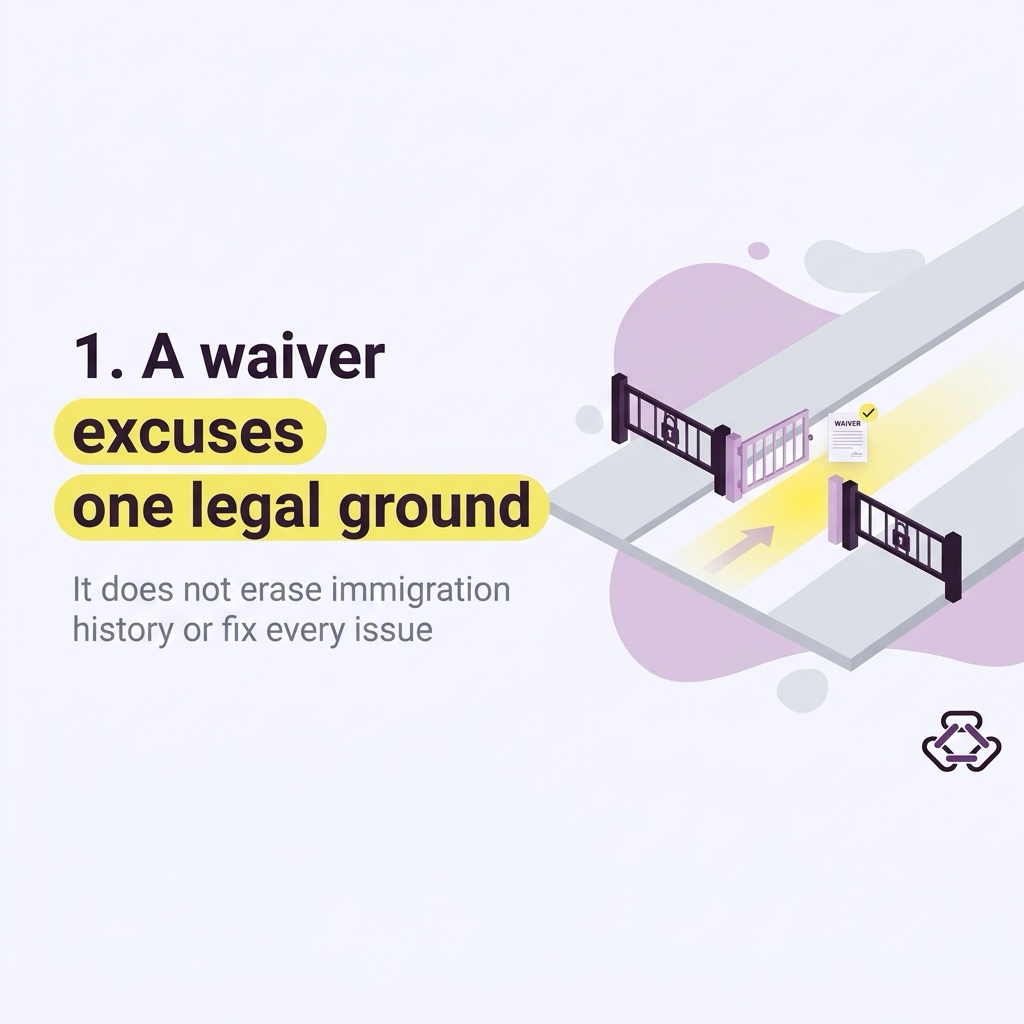
A waiver does not erase immigration history. Instead, it asks USCIS or another part of the immigration system to excuse a particular legal ground that would otherwise block a visa, admission, or green card process.
That distinction matters because immigration cases often involve more than one issue at the same time. A person may have an approved family petition and still face a visa refusal because of unlawful presence. Another person may think the only issue is unlawful presence, but a consular officer later identifies a separate ground, such as fraud, prior removal-related issues, or a permanent bar problem. USCIS explains that unlawful-presence inadmissibility can arise under INA § 212(a)(9)(B) or § 212(a)(9)(C), and the legal consequences differ depending on the facts and the person’s travel history. USCIS’s unlawful presence guidance and the USCIS Policy Manual discussion of seeking admission after unlawful presence are the main starting points for that analysis.
That is one reason waiver strategy is rarely just “file the form.” It is often a case-mapping exercise: identify the exact inadmissibility ground, determine whether a waiver exists, confirm who counts as a qualifying relative, decide whether the case belongs in the United States or abroad, and organize evidence around the legal standard that applies.
How Unlawful Presence Creates A Waiver Problem
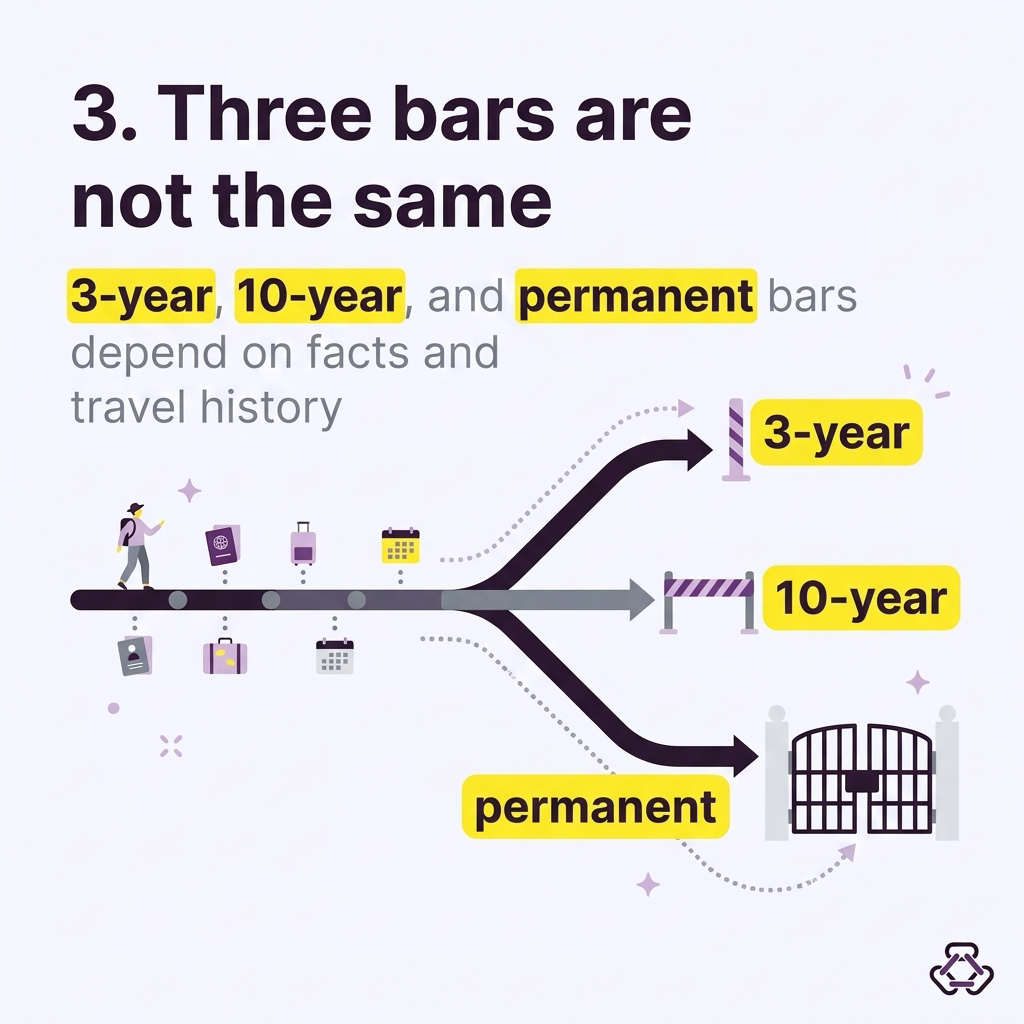
Unlawful presence is one of the most common reasons a waiver issue appears in family-based immigration. USCIS states that, in general, a person may become inadmissible for 3 years after departing the United States if they accrued more than 180 days but less than 1 year of unlawful presence during a single stay, or for 10 years if they accrued 1 year or more during a single stay. The permanent-bar provision under INA § 212(a)(9)(C) can apply in a different and more severe set of circumstances, including certain entries or attempted entries after prior unlawful presence. USCIS summarizes these bars here.
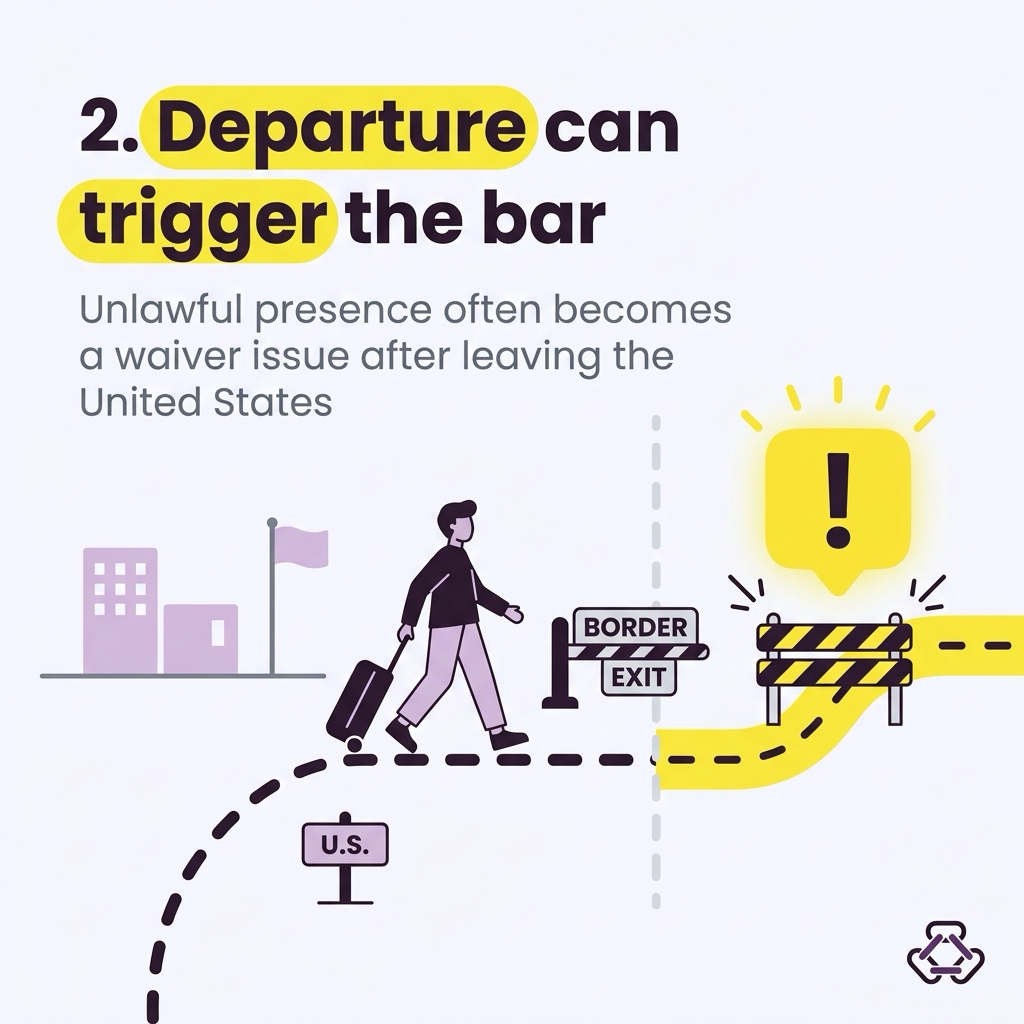
This is where many families get tripped up: the unlawful-presence bar is often triggered by departure. In other words, a person may live in the United States for years without fully realizing how a future consular process could change the legal analysis. Once the person leaves for an immigrant visa interview abroad, the case can shift dramatically.
That timing issue is exactly why unlawful presence often changes case planning from the beginning. For a deeper look at that point, this explanation of how unlawful presence affects immigration strategy walks through why entries, exits, and status history matter so much.
The Difference Between Form I-601 And Form I-601A
A lot of waiver confusion comes from the fact that two similar-sounding forms serve very different functions.
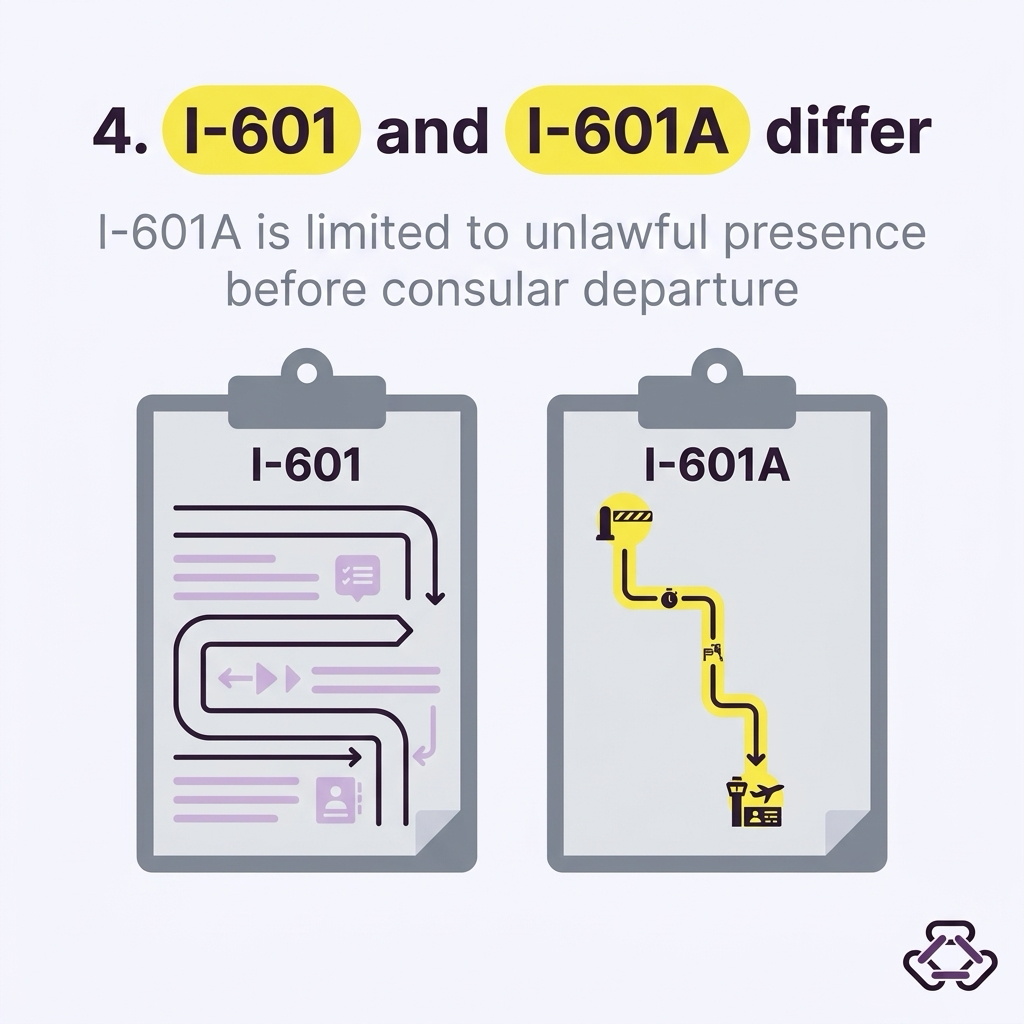
Form I-601
Form I-601 is the general application used to seek a waiver of certain grounds of inadmissibility. It comes up in a range of contexts, including immigrant visa and some adjustment or other immigration benefit cases, depending on the ground involved and the person’s procedural posture.
Form I-601A
Form I-601A is narrower. It is the provisional unlawful presence waiver. USCIS explains that this process allows certain immigrant visa applicants who are statutorily eligible and who only need a waiver for unlawful presence to apply for that waiver before departing the United States for their immigrant visa interview. USCIS also notes that the provisional process was expanded to cover more than just immediate relatives of U.S. citizens; it can also apply to other immigrant visa applicants, including some family-sponsored, employment-based, and diversity visa cases, if they otherwise qualify. See USCIS’s provisional waiver page.
That “only unlawful presence” limitation is one of the most important strategic points in this area. USCIS and AAO materials make clear that an I-601A does not fix other inadmissibility grounds. If the consular officer later finds an additional ground of inadmissibility, the approved provisional waiver may no longer solve the case and can even be automatically revoked in some circumstances. That is reflected in USCIS guidance on provisional waivers and in AAO decisions discussing the limited scope of Form I-601A.
In practical terms, that often means the legal team is not just preparing a waiver packet. They are also trying to identify whether there are hidden issues that could make the provisional route risky.
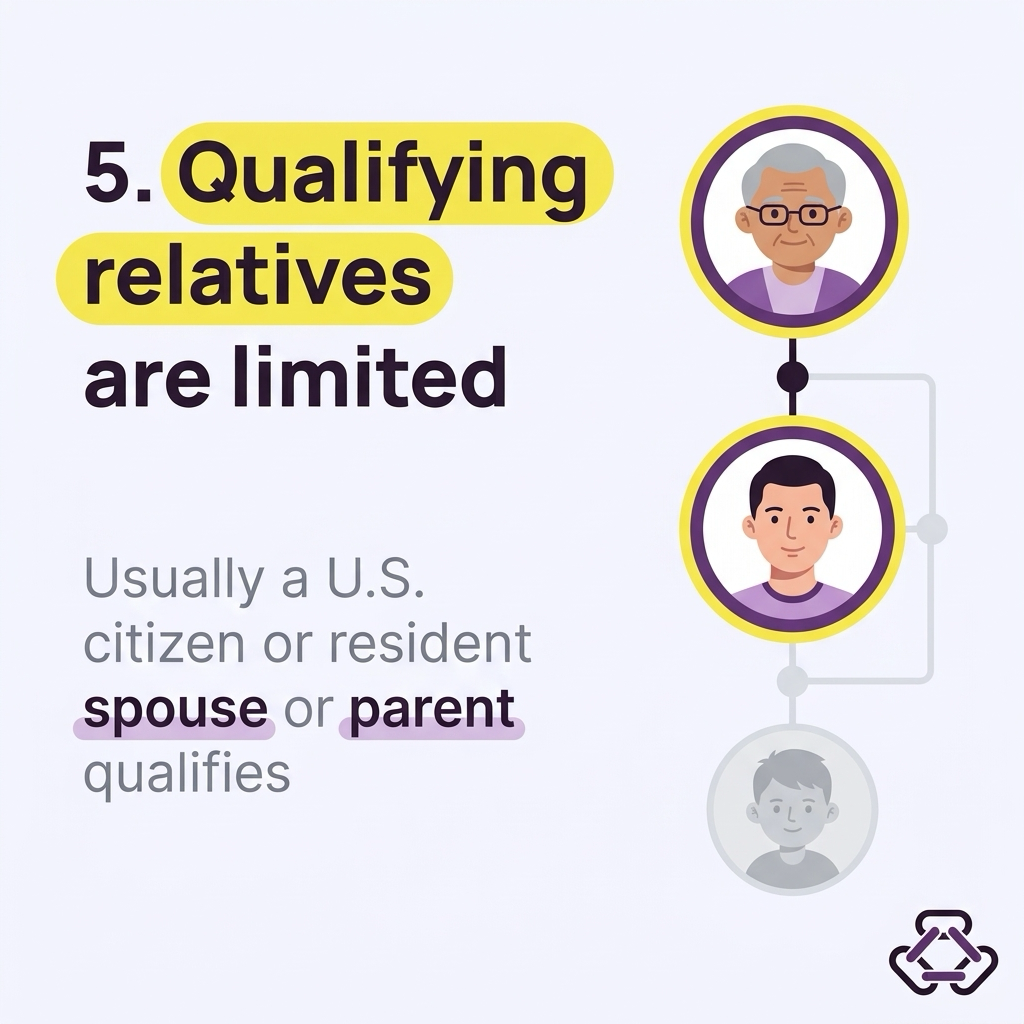
Who Counts As A Qualifying Relative In An Unlawful Presence Waiver
Hardship is central to many waiver cases, but hardship alone is not enough. The hardship generally has to be tied to the right person under the statute.
For unlawful presence waivers under INA § 212(a)(9)(B)(v), USCIS policy states that the qualifying relative is generally the applicant’s U.S. citizen or lawful permanent resident spouse or parent. USCIS’s waiver policy manual explains that if the waiver provision does not permit a child to serve as the qualifying relative, the officer cannot treat the child’s hardship as the direct qualifying-relative hardship for that waiver. Even so, hardship affecting a child may still matter indirectly if it affects the qualifying spouse or parent.
That nuance is often one of the most misunderstood parts of waiver preparation. Families naturally focus on children, daily caregiving, schooling, and emotional harm. Those facts can still be highly important, but they often have to be presented in a way that shows how those realities create extreme hardship for the qualifying spouse or parent.
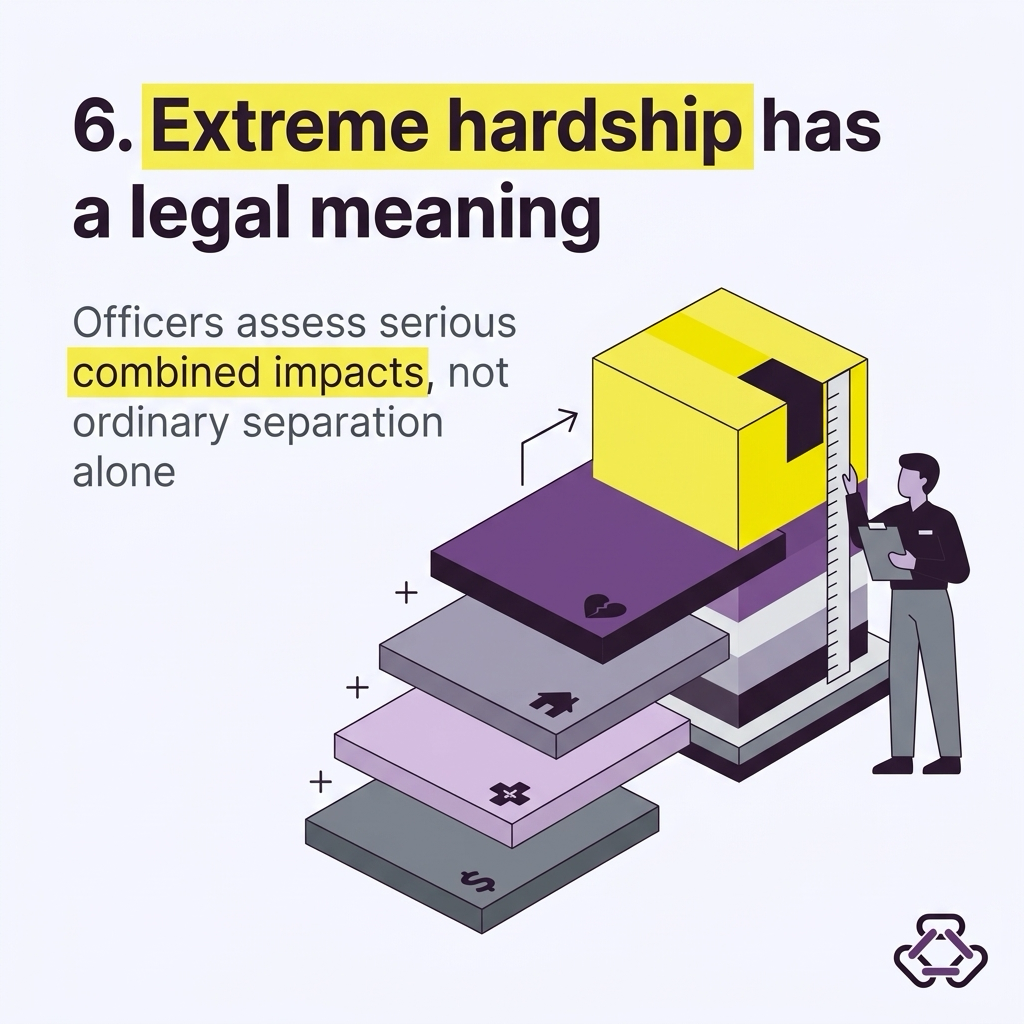
USCIS also recognizes that hardship can be considered in the aggregate. A single factor might not be enough alone, but the combined impact of health, financial pressure, caregiving burdens, country conditions, education disruption, or psychological strain may paint a very different picture when viewed together. That framework appears in the USCIS Policy Manual’s discussion of qualifying relatives and extreme hardship factors.
What “Extreme Hardship” Usually Means
“Extreme hardship” is a legal standard, not just a way of saying the family will suffer. USCIS explains that ordinary consequences of separation or relocation are typically expected in immigration cases, so the evidence usually has to show something more serious, more individualized, or more cumulative than the usual disruptions. USCIS’s policy on extreme hardship determinations and its list of extreme hardship considerations and factors outline how officers evaluate these cases.
Common hardship themes include:
- serious or ongoing medical issues
- mental health concerns and psychological consequences
- financial dependency, debt, or loss of necessary income
- caregiving obligations for children, parents, or disabled relatives
- educational disruption
- country conditions affecting safety, healthcare access, language barriers, or employment
- long-term family separation and its compounding effects
USCIS also explains that officers may evaluate hardship under two scenarios: if the qualifying relative remains in the United States without the applicant, and if the qualifying relative relocates abroad. In many successful presentations, the evidence addresses both possibilities rather than assuming only one future. That structure appears throughout the USCIS Policy Manual on hardship.
For readers who want a more practical breakdown of how these cases are documented, this guide to building a hardship-focused waiver package goes deeper into declarations, records, and corroboration.
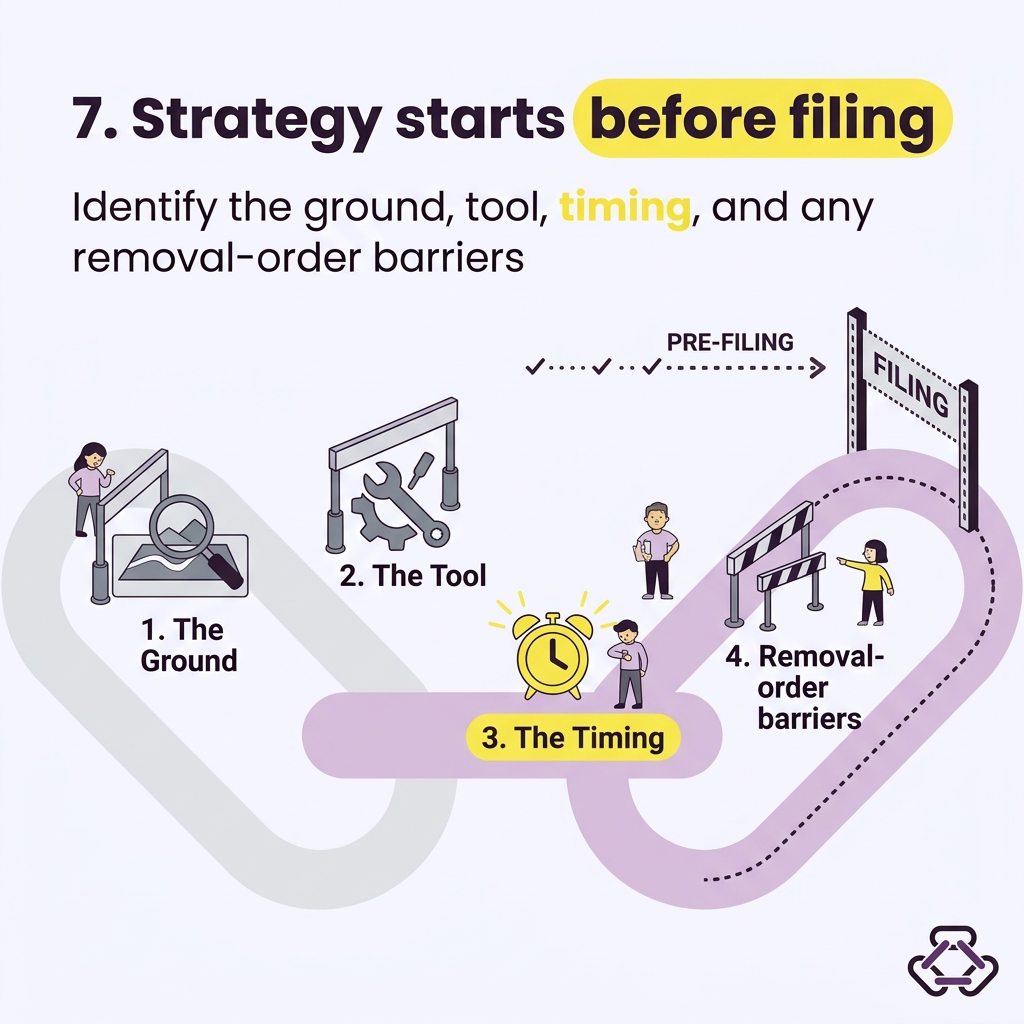
Why Case Strategy Starts Before The Waiver Is Filed
One of the biggest misconceptions in waiver cases is that the main task is proving hardship. Hardship is essential, but good waiver strategy usually starts earlier.
Confirming The Exact Ground Of Inadmissibility
A waiver packet can be strong and still miss the real issue if the legal team has not correctly identified the actual inadmissibility ground. That is especially important in cases involving prior departures, prior removals, misrepresentation concerns, or entries after accumulated unlawful presence.
Deciding Whether I-601A Is Even The Right Tool
USCIS states that a provisional unlawful presence waiver is for immigrant visa applicants who only require a waiver for unlawful presence. If there is a meaningful chance another ground could surface at the consular stage, the strategy may look very different. USCIS’s I-601A page and provisional waiver overview frame that limitation clearly.
Checking Procedure And Timing
To file Form I-601A, the person generally needs an approved immigrant visa petition and an active immigrant visa case with the Department of State, including proof of payment of the immigrant visa processing fee in most cases. The I-601A instructions, USCIS checklist, and USCIS consular processing page help explain where this fits in the process.
Reviewing Removal Proceedings Or Prior Orders
USCIS states that if a person is in removal proceedings, they generally cannot seek a provisional unlawful presence waiver until the immigration judge or the Board of Immigration Appeals has administratively closed the case. USCIS also explains that a person with a final order of removal, exclusion, or deportation may only obtain a provisional unlawful presence waiver if Form I-212 has already been approved before filing the I-601A. Those details appear on USCIS’s provisional waiver page.
That is a good example of why strategy matters so much: two people may both say, “I have unlawful presence and a U.S. citizen spouse,” but one may be a provisional-waiver candidate while the other may have a completely different procedural path.
Why Evidence Often Decides The Case
In hardship waivers, legal theory and evidence are inseparable. USCIS applies a preponderance of the evidence standard, meaning the applicant has to provide relevant, probative, and credible evidence showing the claim is more likely than not true. That standard appears in the USCIS Policy Manual on extreme hardship determinations.
In many cases, the file includes:
- declarations from the applicant and qualifying relative
- medical records and physician letters
- therapy records or psychological evaluations when relevant
- tax returns, pay records, debt records, budgets, or employer letters
- school records
- proof of caregiving duties
- records showing disability or special needs
- country-conditions evidence from government or similarly authoritative sources
- documents tying all of those facts back to the qualifying relative’s lived reality
The strongest files are often the ones where the evidence does not read like a list of hardships. Instead, it reads like a coherent explanation of how this particular family functions, what would happen under each possible scenario, and why the qualifying relative’s hardship goes beyond the ordinary.
For a more family-centered overview of what people often overlook before filing, this breakdown of key facts families often miss in waiver cases can help set expectations.
Discretion Still Matters After Hardship
Even where the legal standard for hardship is met, waiver adjudication can still involve discretion. USCIS explains that once the officer finds the requisite hardship, the officer may still weigh positive and negative factors in deciding whether to grant the waiver as a matter of discretion. USCIS discusses that discretionary stage here.
In practice, this means waiver preparation often includes more than medical or financial hardship evidence. It may also include material that gives context to the person’s background, family ties, rehabilitation, community history, and the overall equities in the case.
That does not mean every unlawful presence waiver turns into a discretionary battle. It does mean that attorneys often prepare the case as a complete story, not just a narrow hardship chart.
Common Strategy Errors That Cause Problems
A surprising number of waiver cases run into trouble because the issue is not whether hardship exists, but whether the case was framed correctly.
Some common problems include:
- filing the wrong waiver form
- assuming children are always qualifying relatives
- focusing on emotion without documentary support
- ignoring possible other inadmissibility grounds
- submitting inconsistent timelines
- underdeveloping the relocation scenario or the separation scenario
- waiting until an RFE to gather basic evidence
- overlooking procedural barriers tied to removal proceedings or prior orders
Those mistakes can lead to delay, denial, or a much more complicated refiling process. If you want a checklist-style look at recurring filing and strategy problems, this roundup of common waiver mistakes and how they affect timing is a useful companion piece.
Current Process Points Families Often Ask About
A few practical questions come up again and again.
Is A Provisional Waiver The Same As Visa Approval?
No. An approved I-601A is not the immigrant visa itself. It is a provisional waiver of unlawful presence before consular processing. The applicant still has to complete the immigrant visa process through the Department of State, attend the consular interview, and remain otherwise admissible. USCIS’s provisional waiver page explains this distinction.
What If Another Ground Of Inadmissibility Is Found Later?
That can change the case significantly. USCIS and AAO materials indicate that I-601A approval only addresses unlawful presence, and it does not cure separate grounds. In some situations, another inadmissibility finding can make the provisional approval ineffective or revoked. See USCIS’s I-601A information and the AAO discussion of I-601A’s limited scope.
What Are The Filing Fees?
USCIS fee amounts changed under the fee rule that took effect on April 1, 2024. USCIS’s FAQ reflects that the Form I-601A fee became $795, up from the prior total of $630. USCIS’s fee-rule FAQ is a reliable source for that update. Because fee schedules can change again, many attorneys double-check the current USCIS fee pages right before filing.
Why Retaining The Right Attorney Can Change The Entire Approach
Waiver cases often look simple from the outside: there is a family petition, a period of unlawful presence, and a hardship story. But the real legal work often happens beneath the surface:
- spotting whether the person may be dealing with 212(a)(9)(B) or 212(a)(9)(C)
- determining whether the person qualifies for I-601A or needs a different path
- identifying the qualifying relative
- structuring hardship under both separation and relocation theories
- documenting hardship with evidence that is consistent, credible, and tied to the statute
- planning around consular processing, prior removal issues, or possible discretionary concerns
That is why families often spend months, and sometimes years, living with the consequences of an early strategy mistake. In many cases, the question is not just “Can a waiver be filed?” but “What case strategy fits this person’s exact history based on documented facts and the actual waiver standard involved?”
Final Thoughts
Inadmissibility waivers are one of the most technical parts of immigration law because they sit at the intersection of status history, travel history, family relationships, hardship, evidence, and procedure. Unlawful presence can trigger a 3-year or 10-year bar after departure, but the right response depends on much more than counting days. It often depends on identifying the exact ground of inadmissibility, confirming whether a waiver exists, proving extreme hardship to the right qualifying relative, and avoiding procedural problems that can derail the case before the evidence is ever fully considered.
For families trying to make sense of a waiver case, attorney fit often matters as much as attorney availability. Visit ReferU.AI to get matched with an attorney who has demonstrable experience in cases like yours — for free.


