Table of Contents
- 10 Facts Families Should Understand Before Filing a Waiver Case
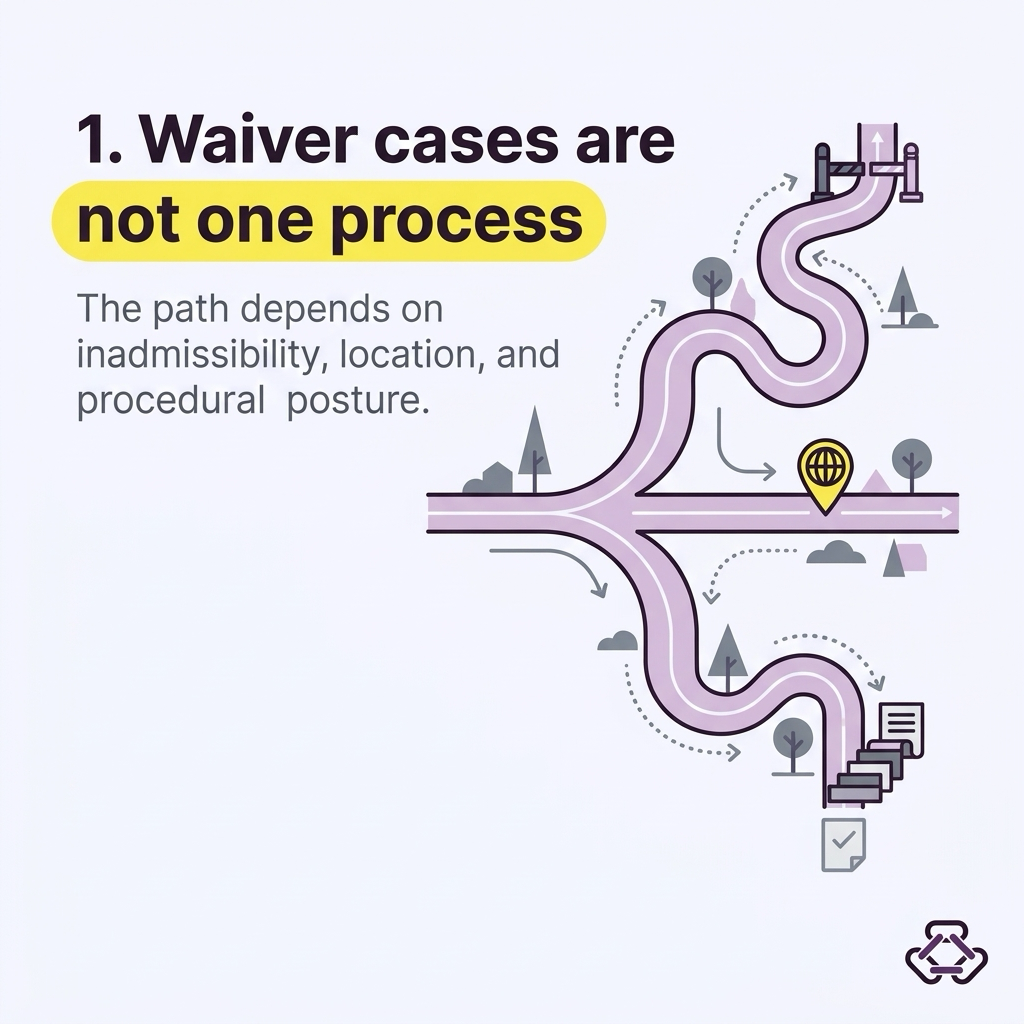
- 1. A Waiver Case Is Not One Single Process
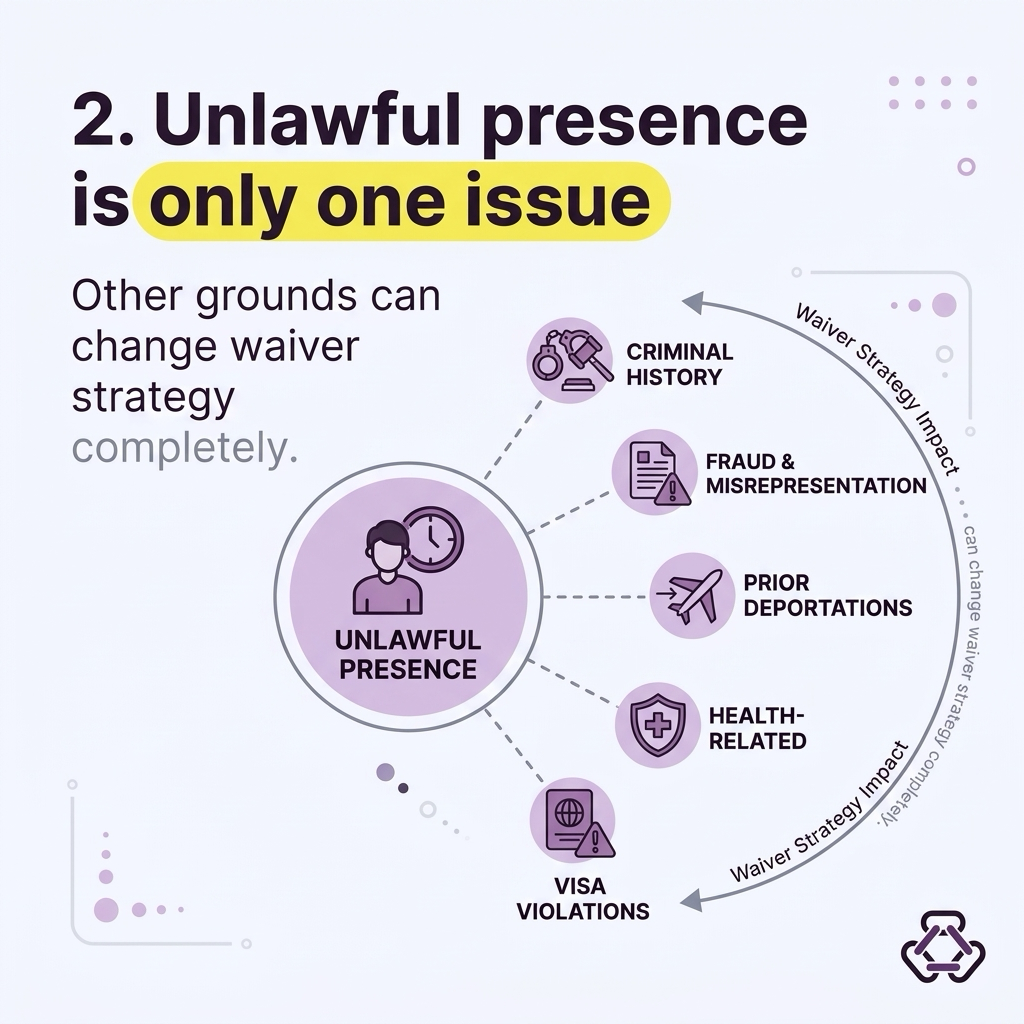
- 2. “Unlawful Presence” Is Only One Piece Of The Puzzle
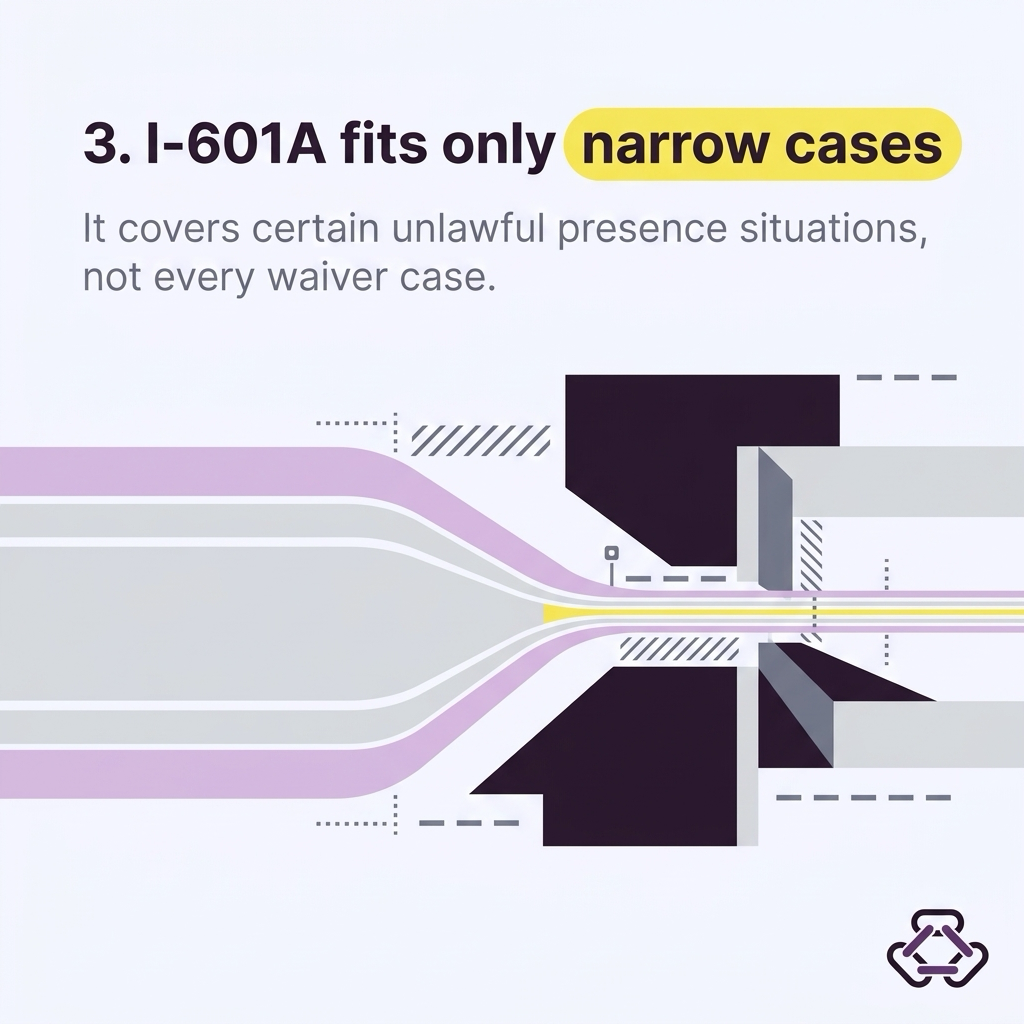
- 3. Not Everyone Who Needs A Waiver Can Use Form I-601A
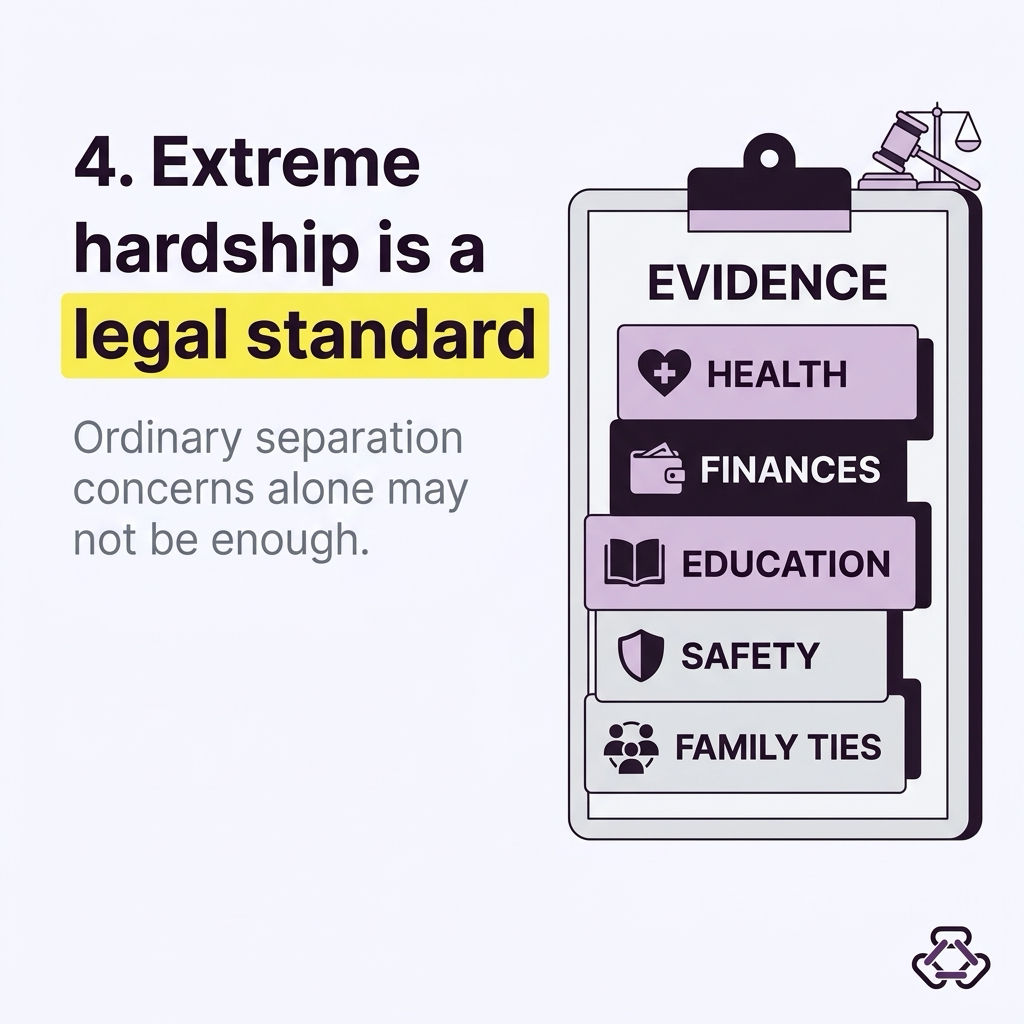
- 4. “Extreme Hardship” Is A Legal Standard, Not Just Emotional Hardship
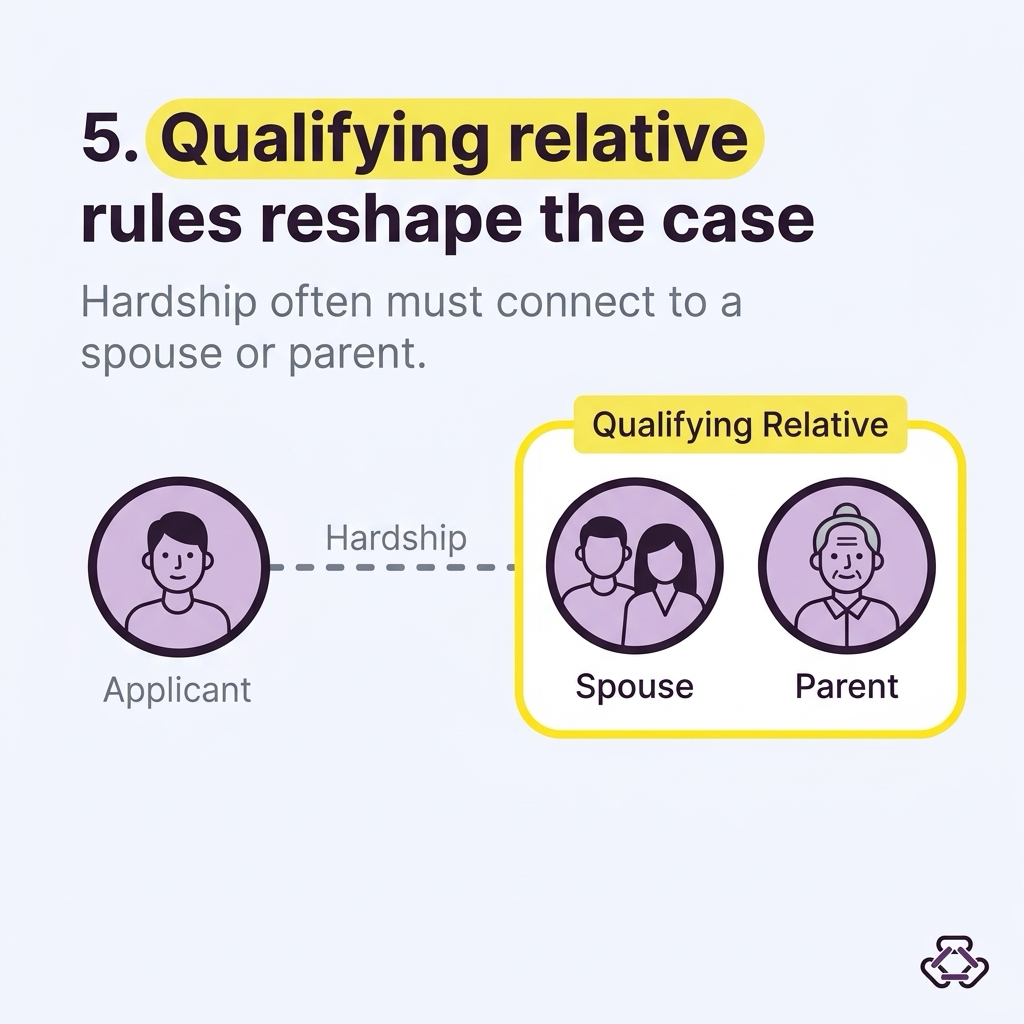
- 5. The “Qualifying Relative” Rule Can Change Everything
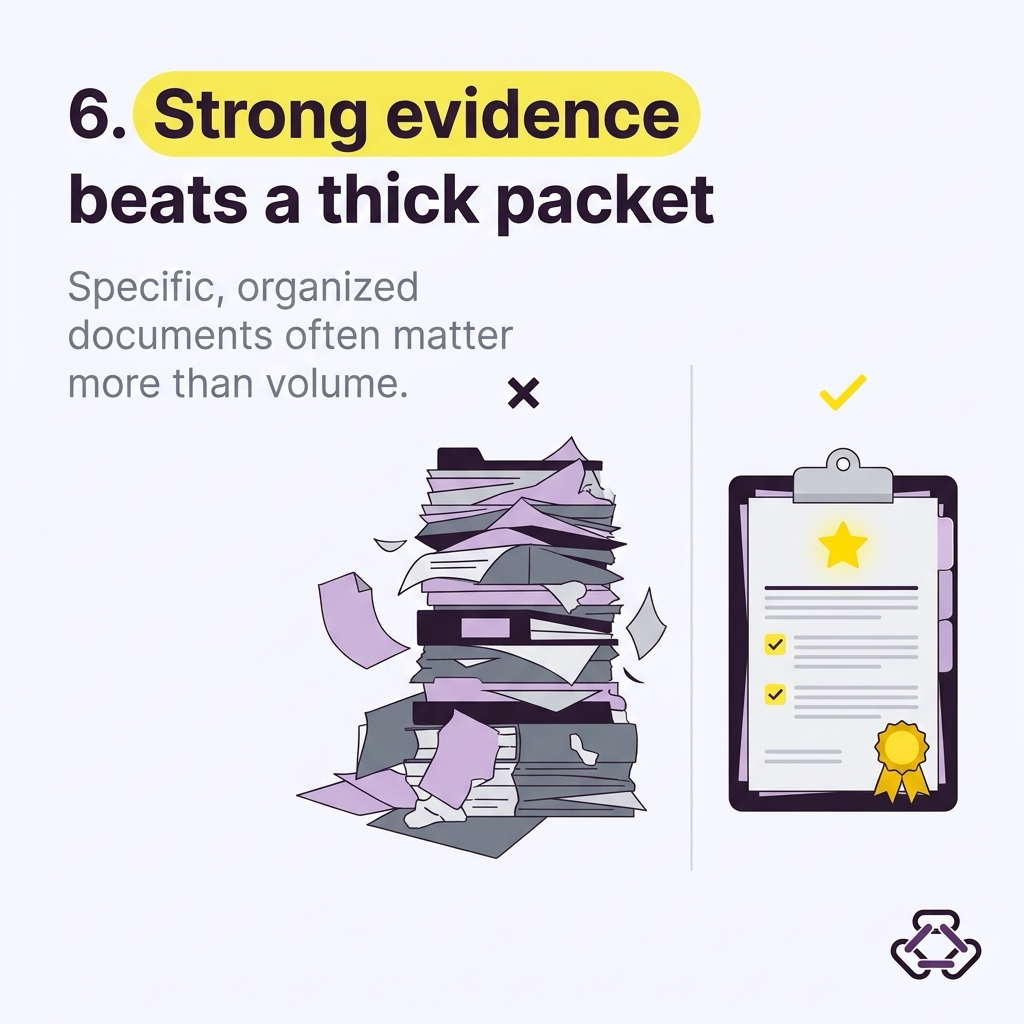
- 6. Evidence Quality Often Matters More Than Evidence Volume
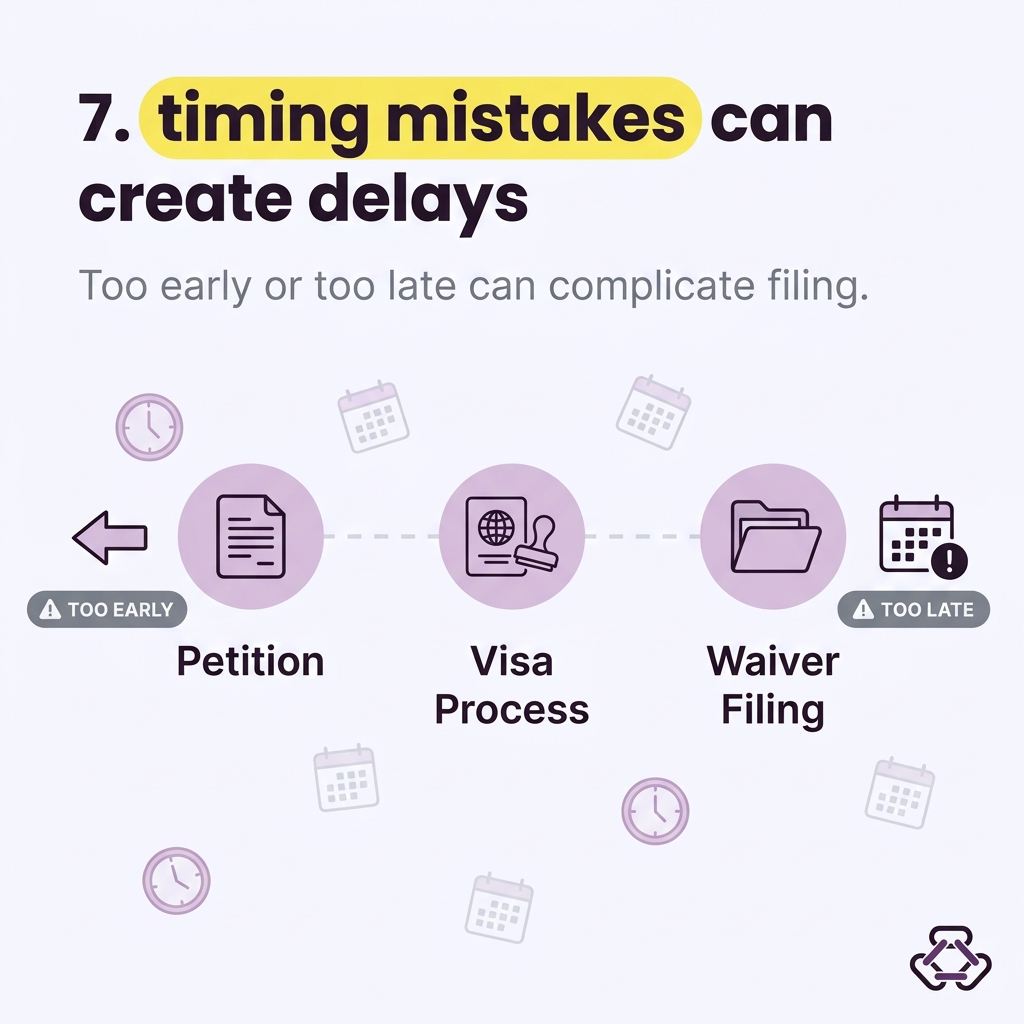
- 7. Filing Too Early Can Be Just As Risky As Filing Too Late
- 8. Processing Times Can Be Longer Than Families Expect
- 9. Fees, Form Editions, And Filing Details Change More Often Than People Think
- 10. The Right Attorney Fit Often Depends On Documented Experience In Highly Similar Matters
- Final Thoughts

Type
Great Grandchild
Status
Approved
Title (YouTube)
Images Failed (Social)
Images Failed (Social)
Do not index
Publish Date (TikTok)
Apr 23, 2027 14:15
Videos Post IDs (Social)
Hashtags (Social)
#LegalAdvice #LegalHelp #Immigration #InadmissibilityWaivers
Caption
Caption X
Cover

OG Image

Alt Image Text
Flat vector illustration of a family reviewing documents and multiple pathways before filing a waiver case, highlighting unlawful presence as one part of a complex immigration process.
Images

Videos
Publish Date (Social)
Feb 18, 2027 07:00
Scheduled (Social)
Scheduled (Social)
Images Posted (Social)
Images Posted (Social)
Videos Posted (Social)
Videos Posted (Social)
Featured
Created time
Apr 7, 2026 12:02 AM
Sub-item
Authors
CTA Practice Area (Social)
Immigration
TikTok Failed (Social)
TikTok Failed (Social)
Videos Post Links (Social)
TikTok Post Links (Social)
Images Post IDs (Social)
YT Post ID
Video Pending Manual (Social)
TikTok Posted (Social)
TikTok Posted (Social)
TikTok Post IDs (Social)
Video Cover (Social)
Images Post Links (Social)
First Comment (Social)
Videos Failed (Social)
Videos Failed (Social)
YT Embedded
Images Delete (Social)
Videos Delete (Social)
Carousel Video URL (Social)
10 Facts Families Should Understand Before Filing a Waiver Case
When a family is dealing with immigration inadmissibility issues, the word waiver can sound simple. In reality, waiver cases often involve detailed eligibility rules, long timelines, and a demanding evidence process. Families frequently hear phrases like “extreme hardship,” “unlawful presence,” or “consular processing” without getting a clear explanation of how those pieces fit together.
In this post, you’ll learn 10 practical facts that many families wish they understood earlier. If you’re brand new to the topic, it may also help to start with this overview of how waiver-based immigration relief generally works, because many waiver cases rise or fall on the difference between the specific ground of inadmissibility and the evidence tied to it.
Scroll to the bottom for every post in this series.
1. A Waiver Case Is Not One Single Process
Families often talk about “filing a waiver” as if there is one standard application. In practice, waiver cases can look very different depending on which inadmissibility ground applies, where the person is located, and whether the case involves consular processing, adjustment of status, or a prior removal issue.
For example, USCIS explains that Form I-601 is used to request a waiver of certain grounds of inadmissibility in several immigration contexts, while Form I-601A is a provisional unlawful presence waiver used in a narrower situation tied to unlawful presence and immigrant visa processing abroad. USCIS also notes that the provisional process does not replace the immigrant visa process and does not by itself create eligibility for adjustment of status in the United States. USCIS’s page on provisional unlawful presence waivers makes that distinction especially clear.
That is why one of the first questions in a family consultation is often not “Can we file a waiver?” but instead “What exactly is the inadmissibility issue, and which waiver framework—if any—fits it?”
2. “Unlawful Presence” Is Only One Piece Of The Puzzle
A lot of waiver conversations begin with the 3-year and 10-year bars connected to unlawful presence. Those bars matter, but they are not the only inadmissibility issues that can affect a case.
According to USCIS guidance on unlawful presence and inadmissibility, people who accrue more than 180 days but less than one year of unlawful presence and then depart may trigger a 3-year bar, while people who accrue one year or more and then depart may trigger a 10-year bar. But waiver strategy may become more complicated if there are additional issues, such as misrepresentation, prior removal orders, criminal grounds, or other bars.
That is one reason families often benefit from reading about how unlawful presence can reshape waiver strategy before anything gets filed. In general terms, a case that looks like an “unlawful presence waiver” at first glance may later turn out to involve a second inadmissibility issue that changes the entire approach.
3. Not Everyone Who Needs A Waiver Can Use Form I-601A
One of the most common misunderstandings is the belief that anyone facing a 3-year or 10-year bar can file the provisional waiver from inside the United States. That is not how the process works.
USCIS states that the I-601A process is limited to certain immigrant visa applicants who are statutorily eligible and who seek a waiver only for unlawful presence under INA section 212(a)(9)(B). USCIS also explains that if there are other inadmissibility grounds, the provisional waiver may not solve the problem. The agency further notes that some people with final orders of removal can pursue the process only if they have already obtained approval of Form I-212.
This point matters because families sometimes spend months gathering hardship evidence for the wrong filing path. In many cases, the real issue is not whether hardship exists, but whether the applicant is even in the correct waiver category in the first place.
4. “Extreme Hardship” Is A Legal Standard, Not Just Emotional Hardship
Families often assume that proving love, separation, and sadness will be enough. Those experiences are real and important, but immigration law treats extreme hardship as a specific legal standard.
In its Policy Manual section on extreme hardship, USCIS explains that some degree of hardship exists in most family-separation cases, which means the officer is looking for something beyond the ordinary consequences of inadmissibility. USCIS’s chapter on extreme hardship factors discusses a wide range of considerations, including health conditions, financial impact, educational disruption, personal safety, country conditions, and family ties in the United States and abroad.
The Board of Immigration Appeals has also long recognized a multi-factor analysis. In Matter of Cervantes-Gonzalez, the BIA described factors that can be relevant when evaluating extreme hardship, including family ties, conditions in the country of relocation, financial impact, and significant health concerns.
Here’s what this often means in real life: a waiver case is usually stronger when it shows how multiple hardship factors interact, rather than relying on one short statement that separation would be difficult.
5. The “Qualifying Relative” Rule Can Change Everything
Another issue families commonly discover too late is that hardship is not always measured the way they expected. In many waivers, the central question is not simply whether the applicant will suffer, or whether the children will suffer, but whether the hardship to a qualifying relative meets the legal standard.
USCIS explains in its Policy Manual that, for many waivers, the applicant generally cannot satisfy the hardship requirement based only on hardship to themselves. The relevant hardship often has to be tied to a U.S. citizen or lawful permanent resident spouse or parent, although the exact rule can vary by waiver type. USCIS also notes that hardship affecting children may still be considered indirectly when that hardship impacts the qualifying relative.
This is one of the most important structural facts in waiver work. A family may have compelling facts involving children, schooling, medical treatment, or caregiving—but the case often has to connect those facts back to the qualifying relative in a legally coherent way.
6. Evidence Quality Often Matters More Than Evidence Volume
A thick packet is not automatically a persuasive packet.
USCIS’s I-601 page says applicants should include evidence showing why they qualify for the waiver, evidence supporting any extreme hardship claim, proof of the qualifying relationship, and evidence relevant to discretion where applicable. The Policy Manual discussion of documentation also reflects that hardship can be documented through personal statements, official records, expert letters, and reliable country-condition materials.
In many cases, the most persuasive evidence is not dramatic. It is specific, organized, and connected to the legal standard. Examples may include:
- medical records that explain a diagnosis and ongoing treatment
- financial documents showing dependence on the applicant’s income or care
- psychological evaluations when mental-health effects are relevant
- school records tied to a child’s special needs or disruption
- country-condition reports from reliable government or international sources
- affidavits that provide detail rather than general conclusions
Families looking deeper into this part of the process may find it useful to read more about building a hardship-focused waiver filing with supporting documents. A waiver package often becomes more credible when each document helps answer a specific legal question.
7. Filing Too Early Can Be Just As Risky As Filing Too Late
In waiver matters, timing is often strategic. Some families are eager to file as soon as possible, but an early filing can create problems if the record is incomplete, the immigrant visa process is not at the right stage, or a hidden inadmissibility issue has not been identified.
For provisional waivers, USCIS explains that applicants generally need, among other things, the receipt number for the approved immigrant visa petition and evidence tied to the Department of State immigrant visa case process. USCIS also warns that substitutes like fee receipts alone may be insufficient and can lead to delays. The agency’s I-601A checklist highlights common filing mistakes that frequently result in rejected or delayed applications.
On the other side, waiting too long can also affect family planning, travel, document freshness, and emotional strain. In general terms, timing in a waiver case tends to work best when the filing is coordinated with the immigrant petition, the National Visa Center stage if applicable, and a realistic review of any additional inadmissibility concerns.
8. Processing Times Can Be Longer Than Families Expect
Many families begin a waiver case assuming the process will move in a few months. That assumption can create serious stress when the case stays pending much longer.
USCIS has publicly acknowledged substantial wait times for provisional waiver cases. In a USCIS HART Service Center FAQ, the agency stated that as of June 2024 it was processing 80% of Form I-601A applications within 43.5 months. USCIS also noted in that same FAQ that Form I-601A is currently paper-filed and then digitized for adjudication at the HART Service Center. More recent USCIS materials have continued to indicate that backlogs remain significant across some form types, including Form I-601 matters, even as the agency reports improvement in certain categories through its processing-times updates.
That does not mean every case will take that long. It does mean families often benefit from planning around the possibility that waiver processing may be measured in many months or even years, depending on the form and posture of the case.
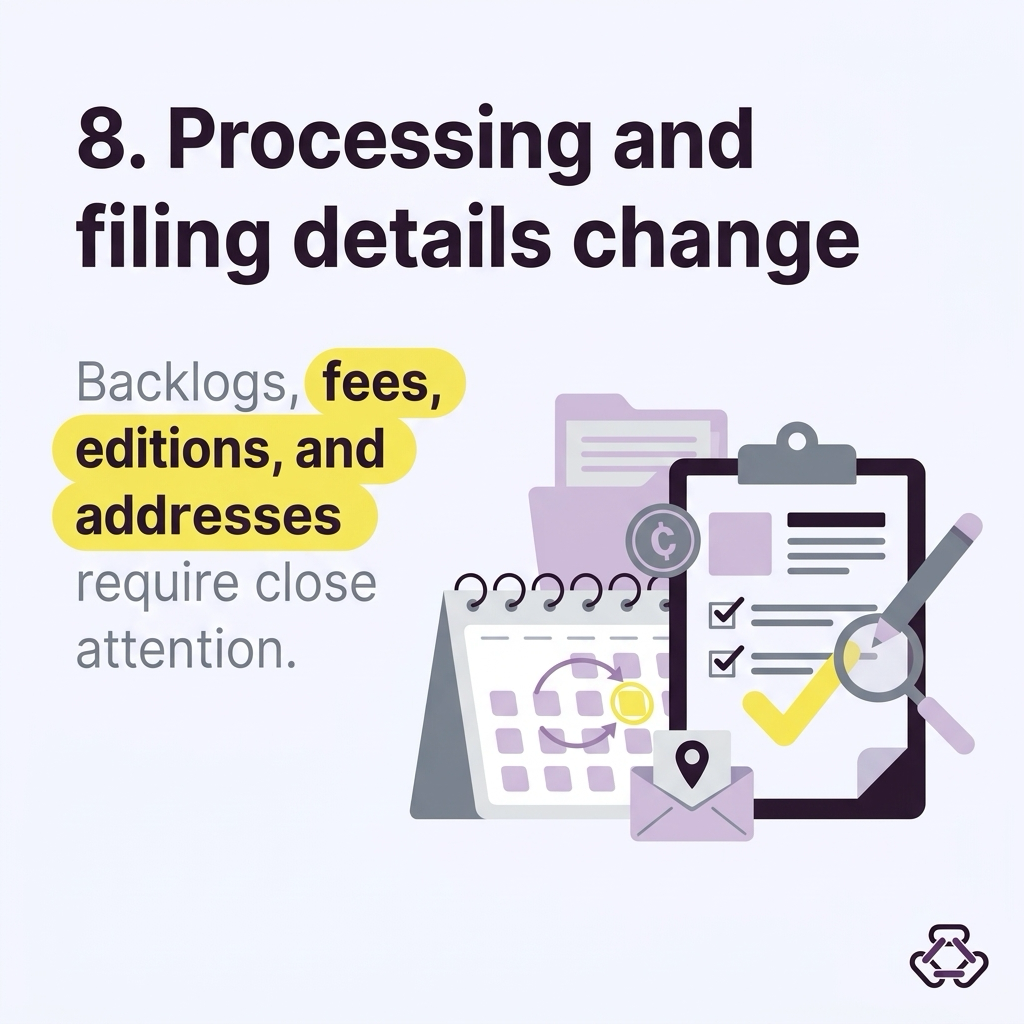
9. Fees, Form Editions, And Filing Details Change More Often Than People Think
A surprising number of immigration filings run into trouble over logistics rather than legal merits. USCIS regularly updates form editions, fee schedules, filing addresses, and lockbox instructions.
The current USCIS Fee Schedule lists the filing fee for Form I-601 as $1,050 and the filing fee for Form I-601A as $795, as reflected in the 2025 edition of Form G-1055. USCIS also warns on both the I-601 page and the I-601A page that applicants should verify they are using the current acceptable edition of the form and follow the correct filing instructions. On the direct filing addresses page for Form I-601, USCIS notes that the filing location depends on the immigration benefit being sought, and that some address rules have changed over time.
This may sound small, but rejected filings can create delay, extra mailing costs, and lost time. In waiver practice, administrative accuracy is often part of case strategy.
10. The Right Attorney Fit Often Depends On Documented Experience In Highly Similar Matters
Waiver cases can involve a mix of family history, inadmissibility analysis, hardship evidence, consular processing, and procedural timing. That combination is one reason families often spend a long time looking for legal help and still feel unsure whether the attorney they found has handled highly similar matters before.
Some waiver cases focus heavily on medical hardship. Others turn on unlawful presence calculations, prior misrepresentation findings, or complications involving removal orders. Because of that, “immigration lawyer” by itself may not tell a family very much about fit.
Many people in similar situations look for counsel with documented experience in waiver cases involving similar facts, not just broad immigration practice. If you’re trying to avoid common filing problems, it may also help to review examples of mistakes that often lead to delay, denial, or refiling in waiver matters. Often, the most helpful attorney conversations are the ones grounded in the actual waiver type, the actual inadmissibility ground, and the actual evidence pattern in the family’s case.
Final Thoughts
Waiver cases are often deeply personal, but they are also highly technical. Families may be dealing with separation concerns, medical issues, financial pressure, and years of immigration history at the same time. Understanding the basic structure of the process can make the next steps feel less confusing.
The biggest takeaways are these: not every waiver is the same, unlawful presence is only one possible issue, extreme hardship is a legal standard with specific evidence demands, qualifying-relative rules can reshape the whole case, and timeline assumptions are often too optimistic.
If your family is trying to sort through a waiver case, it may help to connect with an attorney whose experience is based on evidence, based on court records, and tied to highly similar matters. Visit ReferU.AI to get matched with an attorney who has demonstrable experience in cases like yours — for free.
