Table of Contents
- How to Prepare a Waiver Case Around Hardship and Supporting Evidence
- What A Hardship Waiver Case Is Really Trying To Prove
- Step 1: Identify The Correct Waiver And The Correct Qualifying Relative
- Step 2: Build The Case Around Both Possible Hardship Scenarios
- Step 3: Use The Personal Declaration As The Roadmap, Not The Entire Case
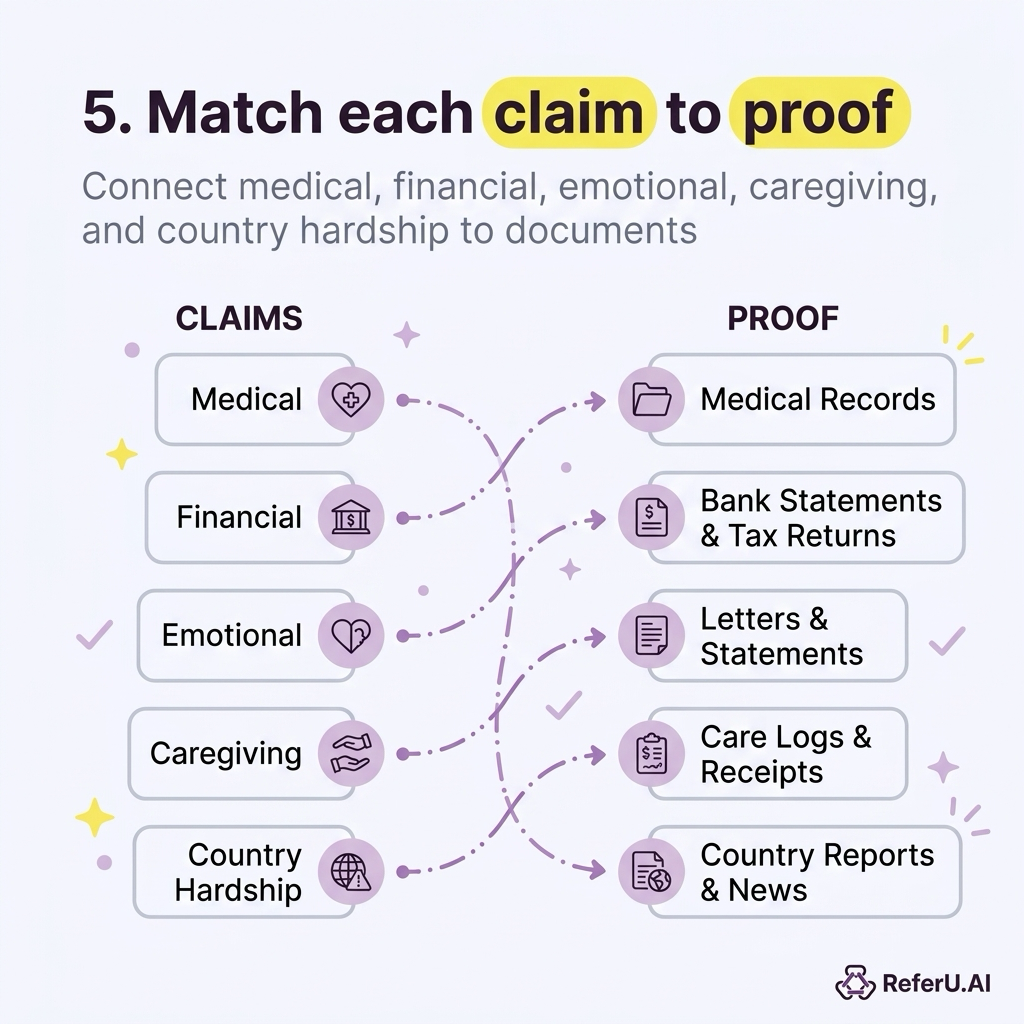
- Step 4: Match Every Hardship Theory To Documents
- Medical Hardship
- Financial Hardship
- Emotional And Psychological Hardship
- Family And Caregiving Hardship
- Country Conditions And Relocation Hardship
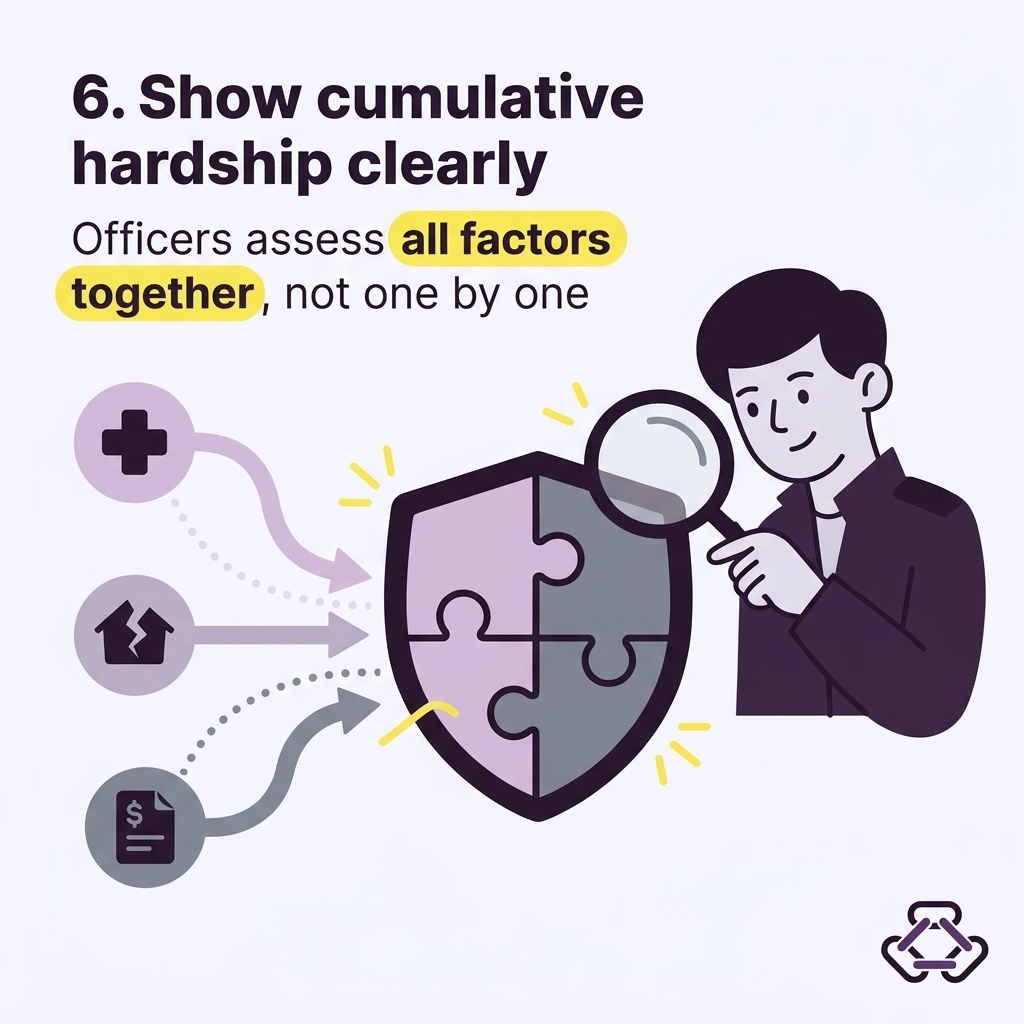
- Step 5: Show Cumulative Hardship, Not Just Individual Problems
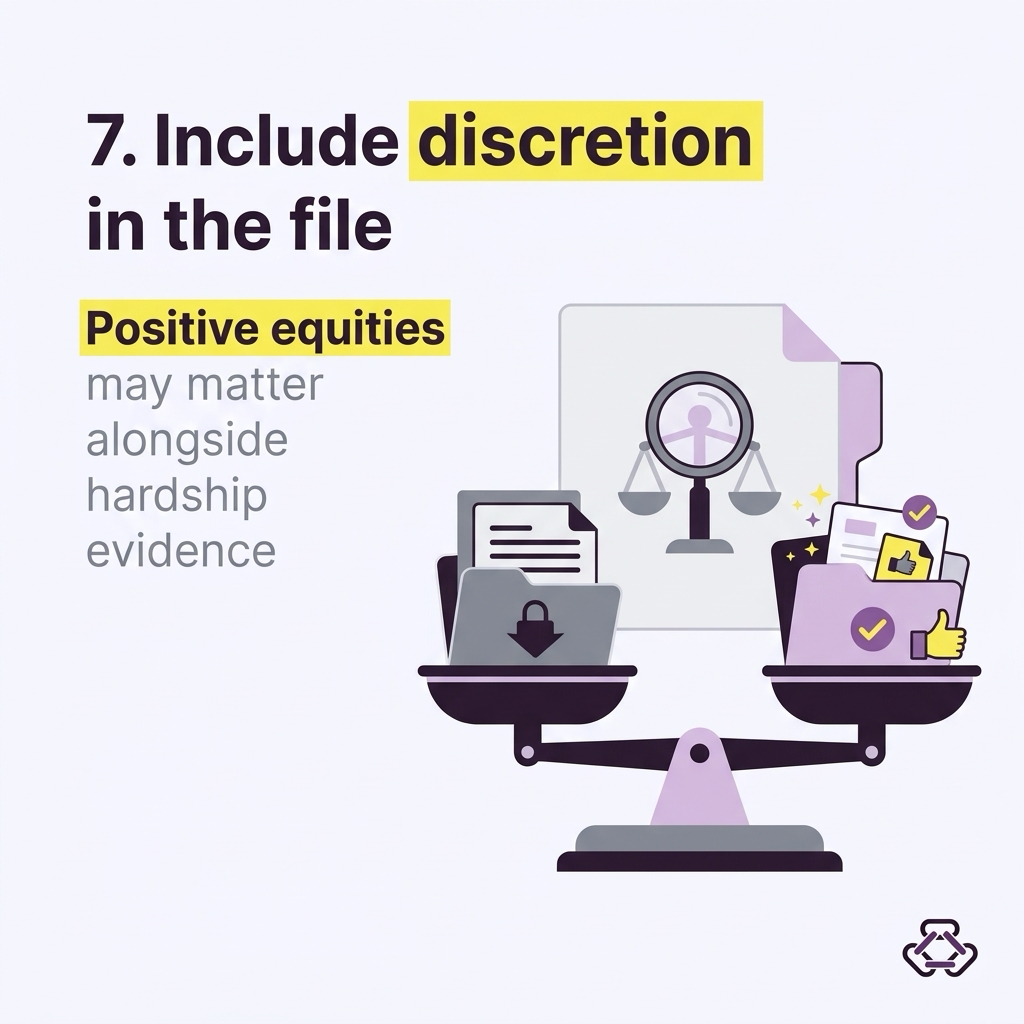
- Step 6: Do Not Ignore Discretion
- Step 7: Organize The Evidence Like A Legal Record, Not A Stack Of Papers
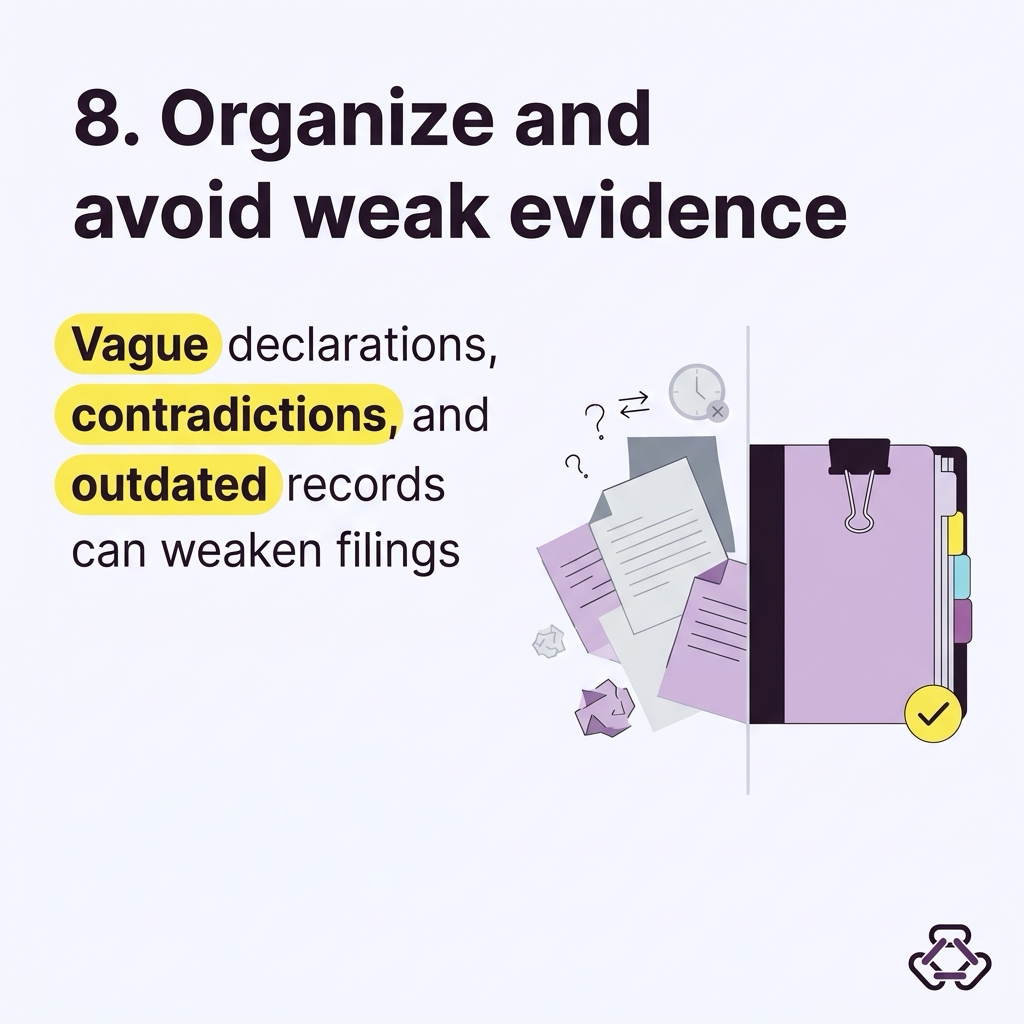
- Step 8: Watch For Common Evidence Problems
- Why Attorney Fit Can Matter So Much In Waiver Cases
- Final Thoughts

Type
Great Grandchild
Status
Approved
Title (YouTube)
Images Failed (Social)
Images Failed (Social)
Do not index
Publish Date (TikTok)
Apr 24, 2027 06:15
Videos Post IDs (Social)
Hashtags (Social)
#LegalAdvice #LegalHelp #Immigration #InadmissibilityWaivers
Caption
Caption X
Cover

OG Image

Alt Image Text
Flat vector illustration of a hardship waiver case with supporting evidence, showing organized documents, family records, and legal preparation for an immigration waiver.
Images


Videos
Publish Date (Social)
Feb 18, 2027 08:30
Scheduled (Social)
Scheduled (Social)
Images Posted (Social)
Images Posted (Social)
Videos Posted (Social)
Videos Posted (Social)
Featured
Created time
Apr 7, 2026 12:02 AM
Sub-item
Authors
CTA Practice Area (Social)
Immigration
TikTok Failed (Social)
TikTok Failed (Social)
Videos Post Links (Social)
TikTok Post Links (Social)
Images Post IDs (Social)
YT Post ID
Video Pending Manual (Social)
TikTok Posted (Social)
TikTok Posted (Social)
TikTok Post IDs (Social)
Video Cover (Social)
Images Post Links (Social)
First Comment (Social)
Videos Failed (Social)
Videos Failed (Social)
YT Embedded
Images Delete (Social)
Videos Delete (Social)
Carousel Video URL (Social)
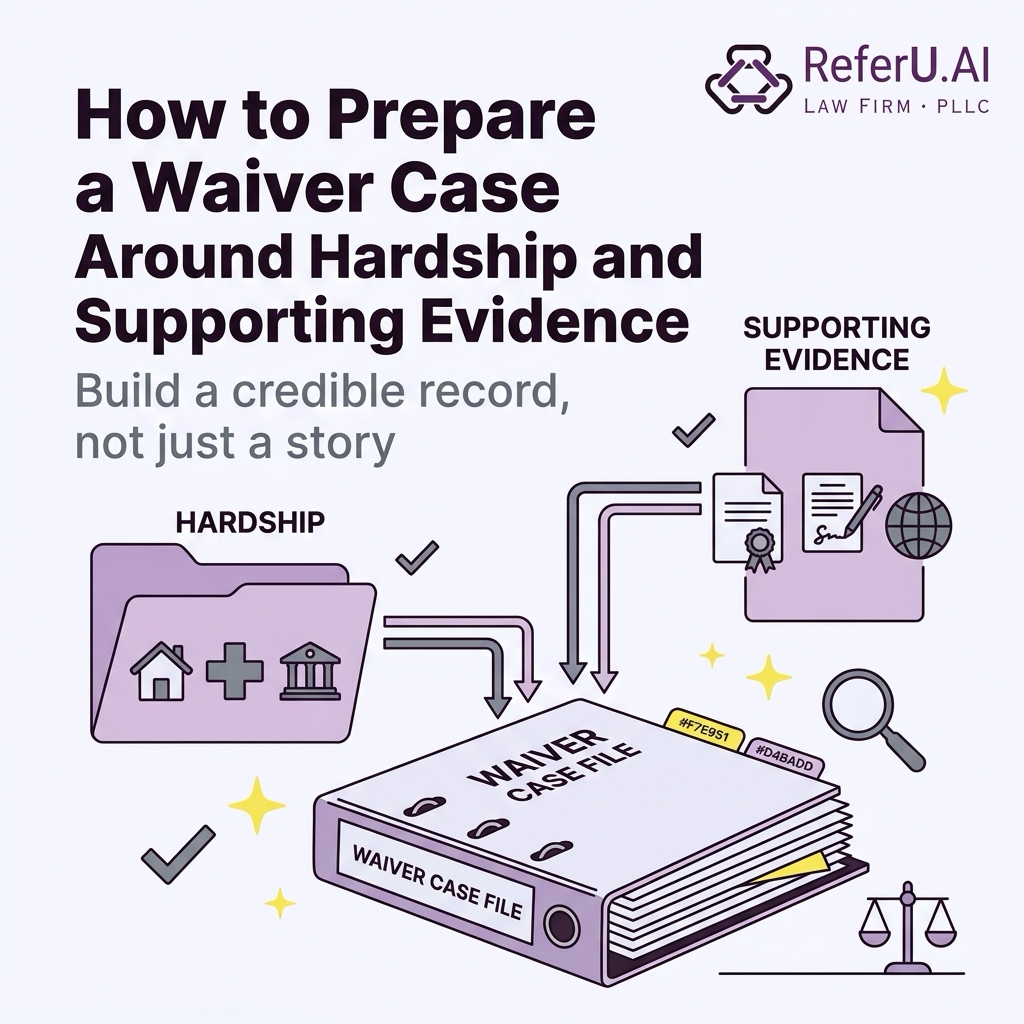
How to Prepare a Waiver Case Around Hardship and Supporting Evidence
Waiver cases often turn on one central question: can the applicant show a level of hardship that goes beyond the ordinary consequences of separation, relocation, or denial? In immigration cases involving inadmissibility, that question is rarely answered by one document or one emotional statement. It is usually answered by a carefully built record.
That is why preparation matters so much. A hardship waiver is not just a form. It is a legal presentation made through declarations, records, timelines, expert materials, and country evidence that work together to tell a credible, evidence-based story. If you are still getting oriented, it may help to start with this broader overview of how waiver strategy fits into unlawful presence and hardship issues.
In this post, you’ll learn how people often prepare a waiver case around hardship, what kinds of supporting evidence tend to matter, how USCIS evaluates these cases, and where an attorney may add value in shaping the record.
Scroll to the bottom for every post in this series.
What A Hardship Waiver Case Is Really Trying To Prove
In many inadmissibility waiver cases, the legal standard is not simply whether separation would be painful. USCIS explains that some degree of hardship exists in most cases, so the issue is whether the evidence shows “extreme hardship” to a qualifying relative under the relevant statute and waiver type. The agency’s waiver guidance also explains that officers review the totality of the evidence and consider hardship both in a separation scenario and, when relevant, a relocation scenario. See the USCIS Policy Manual discussion of extreme hardship determinations and extreme hardship considerations and factors. USCIS also states on its Form I-601 page that applicants pursuing a waiver requiring extreme hardship are expected to submit evidence of the family relationship and evidence showing that denial of admission would result in extreme hardship to the qualifying relative.
That framework is important because it changes how a case is built. A persuasive filing often does not rely on general statements like “our family will suffer” or “this will be hard on us.” Instead, the case usually works better when it connects specific facts to specific legal hardship factors with documents that support those facts.
Step 1: Identify The Correct Waiver And The Correct Qualifying Relative
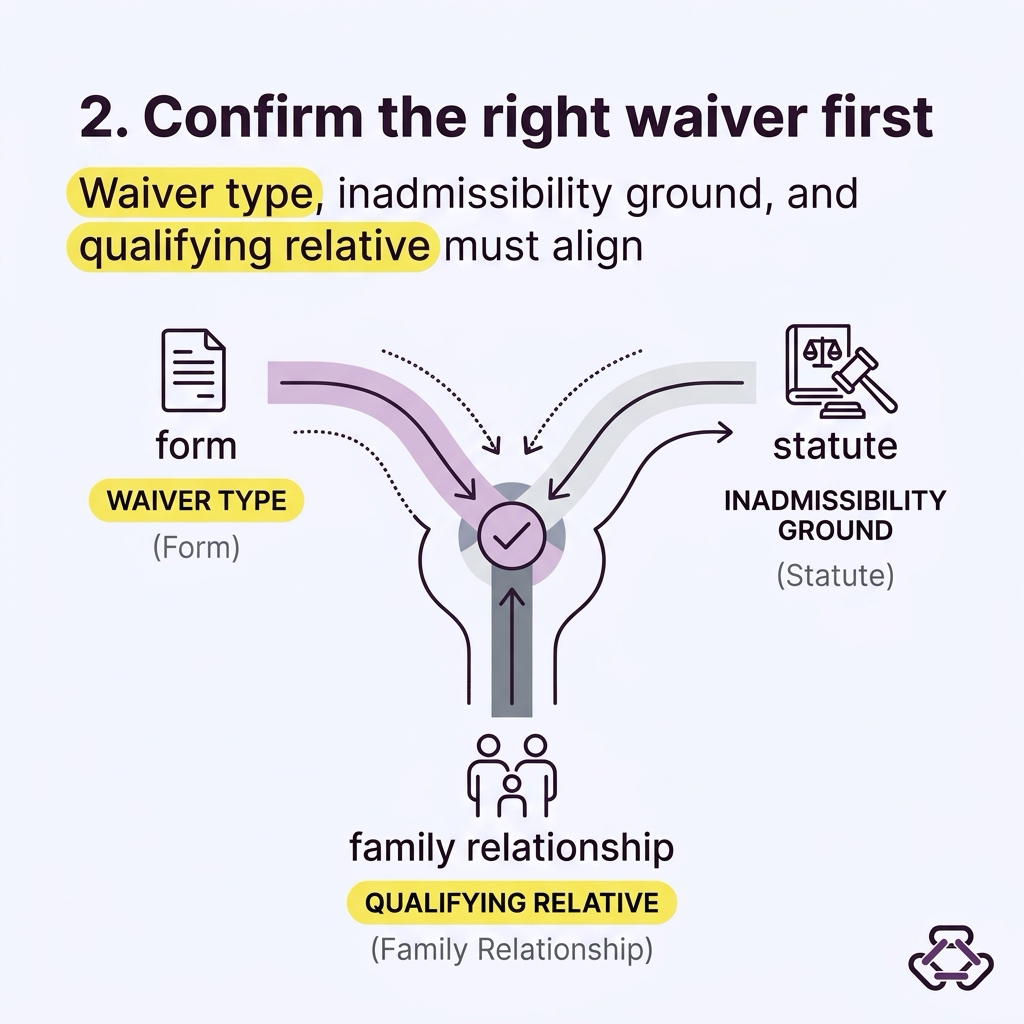
A waiver case can go off track early if the filing starts with the wrong legal assumption about eligibility. USCIS notes that different waiver forms and different grounds of inadmissibility have different requirements, and not every relative counts as a qualifying relative for every waiver. The Form I-601 instructions, the Form I-601 page, and the USCIS Policy Manual chapter on qualifying relatives all reflect that point.
For example, for certain unlawful presence waivers, the qualifying relative may be limited to a U.S. citizen or lawful permanent resident spouse or parent, depending on the waiver type. USCIS states on its Form I-601A page and in the Form I-601A instructions that provisional unlawful presence waivers focus on extreme hardship to a qualifying relative, not simply hardship to the applicant.
That means one of the first tasks in preparing the case is figuring out:
- what inadmissibility ground is involved,
- whether that ground is waivable,
- which waiver form applies,
- who qualifies under the statute, and
- whether the evidence is being organized around the right person.
A lot of waiver filings become weaker when the emotional center of the case is understandable, but legally misaligned. For example, a filing may focus heavily on hardship to children, siblings, or the applicant personally when the law is asking for evidence centered on a spouse or parent. USCIS does allow hardship to others to matter indirectly when it affects the qualifying relative, but the agency’s policy makes clear that the qualifying relative remains central to the analysis in non-VAWA cases. The USCIS Policy Manual addresses that distinction directly.
Step 2: Build The Case Around Both Possible Hardship Scenarios
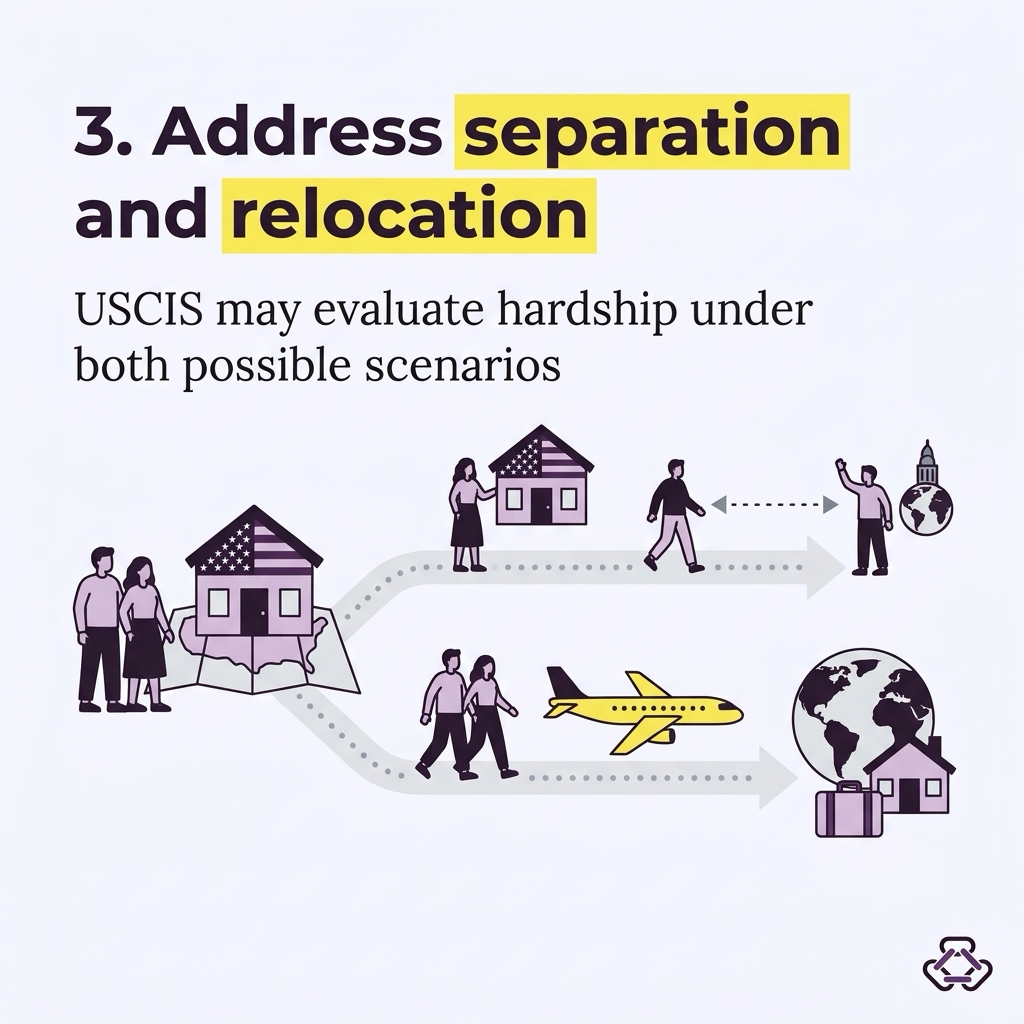
USCIS guidance commonly analyzes hardship in two possible worlds:
- Separation — the qualifying relative remains in the United States without the applicant
- Relocation — the qualifying relative relocates abroad to live with the applicant
The USCIS Policy Manual chapter on extreme hardship considerations and factors explains that officers may consider each scenario and then assess whether any factor alone, or all factors cumulatively, rise to the level of extreme hardship.
This is one of the most overlooked parts of waiver preparation.
Many families understandably write from only one perspective: “We cannot live apart.” But if the government may ask whether the qualifying relative could relocate instead, a filing often becomes stronger when it explains why each scenario creates hardship. That does not mean every case has equal arguments in both directions. It means the case record often benefits from addressing both, especially when relocation is a realistic question.
For unlawful presence issues, the underlying inadmissibility rule itself can be technical. The Department of State’s Foreign Affairs Manual on INA 212(a)(9) outlines the unlawful presence bars and how those bars can be triggered, while USCIS provides separate guidance for provisional unlawful presence waivers. In practical terms, that legal backdrop often shapes the hardship story because the family is trying to document what happens if the applicant cannot return for years.
Step 3: Use The Personal Declaration As The Roadmap, Not The Entire Case
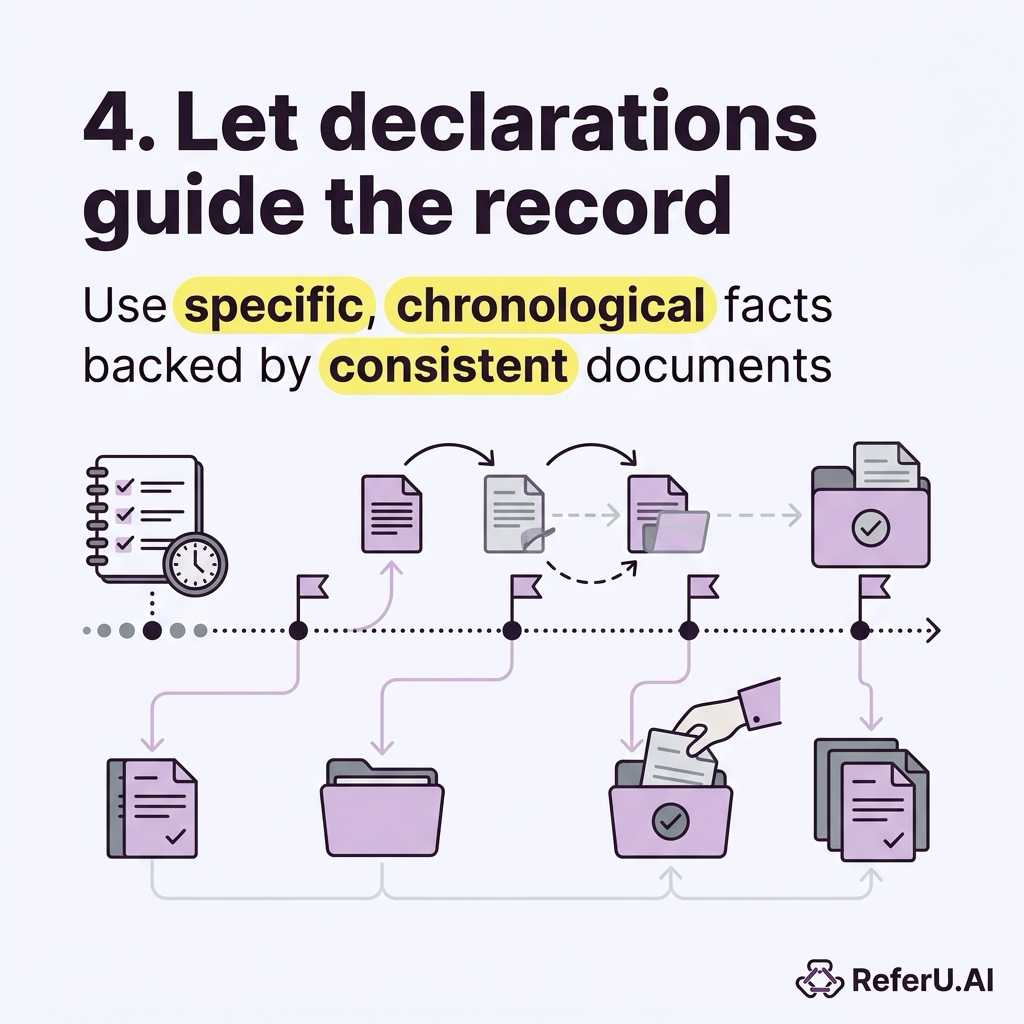
A strong declaration often matters a great deal, but it usually works best as the organizing narrative, not the only evidence.
In many waiver cases, attorneys prepare one or more declarations that cover:
- the family’s history,
- the qualifying relative’s role in the household,
- medical or emotional issues,
- financial obligations,
- caregiving responsibilities,
- educational disruption,
- country-specific concerns,
- prior immigration history, and
- what separation or relocation would realistically look like.
USCIS notes that applicants may document hardship through a personal statement and other evidence, including country condition reports and information from public or private sources, in its Policy Manual discussion of documentation and evidence. That language is useful because it reflects how the agency expects a hardship claim to be substantiated: the statement introduces the facts, and the documents help prove them.
A declaration often becomes more persuasive when it is:
- chronological,
- specific,
- consistent with the records,
- realistic rather than exaggerated, and
- detailed about daily life.
Instead of saying “my spouse depends on me,” many practitioners try to show how that dependence plays out: school pickup schedules, medication management, mortgage payments, elder-care tasks, transportation, language barriers, or health-related support. The more the declaration sounds like real life, the easier it may be for an adjudicator to connect the facts to hardship.
Step 4: Match Every Hardship Theory To Documents
One useful way to organize a waiver case is to think in columns:
- Hardship claim
- Why it matters legally
- Documents that prove it
That structure can help avoid a common problem: claims that sound compelling but are not well documented.
Medical Hardship
USCIS lists health as a major hardship factor and discusses issues such as ongoing treatment, medication, disability, psychological conditions, and the availability or quality of care in the country of relocation in the Policy Manual.
Supporting documents may include:
- physician letters,
- diagnoses,
- treatment records,
- medication lists,
- health insurance records,
- therapy records when appropriate,
- disability documentation, and
- country reports showing limited access to treatment abroad.
The strongest medical evidence usually explains functional impact, not just the name of a diagnosis. In other words, the record often becomes more useful when it shows how the condition affects daily living, work, mobility, parenting, or safety.
Financial Hardship
Economic difficulty alone may not always carry a waiver case, but it can become important when paired with other factors. USCIS considers financial considerations as part of the hardship analysis in its waiver guidance, including loss of employment, decline in living standards, debt obligations, and the practical consequences of relocation or separation in the Policy Manual.
Useful records often include:
- tax returns,
- pay stubs,
- proof of employment,
- rent or mortgage records,
- utility bills,
- childcare costs,
- medical bills,
- debt statements,
- proof of dependent support, and
- budgets showing the household’s before-and-after reality.
A waiver package often becomes more credible when it avoids broad claims like “we will not survive financially” and instead shows specific numbers and specific consequences.
Emotional And Psychological Hardship
Separation often causes emotional pain, but waiver cases are usually stronger when that harm is described with detail and, where possible, corroborated. USCIS recognizes mental health concerns as potentially relevant hardship factors in the Policy Manual.
Evidence may include:
- psychological evaluations,
- counseling records,
- therapist letters,
- declarations from relatives or community members,
- school reports involving affected children when relevant to the qualifying relative’s hardship, and
- evidence of prior trauma that separation or relocation may aggravate.
These filings tend to work better when they avoid vague language. “Depressed and anxious” is a start; records explaining panic symptoms, trauma history, sleep loss, inability to function, caregiving strain, or suicidal ideation history are often more concrete.
Family And Caregiving Hardship
Caregiving can be one of the most persuasive parts of a hardship case when it is documented carefully. USCIS commonly considers family ties and the impact on caregiving relationships in evaluating hardship factors in the Policy Manual.
Evidence here may include:
- birth certificates,
- marriage certificates,
- proof of cohabitation,
- school records,
- schedules,
- affidavits from family members,
- records showing care for elderly parents or disabled relatives, and
- proof that the qualifying relative would carry those burdens alone if separated.
This category often matters because it turns abstract hardship into practical hardship: who drives, who cooks, who supervises medication, who handles therapy appointments, who interprets English, who provides child supervision while the qualifying relative works.
Country Conditions And Relocation Hardship
If relocation is in play, country evidence can be central. USCIS expressly notes that country conditions may be used to support hardship claims in the Policy Manual on documentation and evidence.
Depending on the facts, useful sources may include:
- U.S. Department of State country materials,
- human rights reports,
- public health data,
- evidence about crime or instability,
- documentation on school access,
- labor market information,
- reports on discrimination,
- and records related to medical treatment availability.
Country evidence tends to be more persuasive when it is tied to the qualifying relative’s actual circumstances. General evidence about hardship in a country may not do much by itself. Evidence about lack of a specific medication, conditions affecting a child with special needs, or barriers facing a caregiver with limited language ability often has more force.
Step 5: Show Cumulative Hardship, Not Just Individual Problems
One of the most important points in USCIS waiver guidance is that even if no single factor is enough by itself, the officer considers all factors in the aggregate. USCIS says this directly in its extreme hardship guidance, and the agency’s broader chapter on extreme hardship policy explains that ordinary hardship exists in many waiver cases, so the analysis is about whether the overall circumstances rise beyond that baseline.
This cumulative approach is where many cases are won or lost.
A filing may have:
- moderate medical issues,
- serious financial strain,
- a child with educational needs,
- aging parents who rely on the qualifying relative,
- unsafe or unstable conditions in the destination country,
- and a long-standing household dependence on the applicant.
Each fact alone may look ordinary. Together, they may tell a very different story.
The Board of Immigration Appeals has also long recognized a multi-factor approach in hardship cases. In Matter of Cervantes-Gonzalez, the BIA discussed factors that may be relevant in evaluating extreme hardship, including family ties, country conditions, financial impact, and health conditions. That case is still frequently cited in waiver analysis and appears in USCIS’s own hardship guidance as a foundational authority.
Step 6: Do Not Ignore Discretion
Even where the statutory hardship standard is met, many waivers still involve discretion. USCIS explains in its waiver policy materials that adjudicators weigh favorable and unfavorable factors, and in some contexts the agency cites Matter of Mendez-Moralez for the balancing framework used in discretionary waiver decisions.
That means hardship evidence may be necessary, but it may not be the whole file.
Depending on the case, discretionary evidence may include:
- rehabilitation records,
- evidence of community involvement,
- tax compliance,
- proof of long-term family support,
- records of consistent work history,
- evidence addressing past immigration violations with candor,
- and documentation reflecting good moral character or positive equities.
This part of the case often benefits from honest framing. A waiver package usually gains credibility when it acknowledges difficult facts directly and then supports the case with documentation rather than minimizing the record.
Step 7: Organize The Evidence Like A Legal Record, Not A Stack Of Papers
USCIS does not award points for volume alone. In many cases, organization affects how persuasive the filing feels.
A well-prepared waiver packet often includes:
- a legal brief or cover letter,
- a table of contents,
- tabs or exhibit labels,
- a declaration index,
- a chronology,
- evidence grouped by hardship theme,
- translations where required,
- and concise explanations linking each exhibit to a claim.
USCIS reminds applicants in its Form I-601 page and related filing instructions to submit the evidence that establishes eligibility and supports extreme hardship. That may sound simple, but in practice the presentation can shape how clearly the adjudicator sees the case.
A cluttered record can hide strong facts. A structured record helps those facts stand out.
Step 8: Watch For Common Evidence Problems
A lot of waiver cases are weakened by issues that have less to do with the family’s hardship and more to do with proof quality.
Common problems include:
- declarations that are too vague,
- medical letters without diagnoses or treatment details,
- unsupported financial claims,
- outdated country reports,
- untranslated foreign-language documents,
- records that contradict the timeline,
- evidence focused on the wrong relative,
- and packets that discuss hardship but not discretion.
USCIS’s form pages and policy guidance repeatedly emphasize sufficient evidence and substantiation, not just assertion. See the Form I-601 page, the Form I-601A page, and the Policy Manual chapter on extreme hardship determinations.
If you want more context on case-building mistakes, it can be helpful to compare your materials against common waiver filing problems such as weak documentation, incomplete narratives, and legal mismatch. That kind of review often catches issues before they become delays, RFEs, or denials.
Why Attorney Fit Can Matter So Much In Waiver Cases
Waiver cases often live or die in the details: the right legal theory, the right qualifying relative, the right hardship framework, and the right evidence for the right facts. Two lawyers may both handle immigration matters, but that does not always mean they have the same documented experience with hardship-centered waiver filings, unlawful presence issues, consular processing complications, or discretionary presentation.
That is where attorney fit becomes especially important. Many families are not just looking for any immigration lawyer. They are looking for someone with relevant, documented experience in highly similar matters.
ReferU.AI approaches that problem differently. Instead of relying on advertising or generic directory placement, ReferU.AI matches users with attorneys based on objective criteria, including demonstrable experience, case similarity, and court-record-based evidence of relevant work in comparable matters. For a waiver case built around hardship and supporting evidence, that kind of fit can be especially meaningful because the work is so fact-specific.
Final Thoughts
Preparing a waiver case around hardship is usually about more than telling a painful story. It is about translating lived reality into a legal record that USCIS can evaluate under the statute, the agency’s policy framework, and discretionary standards. The strongest cases often connect the dots clearly: who the qualifying relative is, what the hardship looks like in separation and relocation scenarios, how the hardship is documented, and why the total record supports relief.
For many families, that process feels overwhelming at first. But when the facts are developed carefully and the evidence is organized with purpose, the case often becomes much clearer.
Visit ReferU.AI to get matched with an attorney who has demonstrable experience in cases like yours — for free.
