Table of Contents
- 7 Waiver Errors That Lead to Delay, Denial, or Refiling
- Why Waiver Cases Go Off Track
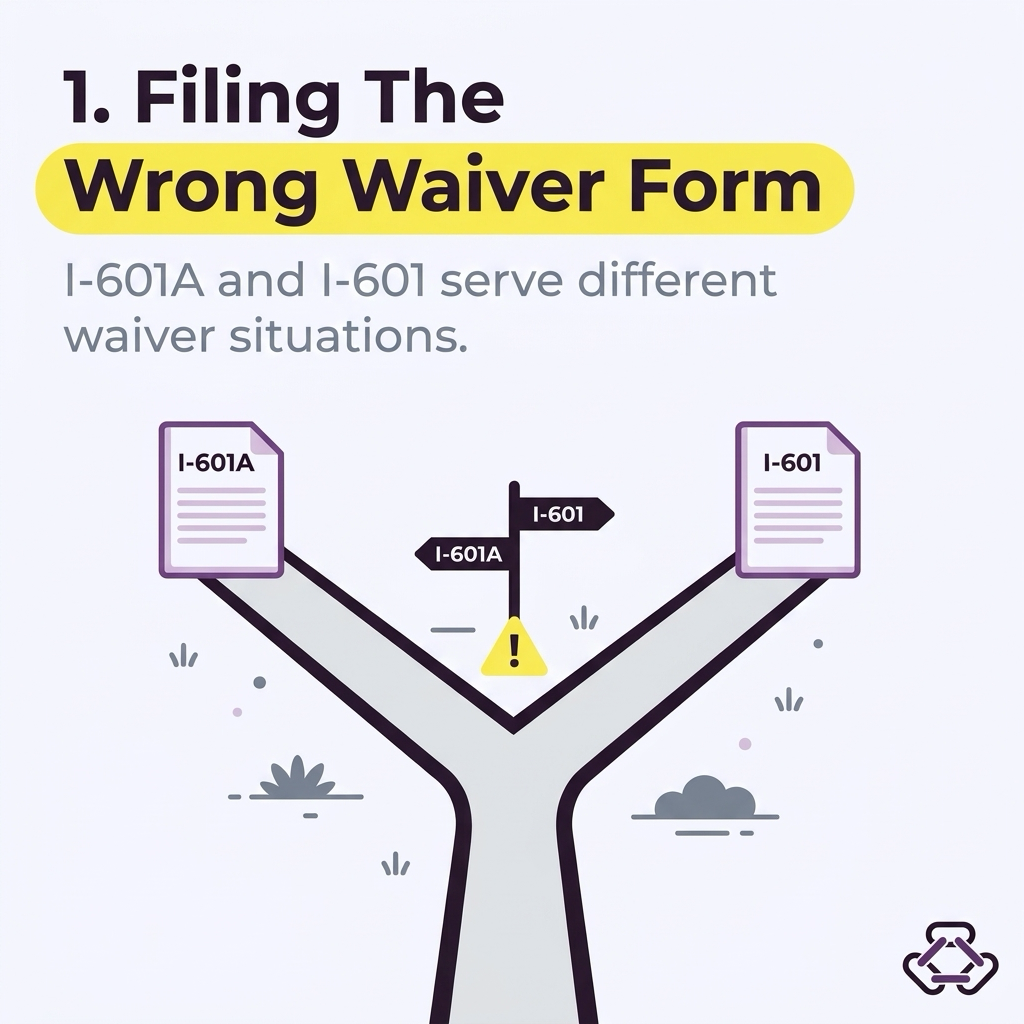
- 1. Filing The Wrong Waiver Form
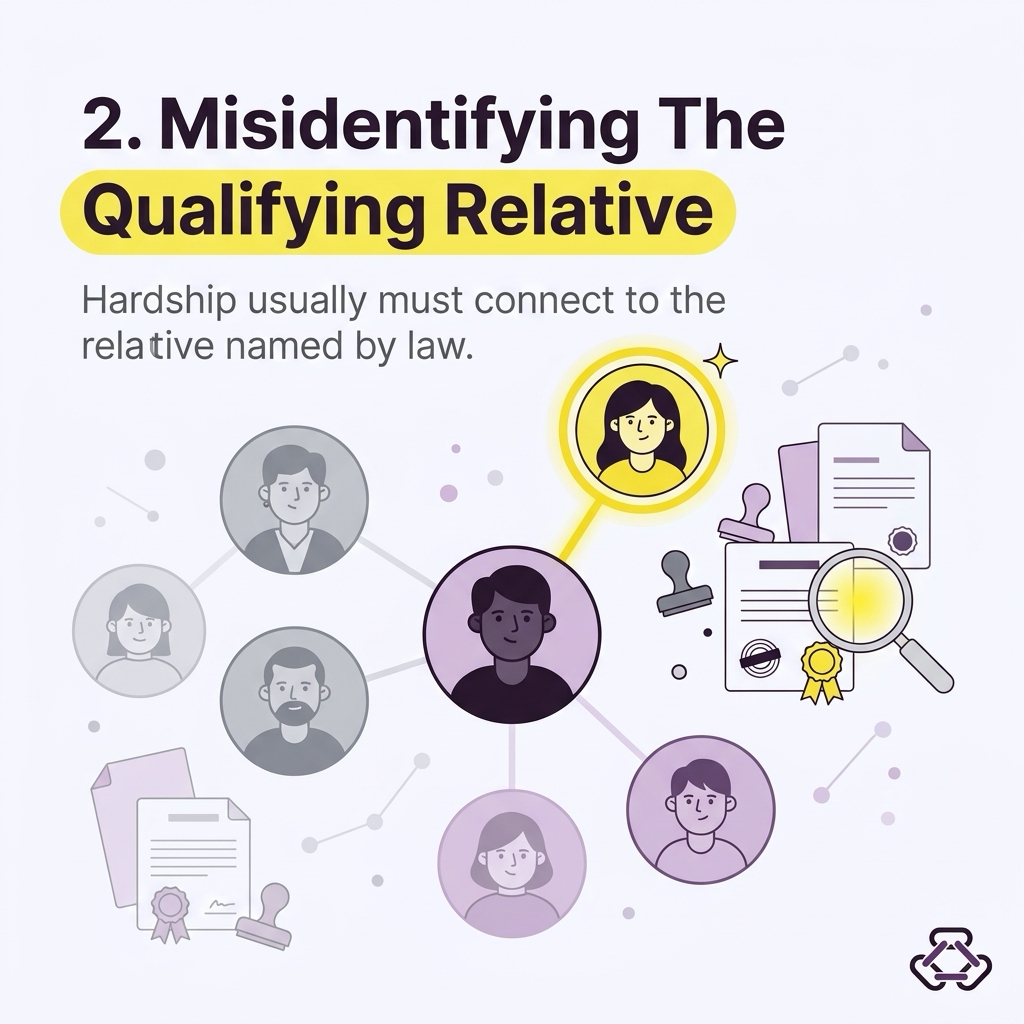
- 2. Misidentifying The Qualifying Relative
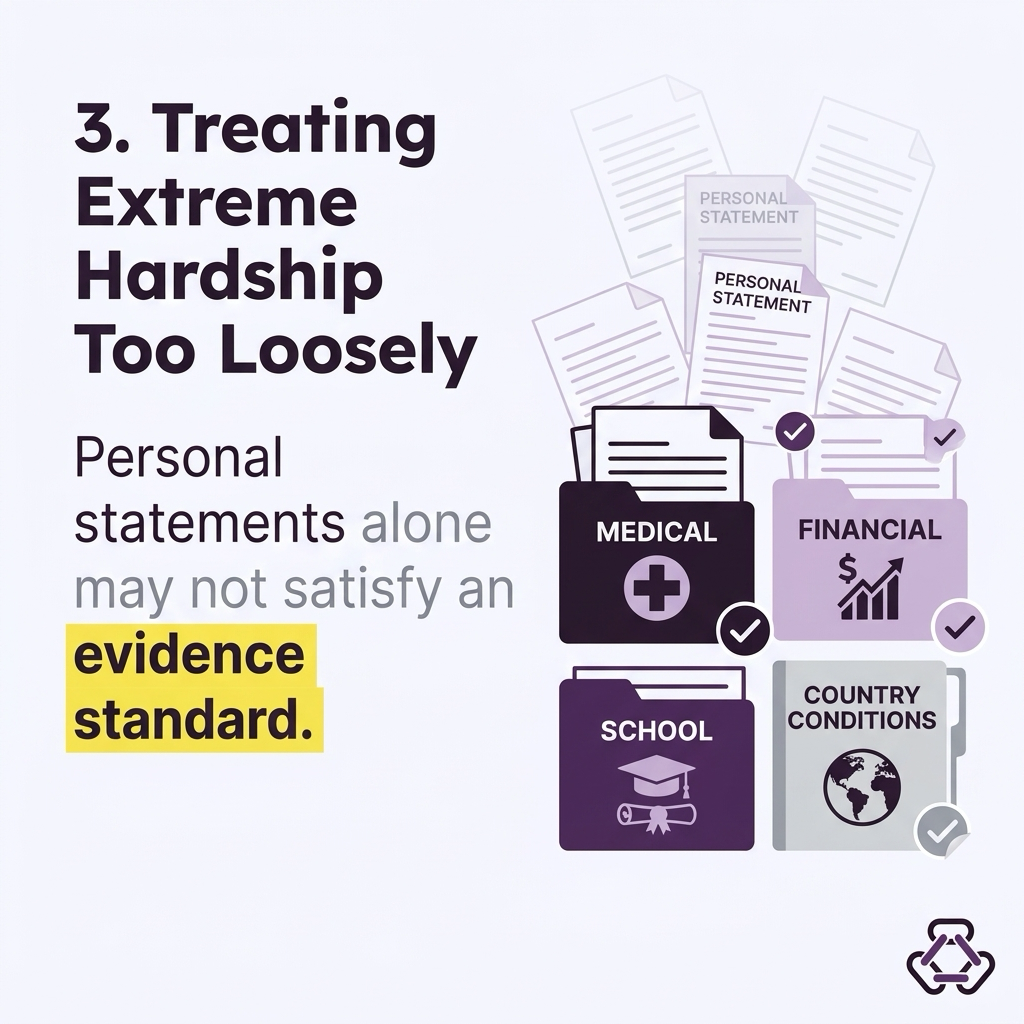
- 3. Treating “Extreme Hardship” Like A Personal Statement Instead Of An Evidence Standard
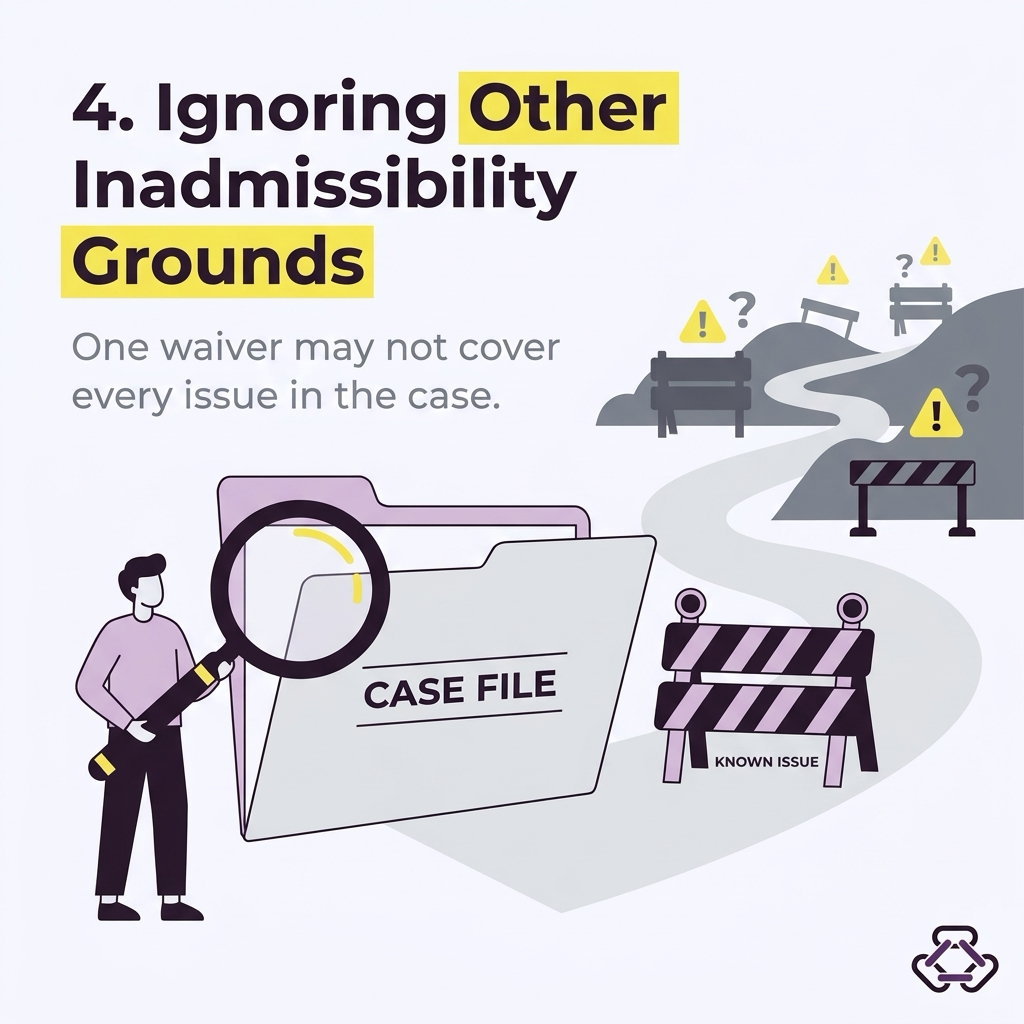
- 4. Ignoring Other Inadmissibility Grounds
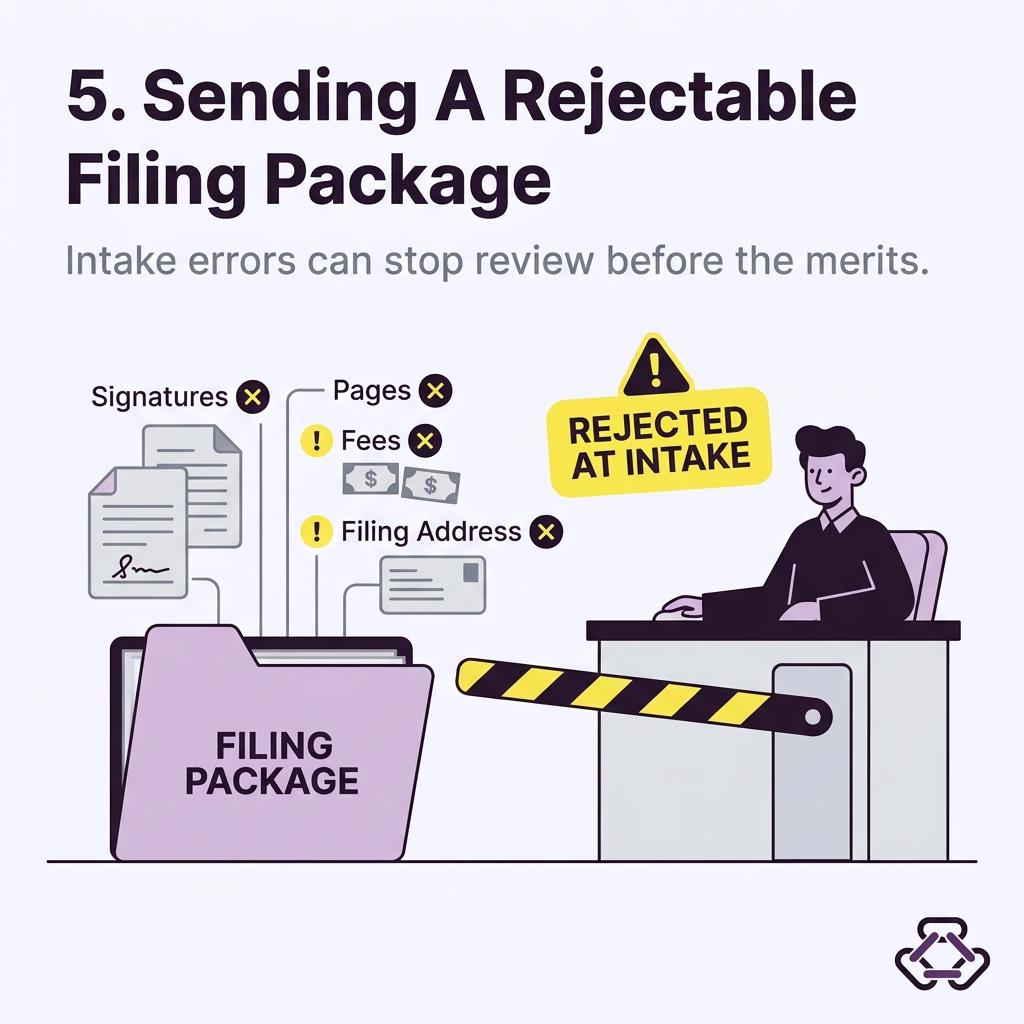
- 5. Sending A Filing Package That Gets Rejected Before The Merits Are Even Reviewed
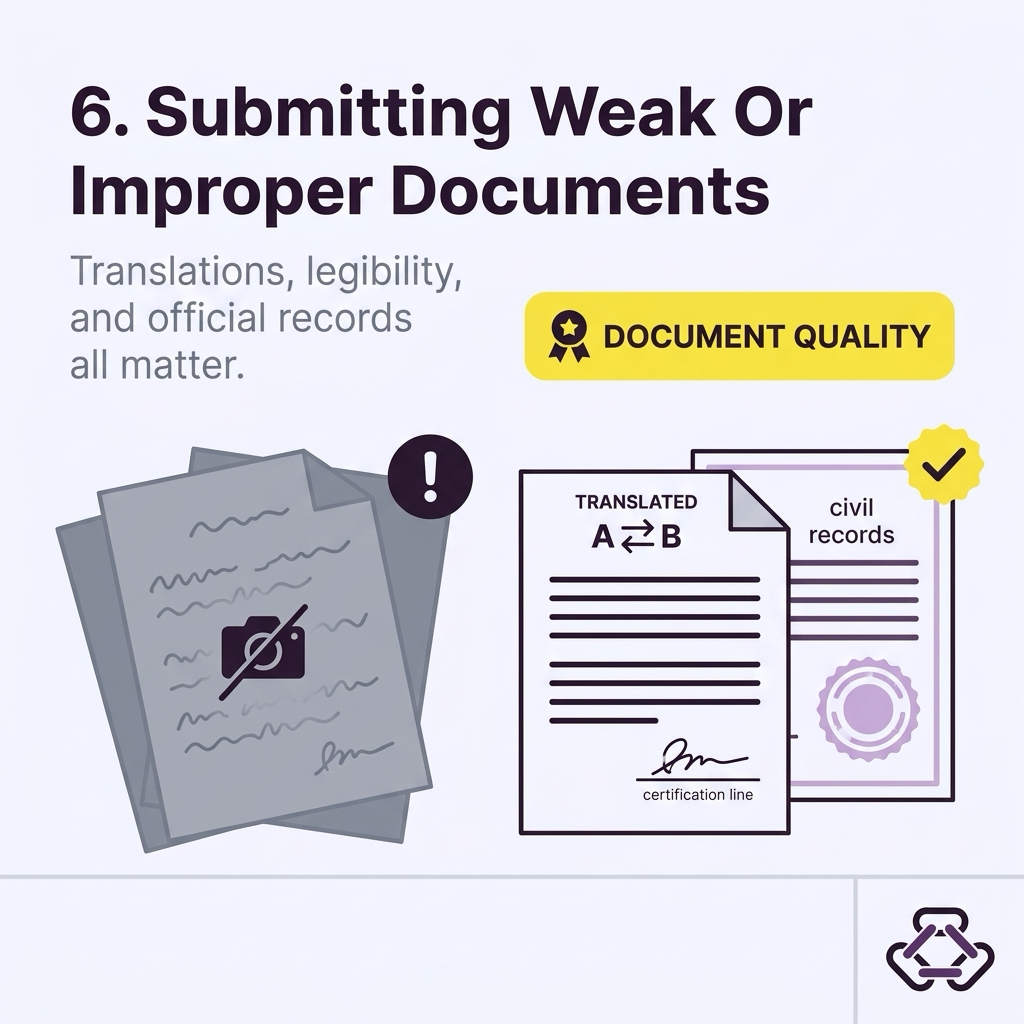
- 6. Submitting Weak, Incomplete, Or Improperly Prepared Documents
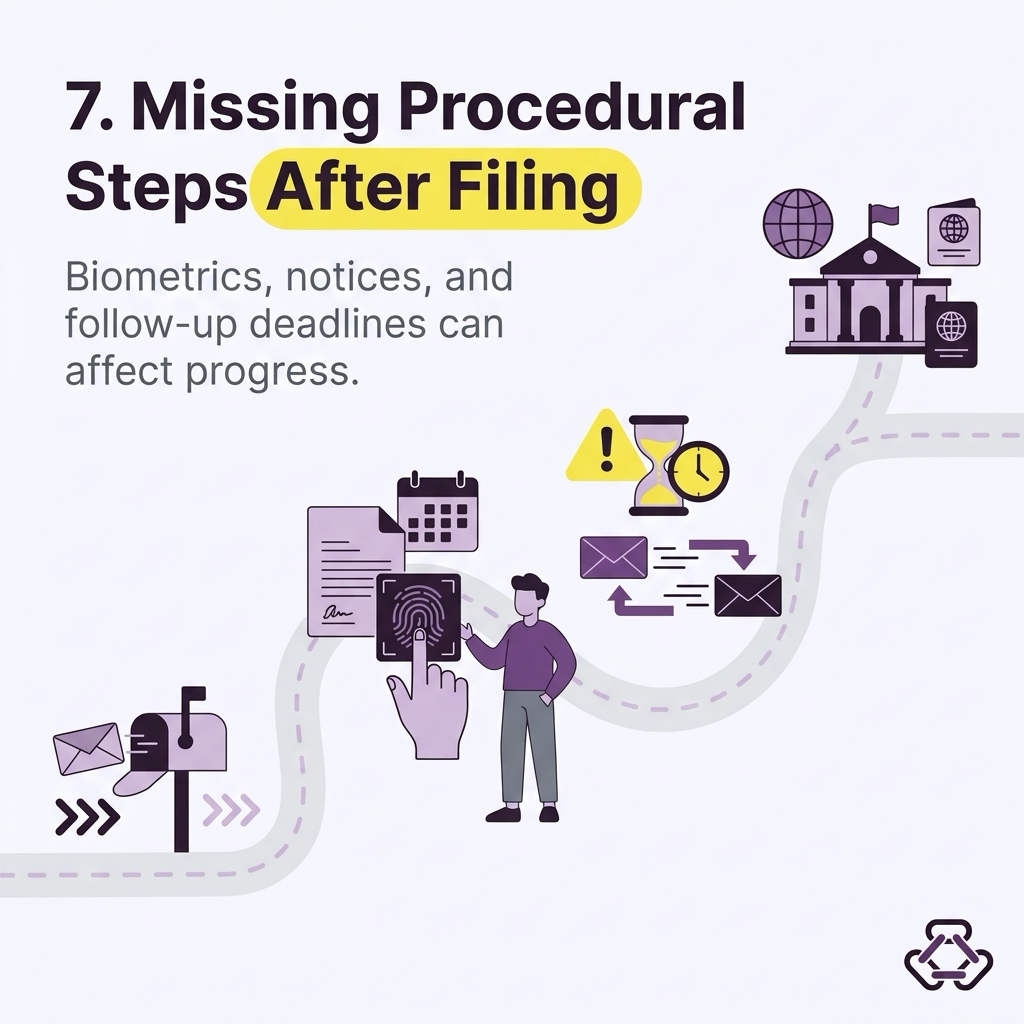
- 7. Missing Procedural Steps After Filing
- What Families Often Overlook About Delay, Denial, And Refiling
- Final Thoughts On Avoiding Common Waiver Mistakes

Type
Great Grandchild
Status
Approved
Title (YouTube)
Images Failed (Social)
Images Failed (Social)
Do not index
Publish Date (TikTok)
Apr 23, 2027 15:15
Videos Post IDs (Social)
Hashtags (Social)
#LegalAdvice #LegalHelp #Immigration #InadmissibilityWaivers
Caption
Caption X
Cover

OG Image

Alt Image Text
Flat vector illustration of waiver errors causing delay, denial, or refiling in an immigration waiver case, showing a family reviewing documents, highlighted filing mistakes, and branching outcomes.
Images

Videos
Publish Date (Social)
Feb 18, 2027 07:30
Scheduled (Social)
Scheduled (Social)
Images Posted (Social)
Images Posted (Social)
Videos Posted (Social)
Videos Posted (Social)
Featured
Created time
Apr 7, 2026 12:02 AM
Sub-item
Authors
CTA Practice Area (Social)
Immigration
TikTok Failed (Social)
TikTok Failed (Social)
Videos Post Links (Social)
TikTok Post Links (Social)
Images Post IDs (Social)
YT Post ID
Video Pending Manual (Social)
TikTok Posted (Social)
TikTok Posted (Social)
TikTok Post IDs (Social)
Video Cover (Social)
Images Post Links (Social)
First Comment (Social)
Videos Failed (Social)
Videos Failed (Social)
YT Embedded
Images Delete (Social)
Videos Delete (Social)
Carousel Video URL (Social)
7 Waiver Errors That Lead to Delay, Denial, or Refiling
Filing an immigration waiver case can feel like one of the most stressful parts of the process. Many families are already dealing with separation, missed timelines, confusing forms, and the fear that one avoidable mistake could send the case backward.
That concern is not misplaced. Waiver filings often involve strict form requirements, detailed evidence, and legal standards that are broader than many people expect. In general terms, delays and denials do not always happen because a person is ineligible. They often happen because the filing strategy, evidence, or form selection does not line up with how USCIS and the State Department actually evaluate waiver cases.
In this post you’ll learn about 7 common waiver errors that can lead to delay, denial, or the expense of refiling, plus what those errors often look like in real cases. If you want broader background before diving into these filing mistakes, it may help to start with this overview of how inadmissibility waivers work and where hardship fits into the strategy.
Scroll to the bottom for every post in this series.
Why Waiver Cases Go Off Track
A waiver case is rarely just “fill out the form and explain the situation.” USCIS evaluates the specific ground of inadmissibility, the correct waiver vehicle, the required qualifying relative if one is required, and the supporting evidence. For many waivers, officers also review hardship claims in the aggregate rather than in isolation, meaning a case can be weakened when the filing treats each problem as a stand-alone issue instead of showing the full picture of family, medical, financial, and country-condition impacts. USCIS explains these standards in its waiver policy manual and extreme hardship guidance.
For unlawful presence cases specifically, USCIS notes that Form I-601A is only for certain applicants seeking a provisional waiver of unlawful presence before departing the United States, and approval does not itself grant status, work authorization, or a visa. The applicant still has to leave for consular processing, and other inadmissibility issues can still surface later at the visa interview. That is one reason case screening matters so much at the front end. See USCIS’s I-601A page and provisional unlawful presence waiver guidance.
1. Filing The Wrong Waiver Form
One of the most common problems is using Form I-601A when the person may actually require Form I-601, or assuming one waiver covers every inadmissibility issue in the case.
That mix-up matters because the two forms serve different purposes. USCIS states that Form I-601A is for certain applicants seeking a provisional waiver of the unlawful presence ground under INA 212(a)(9)(B) before leaving the United States for consular processing. By contrast, Form I-601 is the broader application used for certain waivers of inadmissibility after a qualifying inadmissibility determination, depending on the ground involved and the immigration benefit sought. USCIS lays that out on its Form I-601 page and Form I-601A page.
This is where many families get caught off guard. A person may focus only on unlawful presence, file an I-601A, and later learn at the consular interview that there is also a misrepresentation issue, prior removal issue, or another inadmissibility ground that the provisional waiver never addressed. The State Department’s Foreign Affairs Manual notes that immigrant visa waiver processing depends on the specific inadmissibility ground involved, and not every ground is waivable in the same way or at the same stage of the case through the FAM’s immigrant visa waiver guidance.
In practical terms, this error often leads to a denial, post-interview surprise, or a second filing cycle. For readers trying to sort out why unlawful presence changes the whole approach, this companion discussion on why unlawful presence can reshape waiver strategy would naturally fit alongside the analysis here.
2. Misidentifying The Qualifying Relative
Another recurring mistake is building the hardship section around the wrong person.
USCIS’s waiver guidance explains that, for many waivers requiring extreme hardship, the applicant has to show hardship to a qualifying relative identified by the statute. Depending on the waiver, that may be a U.S. citizen or lawful permanent resident spouse or parent, and in some waiver types it may also include a son or daughter. USCIS also explains that hardship to the applicant alone, or to a non-qualifying relative alone, does not satisfy the extreme-hardship requirement unless the law for that specific waiver says otherwise. Those effects can still matter indirectly if they create hardship for the qualifying relative. That framework appears in USCIS’s qualifying relative guidance and purpose-and-background chapter for waivers.
This mistake often shows up like this:
- the packet focuses almost entirely on hardship to U.S. citizen children when the waiver requires hardship to a spouse or parent;
- the narrative describes the applicant’s own medical or financial hardship without tying it back to the qualifying relative;
- the evidence proves the relationship informally, but not with the primary documents USCIS expects.
USCIS specifically notes that applicants generally should include primary relationship evidence such as marriage certificates, birth certificates, adoption papers, paternity orders, child-support orders, or other official records with the waiver filing in its policy manual discussion of qualifying relatives.
A waiver case can still include children’s medical, educational, or caregiving issues. The key issue is often whether those facts are being framed as part of the qualifying relative’s hardship rather than as a separate hardship theory that the statute does not recognize.
3. Treating “Extreme Hardship” Like A Personal Statement Instead Of An Evidence Standard
A lot of waiver packets include sincere letters and painful facts, but not enough documentation.
USCIS states that some level of hardship exists in many family-separation cases, and that extreme hardship is more than the common consequences of denial, relocation, or separation. USCIS also looks at hardship in the aggregate, meaning the total impact of medical, financial, psychological, educational, family, and country-condition factors together can matter more than any one category standing alone. That comes directly from USCIS’s extreme hardship policy chapter and qualifying relative chapter.
This is one of the biggest reasons waiver cases get delayed through RFEs or denied after review. A filing may say:
- the U.S. citizen spouse has anxiety,
- the family depends on one income,
- the child has special educational needs,
- relocation would be unsafe or unrealistic,
but provide little objective support.
In many cases, stronger submissions include evidence such as medical records, physician letters, psychological evaluations where appropriate, proof of income and expenses, caregiving evidence, school records, debt records, country-condition materials, and declarations that are specific rather than generic. For anyone trying to understand the evidence side in more depth, a companion piece on building a waiver case around hardship evidence would be the natural next read.
The core issue is not whether the family’s situation is real. The issue is whether the record gives USCIS enough documented detail to see how the hardship rises beyond the ordinary consequences of immigration separation.
4. Ignoring Other Inadmissibility Grounds
This error overlaps with the wrong-form issue, but it is important enough to stand on its own: a waiver case can stall when the filing strategy assumes there is only one problem.
USCIS states that officers review all inadmissibility grounds that may apply, even if another officer or agency made a prior determination. In the waiver context, USCIS also reviews the inadmissibility grounds listed in the waiver application. That means a narrow filing theory may run into trouble if the full record points to additional issues. USCIS discusses this in its review of inadmissibility grounds chapter.
For provisional unlawful presence waivers, USCIS is especially clear that an approved I-601A does not guarantee visa issuance or admission, and it does not protect against the discovery of other inadmissibility grounds at the consular stage. USCIS says exactly that in its provisional unlawful presence waiver guidance.
Examples that can complicate a case include:
- prior fraud or misrepresentation findings,
- a prior removal, exclusion, or deportation order,
- unlawful reentry after removal,
- criminal issues,
- health-related grounds,
- document problems at the immigrant visa stage.
USCIS also notes that applicants with a final order of removal, exclusion, or deportation generally may seek an I-601A only if Form I-212 has already been approved at the time of filing. That point alone changes strategy for a significant number of cases, according to USCIS’s provisional waiver page.
When a case involves more than one possible ground, the waiver plan often becomes less about “submitting a form” and more about sequencing, screening, and risk analysis.
5. Sending A Filing Package That Gets Rejected Before The Merits Are Even Reviewed
Not every setback is a denial. Some waiver packages never make it to substantive review because they are rejected at intake.
USCIS repeatedly warns filers to use the current edition of the form, keep all pages from the same edition, include all pages even if blank, sign in the proper place, and send the filing to the correct address. USCIS also notes that if multiple forms are submitted together, each filing fee generally has to be paid separately, and a combined payment can lead to rejection in some cases. Those intake rules appear on USCIS’s I-601 page, I-601A page, and Five Steps To File At The USCIS Lockbox.
These filing defects sound small, but they can create serious timing problems:
- outdated form edition;
- missing pages;
- unsigned form;
- wrong lockbox address;
- incorrect fee method or combined payment issue;
- mailing delays tied to lockbox intake requirements.
USCIS also states that filing fees are generally final and non-refundable, which raises the stakes when a family is already budgeting around a complex immigration process through the Form I-601 page and Form I-601A page.
In practical terms, a rejection can push a family back weeks or months without ever reaching the legal merits of the waiver.
6. Submitting Weak, Incomplete, Or Improperly Prepared Documents
A waiver packet can include strong facts but still run into trouble if the documents are incomplete, hard to read, unsupported, or not translated the way USCIS requires.
USCIS explains that any foreign-language document submitted in support of an immigration filing must include a full English translation and a certification from the translator stating that the translation is complete and accurate and that the translator is competent to translate into English. USCIS also notes that summaries prepared by a translator are not acceptable in place of a full translation. That guidance appears in USCIS’s evidence chapter and is repeated on USCIS form pages such as the I-601 page.
At the consular-processing stage, civil documents also have to come from the proper issuing authority in the relevant country. The State Department’s immigrant visa process materials explain that applicants are expected to provide official civil documents and consult the country-specific reciprocity schedule for what is considered available and acceptable in that country through the State Department’s civil documents guidance.
This error often appears in waiver cases as:
- untranslated records;
- partial translations;
- poor-quality scans;
- letters with no letterhead or no dates;
- medical records without diagnosis detail;
- financial claims without supporting statements or bills;
- foreign civil documents that do not match the country’s accepted format.
Even when USCIS does not reject the filing outright, document quality problems often invite requests for evidence or make an already difficult hardship showing much harder to prove.
7. Missing Procedural Steps After Filing
Some families assume the hard part is over once the packet is mailed. In reality, waiver cases can derail after filing when required follow-up steps are missed.
For I-601A filings, USCIS says applicants receive a biometrics appointment notice to appear at an Application Support Center, and failing to attend can lead to denial. USCIS also notes that ASC appointments are part of the process after the filing and fee are accepted, as explained on the provisional unlawful presence waiver page and in the I-601A instructions. USCIS’s office locator also confirms that Application Support Centers handle biometrics services through Find A USCIS Office.
Post-filing problems can also include:
- missing biometrics;
- not responding fully or on time to an RFE or notice;
- overlooking address changes and missing mail;
- misunderstanding that an approved I-601A still requires departure and immigrant visa processing abroad.
USCIS specifically says an approved provisional unlawful presence waiver does not grant lawful status, does not provide work authorization or advance parole, and does not guarantee a visa or admission. Those limitations are central to the USCIS provisional waiver guidance.
That last point is especially important because many waiver problems are not “bad cases” so much as mismanaged expectations about what approval does and does not accomplish.
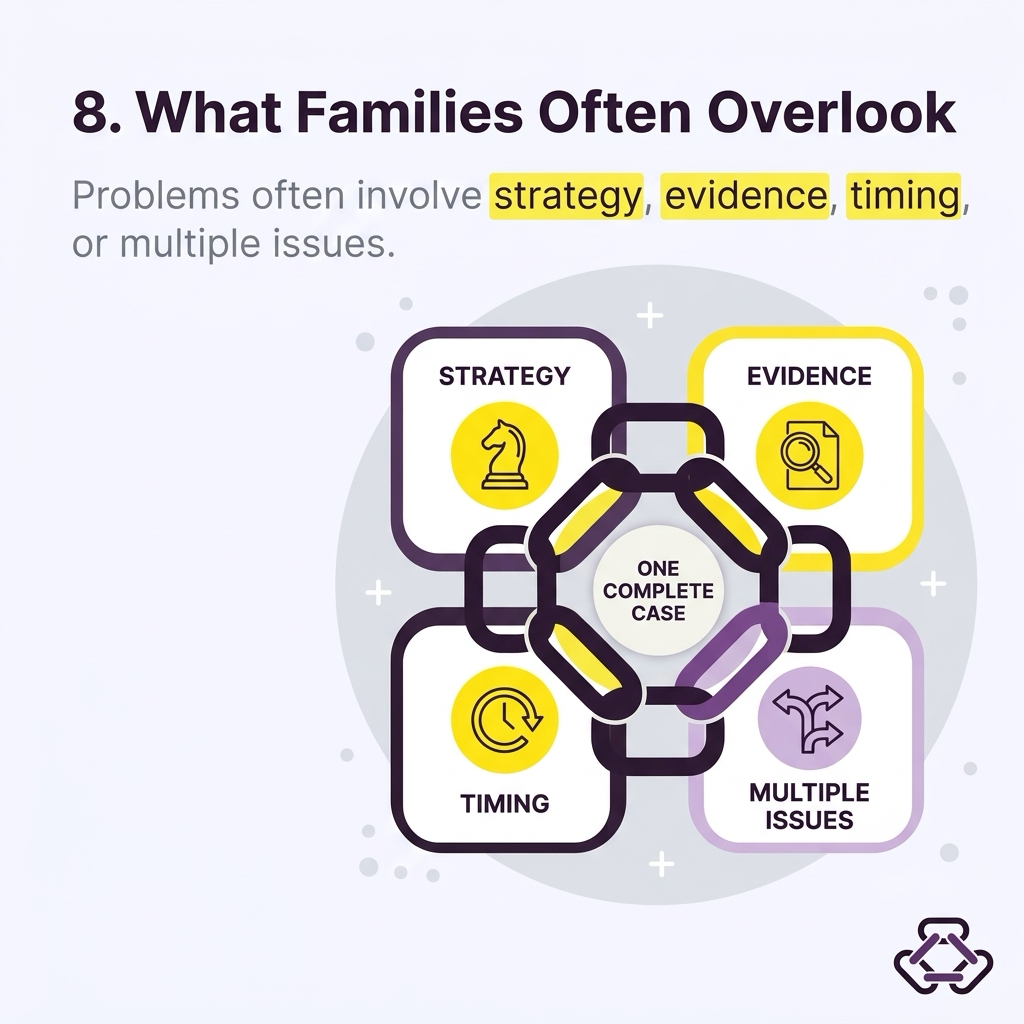
What Families Often Overlook About Delay, Denial, And Refiling
When people hear “waiver denied,” they often assume the underlying facts were not strong enough. Sometimes that is true. But often, the record shows something more complicated:
- the case theory did not match the actual inadmissibility issue;
- the hardship was real but underdocumented;
- the filing package had procedural defects;
- another legal issue surfaced later than expected;
- the family relied on general immigration help instead of case-specific waiver analysis.
That is why waiver cases often benefit from more than form preparation alone. They usually involve legal screening, factual development, evidence planning, and procedural timing. Readers who are still in the early research stage may also want a family-focused overview of key issues people often miss before filing a waiver case, because many of those misunderstandings start long before the packet is assembled.
Final Thoughts On Avoiding Common Waiver Mistakes
Waiver cases sit at the intersection of paperwork, legal standards, and life consequences. A single error with form choice, qualifying relatives, hardship evidence, translations, fees, or post-filing steps can lead to months of delay or the cost of starting over.
For many families, the hardest part is figuring out whether the problem is eligibility, evidence, timing, or all three. An attorney with documented experience in highly similar waiver matters may be able to evaluate the full record, spot overlapping inadmissibility issues, and help shape a filing strategy based on objective criteria and the actual evidence in the case.
Visit ReferU.AI to get matched with an attorney who has demonstrable experience in cases like yours — for free.
