Table of Contents
- Naturalization: A Beginner’s Guide to Becoming a U.S. Citizen
- What Is Naturalization?
- Why Do People Apply For U.S. Citizenship?
- Who May Be Eligible To Naturalize?
- Are You At Least 18 Years Old?
- Have You Had A Green Card Long Enough?
- Have You Maintained Continuous Residence?
- Have You Met The Physical Presence Requirement?
- Have You Lived In The Right Place Long Enough?
- Can You Show Good Moral Character?
- What Is Form N-400?
- How Much Does It Cost To Apply?
- When Can You File?
- What Happens After You File The N-400?
- What Happens At The Naturalization Interview?
- What Is The Naturalization Test?
- Are There Exceptions To The English Or Civics Requirements?
- What Does “Good Moral Character” Really Mean?
- What Can Delay Or Complicate A Citizenship Case?
- What Happens If USCIS Approves The Case?
- When Does It Make Sense To Talk With An Immigration Attorney?
- A Beginner’s Summary Of The Naturalization Process

Type
Great Grandchild
Status
Approved
Title (YouTube)
Images Failed (Social)
Images Failed (Social)
Do not index
Publish Date (TikTok)
Apr 23, 2027 11:45
Videos Post IDs (Social)
Hashtags (Social)
#LegalAdvice #LegalHelp #Immigration #Naturalization
Caption
Caption X
Cover

OG Image

Alt Image Text
Flat vector illustration of naturalization and U.S. citizenship for a beginner’s guide, showing a permanent resident progressing through application, interview, civics test, and oath milestones.
Images

Videos
Publish Date (Social)
Feb 18, 2027 06:00
Scheduled (Social)
Scheduled (Social)
Images Posted (Social)
Images Posted (Social)
Videos Posted (Social)
Videos Posted (Social)
Featured
Created time
Apr 7, 2026 12:02 AM
Sub-item
Authors
CTA Practice Area (Social)
Immigration
TikTok Failed (Social)
TikTok Failed (Social)
Videos Post Links (Social)
TikTok Post Links (Social)
Images Post IDs (Social)
YT Post ID
Video Pending Manual (Social)
TikTok Posted (Social)
TikTok Posted (Social)
TikTok Post IDs (Social)
Video Cover (Social)
Images Post Links (Social)
First Comment (Social)
Videos Failed (Social)
Videos Failed (Social)
YT Embedded
Images Delete (Social)
Videos Delete (Social)
Carousel Video URL (Social)
Naturalization: A Beginner’s Guide to Becoming a U.S. Citizen
For many green card holders, naturalization is both exciting and intimidating. It can represent security, stability, voting rights, a U.S. passport, and a stronger sense of belonging. At the same time, the process can feel technical, personal, and easy to second-guess.
If you are just starting out, you are not alone. U.S. Citizenship and Immigration Services (USCIS) reports that 818,500 people naturalized in fiscal year 2024, and millions more continue moving through the citizenship pipeline each year. USCIS data also shows that the most common path is naturalization after five years as a lawful permanent resident. Pending naturalization caseloads have remained substantial as well, with the Congressional Research Service reporting about 536,000 naturalization applications pending as of March 31, 2025. USCIS Congressional Research Service
In this post you’ll learn what naturalization is, who may qualify, how the N-400 works, what happens at the interview and civics test, what common problems can slow a case, and when it may make sense to talk with an immigration attorney.
If you want a broader overview of the full process, this more detailed breakdown of how the citizenship process usually works from eligibility through the oath can be a useful companion as you read.
Scroll to the bottom for every post in this series.
What Is Naturalization?
Naturalization is the legal process through which a lawful permanent resident becomes a U.S. citizen. USCIS describes it as the process by which citizenship is granted to a permanent resident after meeting requirements established by Congress in the Immigration and Nationality Act. USCIS
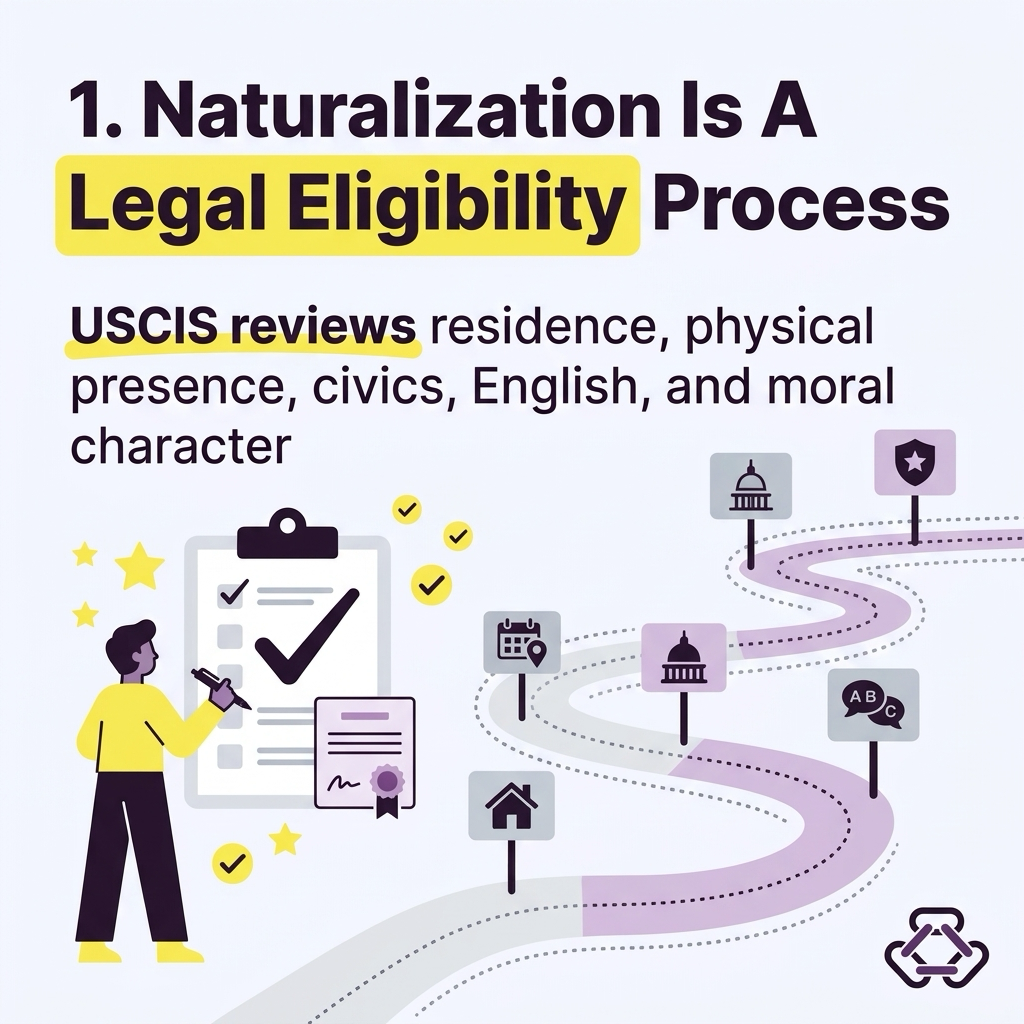
That last part matters. Naturalization is not just a form. It is a legal eligibility process. USCIS reviews whether the applicant meets requirements tied to residence, physical presence, English and civics knowledge, and “good moral character,” among other factors. USCIS USCIS Policy Manual
Why Do People Apply For U.S. Citizenship?
For many immigrants, citizenship can open up practical and long-term benefits. USCIS lists several potential benefits, including the right to vote, eligibility for a U.S. passport, the ability to apply for certain federal and state jobs, broader options for petitioning family members, and potential citizenship pathways for some children under 18. USCIS
In general terms, people often look at naturalization as more than an immigration filing. It can also be part of long-range planning for travel, family, employment, and protection from the recurring burdens of green card renewal.
Who May Be Eligible To Naturalize?
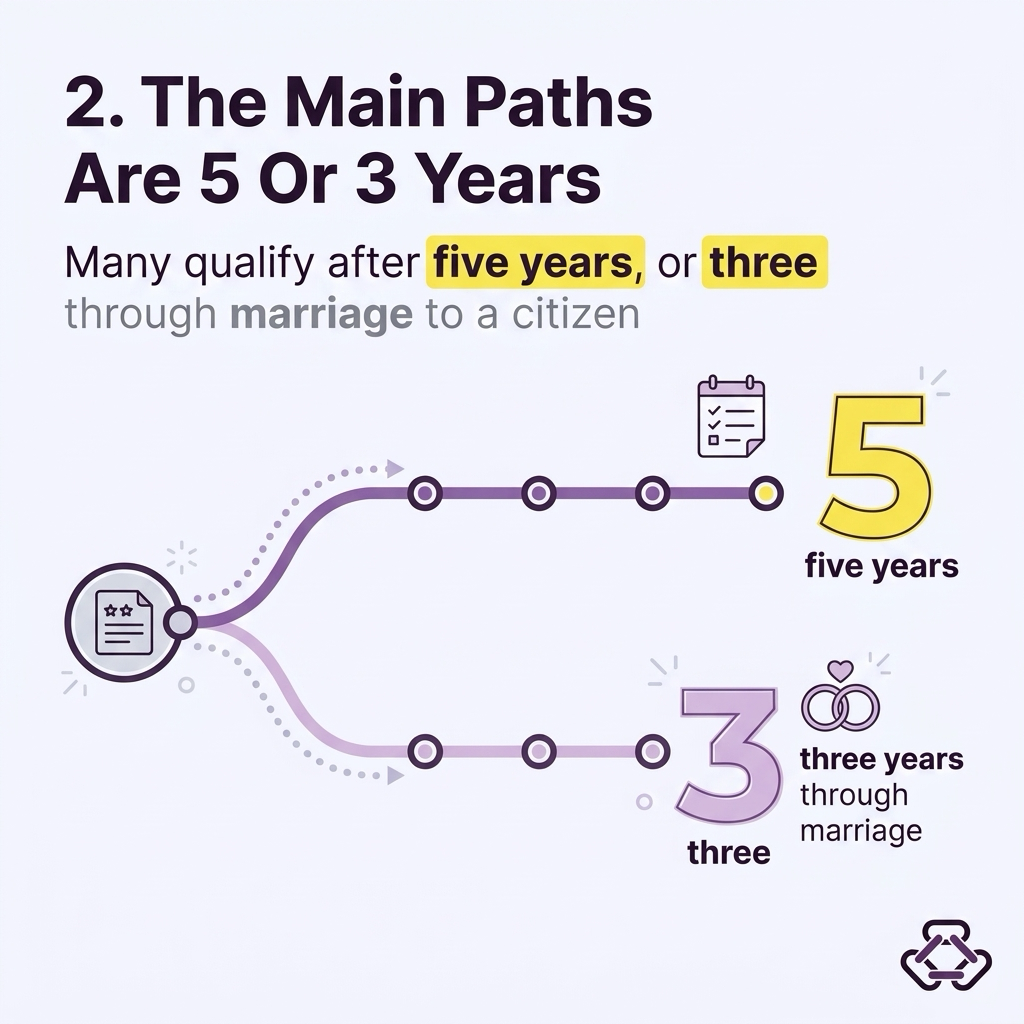
The most common path is the five-year rule. USCIS explains that a lawful permanent resident may be eligible after at least five years as an LPR if other requirements are also met. USCIS
Another common path is the three-year rule for certain people married to and living with a U.S. citizen spouse. USCIS also allows some applicants to file 90 calendar days early before completing the required continuous residence period for the five-year or three-year category. USCIS Form N-400
At a high level, many applicants are looking at questions like these:
Are You At Least 18 Years Old?
USCIS generally requires an applicant filing Form N-400 to be at least 18 at the time of filing. USCIS
Have You Had A Green Card Long Enough?
For many applicants, that means five years. For some, it means three years through marriage to a U.S. citizen. USCIS Form N-400
Have You Maintained Continuous Residence?
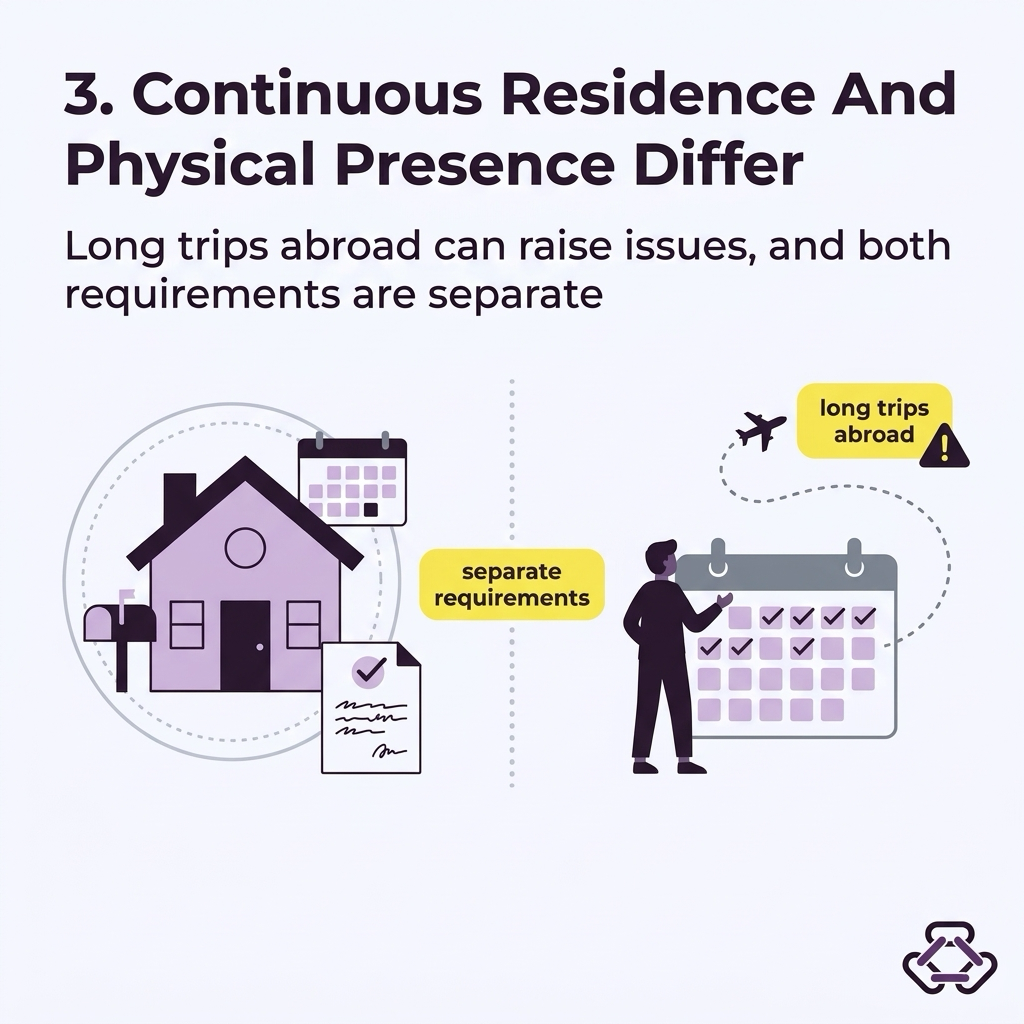
“Continuous residence” is not the same thing as simply having a green card for a certain number of years. USCIS looks at whether you maintained your residence in the United States during the required statutory period. Long trips abroad can create questions, and longer absences can interrupt eligibility depending on the facts. USCIS USCIS Guide For New Immigrants
Have You Met The Physical Presence Requirement?
Physical presence refers to the total time actually spent inside the United States during the relevant period. This is different from continuous residence, and many applicants confuse the two. USCIS treats both as separate requirements. USCIS Guide For New Immigrants
Have You Lived In The Right Place Long Enough?
USCIS also generally requires residence for at least three months in the state or USCIS district where the application is filed. USCIS
Can You Show Good Moral Character?
This part often causes the most anxiety. USCIS treats good moral character as a required element of naturalization and evaluates it during the applicable statutory period, though earlier conduct can sometimes matter too. Criminal history, false statements, unpaid taxes, selective service issues, and other facts may become relevant depending on the case. USCIS Policy Manual
Because this area is fact-specific, people with arrests, convictions, prior immigration issues, or past misrepresentations often look for legal guidance before filing.
What Is Form N-400?
Form N-400 is the Application for Naturalization. It is the main form used to ask USCIS for citizenship through naturalization. USCIS allows many applicants to file online or by mail. USCIS Form N-400
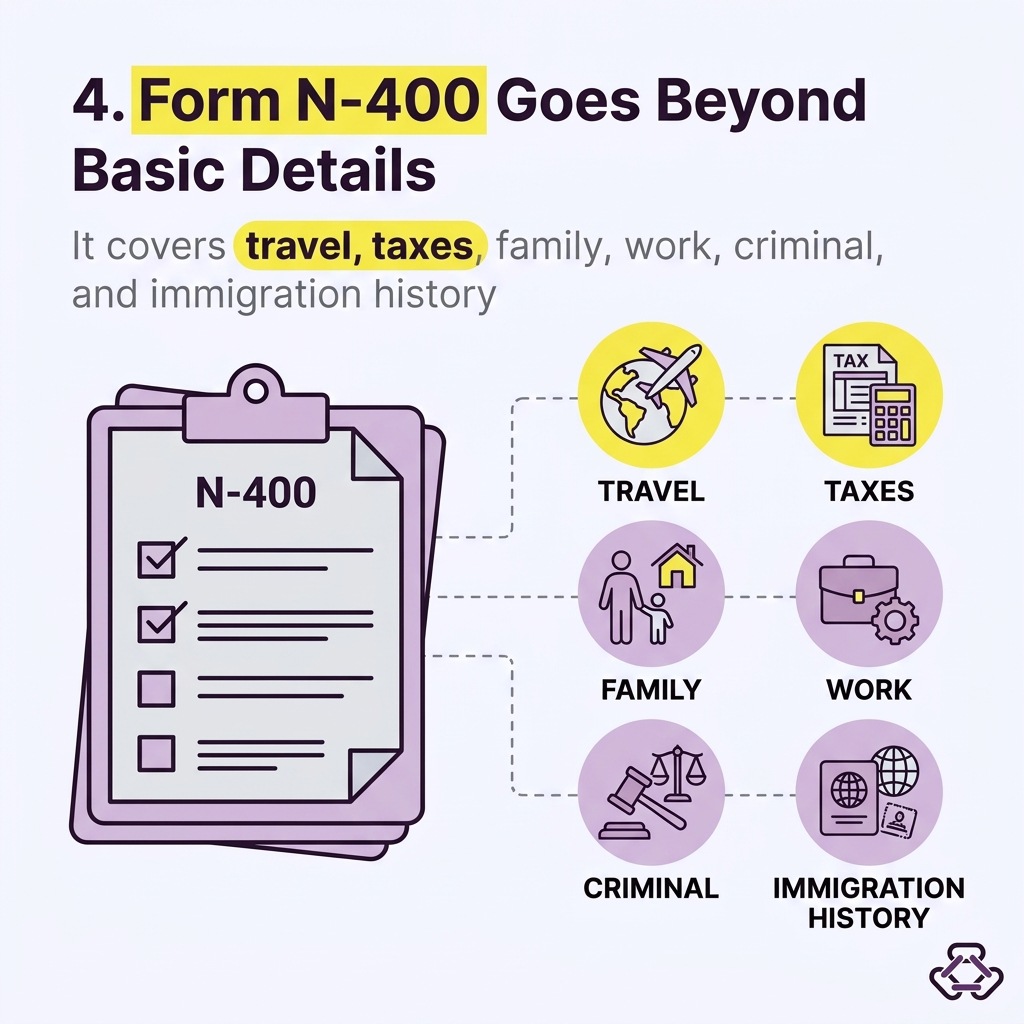
The form asks for a lot more than basic identity details. It covers topics such as:
- address history
- employment and school history
- travel outside the United States
- family information
- marital history
- tax issues
- criminal and immigration history
- selective service questions
- affiliations and other background questions
This is one reason small inconsistencies can matter. A naturalization case often involves comparing the N-400 to earlier immigration filings, travel history, tax records, and court documents.
How Much Does It Cost To Apply?
Fees can change, so it helps to verify the current amount directly with USCIS before filing. According to the USCIS fee schedule edition dated August 29, 2025, Form N-400 costs $710 if filed online and $760 if filed on paper, and USCIS also notes that applicants seeking a reduced fee file a paper Form N-400. USCIS also states that a fee waiver process may be available for certain applicants. USCIS Fee Schedule USCIS Apply For Citizenship
For some families, filing cost is one of the biggest barriers. USCIS maintains information on fee waivers and reduced-fee eligibility, which can make a major difference for qualifying applicants. USCIS
When Can You File?
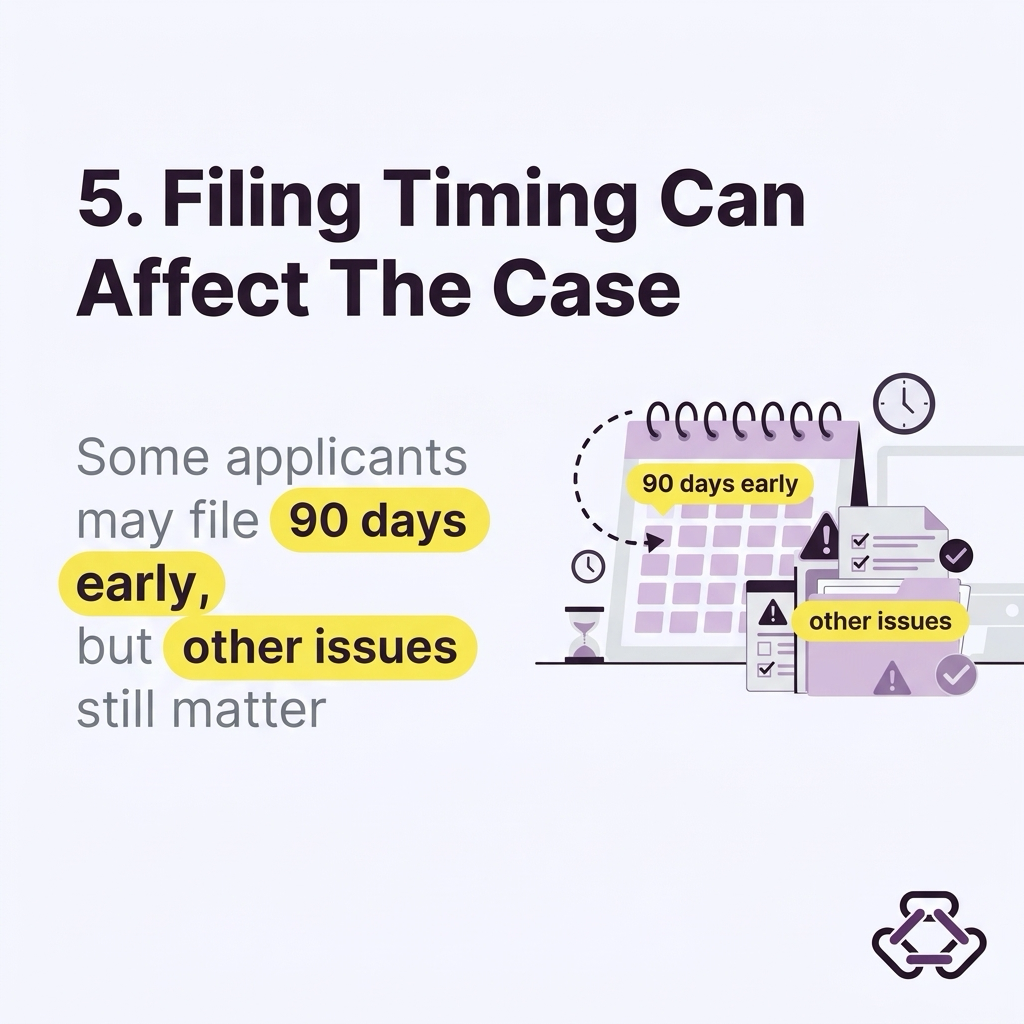
Timing is a big part of naturalization strategy. USCIS states that many applicants in the five-year and three-year categories may file 90 calendar days before completing the required continuous residence period. USCIS Form N-400
That said, early filing does not erase other eligibility issues. Travel, tax concerns, marriage-based timing issues, and criminal or immigration complications can still affect whether a case is approvable.
What Happens After You File The N-400?
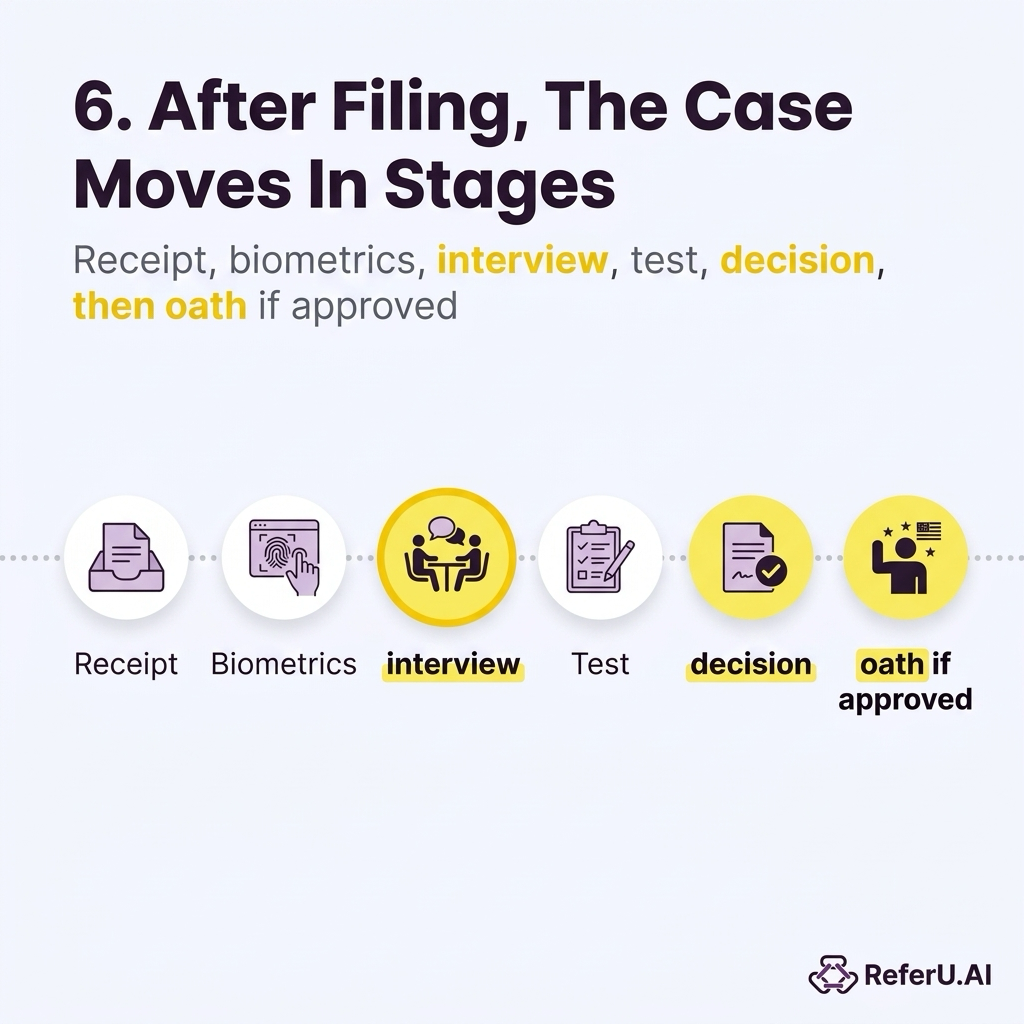
Although timelines vary by field office and case complexity, the process usually includes these stages:
- USCIS receives the application
- Biometrics appointment, if USCIS requires one
- Interview scheduling
- Naturalization interview and test
- Decision
- Oath ceremony, if approved
USCIS explains that if Form N-400 is approved, the agency schedules the applicant to take the Oath of Allegiance at a naturalization ceremony. USCIS
What Happens At The Naturalization Interview?
The interview is where the process becomes very real. USCIS says an officer will review the application and ask questions about the applicant’s background and eligibility. Unless an exemption applies, the applicant also takes the naturalization test. USCIS
In practical terms, the interview often includes:
- identity verification
- review of the green card and travel history
- questions about addresses, work, and family
- updates or corrections to the N-400
- questions about taxes, arrests, citations, or prior immigration filings
- the English and civics testing process, if required
For many applicants, the interview is manageable with preparation. For others, it can be the point where unresolved issues come into focus. Travel patterns, old arrests, missing tax filings, inconsistent marriage history, and prior statements to immigration agencies can all become important here.
What Is The Naturalization Test?
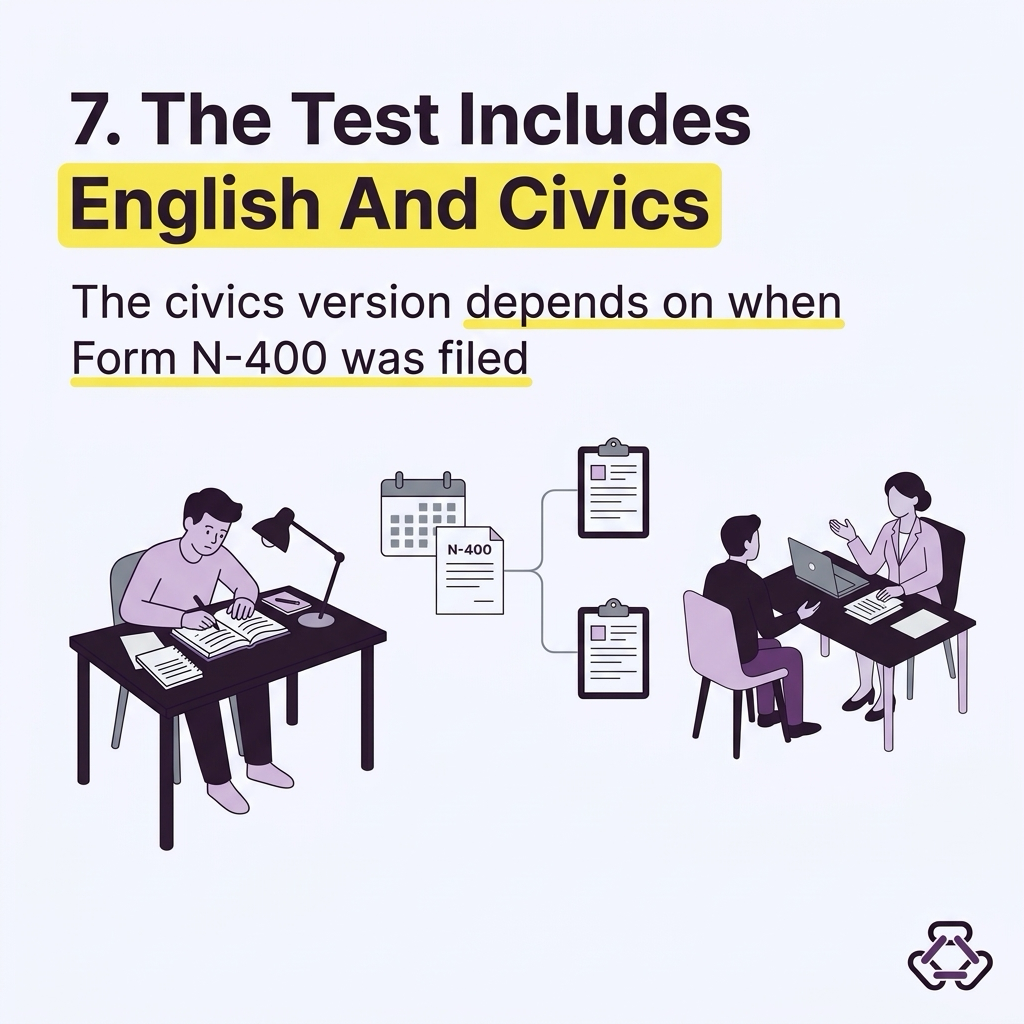
The naturalization test has two parts: English and civics. USCIS states that the English portion assesses the ability to read, write, speak, and understand basic English, while the civics portion covers U.S. history, government, and civics. USCIS
One especially important update: USCIS states that applicants who filed Form N-400 before October 20, 2025 take the 2008 civics test, while applicants who filed on or after October 20, 2025 take the 2025 naturalization civics test. According to USCIS, the 2008 version involves up to 10 questions from a list of 100, with 6 correct answers required to pass, while the 2025 version involves 20 questions from a list of 128, with 12 correct answers required to pass. USCIS USCIS 2025 Civics Study Guide
USCIS also states that if an applicant does not pass a required portion at the initial interview, the agency generally gives a second opportunity between 60 and 90 days later for the failed portion. USCIS Policy Manual USCIS
Are There Exceptions To The English Or Civics Requirements?
Yes. USCIS recognizes several exceptions and accommodations.
For example, some applicants may qualify for age-and-time-based exemptions from the English requirement, and some may take the civics test in their own language. USCIS also allows medical disability exceptions for applicants who cannot comply with English and/or civics requirements because of a physical or developmental disability or a mental impairment, typically supported by Form N-648. USCIS USCIS Form N-400
This is an area where documentation quality can matter a lot. Incomplete medical certifications and unclear exemption claims often lead to delays or follow-up requests.
What Does “Good Moral Character” Really Mean?
This phrase sounds simple, but in immigration law it can be complicated. USCIS policy says good moral character is one of the requirements for naturalization, and the agency looks at the statutory period as well as, in some situations, conduct outside that period. USCIS Policy Manual
Issues that can trigger concern may include:
- certain criminal convictions
- false testimony or fraud
- unpaid taxes
- failure to support dependents
- repeated DUI-related issues
- probation or unresolved criminal matters
- other conduct USCIS views as relevant to the moral character analysis
Not every problem leads to denial, and not every old issue makes a person ineligible. But this is often where the details matter most. A person with any criminal record, prior immigration problem, or history of inaccurate filings may want to consider having an attorney review the record before submitting the N-400.
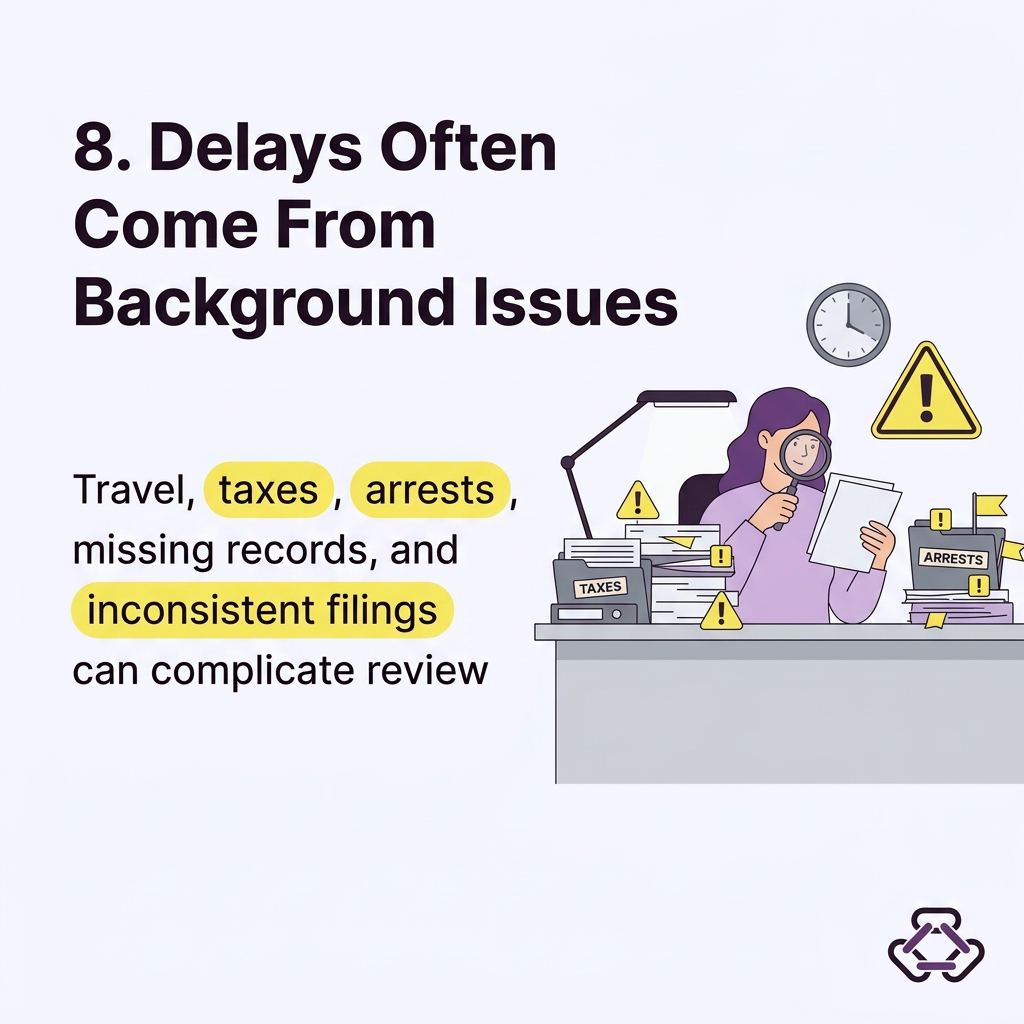
What Can Delay Or Complicate A Citizenship Case?
Many naturalization cases are straightforward. Others become more difficult because the filing looks simple on the surface but raises hidden legal issues.
Common problems include:
- long trips outside the United States
- incomplete or inconsistent travel history
- unfiled or unpaid taxes
- arrests, charges, or convictions
- marriage-based eligibility questions
- prior immigration mistakes or misrepresentations
- selective service issues
- missing documents
- inconsistencies between the N-400 and older immigration filings
USCIS also continues to process high volumes of cases, so even well-prepared applications can face wait times that vary by location and workload. USCIS Immigration And Citizenship Data
A lot of applicants spend most of their attention on the test, when the paperwork and background review may end up being the harder part.
What Happens If USCIS Approves The Case?
If USCIS approves the application, the final step is usually the Oath of Allegiance. USCIS explains that approved applicants are scheduled for a naturalization ceremony, where they take the oath and complete the process of becoming U.S. citizens. USCIS
The oath itself is legally significant. USCIS describes it as the formal pledge of allegiance to the United States that applicants take before citizenship is granted. USCIS
For many people, this is the emotional finish line. It is also the point where naturalization changes from “pending case” to legal citizenship.
When Does It Make Sense To Talk With An Immigration Attorney?
Some naturalization applications are routine enough that people feel comfortable filing on their own. Others involve facts that may benefit from legal analysis before anything is submitted.
An attorney may be particularly helpful when a case involves:
- arrests, citations, or criminal court history
- long or frequent international travel
- tax problems
- prior green card fraud concerns or accusations
- inconsistent information across earlier immigration filings
- divorce, separation, or abuse issues tied to marriage-based residence
- medical waiver questions
- missed selective service registration
- prior removal, deportation, or immigration court history
In situations like these, a legal review can help clarify whether the issue is minor, fixable, or serious enough to change the filing timeline.
A Beginner’s Summary Of The Naturalization Process
Naturalization is the legal process of becoming a U.S. citizen after meeting eligibility requirements as a lawful permanent resident. For many people, the path includes confirming eligibility, preparing Form N-400, documenting travel and tax history, attending an interview, passing the required English and civics components unless an exemption applies, and taking the Oath of Allegiance. USCIS USCIS USCIS
For beginners, the biggest takeaway is that citizenship cases are not only about filling out a form correctly. They are also about making sure the full record supports eligibility. When a case involves travel, taxes, criminal history, or earlier immigration issues, professional guidance can make the process easier to understand and evaluate.
Visit ReferU.AI to get matched with an attorney who has demonstrable experience in cases like yours — for free.
