Table of Contents
- Naturalization Explained: Eligibility, N-400, Interview, Civics Test, and Oath
- What Naturalization Is
- Who May Be Eligible To Apply
- Continuous Residence And Physical Presence Are Not The Same Thing
- Good Moral Character Often Requires A Broader Review Than People Expect
- When You Can File Form N-400
- What Form N-400 Covers
- Filing Fees And Cost Questions
- What Happens After Filing
- The Naturalization Interview
- The English And Civics Test
- A Major Test Change Took Effect In 2025
- English Exemptions And Accommodations
- The Oath Ceremony
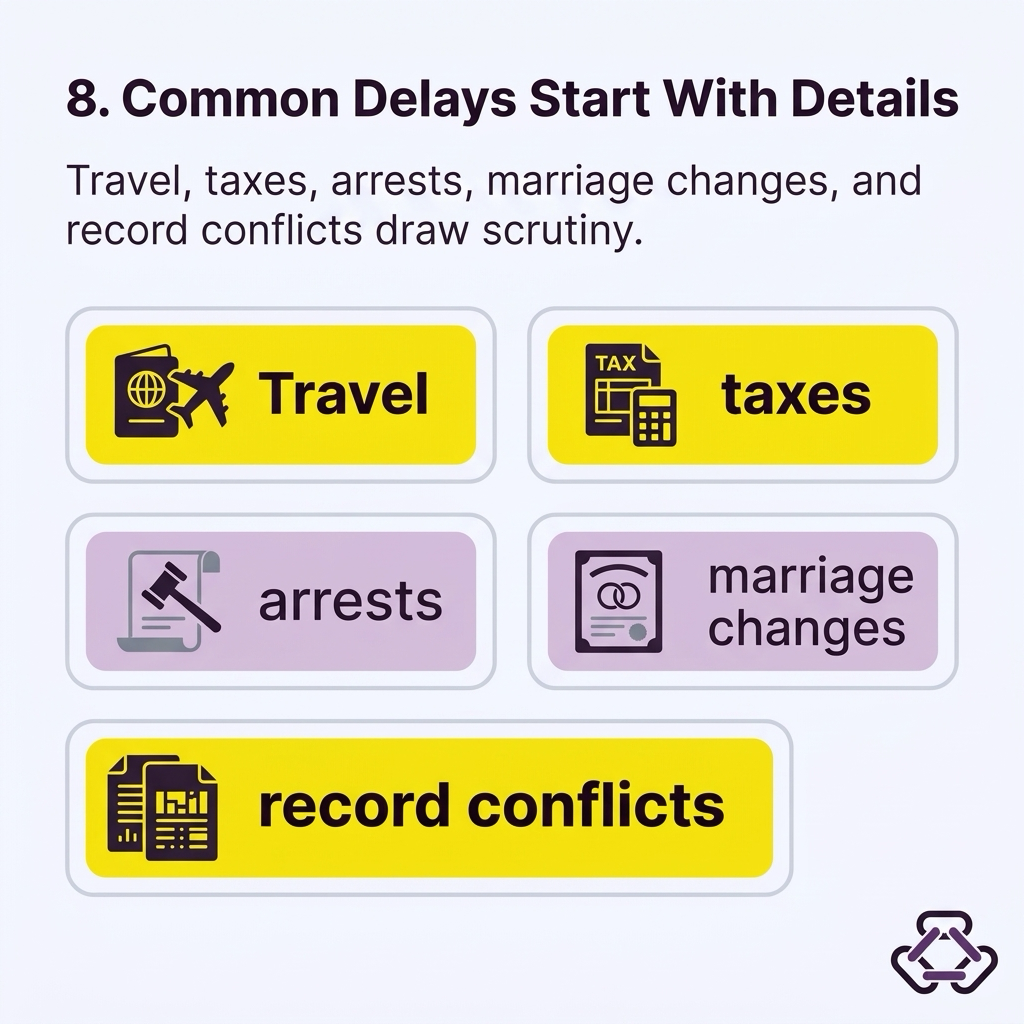
- Common Problems That Can Affect A Naturalization Case
- Travel History Problems
- Tax Issues
- Marriage-Based Three-Year Filing Issues
- Criminal Or Police Contact History
- Prior Immigration Inconsistencies
- Disability Accommodation Or Medical Exception Issues
- Questions People Commonly Ask Before Filing
- When An Attorney May Add Real Value
- Final Thoughts

Type
Grandchild
Status
Approved
Title (YouTube)
Images Failed (Social)
Images Failed (Social)
Do not index
Parent item
Publish Date (TikTok)
Apr 23, 2027 13:15
Videos Post IDs (Social)
Hashtags (Social)
#LegalAdvice #LegalHelp #Immigration #Naturalization
Caption
Caption X
Cover

OG Image

Alt Image Text
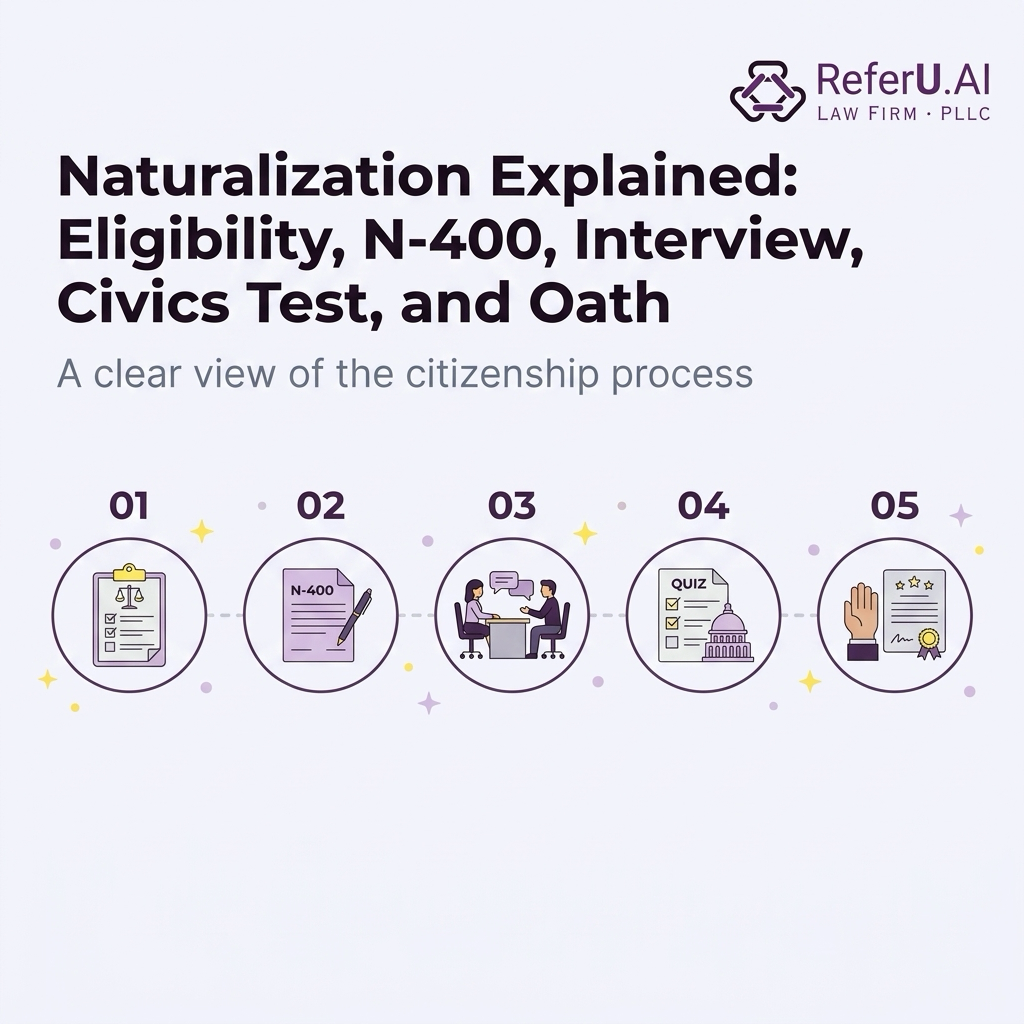
Flat vector illustration of the naturalization process with eligibility review, N-400 application, interview, civics test, and oath ceremony for naturalization explained and N-400 interview.
Images

Videos

Publish Date (Social)
Feb 18, 2027 06:30
Scheduled (Social)
Scheduled (Social)
Images Posted (Social)
Images Posted (Social)
Videos Posted (Social)
Videos Posted (Social)
Featured
Created time
Apr 7, 2026 12:02 AM
Authors
CTA Practice Area (Social)
Immigration
TikTok Failed (Social)
TikTok Failed (Social)
Videos Post Links (Social)
TikTok Post Links (Social)
Images Post IDs (Social)
YT Post ID
Video Pending Manual (Social)
TikTok Posted (Social)
TikTok Posted (Social)
TikTok Post IDs (Social)
Video Cover (Social)

Images Post Links (Social)
First Comment (Social)
Videos Failed (Social)
Videos Failed (Social)
YT Embedded
YT Embedded
Images Delete (Social)
Videos Delete (Social)
Carousel Video URL (Social)
Naturalization Explained: Eligibility, N-400, Interview, Civics Test, and Oath
For many green card holders, naturalization is the final step in a long immigration journey. It is the process of becoming a U.S. citizen after meeting certain requirements under federal immigration law. That process often looks simple from the outside: file Form N-400, go to biometrics, attend an interview, pass the test, and take the oath. In real life, though, timing, travel history, taxes, marital status, criminal issues, and paperwork details can all affect how a case moves.
In this post, you’ll learn how naturalization generally works, who may qualify, what the N-400 asks for, what happens at the interview, how the civics and English testing works, and what to expect at the oath ceremony. If you want a broader overview of where citizenship fits within the larger immigration system, this general guide to immigration processes gives helpful context. If you want a simpler overview focused just on citizenship, this plain-English introduction to becoming a citizen may also help.
Scroll to the bottom for every post in this series.
What Naturalization Is
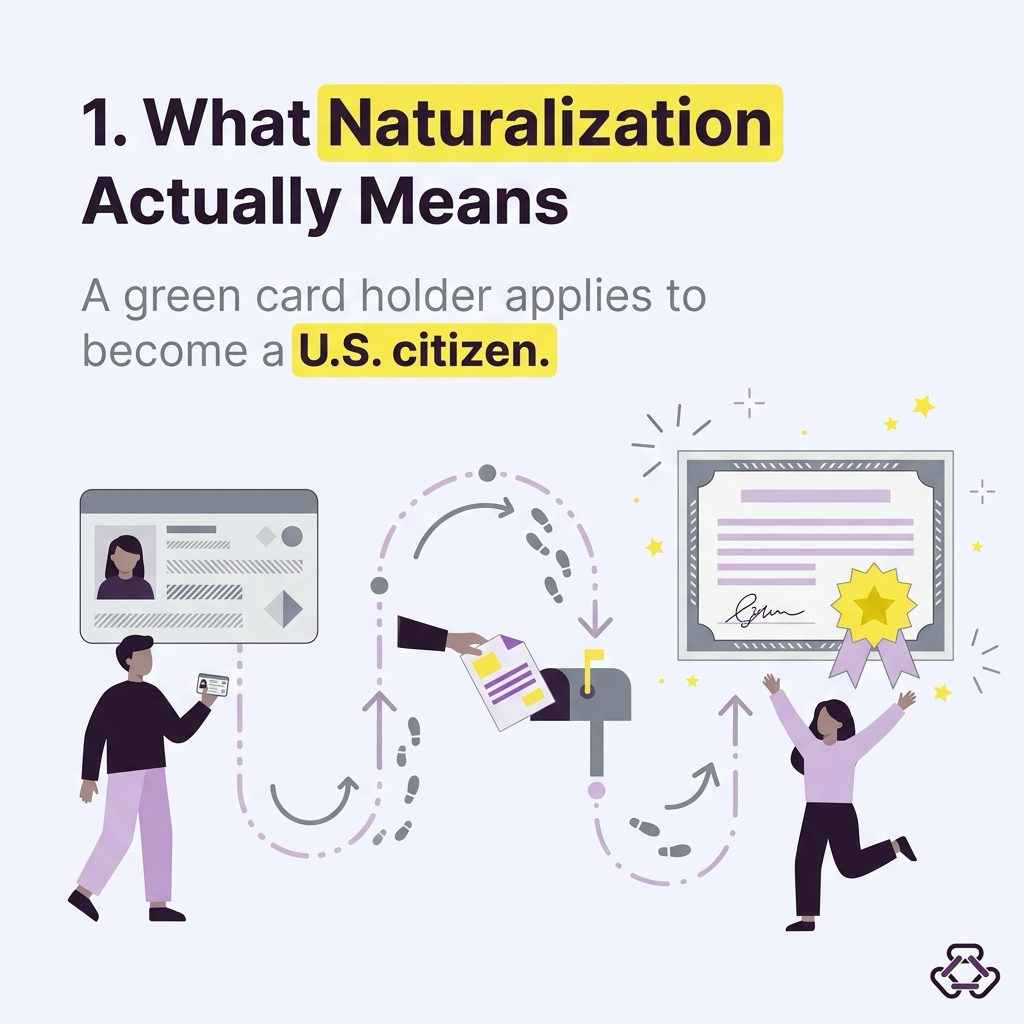
Naturalization is the legal process through which a lawful permanent resident becomes a U.S. citizen. USCIS describes it as the process of becoming a citizen if you were born outside the United States and meet the eligibility requirements for Form N-400. USCIS also maintains a naturalization eligibility tool that gives a basic screening for some applicants.
For many people, citizenship can bring important benefits, including the right to vote in federal elections, the ability to apply for a U.S. passport, and protection from some immigration consequences that permanent residents may still face. At the same time, naturalization is not just a form-filing exercise. USCIS reviews the full record, including residence, physical presence, taxes, selective service where applicable, criminal history, truthfulness on the application, and attachment to the principles of the U.S. Constitution, as outlined in the USCIS Policy Manual.
Who May Be Eligible To Apply
The most common path is the five-year rule. In general terms, a lawful permanent resident may apply after at least five years as a green card holder, if other requirements are met. A common exception is the three-year rule for certain applicants married to and living in marital union with a U.S. citizen for the required period. USCIS explains that spouses applying under this route generally must have been lawful permanent residents for at least three years, lived in marital union with the U.S. citizen spouse for those three years, and remained married to that spouse through the oath stage in many cases under the USCIS policy guidance for spouses of U.S. citizens.
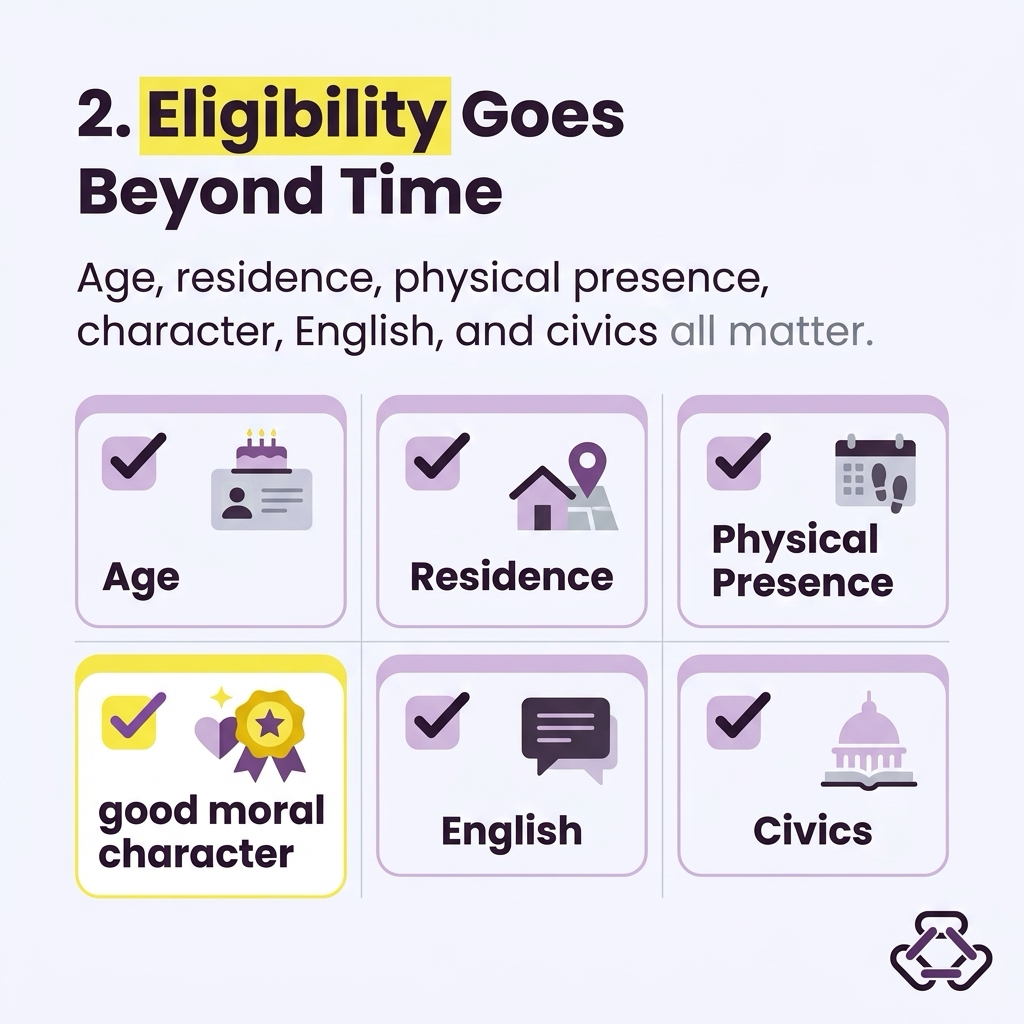
USCIS also states that applicants generally must:
- Be at least 18 years old at filing
- Be a lawful permanent resident
- Meet continuous residence and physical presence requirements
- Show residence in the state or USCIS district for at least three months before filing
- Demonstrate good moral character for the required statutory period
- Show attachment to the principles of the U.S. Constitution
- Pass English and civics requirements unless an exception or accommodation applies
These general requirements are summarized in USCIS naturalization materials and its citizenship resource center.
Continuous Residence And Physical Presence Are Not The Same Thing
This is one of the most misunderstood parts of citizenship cases.
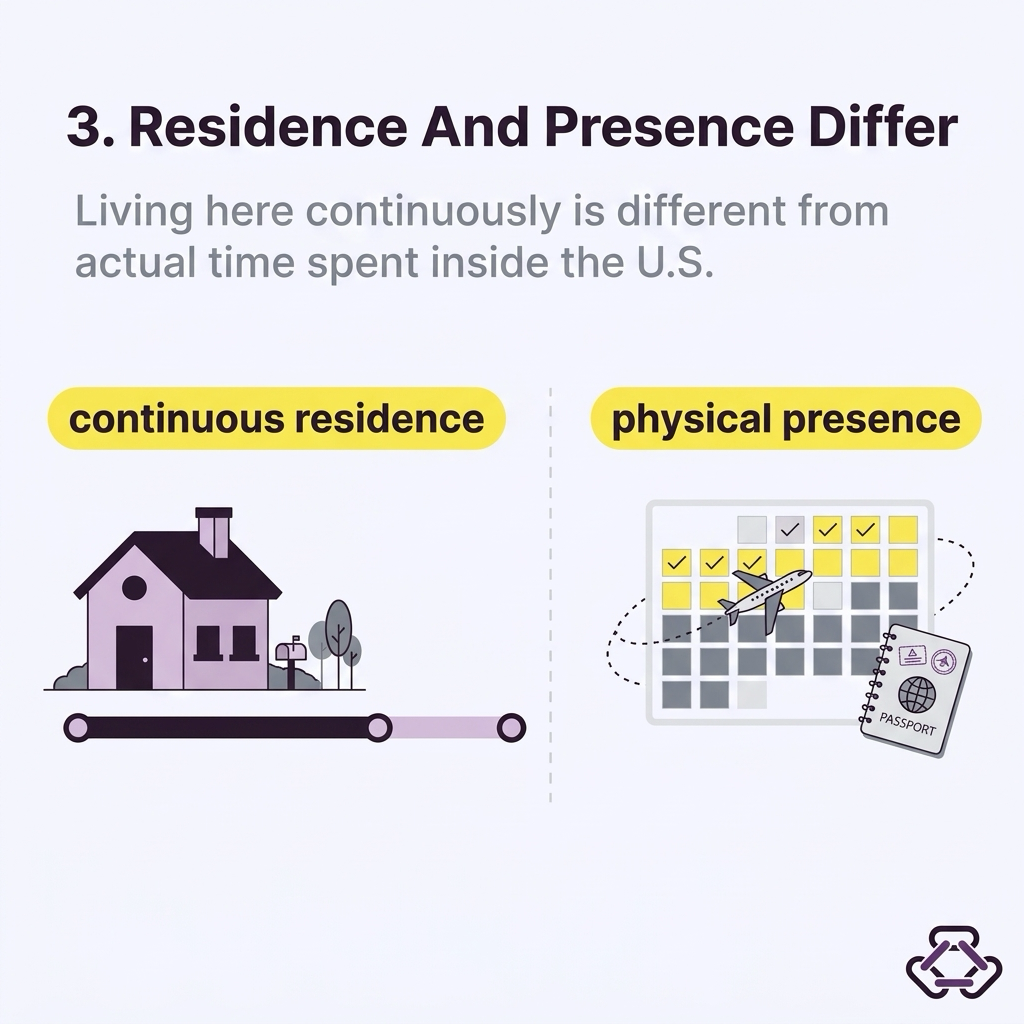
USCIS distinguishes between continuous residence and physical presence in its guidance on continuous residence and physical presence requirements and in the Policy Manual chapter on continuous residence.
- Continuous residence focuses on maintaining your residence in the United States over the statutory period.
- Physical presence focuses on the amount of time you were actually inside the United States.
Long trips abroad can create problems even when a person never intended to abandon residence. In many cases, an absence of more than six months but less than one year raises a rebuttable issue about whether continuous residence was broken. An absence of one year or more often creates a much more serious interruption unless a narrow exception applies, such as approved preservation of residence in certain circumstances through Form N-470.
That is one reason many applicants spend significant time gathering passports, travel logs, IRS transcripts, leases, employment records, and other proof before filing. If you are sorting through that part of the process, this guide on getting travel, tax, and residence records organized before filing may be useful.
Good Moral Character Often Requires A Broader Review Than People Expect
USCIS reviews whether an applicant has shown good moral character during the applicable statutory period, and in some cases conduct outside that period can still matter. USCIS addresses this in the Policy Manual chapter on good moral character. The agency also issued a 2025 policy memorandum describing a more rigorous and holistic good moral character review in naturalization adjudications, reflected in USCIS policy materials here.
Issues that can trigger closer review may include:
- Arrests or charges, even if a case was dismissed
- Certain convictions
- Failure to file or pay taxes
- False statements to immigration officers
- Failure to support dependents
- Selective Service registration issues for some male applicants
- Extended trips outside the United States that conflict with claims of U.S. residence
A person may still be eligible despite one or more concerns, but these are the kinds of details that often make attorney review especially valuable. If you want to see where citizenship cases commonly get delayed or complicated, this article on problems that can slow the process breaks that down further.
When You Can File Form N-400
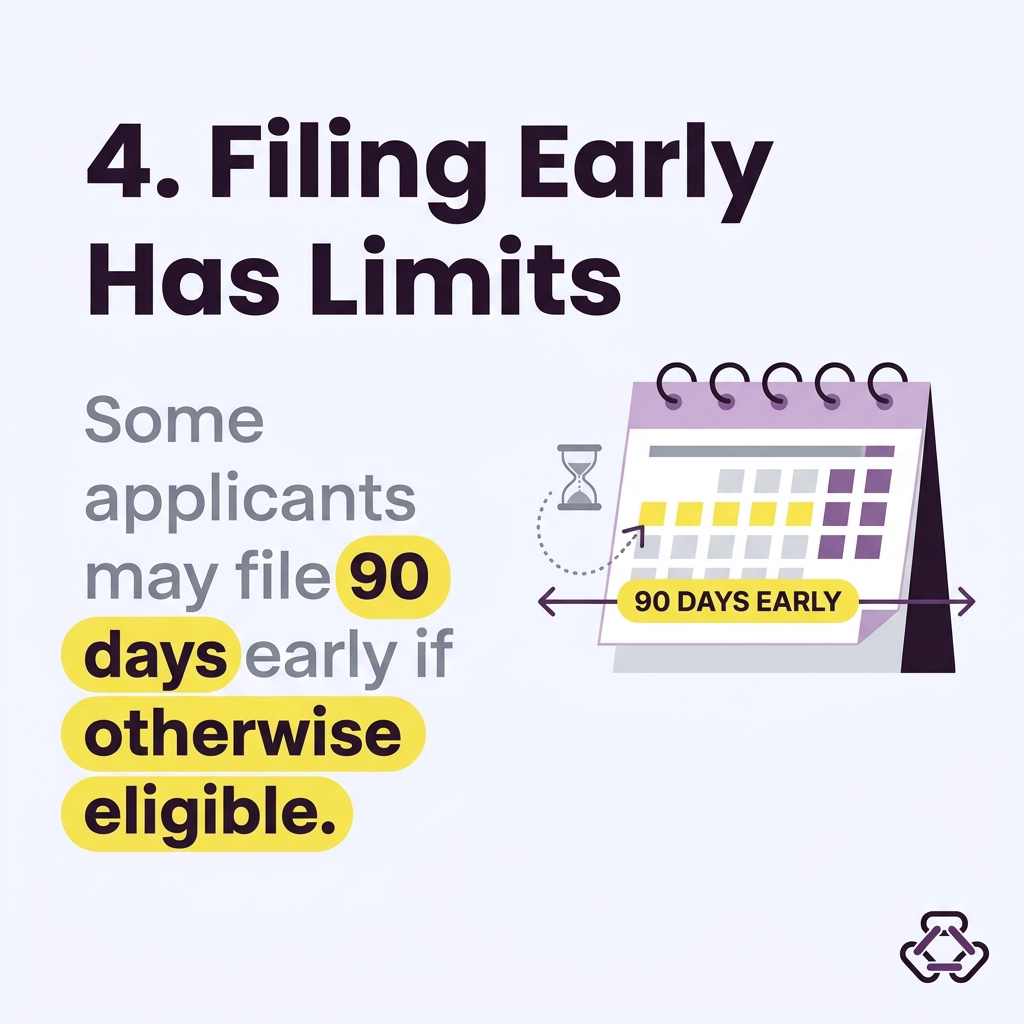
USCIS says many applicants may file 90 calendar days early before completing the full continuous residence period, if they otherwise qualify under the five-year or three-year route, as explained on the official Form N-400 page. That early filing rule helps many people avoid unnecessary delay, but it does not erase the requirement to fully satisfy the eligibility period by the relevant time.
Timing issues can become more complicated when there are:
- Long absences from the United States
- A recent divorce or marital separation in a three-year marriage-based case
- Late tax filings or payment plans
- Recent criminal matters
- Pending removal or immigration court issues
- Questions about when permanent residence actually began
For that reason, the “right filing date” is not always as obvious as counting years from the green card issuance date.
What Form N-400 Covers
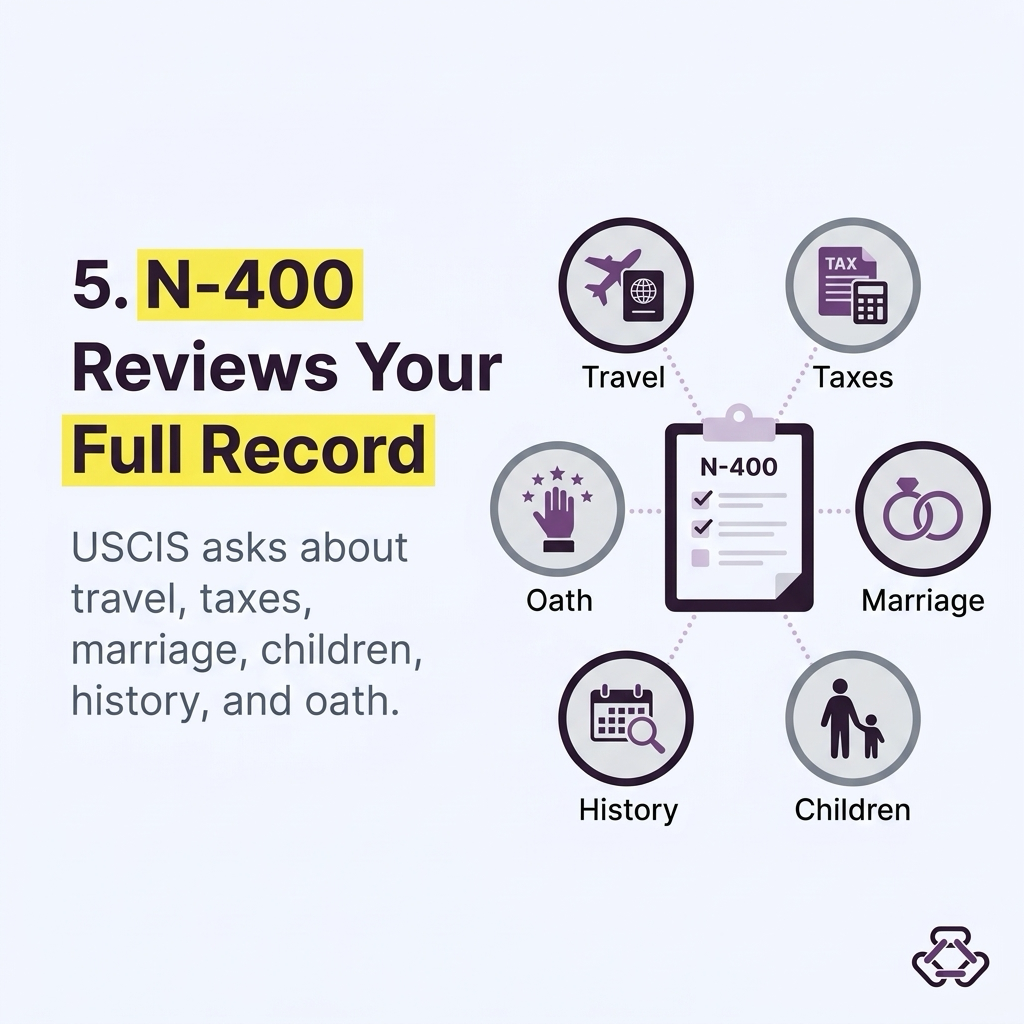
Form N-400 is the application used to request naturalization. USCIS provides the current form, instructions, and filing information on its official N-400 page. The form asks for much more than basic biographic details. It is designed to let USCIS evaluate both statutory eligibility and any grounds for concern.
Applicants are often asked to provide information about:
- Legal name and any prior names
- Addresses and employment history
- Travel outside the United States
- Current marriage and prior marriages
- Children
- Selective Service registration
- Tax filing history
- Organizational affiliations
- Criminal history
- Prior immigration issues
- Willingness to take the Oath of Allegiance
USCIS currently allows many applicants to file the N-400 online, and the agency notes that if someone requests a reduced fee or fee waiver, paper filing is generally required instead of online filing under the reduced-fee guidance.
Filing Fees And Cost Questions
USCIS publishes current filing fees on its filing fees page and separate instructions for reduced fee requests. USCIS explains that some N-400 applicants may qualify for a reduced fee if documented household income is below 400% of the Federal Poverty Guidelines, and some applicants may qualify for a fee waiver depending on eligibility criteria.
Because fees and filing rules can change, many applicants check the USCIS fee page again right before submission rather than relying on an older checklist or forum post.
What Happens After Filing
After USCIS receives the N-400, the usual next steps often include:
- Receipt notice
- Biometrics appointment, if required
- Interview scheduling
- English and civics testing, unless exempt
- Decision or continued review
- Oath ceremony scheduling
USCIS reported significant progress in reducing naturalization processing times in recent years. The agency said the median processing time for naturalization decreased to 6.1 months by the end of fiscal year 2023 in one update, and later published a fact sheet noting about 5.2 months in fiscal year 2024-to-date in another update, though case timing still varies by field office and individual circumstances according to USCIS backlog reporting and this USCIS processing-times fact sheet.
That said, “average” timing often tells only part of the story. A straightforward case with clean travel records and no prior issues may move very differently from a case involving long trips, old arrests, tax concerns, or a request for disability-based accommodations.
The Naturalization Interview
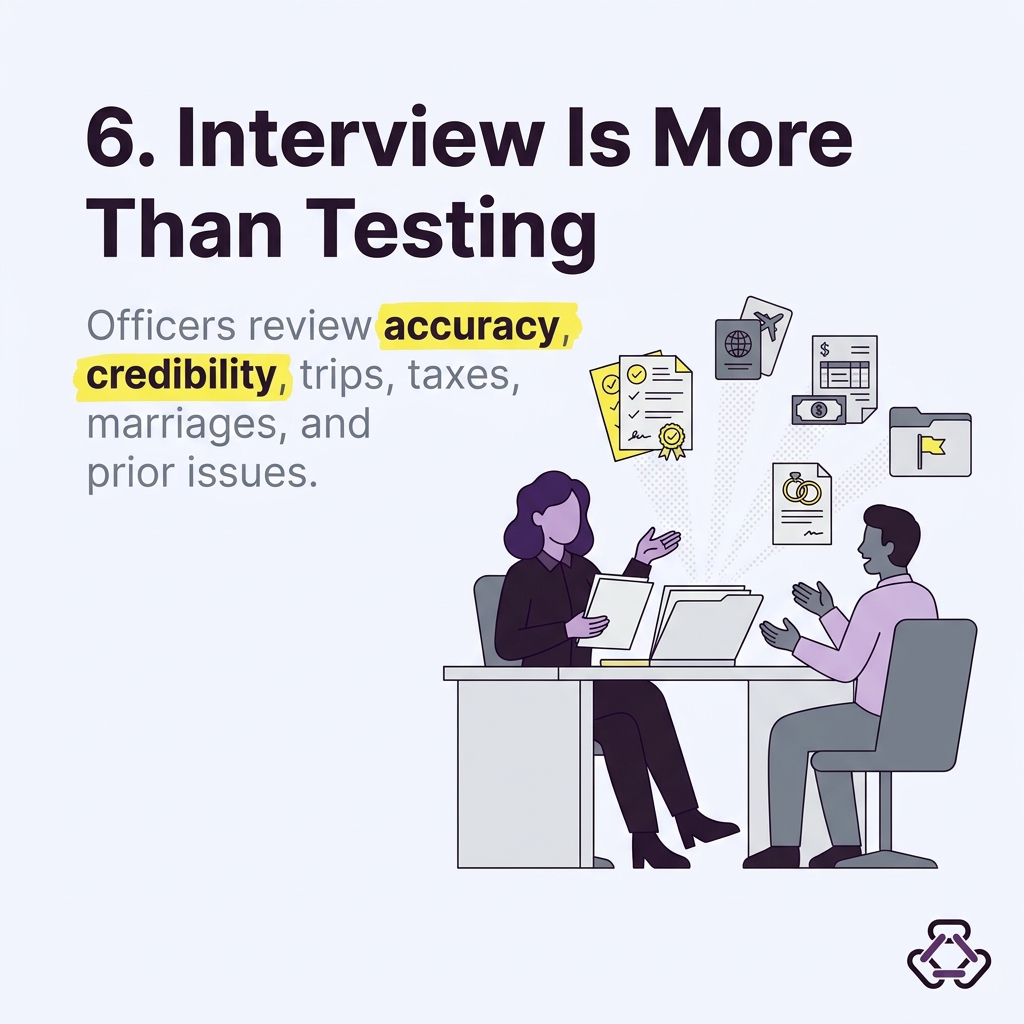
USCIS explains that at the naturalization interview, an officer reviews the N-400 and asks questions about the applicant’s background and eligibility on the official page for the naturalization interview and test. The officer may update answers, confirm biographic details, ask about trips abroad, review taxes, clarify marriages and divorces, and explore any criminal or immigration history.
For many applicants, the interview is not just a civics quiz. It is a credibility and documentation review.
Common interview topics include:
- Whether the information on the N-400 is complete and accurate
- Whether absences from the United States affect residence requirements
- Whether taxes were filed properly
- Whether any arrests, citations, or charges occurred
- Whether marital history is consistent with the filing basis
- Whether the applicant understands and accepts the oath obligations
Some applicants leave the interview with approval, while others receive a request for more evidence or a continuation notice. If the officer believes something is missing or unclear, the case may stay pending while USCIS waits for additional documentation.
If you want a more detailed walkthrough of what officers tend to focus on, this piece on getting ready for the citizenship interview and test goes deeper.
The English And Civics Test
USCIS states that the naturalization test generally has two parts: English and civics. English includes speaking, reading, and writing basic English. Civics covers U.S. history and government, according to USCIS’s interview and test page and study materials page.
A Major Test Change Took Effect In 2025
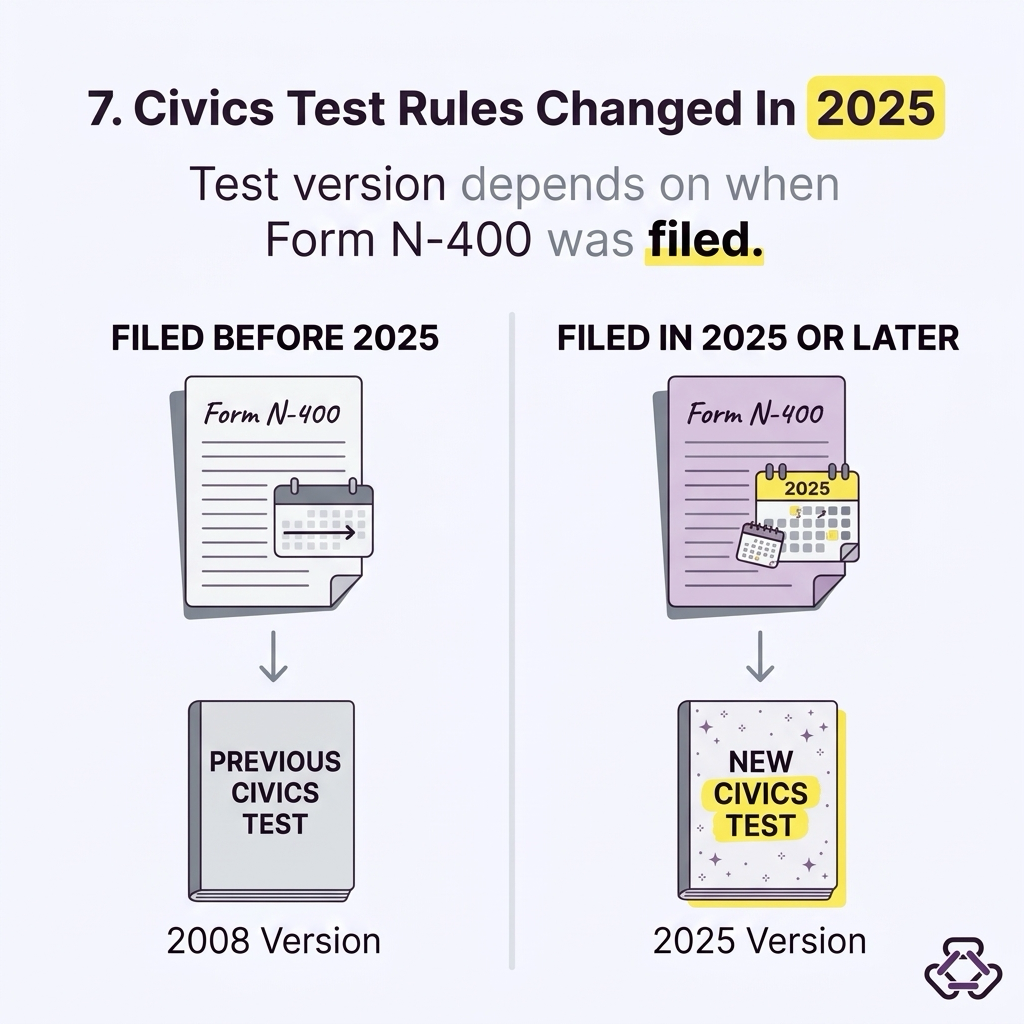
This is one area where older online articles can mislead people. USCIS states that applicants who filed Form N-400 before October 20, 2025 take the 2008 civics test, while applicants who filed on or after October 20, 2025 take the 2025 naturalization civics test. USCIS says the 2025 test is based on the 2020 test with modifications to administration on the official interview and test page.
According to USCIS:
- Under the 2008 test, the officer asks up to 10 questions from a list of 100, and the applicant must answer 6 correctly.
- Under the 2025 test, the officer asks 20 questions from a list of 128, and the applicant must answer 12 correctly.
USCIS also says applicants generally get two opportunities to pass the failed portion of the test, with a retest typically scheduled between 60 and 90 days after the first interview if needed.
English Exemptions And Accommodations
USCIS provides certain exceptions and accommodations on its official exceptions and accommodations page.
For example:
- The 50/20 exception applies to some applicants age 50 or older who have lived as permanent residents for at least 20 years.
- The 55/15 exception applies to some applicants age 55 or older who have lived as permanent residents for at least 15 years.
- Applicants age 65 or older who have been permanent residents for at least 20 years receive special consideration on the civics requirement.
- Some applicants with disabilities may request accommodations, and in some situations a medically supported exception may apply.
Even when the English requirement is waived, USCIS explains that many applicants still take the civics test, often in their native language if eligible for that exception.
The Oath Ceremony
If USCIS approves the N-400, the final step is the oath ceremony. USCIS describes the ceremony as the culmination of the naturalization process on its page about naturalization ceremonies. The agency says some applicants may take the oath on the same day as the interview, while others receive a later notice on Form N-445, Notice of Naturalization Oath Ceremony.
USCIS also explains that ceremonies may be:
- Administrative ceremonies, conducted by USCIS
- Judicial ceremonies, conducted by a court
The Oath of Allegiance page explains the legal commitment involved in becoming a U.S. citizen. In some cases, an applicant requesting a legal name change through naturalization may attend a judicial ceremony rather than an administrative one, as USCIS training materials note in this naturalization process overview.
After the oath, the person generally receives a Certificate of Naturalization. That certificate becomes an important identity and status document, and many new citizens then apply for a U.S. passport and update their records with Social Security and election authorities.
Common Problems That Can Affect A Naturalization Case
Naturalization cases are often presented as routine, but plenty of them are not. A few recurring issues tend to come up again and again:
Travel History Problems
Missing passport stamps, uncertain departure dates, or long trips abroad can create questions about physical presence and continuous residence. Inconsistencies between the N-400, prior immigration filings, and CBP or passport records can also trigger scrutiny.
Tax Issues
Unfiled returns, unpaid taxes, or filing as a “nonresident” for tax purposes can complicate a case. Tax problems do not automatically end eligibility, but they often lead to detailed follow-up questions and requests for documentation.
Marriage-Based Three-Year Filing Issues
Applicants using the three-year rule may run into issues if there was a recent separation, divorce, or dispute about whether the marital union requirement was met through the filing period and up to oath.
Criminal Or Police Contact History
Even minor incidents matter more than many people expect. USCIS often asks for certified court records, arrest dispositions, or official letters confirming no charges were filed.
Prior Immigration Inconsistencies
Statements made years earlier on visa applications, green card filings, or border entries may resurface. If the N-400 conflicts with those earlier records, the officer may look closely at credibility and admissibility concerns.
Disability Accommodation Or Medical Exception Issues
These cases can be document-heavy and highly specific. Timing, medical support, and form preparation often matter a great deal.
For a focused breakdown, this article on common citizenship-case complications may help identify where extra preparation may be useful.
Questions People Commonly Ask Before Filing
A lot of applicants are not asking, “Can I ever become a citizen?” They are asking more practical questions, such as:
- Can I apply if I took several long trips?
- What if I owe taxes?
- What if I was arrested years ago?
- Can I file early?
- What happens if I fail the civics test?
- Can I travel while the N-400 is pending?
- What if I qualify under the three-year rule and my marriage changes?
- Do I need a lawyer for the interview?
Those are the kinds of issues that often decide whether a case feels routine or risky. If you want a concise walkthrough of the questions people ask most often before filing, this roundup of frequent pre-application concerns is a helpful companion resource.
When An Attorney May Add Real Value
Some naturalization applications are straightforward. Others involve legal judgment calls that are hard to make from a USCIS checklist alone.
Applicants often look for legal help when they have:
- Complicated travel history
- Prior arrests or charges
- Tax debt or late filing history
- Divorce or separation issues in a three-year filing
- Prior immigration misstatements or denials
- Medical accommodations or disability-based exceptions
- Possible exposure to removal proceedings
- Concerns about how old facts may affect good moral character
In those situations, the key issue is often not simply finding any immigration lawyer. It is finding someone with documented experience handling highly similar naturalization matters, based on objective evidence rather than marketing language.
Final Thoughts
Naturalization can be one of the most meaningful steps in a person’s immigration journey, but it is also a process where details matter. Eligibility is about more than the number of years on a green card. The N-400 is more than a form. The interview is more than a civics quiz. And the oath is more than a ceremony.
For many applicants, the smoothest path comes from understanding the full picture early: eligibility rules, travel history, tax records, marriage issues, good moral character review, interview preparation, and any risks that may deserve individualized legal analysis.
Visit ReferU.AI to get matched with an attorney who has demonstrable experience in cases like yours — for free.


