Table of Contents
- How to Prepare for the Naturalization Interview and Test
- What Happens At The Naturalization Interview
- Step 1: Know Which Civics Test Applies To Your Case
- Step 2: Understand The Three Parts Of The English Test
- Speaking
- Reading
- Writing
- Step 3: Study The Civics Questions The Right Way
- Step 4: Review Your N-400 Before The Interview
- Step 5: Bring The Right Documents
- Step 6: Learn The Most Common Interview Questions
- Step 7: Know Whether You Qualify For An Exception Or Accommodation
- Step 8: Prepare For Issues That Commonly Delay Approval
- Step 9: Know What Happens If You Do Not Pass
- Step 10: Have A Plan For Interview Day
- When Legal Help May Be Especially Useful
- A Short Summary Before You Go

Type
Great Grandchild
Status
Approved
Title (YouTube)
Images Failed (Social)
Images Failed (Social)
Do not index
Publish Date (TikTok)
Apr 23, 2027 11:15
Videos Post IDs (Social)
Hashtags (Social)
#LegalAdvice #LegalHelp #Immigration #Naturalization
Caption
Caption X
Cover

OG Image

Alt Image Text
Flat vector illustration of naturalization interview and test preparation in the citizenship process, showing an applicant reviewing documents and study materials with an officer at a desk.
Images

Videos
Publish Date (Social)
Feb 17, 2027 14:30
Scheduled (Social)
Scheduled (Social)
Images Posted (Social)
Images Posted (Social)
Videos Posted (Social)
Videos Posted (Social)
Featured
Created time
Apr 7, 2026 12:02 AM
Sub-item
Authors
CTA Practice Area (Social)
Immigration
TikTok Failed (Social)
TikTok Failed (Social)
Videos Post Links (Social)
TikTok Post Links (Social)
Images Post IDs (Social)
YT Post ID
Video Pending Manual (Social)
TikTok Posted (Social)
TikTok Posted (Social)
TikTok Post IDs (Social)
Video Cover (Social)
Images Post Links (Social)
First Comment (Social)
Videos Failed (Social)
Videos Failed (Social)
YT Embedded
Images Delete (Social)
Videos Delete (Social)
Carousel Video URL (Social)
How to Prepare for the Naturalization Interview and Test
Becoming a U.S. citizen is a major milestone, but many applicants feel most anxious about the interview and test. That reaction is common. The good news is that the process is usually more predictable than people expect, especially when they understand what USCIS is actually looking for and how the interview is structured.
In this post you’ll learn how the naturalization interview works, what the English and civics tests cover, how to study in a practical way, what documents often matter most on interview day, and when it may make sense to get legal help before the appointment. If you’d like a broader overview of the full citizenship process, this guide on the overall path to naturalization can help put the interview stage in context.
Scroll to the bottom for every post in this series.
What Happens At The Naturalization Interview
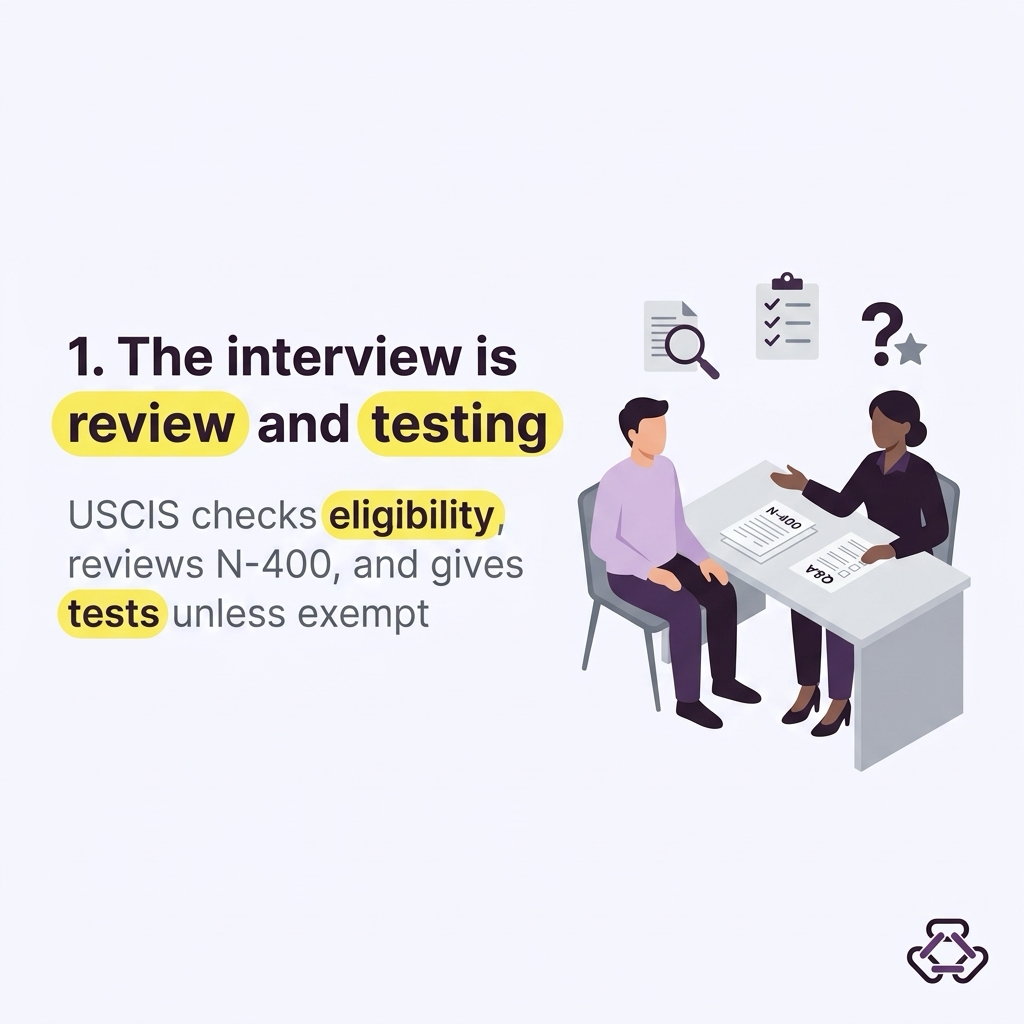
The naturalization interview is part eligibility review and part testing. USCIS officers use it to confirm the information in Form N-400, ask follow-up questions about your background, and administer the English and civics portions of the naturalization test unless an exception applies. USCIS describes the interview as the examination where an officer reviews your application and testimony, and agency guidance explains that statements, amendments, and answers given at the interview become part of the record (USCIS interview overview; USCIS Policy Manual).
In practical terms, many interviews include:
- Identity verification
- Oath or affirmation to tell the truth
- Review of the N-400
- Questions about travel, residence, taxes, family, employment, and criminal history
- English testing
- Civics testing
- A decision, follow-up notice, or request for more evidence
For many applicants, the biggest surprise is that the “speaking test” is not a separate classroom-style exam. USCIS evaluates spoken English during the interview itself, based on whether the applicant can understand and respond to ordinary N-400 questions in English (USCIS naturalization interview and test page; USCIS educational guidance).
Step 1: Know Which Civics Test Applies To Your Case
This is one of the most important updates for current applicants.
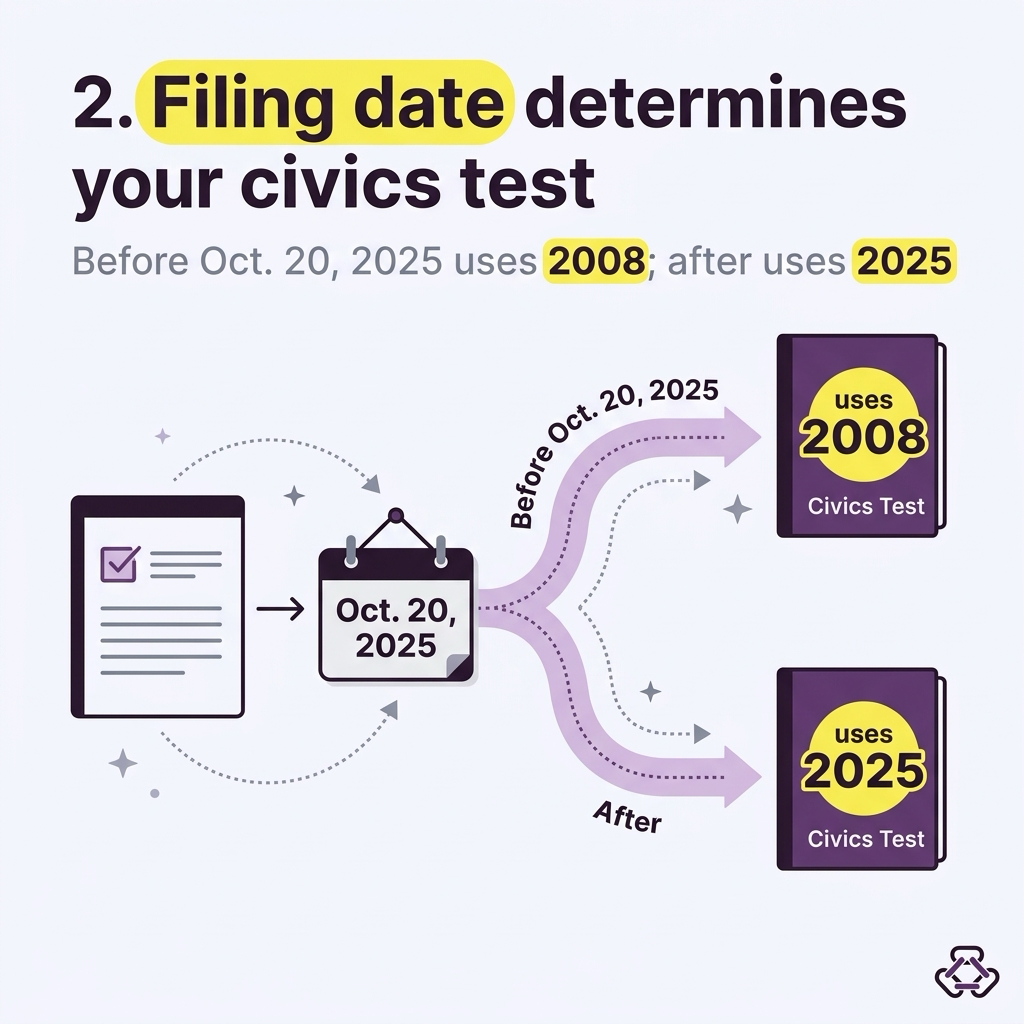
USCIS now uses different civics tests depending on when Form N-400 was filed. Applicants who filed before October 20, 2025 take the 2008 civics test. Applicants who filed on or after October 20, 2025 take the 2025 civics test (USCIS interview and test page; USCIS 2025 civics test page).
That filing date matters because the tests are different:
- 2008 civics test: up to 10 oral questions selected from a list of 100; 6 correct answers to pass
- 2025 civics test: 20 oral questions selected from a list of 128; 12 correct answers to pass
If you are preparing now in 2026, it helps to double-check the date USCIS received your N-400 rather than assuming all applicants are studying the same material. People who filed months apart may be preparing for different tests.
Step 2: Understand The Three Parts Of The English Test
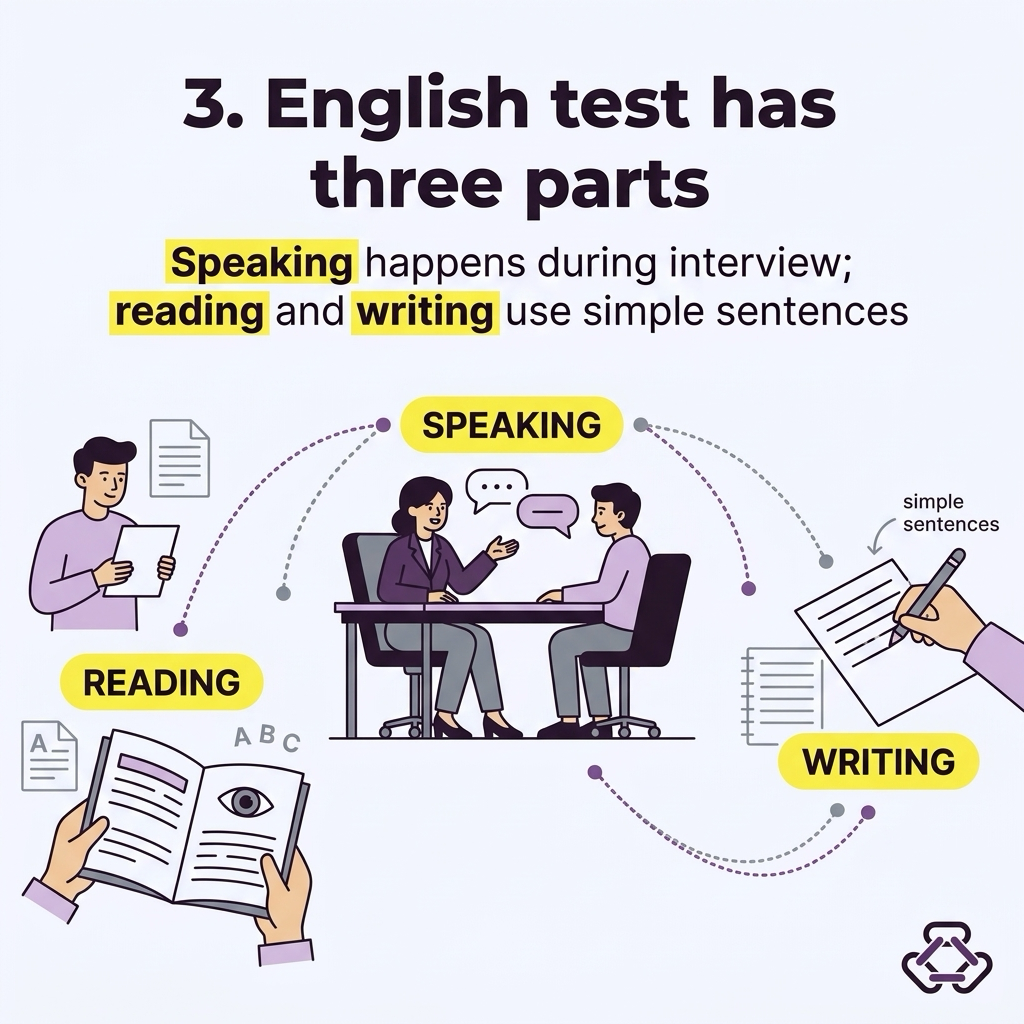
For applicants who are not exempt, the English test has three parts: speaking, reading, and writing. USCIS explains that the speaking portion is evaluated during the interview, while the reading and writing portions involve simple English sentences used in the naturalization context (USCIS Policy Manual; USCIS educational module).
Speaking
This part is often less about perfect grammar and more about understanding questions and answering clearly. USCIS officers typically ask about information already listed on the N-400, such as your address history, trips outside the United States, marital history, work history, and yes-or-no eligibility questions.
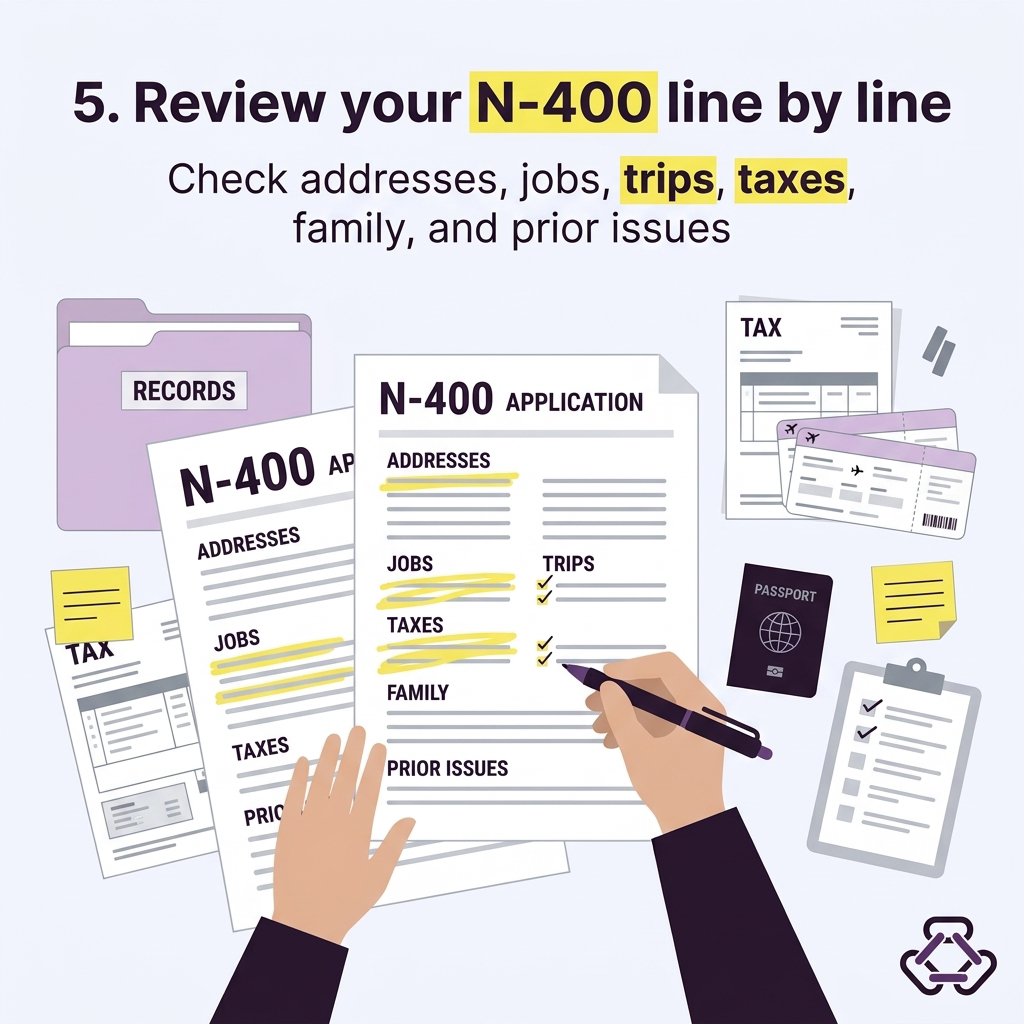
A practical way to prepare is to review your own application line by line and practice answering out loud in English. USCIS specifically notes that applicants can prepare for the speaking test by understanding each question on the application and responding according to their own situation (USCIS FAQ).
Reading
USCIS asks you to read at least one sentence correctly. The sentences are generally short and drawn from approved vocabulary lists connected to civics and government topics (USCIS Policy Manual).
Writing
USCIS asks you to write at least one sentence correctly. Like the reading portion, the sentence uses ordinary words tied to the naturalization context (USCIS Policy Manual).
Step 3: Study The Civics Questions The Right Way
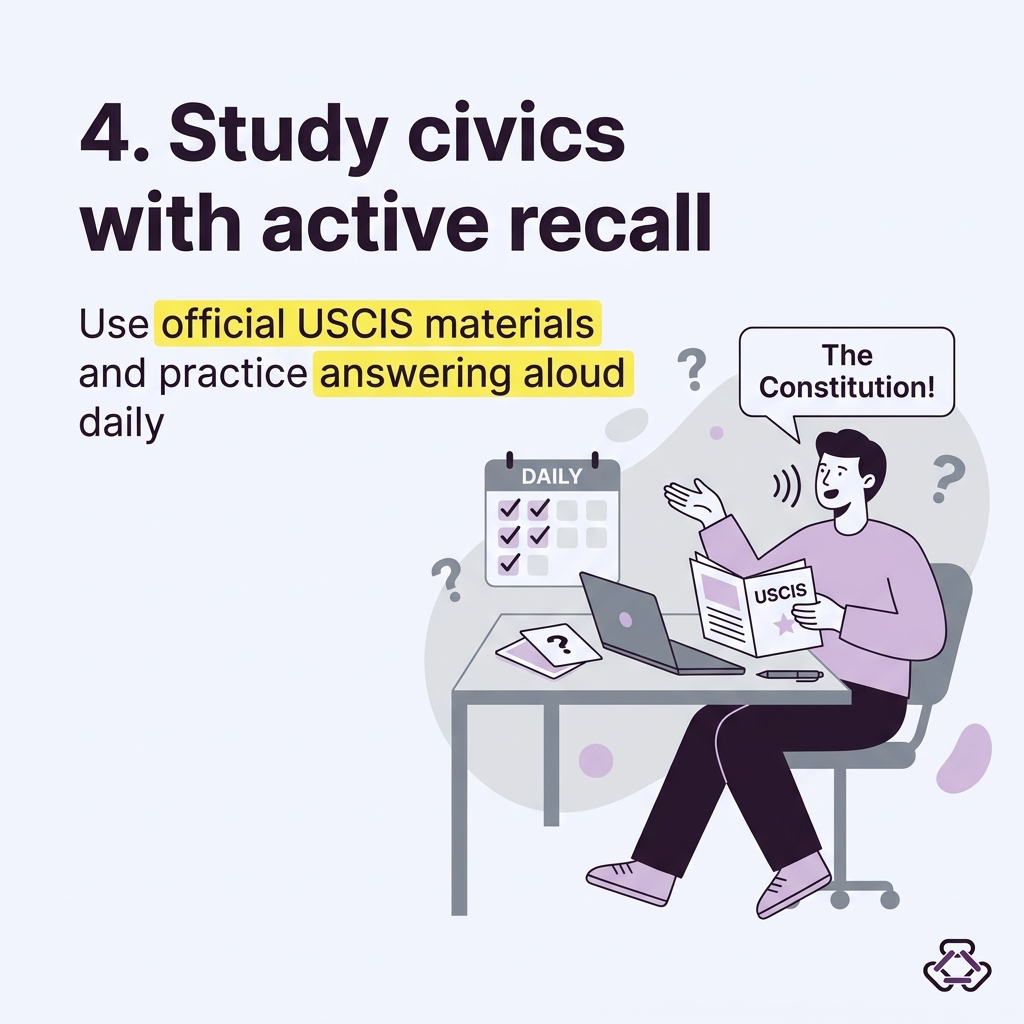
A lot of applicants try to memorize answers passively. That may work for some people, but active recall tends to be more useful under interview pressure.
USCIS offers official study materials, including question lists and interview preparation resources, and those are usually the safest starting point because they reflect what the agency actually tests (USCIS study resources).
Some practical study methods include:
- Reading the question aloud first, then answering without looking
- Studying in short daily sessions instead of one long cram session
- Mixing easy and hard questions together
- Practicing with a family member, tutor, or classmate
- Recording yourself answering oral questions
- Reviewing government vocabulary that appears in both civics and interview questions
If you filed before October 20, 2025, focus on the official 100-question bank for the 2008 test. If you filed on or after that date, focus on the 128-question bank for the 2025 test. Mixing the two versions can create unnecessary confusion.
Step 4: Review Your N-400 Before The Interview
This is where many naturalization interviews become more stressful than expected. The civics test gets most of the attention, but inconsistencies in the application often create the harder part of the appointment.
Before the interview, it helps to review:
- Every address you listed
- Every job and unemployment period
- All trips outside the United States
- Tax filing history
- Selective Service information, if applicable
- Marital history
- Child support or family support obligations, if relevant
- Any arrests, citations, charges, or court matters
- Any prior immigration issues or past filings
USCIS may update or correct answers during the interview, and officer notes and applicant testimony become part of the file (USCIS Policy Manual). That is one reason applicants with complicated travel, tax, or residence histories often spend extra time reviewing records before the appointment. If that part of your case feels messy, it may help to organize the same categories of evidence people usually gather when preparing filing records in the first place.
Step 5: Bring The Right Documents
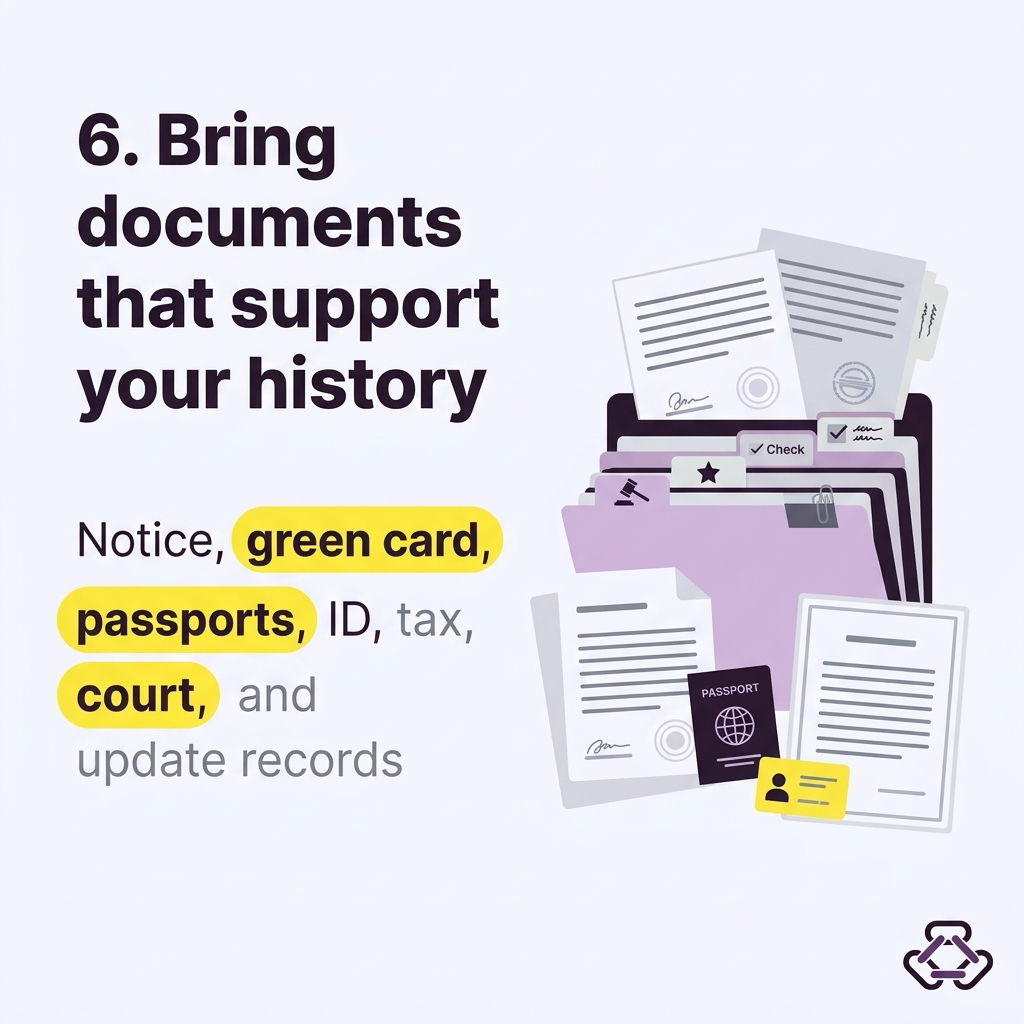
USCIS interview notices often list what to bring, and the exact list can vary by case. In general terms, applicants often bring:
- Interview appointment notice
- Green card
- Passport(s) and travel documents
- State-issued identification
- Copies of tax returns or IRS transcripts, if relevant
- Marriage certificate, divorce records, or spouse-related documents, if relevant
- Selective Service proof, if applicable
- Court dispositions or certified records for any arrests or charges
- Evidence relating to long trips abroad, if continuous residence is an issue
- Any documents that support updates or corrections to the N-400
The Form N-400 page and official form instructions discuss supporting evidence and note that applicants with trips outside the United States lasting more than six months but less than one year may need evidence showing they maintained continuous residence.
If your case includes extended travel, tax concerns, criminal history, prior immigration filings, or discrepancies in the application, an attorney may help identify what records are most relevant for the interview file.
Step 6: Learn The Most Common Interview Questions
Although every case is different, a large number of interviews cover familiar territory because USCIS is reviewing the same form categories.
Expect questions like:
- What is your current address?
- How long have you lived there?
- Where have you worked in the last five years?
- Are you married?
- How many children do you have?
- Have you taken any trips outside the United States?
- Have you ever failed to file taxes?
- Have you ever claimed to be a U.S. citizen?
- Have you ever been arrested, cited, or detained by law enforcement?
- Are you willing to take the Oath of Allegiance?
USCIS also provides vocabulary self-tests and interview preparation materials that help applicants become familiar with the wording they may hear during the examination (USCIS vocabulary self-test).
A useful preparation technique is to practice giving truthful, short, complete answers rather than long explanations. If an answer may require context, some people in similar situations prepare a simple summary first and then bring supporting records in case the officer asks follow-up questions.
Step 7: Know Whether You Qualify For An Exception Or Accommodation
Not everyone takes the full English test.
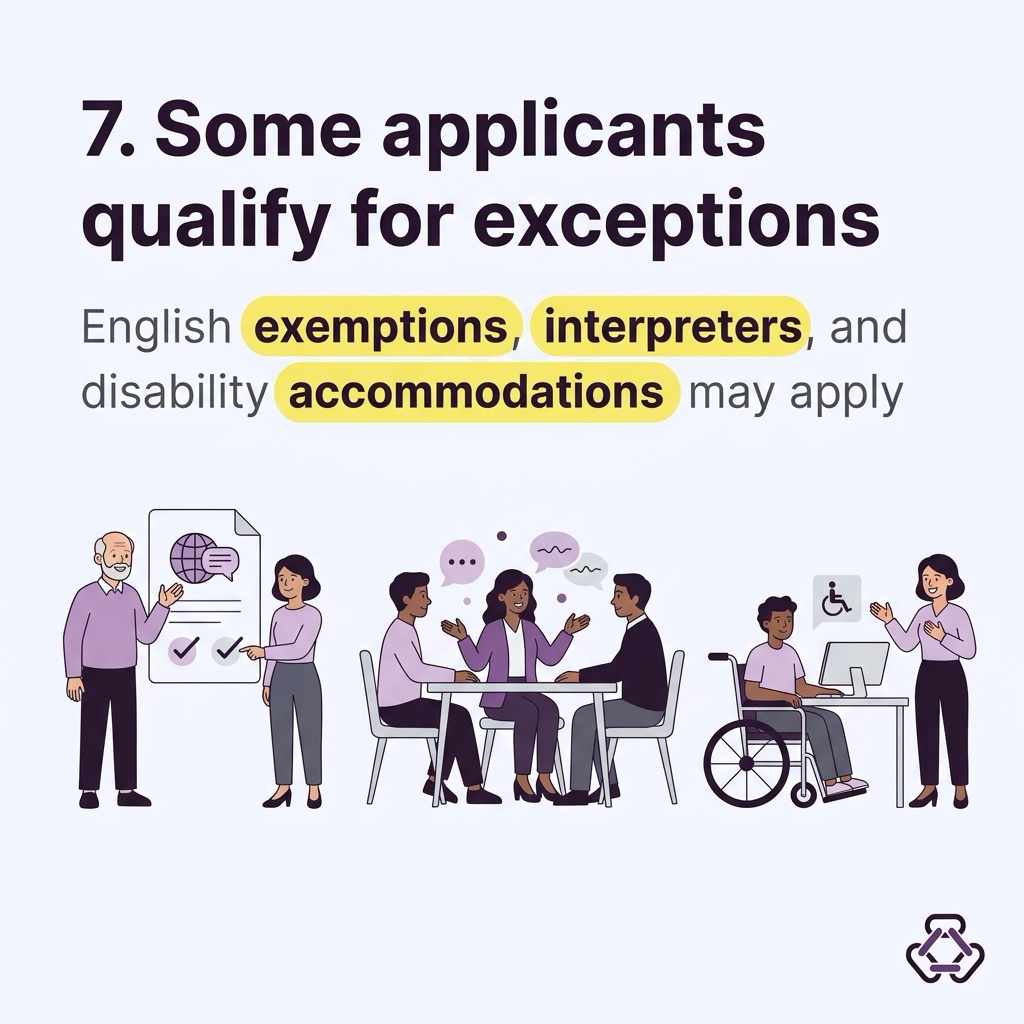
USCIS recognizes several exceptions and accommodations, including age-and-residence-based English exemptions. According to USCIS, applicants may qualify for an English exemption if they are:
- Age 50 or older and have lived as a lawful permanent resident in the United States for 20 years (“50/20”)
- Age 55 or older and have lived as a lawful permanent resident in the United States for 15 years (“55/15”)
Applicants who qualify for those English exemptions still take the civics test, but they may take it in their own language with an interpreter. Applicants who are 65 or older and have been lawful permanent residents for at least 20 years receive special consideration on the civics requirement (USCIS exceptions page; USCIS Policy Manual).
USCIS also allows certain disability-related exceptions and accommodations, including requests made through Form N-648 in qualifying circumstances (USCIS exceptions and accommodations page).
These rules can be especially important for older applicants or people with medical issues that affect communication, memory, or testing. In those situations, legal guidance may help clarify which exception, accommodation, or supporting documentation fits the facts best.
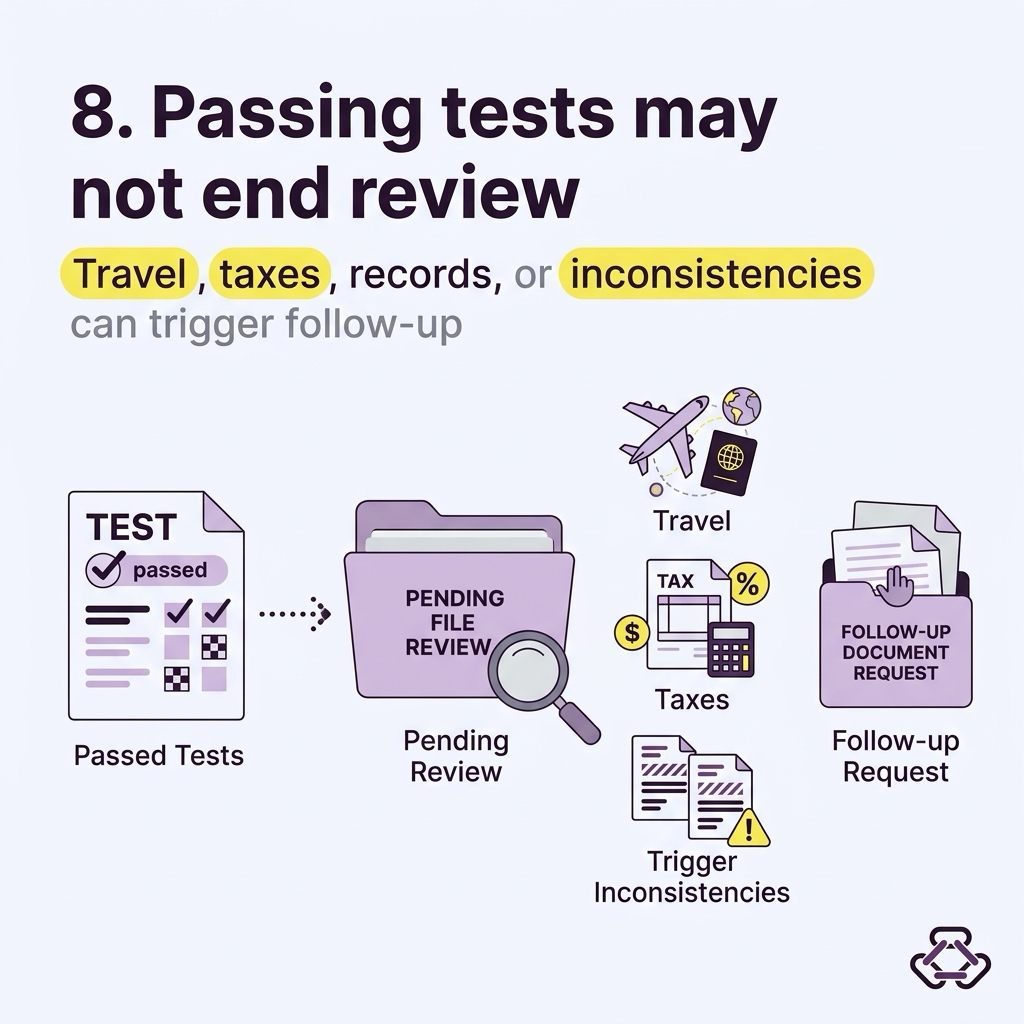
Step 8: Prepare For Issues That Commonly Delay Approval
Passing the civics and English portions does not automatically mean USCIS will approve the case that day. USCIS expressly notes that approval is not based only on passing the tests, because the agency is still evaluating overall eligibility for naturalization (USCIS FAQ).
Some issues that often slow cases include:
- Missing or inconsistent travel history
- Tax problems
- Extended trips abroad affecting continuous residence
- Problems related to selective service registration
- Arrests, charges, or incomplete court records
- Prior false claims to citizenship or voting issues
- Marital issues in three-year marriage-based cases
- Incomplete disclosure on the N-400
These concerns do not always lead to denial, but they often lead to closer review, requests for evidence, or follow-up interviews. If your case touches one of these areas, it may help to understand the kinds of citizenship issues that often create delays or complications and compare them against your own filing history.
Step 9: Know What Happens If You Do Not Pass
USCIS gives applicants two opportunities to pass the English and civics tests. If you do not pass a portion of the test at the first interview, USCIS generally schedules a second appointment for the part you did not pass, usually between 60 and 90 days after the initial interview (USCIS naturalization interview and test page).
That means an unsuccessful first attempt is not necessarily the end of the process. For many people, it becomes a second preparation window focused on the exact area that caused trouble, whether that was civics recall, spoken English, reading, or writing.
Step 10: Have A Plan For Interview Day
The final stage of preparation is often less about studying and more about reducing avoidable stress.
A few common-sense interview-day habits can help:
- Review your N-400 one last time the day before
- Organize documents in a folder by topic
- Bring originals where required
- Leave extra time for travel and security screening
- Listen carefully and answer the exact question asked
- Let the officer know if you need a question repeated
- Correct mistakes honestly if you realize something on the application was inaccurate
USCIS completed 975,800 naturalization applications in fiscal year 2023 and reported that median naturalization processing times had fallen to 6.1 months by the end of that fiscal year, down from 10.5 months earlier in the backlog period (USCIS year-end backlog update). That scale is worth remembering because it helps explain why officers often follow a structured process. The interview may feel personal and high-stakes to the applicant, but it also tends to follow familiar agency routines.
When Legal Help May Be Especially Useful
Some naturalization cases are straightforward. Others involve facts that are harder to explain in a short interview.
People often look for attorney guidance when the case involves:
- Criminal history, even if records seem old or minor
- Trips abroad longer than six months
- Tax debt or unfiled returns
- Prior immigration applications with inconsistent answers
- Divorce, separation, or questions about marriage-based residence
- Disability-related exceptions
- Prior removability concerns
- Missed selective service registration
- Concerns about good moral character
In those situations, the question is often not just “How do I pass the civics test?” It is “How will USCIS interpret my history, and what records help explain it?” An attorney might help assess risk, prepare supporting documentation, and identify issues that may deserve clarification before the interview rather than during it.
A Short Summary Before You Go
Preparing for the naturalization interview and test usually involves three things: learning which civics test applies to your filing date, reviewing your own N-400 carefully, and practicing clear, simple responses for both the interview and the English/civics testing portions.
For many applicants, the interview is less mysterious once they realize it is not only a test of memorization. It is also a review of personal history, eligibility, and consistency. The more organized that story is on paper and in conversation, the more manageable the appointment often feels.
If your citizenship case includes travel issues, tax questions, criminal records, prior inconsistencies, or other facts that may complicate the interview, finding counsel with demonstrable experience in highly similar matters can make the process easier to evaluate.
Visit ReferU.AI to get matched with an attorney who has demonstrable experience in cases like yours — for free.
