Table of Contents
- 6 Naturalization Problems That Slow or Complicate Citizenship Cases
- 1. Long Trips Outside The United States
- Why this slows cases
- Records that often matter
- 2. Tax Problems Or Missing Financial Compliance Records
- Why this slows cases
- What often raises concern
- 3. Arrests, Charges, Or Other Good Moral Character Issues
- Why this slows cases
- Issues that often complicate review
- Why legal analysis can matter here
- 4. Selective Service Registration Problems
- Why this slows cases
- A common source of confusion
- 5. Mistakes, Omissions, Or Inconsistencies On Form N-400
- Why this slows cases
- 6. Filing Before The Case Is Truly Ready
- Why this slows cases
- The Practical Reality
- When These Problems Point To Attorney Involvement
- Final Thoughts

Type
Great Grandchild
Status
Approved
Title (YouTube)
Images Failed (Social)
Images Failed (Social)
Do not index
Publish Date (TikTok)
Apr 23, 2027 09:15
Videos Post IDs (Social)
Hashtags (Social)
#LegalAdvice #LegalHelp #Immigration #Naturalization
Caption
Caption X
Cover

OG Image

Alt Image Text
Flat vector illustration of naturalization problems complicating citizenship cases, showing an applicant reviewing documents with symbols for travel history, records issues, legal concerns, taxes, family obligations, and case delays.
Images


Videos
Publish Date (Social)
Feb 17, 2027 13:30
Scheduled (Social)
Scheduled (Social)
Images Posted (Social)
Images Posted (Social)
Videos Posted (Social)
Videos Posted (Social)
Featured
Created time
Apr 7, 2026 12:02 AM
Sub-item
Authors
CTA Practice Area (Social)
Immigration
TikTok Failed (Social)
TikTok Failed (Social)
Videos Post Links (Social)
TikTok Post Links (Social)
Images Post IDs (Social)
YT Post ID
Video Pending Manual (Social)
TikTok Posted (Social)
TikTok Posted (Social)
TikTok Post IDs (Social)
Video Cover (Social)
Images Post Links (Social)
First Comment (Social)
Videos Failed (Social)
Videos Failed (Social)
YT Embedded
Images Delete (Social)
Videos Delete (Social)
Carousel Video URL (Social)
6 Naturalization Problems That Slow or Complicate Citizenship Cases
Becoming a U.S. citizen can feel straightforward at first: file Form N-400, attend biometrics, go to the interview, take the civics and English tests, and wait for the oath. In real life, though, many naturalization cases slow down because of issues that are easy to overlook until USCIS starts asking questions.
If you want a broader overview of how the process works from start to finish, it may help to begin with this plain-English walkthrough of the citizenship process.
In this post, you’ll learn about six of the most common naturalization problems that can delay a case, trigger requests for evidence, or lead to deeper review. You’ll also see what kinds of records often matter and where an immigration attorney may add value when the facts are not simple.
Scroll to the bottom for every post in this series.
1. Long Trips Outside The United States
One of the most common reasons naturalization cases become more complicated is travel history.
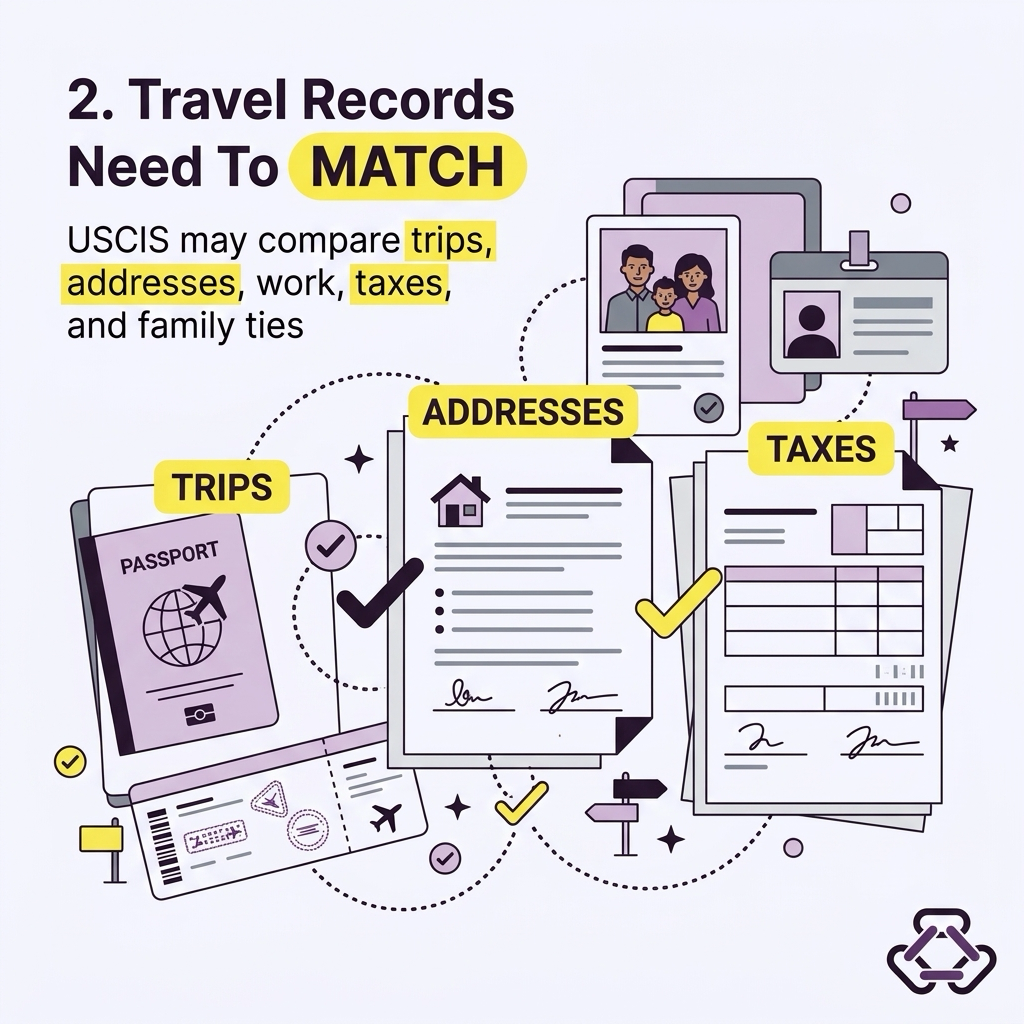
For most applicants, USCIS looks at two related but different requirements: continuous residence and physical presence. In general, a five-year applicant has to show continuous residence in the United States, at least 30 months of physical presence during the five years before filing, and at least three months of residence in the state or USCIS district before filing. For certain applicants married to U.S. citizens, the timeline may be shorter: generally three years of continuous residence and 18 months of physical presence. USCIS explains those rules here and in its Policy Manual on continuous residence.
The problem usually starts when an applicant has taken multiple long trips, a single trip of more than six months, or time abroad that does not match what was listed on the N-400. According to USCIS, an absence of more than six months but less than one year may break continuous residence unless the applicant can rebut that presumption with evidence. An absence of one year or more can break continuous residence in many cases. USCIS also separately counts the total amount of time physically present in the United States. USCIS’s physical presence guidance and the agency’s N-400 filing page both highlight these issues.
Why this slows cases
Travel issues often lead to follow-up questions at the interview, document requests, or a conclusion that the applicant filed too early. Officers may ask for records showing where a person actually lived, worked, and kept ties during the relevant period.
Records that often matter
Some applicants gather:
- Passport pages
- Entry and exit records
- Airline itineraries
- Lease or mortgage records
- Utility bills
- Tax returns
- Pay stubs
- School records
- Evidence involving a spouse or children living in the United States
This is one reason many applicants spend time getting travel, tax, and residency paperwork in order before filing, especially when trips were frequent or unusually long.
2. Tax Problems Or Missing Financial Compliance Records
Tax issues do not automatically end a naturalization case, but they often create friction.
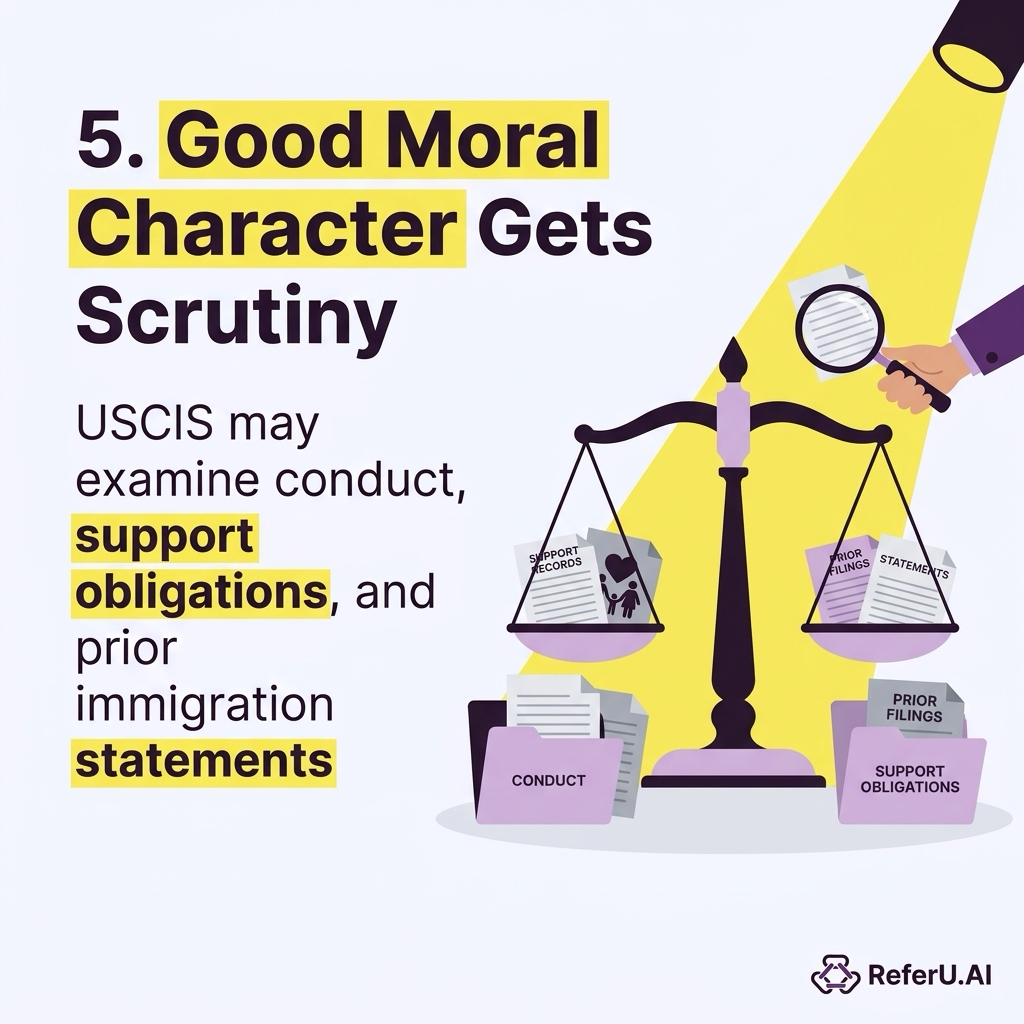
USCIS treats compliance with tax obligations as part of the larger good moral character analysis. The USCIS Policy Manual explains that an applicant generally has to show good moral character during the statutory period and through the oath, and conduct outside that period can still matter in some cases. USCIS’s good moral character guidance and the broader Policy Manual discussion of adjudicative factors make clear that officers look beyond a simple checklist.
A naturalization case may become more complicated when someone:
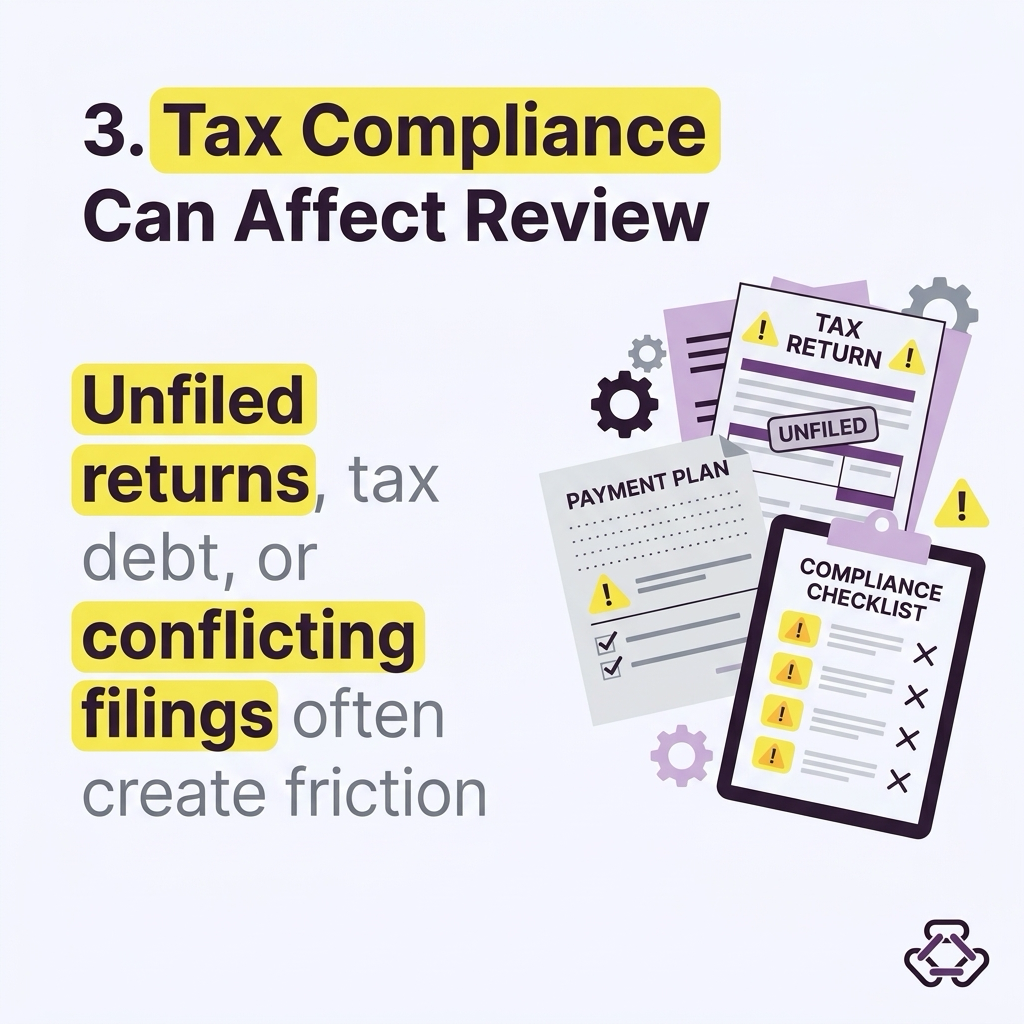
- did not file required tax returns,
- filed as a “nonresident” when that conflicts with permanent resident status,
- owes back taxes without documentation,
- has an installment agreement but cannot show current compliance, or
- gives answers on the N-400 that do not line up with IRS records or prior filings.
The USCIS N-400 page lists tax documentation among the types of evidence that may be relevant depending on the facts. The IRS also provides information on installment agreements and payment plans, which may become important if a person is trying to show that old tax debt is being addressed.
Why this slows cases
Tax problems often turn a routine interview into a documentation case. USCIS may want to see whether the issue was resolved, whether the applicant was truthful about it, and whether the person remained in compliance over time.
What often raises concern
Common red flags include:
- unfiled returns,
- inconsistent addresses or residency claims,
- unexplained tax debt,
- missed payments under a tax plan, and
- confusion about joint returns, separation, or support obligations.
For many applicants, the issue is less about the existence of tax debt and more about whether the file clearly shows a consistent, documented effort to resolve it.
3. Arrests, Charges, Or Other Good Moral Character Issues
A prior arrest does not always make a person ineligible for naturalization. Even so, criminal history is one of the most common reasons a citizenship case becomes more serious.
USCIS states that naturalization applicants generally have to show they have been and continue to be persons of good moral character during the applicable period, and the agency may also consider conduct outside that period. USCIS says this directly in the Policy Manual. The agency also notes that issues involving criminal, unlawful, or questionable activity can arise at any time during the interview, and officers are instructed to develop a complete record. That appears in USCIS’s evidence guidance.
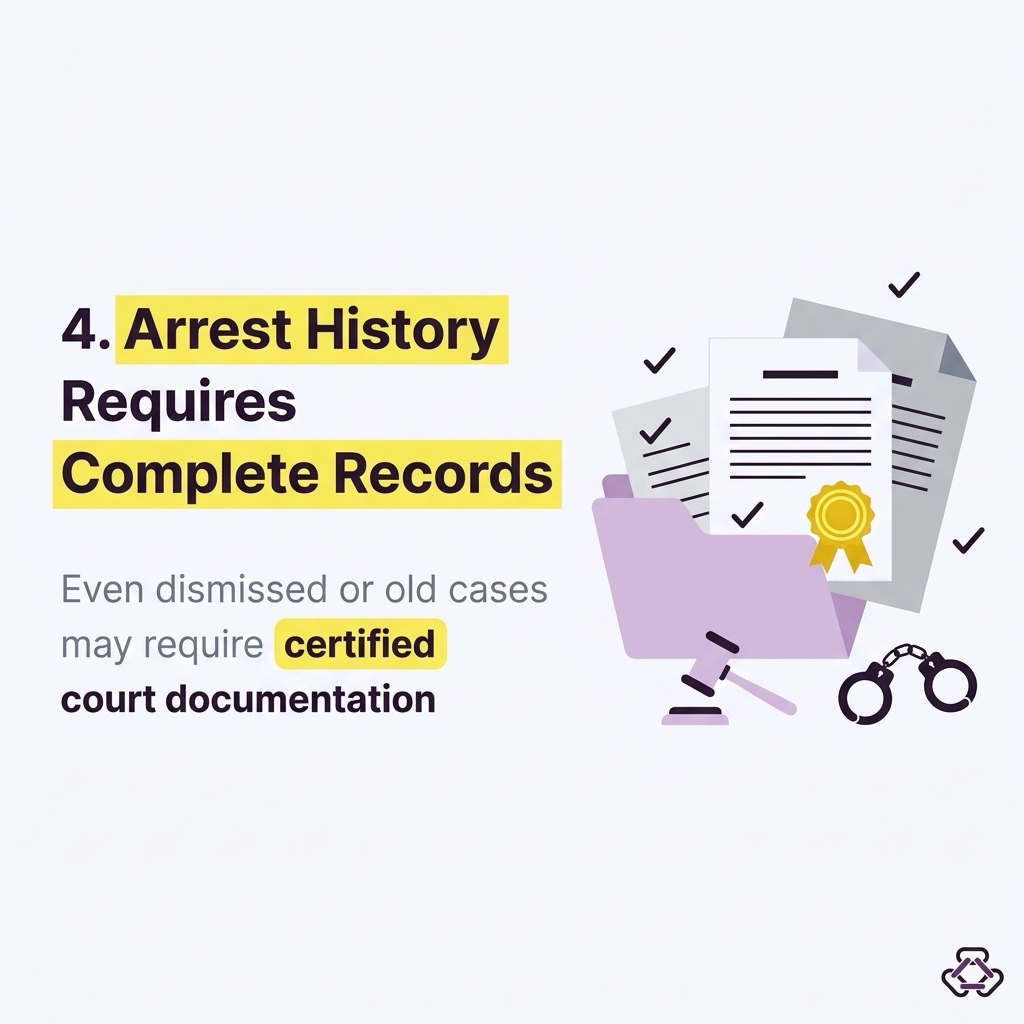
The N-400 page specifically lists documents that may be required for arrests and criminal matters, including certified court records and official statements when no charges were filed.
Why this slows cases
Even minor cases can lead to delay when the paperwork is incomplete. A dismissed case, expunged case, old citation, or arrest without charges may still prompt USCIS to ask for certified records or police documentation. If the applicant cannot produce them, the case may stall while records are retrieved or explained.
Issues that often complicate review
These situations frequently receive closer attention:
- arrests not disclosed on the N-400,
- DUI-related history,
- probation or unresolved court requirements,
- domestic violence allegations,
- drug-related issues,
- unpaid child support,
- false claims or misrepresentations in prior immigration filings,
- voting-related issues, depending on the facts.
USCIS also maintains guidance on permanent bars to good moral character for certain conduct, including aggravated felonies in some circumstances. That policy appears here.
Why legal analysis can matter here
In some cases, the real issue is not just the arrest itself. It is how immigration law categorizes the conduct, what the certified disposition says, whether the person completed every court requirement, and whether earlier immigration forms described the event differently. That is often where an immigration attorney’s review becomes especially valuable.
4. Selective Service Registration Problems
Selective Service issues are easy to miss, especially for men who became permanent residents at a young age and never realized registration applied to them.
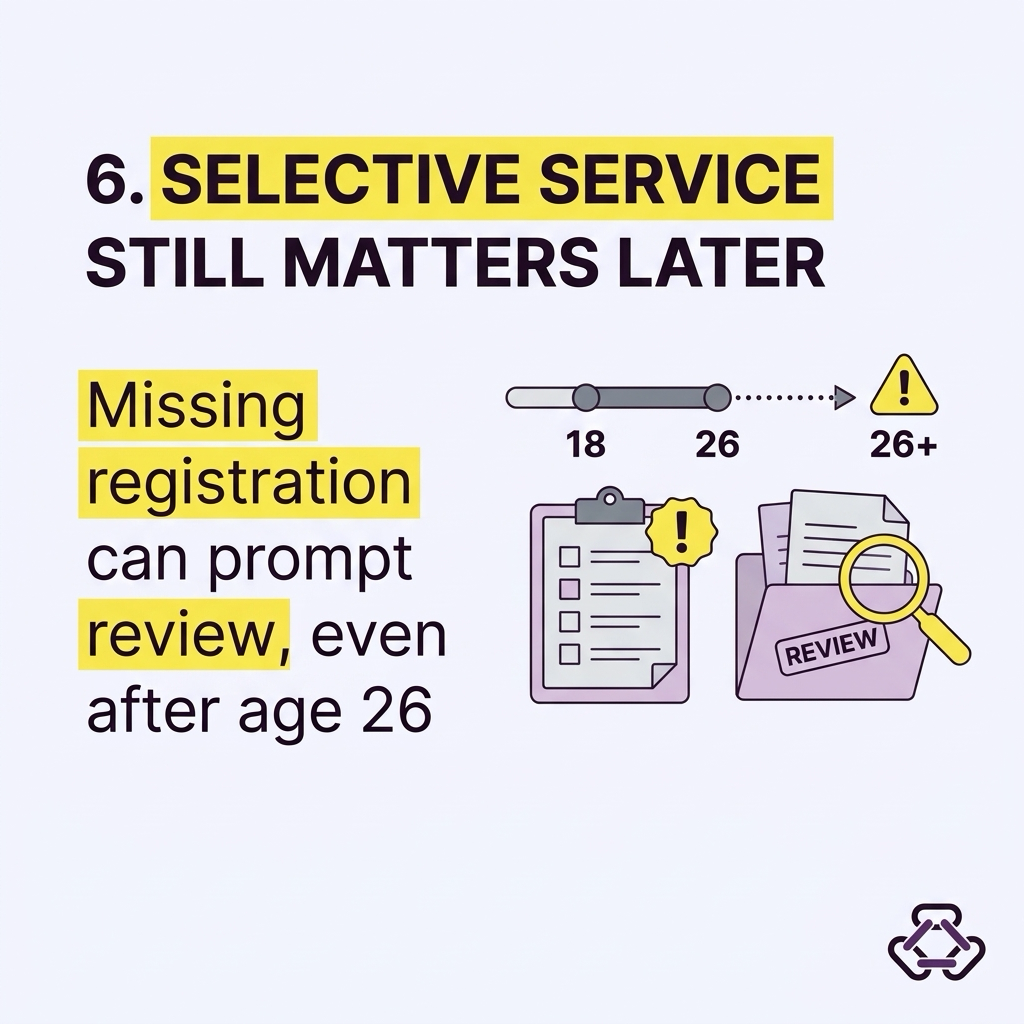
According to the Selective Service System’s registration chart, many male U.S. citizens and male immigrants, including many permanent residents, are required to register between ages 18 and 26. USCIS treats a knowing and willful failure to register as potentially relevant to good moral character, attachment to the Constitution, and willingness to bear arms on behalf of the United States. USCIS discusses that here.
The USCIS N-400 page also explains that if a person was required to register but did not, USCIS may ask for a status information letter and a written explanation. The Selective Service System has also published recent USCIS-focused guidance for applicants over age 31 explaining how registration failures may be evaluated in naturalization cases. That document is here.
Why this slows cases
A missing Selective Service registration does not always lead to denial, but it often leads to additional review. USCIS may look at:
- whether the applicant was actually required to register,
- whether the failure was knowing and willful,
- the applicant’s age now,
- whether the statutory period has passed, and
- whether supporting evidence is consistent.
A common source of confusion
Many applicants assume this issue disappears once they turn 26. In practice, it often continues to matter during naturalization review, particularly if the person is still within the relevant statutory period for showing good moral character.
5. Mistakes, Omissions, Or Inconsistencies On Form N-400
Sometimes the biggest naturalization problem is not the underlying fact. It is the way the fact appears on paper.
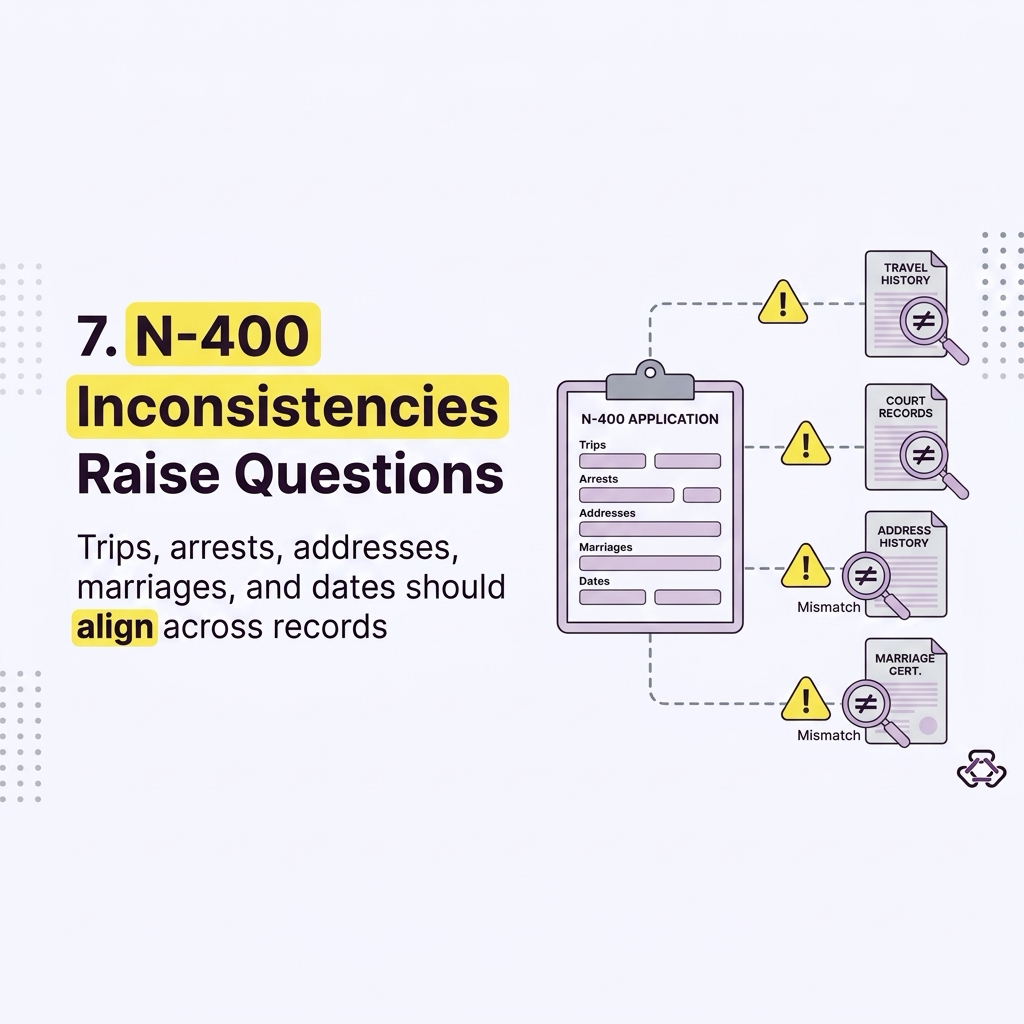
USCIS compares the N-400 against prior immigration filings, travel history, criminal records, tax records, marriage history, and statements made at the interview. The agency’s naturalization interview and test page explains that the officer reviews the application in person and tests whether the applicant understands and confirms the contents.
That means relatively common mistakes can become serious if they appear to be intentional or if they affect eligibility. Examples include:
- forgetting a trip abroad,
- omitting an arrest,
- listing the wrong address history,
- failing to mention a prior marriage,
- giving inconsistent dates of separation or employment,
- checking the wrong tax or Selective Service answer,
- filing based on marriage to a U.S. citizen when the evidence does not line up.
USCIS’s N-400 checklist also notes that foreign-language documents need full English translations with certification, another detail that can slow a case when overlooked.
Why this slows cases
Errors may lead to:
- interview rescheduling,
- requests for evidence,
- continuation for more documents,
- credibility concerns,
- deeper review of the entire immigration file.
In some cases, a correction at the interview is enough. In others, the inconsistency opens a broader inquiry into whether earlier representations were accurate.
If someone wants a fuller sense of what the officer is looking for, it may help to read more about preparing for the interview and civics test, because many N-400 issues come to light during that in-person review.
6. Filing Before The Case Is Truly Ready
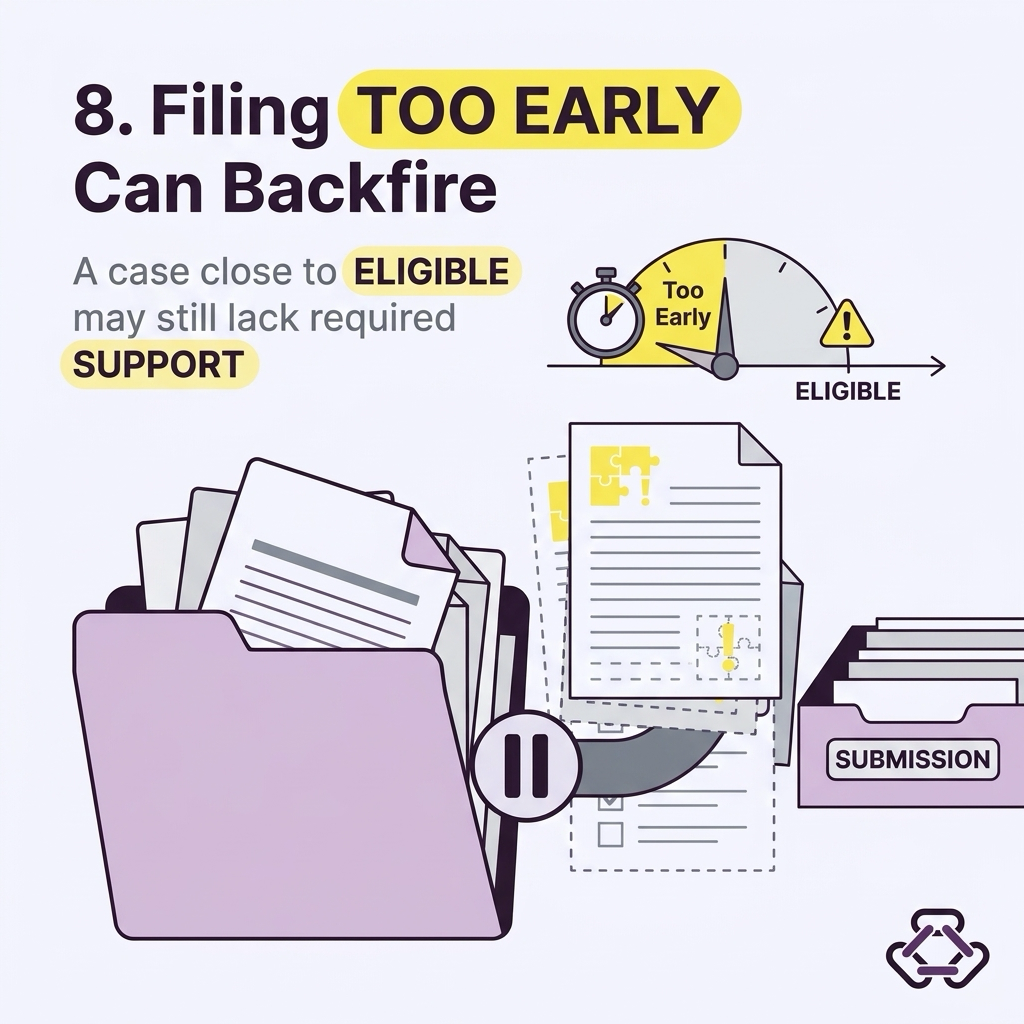
A lot of people focus on the earliest possible filing date. That can be useful, but filing at the first possible moment sometimes creates avoidable complications.
USCIS has improved naturalization processing times in recent years. In a 2024 fact sheet, the agency reported a median naturalization processing time of about 5.2 months, which it described as the lowest since 2016. See the USCIS processing-times fact sheet and the agency’s 2024 citizenship fact sheet. Faster average timelines can encourage people to file quickly, but speed does not change the underlying eligibility rules.
A case may be “not ready” when the applicant is technically close to eligible but still has unresolved questions involving:
- travel and continuous residence,
- pending divorce or marital-status complications,
- unpaid taxes,
- incomplete criminal records,
- missing court dispositions,
- recent moves affecting the three-month residence rule,
- old selective service questions,
- green card history that raises removal-related concerns.
Why this slows cases
An early filing can produce exactly the result applicants were trying to avoid: more waiting, more paperwork, and more uncertainty. If USCIS concludes that a required residence period was broken, for example, the agency’s policy explains that the person may have to establish a new statutory period before becoming eligible again. USCIS addresses that in its continuous residence policy.
The Practical Reality
Naturalization is often presented as a form-filing event. In many cases, it is really a record-building exercise. The more a case involves travel, taxes, criminal history, support obligations, prior immigration filings, or missing documents, the more important it becomes to understand what USCIS is likely to question before the application goes in.
That is also why many people spend time with broader FAQs about citizenship timing, eligibility, and interviews before filing. If you are sorting through those early questions, it can help to review common concerns people raise before applying for citizenship.
When These Problems Point To Attorney Involvement
Some naturalization cases remain manageable even when one of the six issues above appears. Others become more sensitive because one problem overlaps with another.
For example:
- a long trip abroad plus tax filings as a nonresident,
- an old arrest plus a missing court disposition,
- a selective service issue plus conflicting answers on the N-400,
- a marriage-based filing plus address-history inconsistencies,
- unpaid child support plus broader good moral character concerns.
In those situations, the question is often not “Can I still file?” but “How will USCIS interpret this record?” That is a more legal question than many applicants expect.
An immigration attorney may help assess:
- whether the filing basis is correct,
- whether more time is needed before applying,
- what records may help explain a trip, arrest, or tax issue,
- whether a past event creates a naturalization risk,
- how to correct inconsistencies without creating new ones,
- whether a denial could lead to a request for hearing through Form N-336.
Final Thoughts
Most naturalization delays are not caused by the civics test. They come from eligibility details, incomplete records, and inconsistencies that only become visible once USCIS closely reviews the file.
The six problems that commonly slow or complicate citizenship cases are:
- long trips outside the United States,
- tax problems or missing compliance records,
- arrests or other good moral character issues,
- selective service registration problems,
- mistakes or omissions on Form N-400, and
- filing before the case is actually ready.
When a case includes any of those issues, applicants often benefit from looking at the facts the way USCIS will see them: as a record of residence, compliance, credibility, and eligibility over time.
Visit ReferU.AI to get matched with an attorney who has demonstrable experience in cases like yours — for free.
