Table of Contents
- 9 Questions People Ask Before Applying for U.S. Citizenship
- 1. Am I Eligible To Apply Yet?
- 2. Do My Trips Outside The United States Matter?
- 3. What If I Had A Long Trip Or Lived Abroad For A While?
- 4. Will A Criminal Record, Arrest, Or Old Mistake Affect My Application?
- 5. Do I Have To Pass An English Test And Civics Test?
- 6. How Much Does It Cost To Apply?
- 7. How Long Does The Naturalization Process Take?
- 8. What Happens At The Interview?
- 9. Do I Really Need An Immigration Attorney For Citizenship?
- Final Thoughts

Type
Great Grandchild
Status
Approved
Title (YouTube)
Images Failed (Social)
Images Failed (Social)
Do not index
Publish Date (TikTok)
Apr 23, 2027 08:15
Videos Post IDs (Social)
Hashtags (Social)
#LegalAdvice #LegalHelp #Immigration #Naturalization
Caption
Caption X
Cover

OG Image

Alt Image Text
Flat vector illustration of a person reviewing documents, passport, calendar, and travel items before U.S. citizenship application, representing naturalization eligibility and common questions before applying.
Images


Videos
Publish Date (Social)
Feb 17, 2027 13:00
Scheduled (Social)
Scheduled (Social)
Images Posted (Social)
Images Posted (Social)
Videos Posted (Social)
Videos Posted (Social)
Featured
Created time
Apr 7, 2026 12:02 AM
Sub-item
Authors
CTA Practice Area (Social)
Immigration
TikTok Failed (Social)
TikTok Failed (Social)
Videos Post Links (Social)
TikTok Post Links (Social)
Images Post IDs (Social)
YT Post ID
Video Pending Manual (Social)
TikTok Posted (Social)
TikTok Posted (Social)
TikTok Post IDs (Social)
Video Cover (Social)
Images Post Links (Social)
First Comment (Social)
Videos Failed (Social)
Videos Failed (Social)
YT Embedded
Images Delete (Social)
Videos Delete (Social)
Carousel Video URL (Social)
9 Questions People Ask Before Applying for U.S. Citizenship
Applying for U.S. citizenship is a major milestone, but for many green card holders, the process starts with uncertainty rather than paperwork. People often wonder whether they’re eligible yet, whether travel could create problems, whether old legal issues matter, and whether the interview and test are as intimidating as they sound.
That uncertainty is common. In fiscal year 2024, USCIS naturalized about 818,500 people, which shows just how many lawful permanent residents move through this process every year — but it also highlights how important it is to get the details right before filing (USCIS naturalization statistics). In this post you’ll learn the answers to nine of the most common questions people ask before applying, along with the practical issues that often come up behind the scenes.
If you want a broader overview of the full process from eligibility through the oath ceremony, it may help to start with this plain-English walkthrough of the citizenship process.
Scroll to the bottom for every post in this series.
1. Am I Eligible To Apply Yet?
This is usually the first question, and it often turns on timing.
In general terms, most applicants apply for naturalization after being a lawful permanent resident for five years. Some people may qualify after three years if they are married to and living with a U.S. citizen and meet the other requirements tied to that category (USCIS Form N-400 page; USCIS naturalization eligibility tool).
USCIS also allows many applicants to file up to 90 calendar days early before completing the continuous residence requirement (USCIS Form N-400 page).
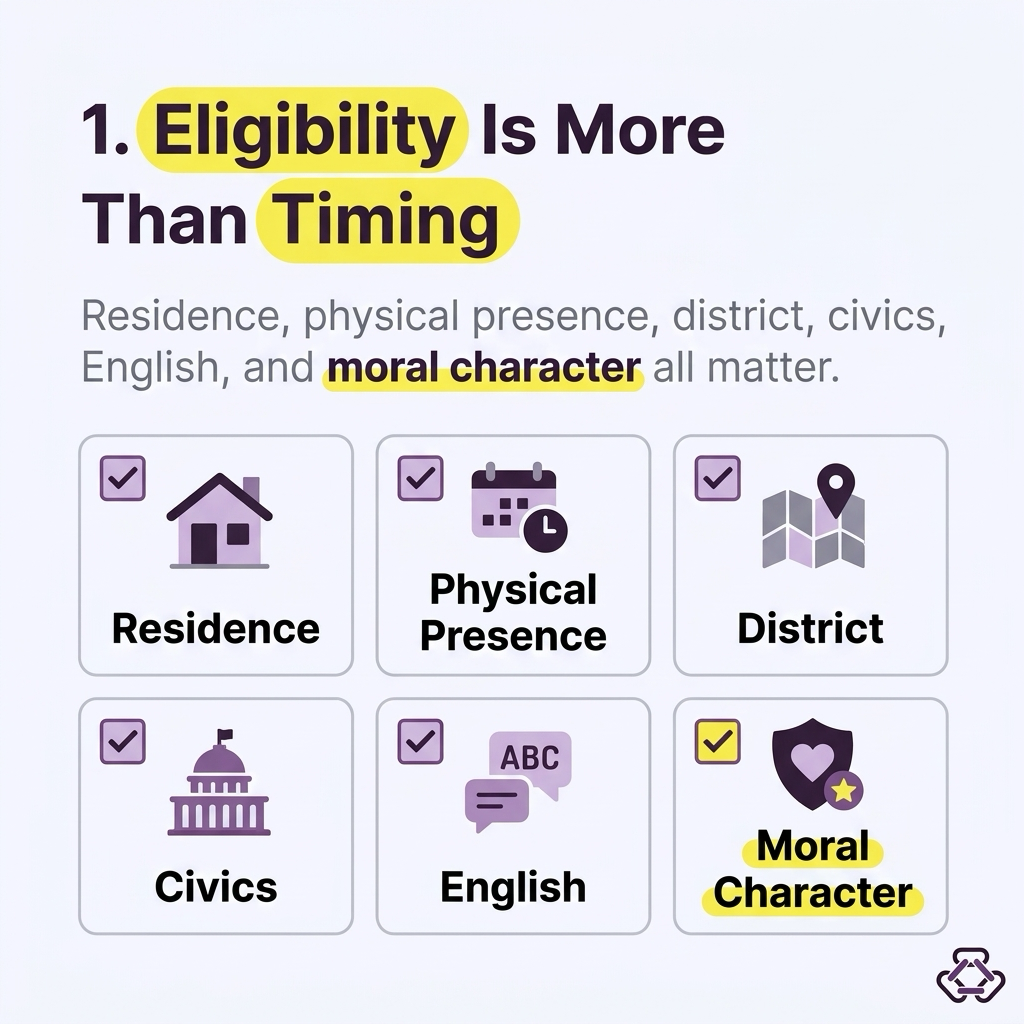
But eligibility is not only about having a green card long enough. USCIS also looks at several related requirements, including:
- continuous residence in the United States
- physical presence in the United States
- time living in the state or USCIS district where you file
- English and civics knowledge, unless an exception applies
- attachment to the Constitution
- good moral character (USCIS apply for citizenship page; USCIS Policy Manual on good moral character)
A lot of confusion comes from assuming the five-year or three-year date is the only thing that matters. It often helps to look at the full picture before filing, especially where travel, taxes, marital status, or criminal history may complicate the timeline.
2. Do My Trips Outside The United States Matter?
Yes — and this is one of the biggest issues people underestimate.
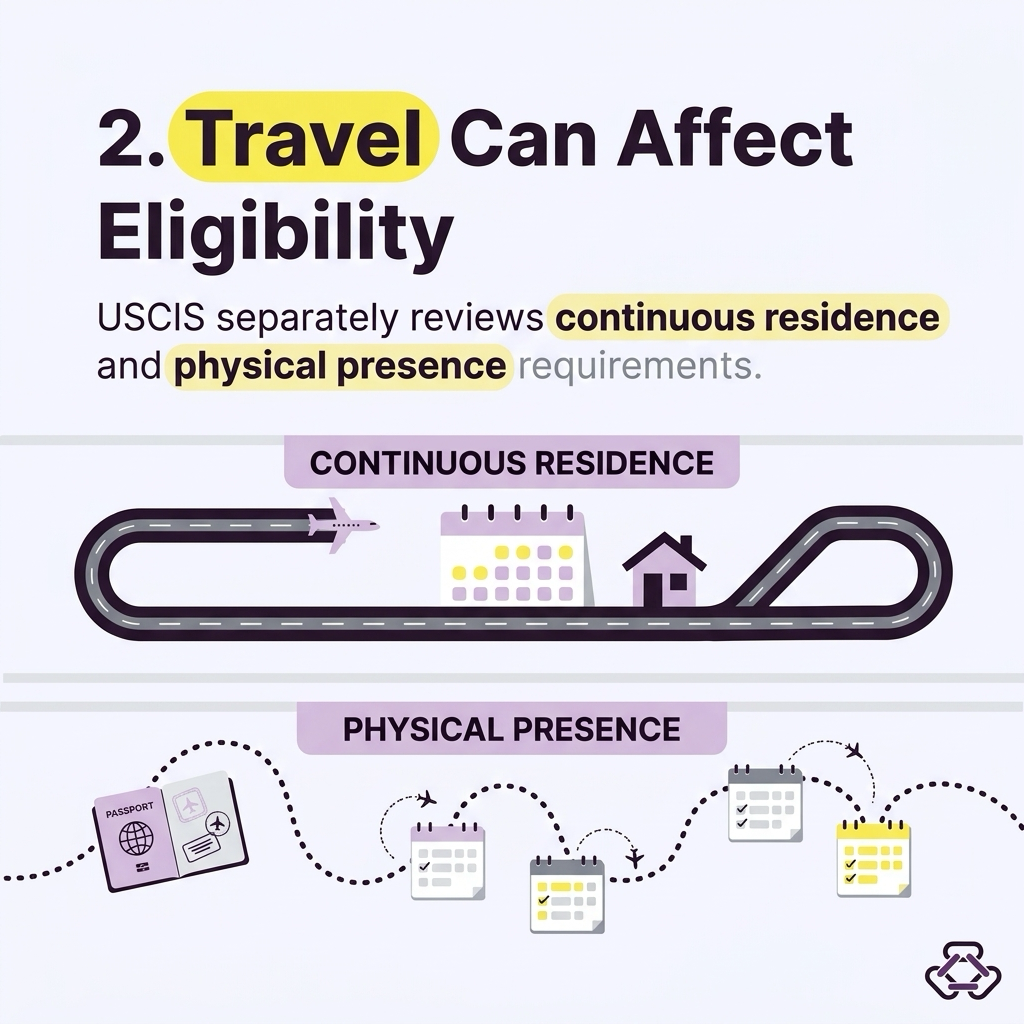
For naturalization, USCIS separates continuous residence from physical presence. They sound similar, but they are different rules. For many applicants under the five-year path, USCIS says they generally must show five years of continuous residence and at least 30 months of physical presence in the United States during that period. For many applicants under the three-year path, the physical presence requirement is generally 18 months during the three-year period (USCIS continuous residence and physical presence guidance).
Travel can affect both.
USCIS explains that:
- absences of more than six months but less than one year may disrupt continuous residence unless the applicant rebuts that issue with evidence
- absences of one year or more may disrupt continuous residence more seriously
- applicants also generally must live for at least three months in the state or USCIS district where they file before submitting Form N-400 (USCIS continuous residence and physical presence guidance)
This is one reason many applicants spend time organizing passport stamps, travel dates, tax returns, leases, employment records, and family records before filing. If that part feels complicated, it may help to read more about putting together travel, tax, and residence records before filing.
3. What If I Had A Long Trip Or Lived Abroad For A While?
A long trip does not always end the case, but it often raises extra questions.
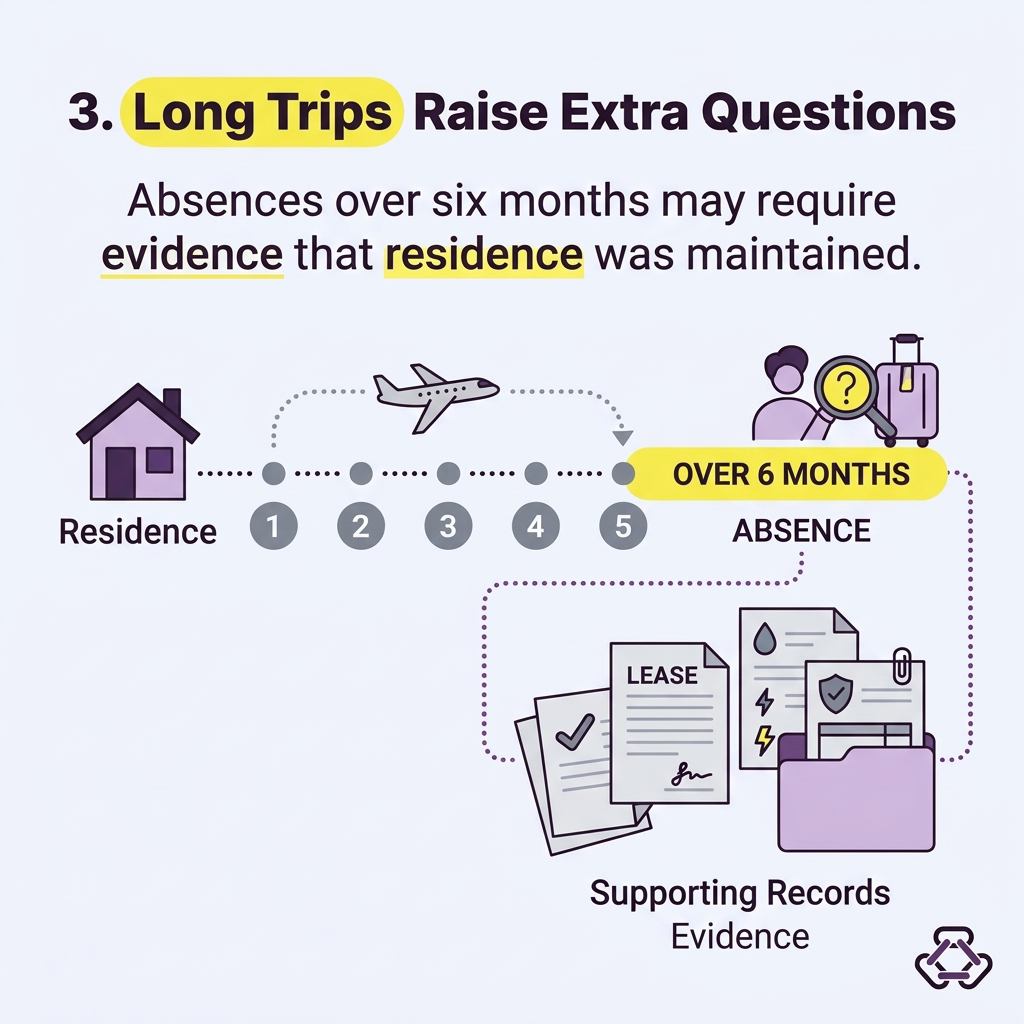
If you were outside the United States for more than six months, USCIS may look closely at whether you really maintained your U.S. residence during that time. Evidence that sometimes becomes relevant includes ongoing U.S. employment, mortgage or lease records, tax filings, immediate family ties, and proof that the trip was temporary rather than a move abroad (USCIS Form N-400 page; USCIS continuous residence and physical presence guidance).
There are also limited exceptions for certain people working abroad for the U.S. government, qualifying research institutions, certain international organizations, and some religious roles. In some of those situations, Form N-470 may be part of the analysis (USCIS continuous residence and physical presence guidance).
This question often becomes very fact-specific. A person may think, “I came back, so it’s fine,” while USCIS may be looking at whether the trip interrupted the required residence period. An immigration attorney might help determine whether the safest filing date is now or later.
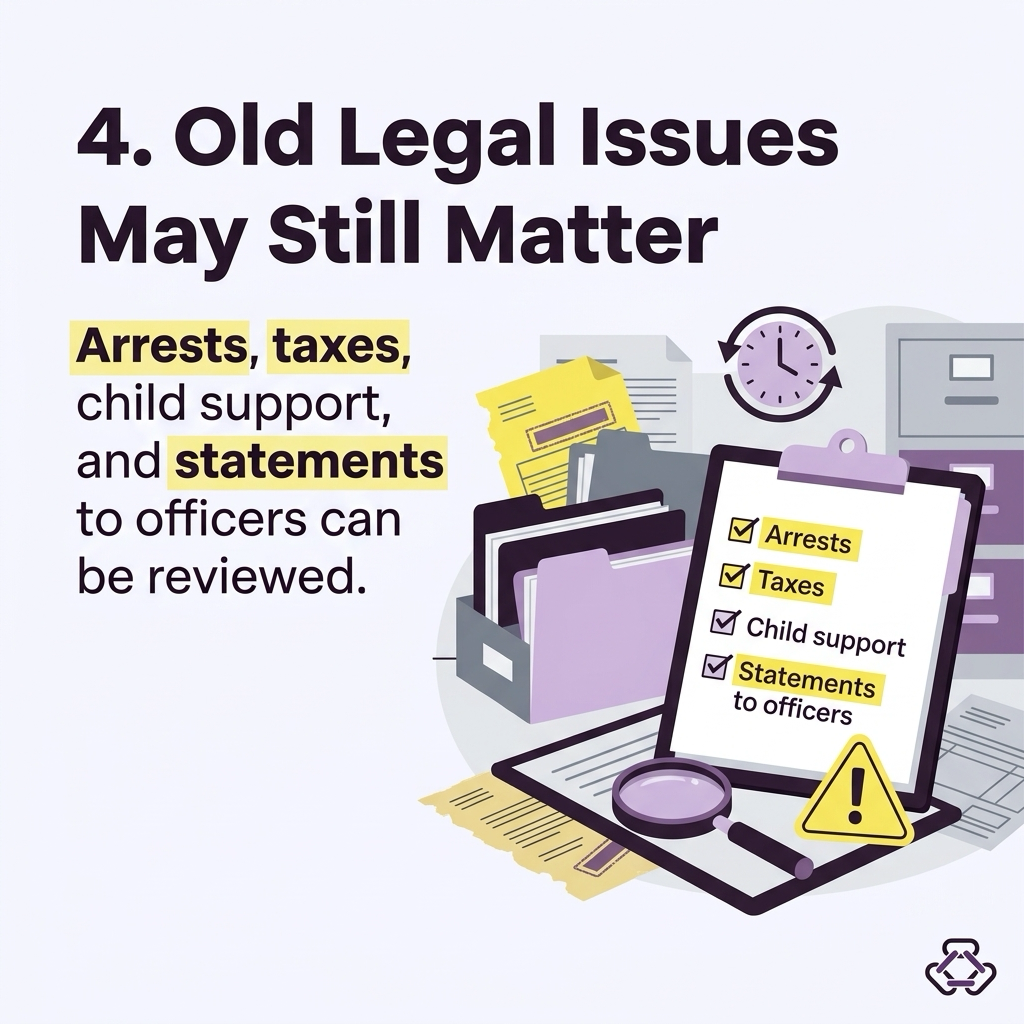
4. Will A Criminal Record, Arrest, Or Old Mistake Affect My Application?
It can, and this is one of the most important pre-filing questions.
Naturalization applicants generally have to show good moral character during the statutory period before filing and through the oath ceremony. For many applicants, that period is the five years before filing, though earlier conduct can still matter in some situations (USCIS Policy Manual on good moral character).
People often assume this only applies to serious felonies. In reality, immigration review can involve a much wider set of issues, including:
- arrests, even if charges were dismissed
- convictions
- probation or parole history
- unpaid child support
- false statements to immigration officers
- failure to file taxes or unresolved tax debt
- selective service issues in some cases (USCIS Policy Manual on good moral character; USCIS Form N-400 page)
The Form N-400 instructions also indicate that applicants may need certified court records, police documents, or official statements showing that no charges were filed, depending on what happened (USCIS Form N-400 page).
For some people, the bigger concern is not only denial of naturalization. In certain situations, filing can bring past immigration or criminal issues back under review. That is why people with arrests, prior charges, fraud concerns, prior removal issues, or complicated travel history often look for counsel with documented experience in highly similar matters before filing.
If you’re worried about delays or red flags, it may also help to review some of the common problems that can slow down or complicate a citizenship case.
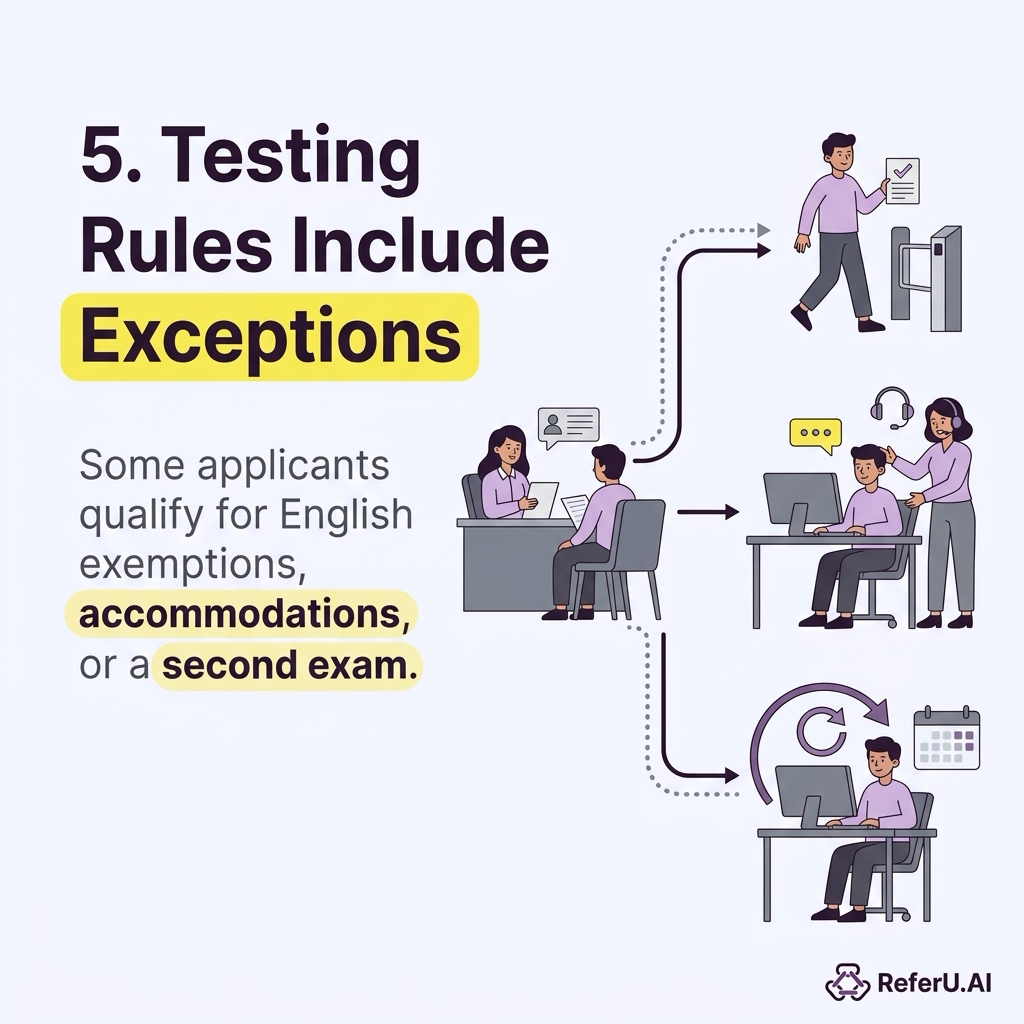
5. Do I Have To Pass An English Test And Civics Test?
Many applicants do, but not everyone.
USCIS says the naturalization test generally has two parts: English and civics. For the civics portion of the 2008 test, the officer asks up to 10 questions from the list of 100 civics questions, and the applicant has to answer enough correctly to pass (USCIS interview and test page).
There are also important exceptions and accommodations. USCIS states that some applicants are exempt from the English requirement if they meet age-and-time-as-a-permanent-resident combinations such as:
- 50/20: age 50 or older and at least 20 years as a permanent resident
- 55/15: age 55 or older and at least 15 years as a permanent resident
Those applicants still take the civics test, but they may take it in their native language with an interpreter. USCIS also gives special consideration on the civics requirement for certain applicants age 65 or older who have been permanent residents for at least 20 years. Some applicants may also request a disability exception using Form N-648 if a qualifying physical or developmental disability or mental impairment prevents compliance with the English and/or civics requirements (USCIS exceptions and accommodations; USCIS alert on disability exception policy updates).
And if a person does not pass the first time, that usually is not the end of the process. USCIS policy says an applicant who fails a portion of the English or civics testing at the initial examination is generally scheduled for a second examination within 60 to 90 days (USCIS Policy Manual on English and civics testing).
For a deeper look at the appointment itself, many applicants like to read more about getting ready for the interview and civics test.
6. How Much Does It Cost To Apply?
As of the current USCIS fee schedule reflected on the Form N-400 page, the filing fee is generally:
- $710 if filing online
- $760 if filing by paper
- $380 for certain applicants who qualify for the reduced fee
- possible fee waiver eligibility for some applicants who submit Form I-912 or a written fee waiver request with supporting documentation (USCIS Form N-400 page; USCIS filing fees page; USCIS reduced fee information for N-400)
For many families, the bigger financial question is not just the filing fee. It is the cost of filing too early, filing with missing evidence, or filing when a waiver, criminal issue, or residence issue has not been fully analyzed. In some cases, a legal review up front may save time, stress, and avoidable complications later.
7. How Long Does The Naturalization Process Take?
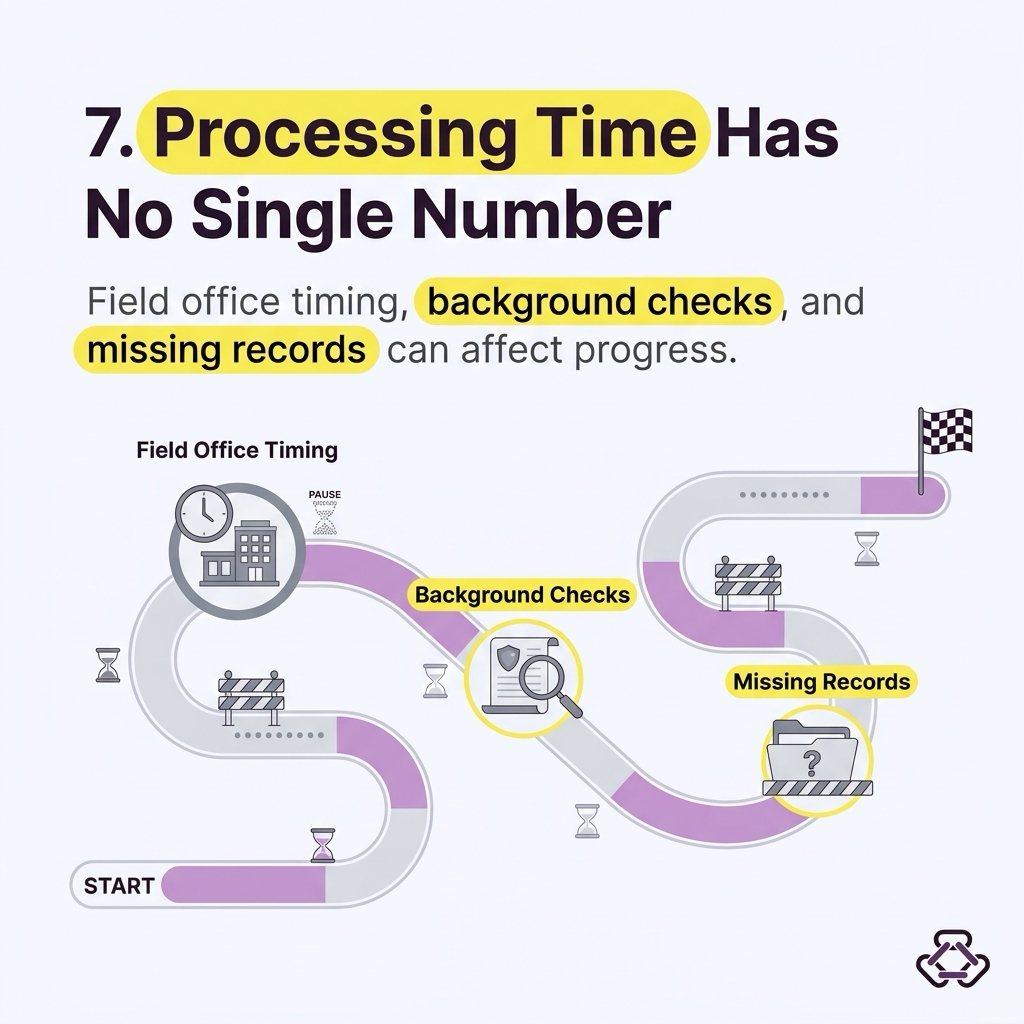
This is one of the hardest questions to answer with a single number because timing can vary by field office, background checks, interview scheduling, requests for evidence, and whether the applicant passes everything at the first interview.
USCIS says applicants can check case status and processing times online after filing, and applicants with online accounts may also see myProgress estimates for Form N-400 milestones (USCIS 10 steps to naturalization; USCIS myProgress update).
There is no single guaranteed timeframe. Some cases move smoothly from filing to interview to oath, while others remain pending because of missing records, travel questions, prior citations or arrests, tax issues, or requests for more information. That’s one reason people often ask not just “How long will it take?” but “What could slow this down?”
That second question is usually the more useful one.
8. What Happens At The Interview?
The naturalization interview is part document review, part eligibility check, and often part language and civics testing.
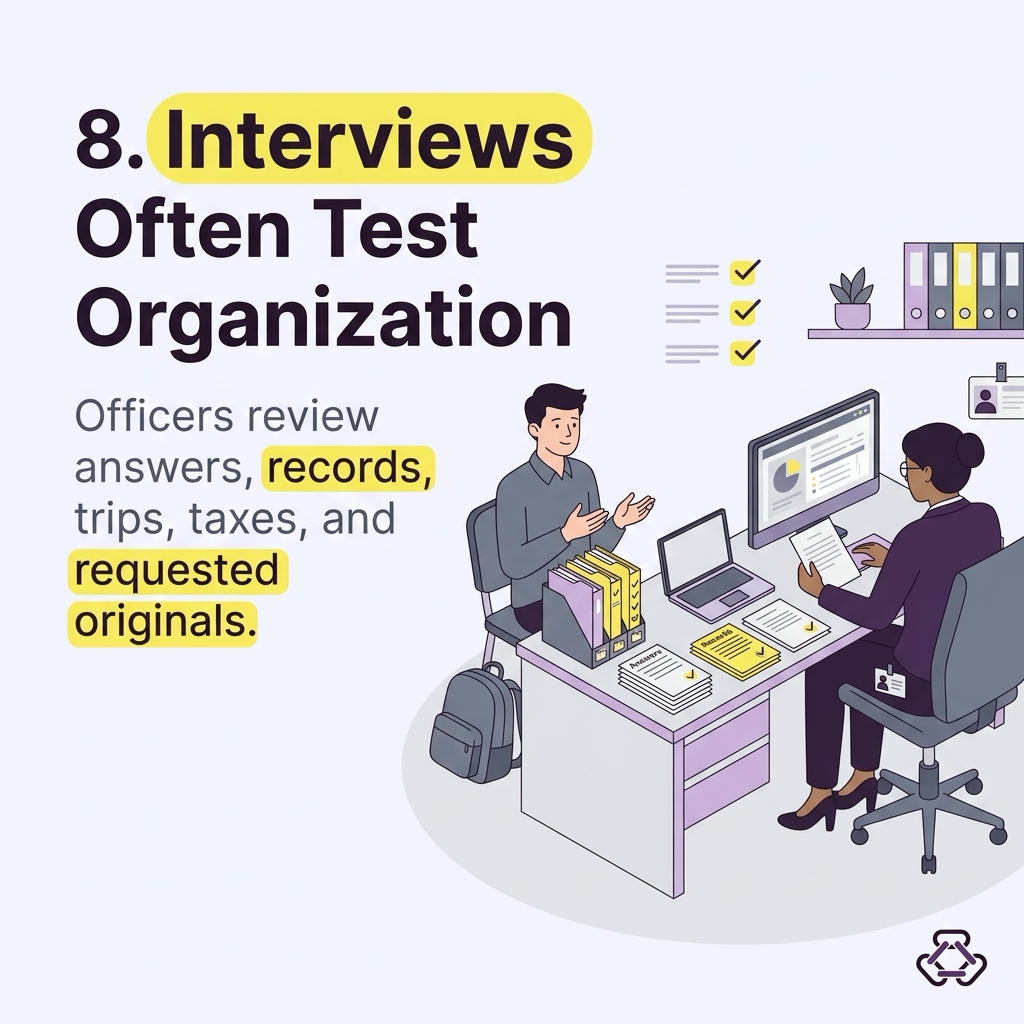
USCIS explains that at the interview, an officer reviews the applicant’s Form N-400 and asks questions about the application and background. Unless an exemption applies, the applicant also completes the English and civics testing during the examination process (USCIS interview and test page).
A lot of people picture the interview as a trick exam. In many cases, it is more accurate to think of it as a formal review of whether the information in the application is complete, accurate, and consistent with the supporting records.
Common trouble spots include:
- forgotten trips abroad
- outdated addresses
- tax filing inconsistencies
- confusion about marriages, separations, or children
- incomplete answers about arrests or citations
- not bringing requested originals (USCIS Form N-400 page; USCIS interview and test page)
If a person expects questions about residence, taxes, marital history, criminal issues, or prior immigration filings, attorney preparation may be especially valuable. In those situations, preparation is often less about memorizing civics answers and more about making sure the facts are organized and explained clearly.
9. Do I Really Need An Immigration Attorney For Citizenship?
Some naturalization cases are relatively straightforward. Others are not.
People often consider handling the case on their own when they have a long-term green card, stable residence history, clean taxes, no criminal issues, and no major travel concerns. But there are many situations where legal guidance becomes much more relevant, including:
- trips outside the United States longer than six months
- prior arrests, charges, or convictions
- prior misstatements on immigration forms
- unpaid taxes or late tax filing history
- divorce or separation issues in a three-year marriage-based case
- questions about selective service
- medical disability exception filings
- prior removal, deportation, or fraud concerns (USCIS Policy Manual on good moral character; USCIS exceptions and accommodations; USCIS continuous residence and physical presence guidance)
In those scenarios, the key issue usually is not finding an attorney with generic immigration experience. It is finding one with demonstrable experience handling cases involving the same kinds of facts, risks, and procedural issues.
That distinction matters. Citizenship cases can look simple on the surface while involving complicated legal questions underneath. A person may be filing “just an N-400,” but the real issue may be whether an old plea, a long absence, or inconsistent prior filings create exposure that deserves a closer look first.
Final Thoughts
Applying for U.S. citizenship often starts with nine simple questions, but the answers are not always simple. Eligibility, travel, taxes, criminal history, testing, fees, and interview preparation can all affect how smooth the process feels.
For some people, the path is mostly about getting organized. For others, the more important step is identifying possible risk before paperwork goes in. Either way, having the right information early can make the process more manageable.
Visit ReferU.AI to get matched with an attorney who has demonstrable experience in cases like yours — for free.
