Table of Contents
- 9 Removal Defense Mistakes That Make a Bad Situation Worse
- 1. Ignoring A Notice To Appear Or Assuming It Is Just Paperwork
- 2. Missing Court Dates Because The Address Was Never Properly Updated
- 3. Going To Court Unprepared To Admit, Deny, Or Correct The Charges
- 4. Waiting Too Long To Explore Relief Options
- 5. Trusting A Notario, Consultant, Or Unlicensed “Immigration Expert”
- 6. Failing To Build Evidence Early Because “I Can Explain It To The Judge”
- 7. Assuming There Is No Point In Finding Counsel Because The Court Will Explain Everything
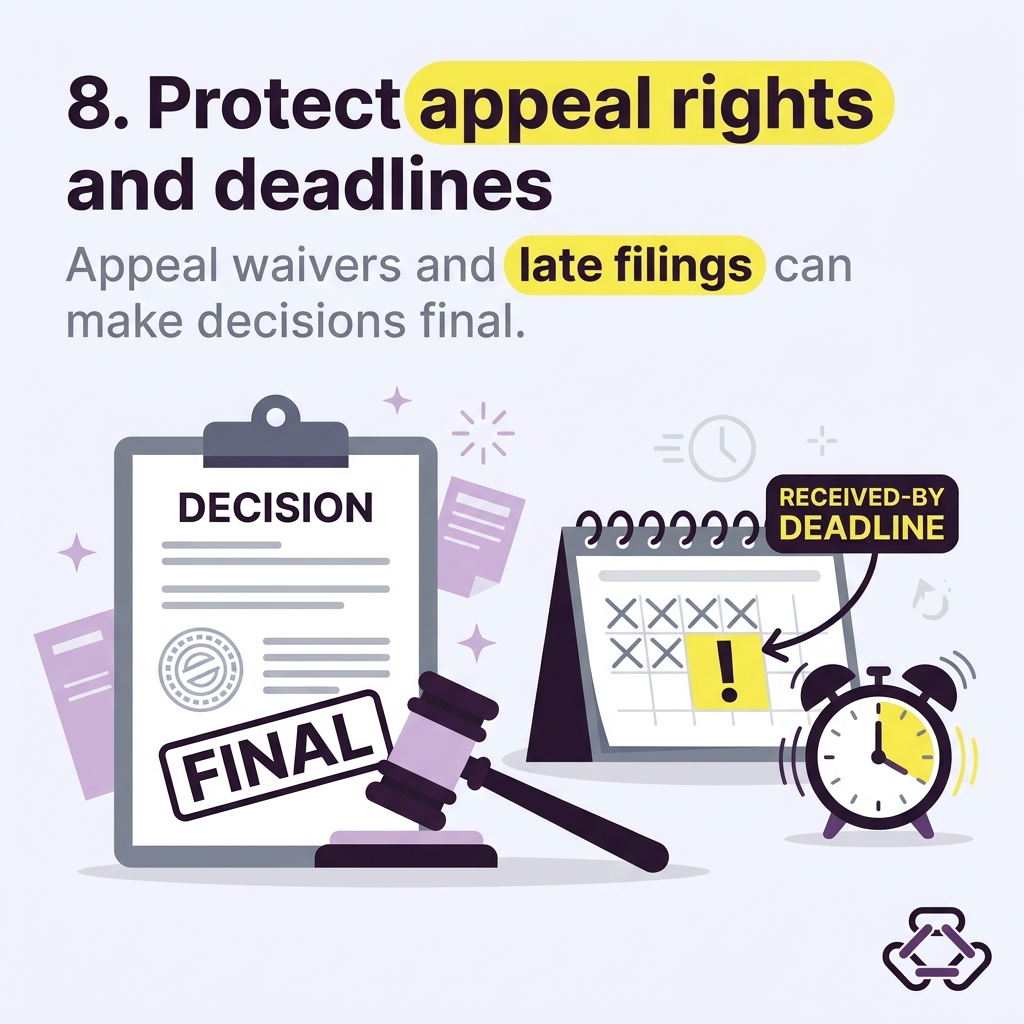
- 8. Giving Up Appeal Rights Too Quickly Or Missing The Deadline Entirely
- Waiving Appeal Without Understanding The Consequences
- Missing The 30-Day Receipt Deadline
- 9. Believing Delay Is A Strategy By Itself
- Why These Mistakes Happen So Often
- A Better Way To Think About Removal Defense
- Final Takeaway

Type
Great Grandchild
Status
Approved
Title (YouTube)
Images Failed (Social)
Images Failed (Social)
Do not index
Publish Date (TikTok)
Apr 24, 2027 16:15
Videos Post IDs (Social)
Hashtags (Social)
#LegalAdvice #LegalHelp #Immigration #RemovalProceedings
Caption
Caption X
Cover

OG Image

Alt Image Text
Flat vector illustration of removal defense mistakes in immigration court, showing missed court dates, paperwork problems, and case complications.
Images

Videos
Publish Date (Social)
Feb 18, 2027 13:30
Scheduled (Social)
Scheduled (Social)
Images Posted (Social)
Images Posted (Social)
Videos Posted (Social)
Videos Posted (Social)
Featured
Created time
Apr 7, 2026 12:02 AM
Sub-item
Authors
CTA Practice Area (Social)
Immigration
TikTok Failed (Social)
TikTok Failed (Social)
Videos Post Links (Social)
TikTok Post Links (Social)
Images Post IDs (Social)
YT Post ID
Video Pending Manual (Social)
TikTok Posted (Social)
TikTok Posted (Social)
TikTok Post IDs (Social)
Video Cover (Social)
Images Post Links (Social)
First Comment (Social)
Videos Failed (Social)
Videos Failed (Social)
YT Embedded
Images Delete (Social)
Videos Delete (Social)
Carousel Video URL (Social)
9 Removal Defense Mistakes That Make a Bad Situation Worse
Removal proceedings can feel overwhelming fast. A single missed hearing, a bad filing, or a misunderstanding about what immigration court is really asking for can make an already stressful case much harder to manage. That’s one reason this topic matters so much: small errors often create bigger problems later.
In this post you’ll learn about nine common removal defense mistakes, why they matter, and what people often consider doing instead. If you’re still getting familiar with the process itself, it may help to start with a plain-English overview of how immigration court and removal proceedings usually work. The goal here is not legal advice. It’s a practical guide to the kinds of missteps that can quietly damage a case before someone realizes what happened.
Immigration court is also under enormous pressure. According to TRAC, the immigration court backlog stood at 3,318,099 active cases at the end of February 2026. In a system that crowded, confusion, delay, and missed details can carry real consequences.
Scroll to the bottom for every post in this series.
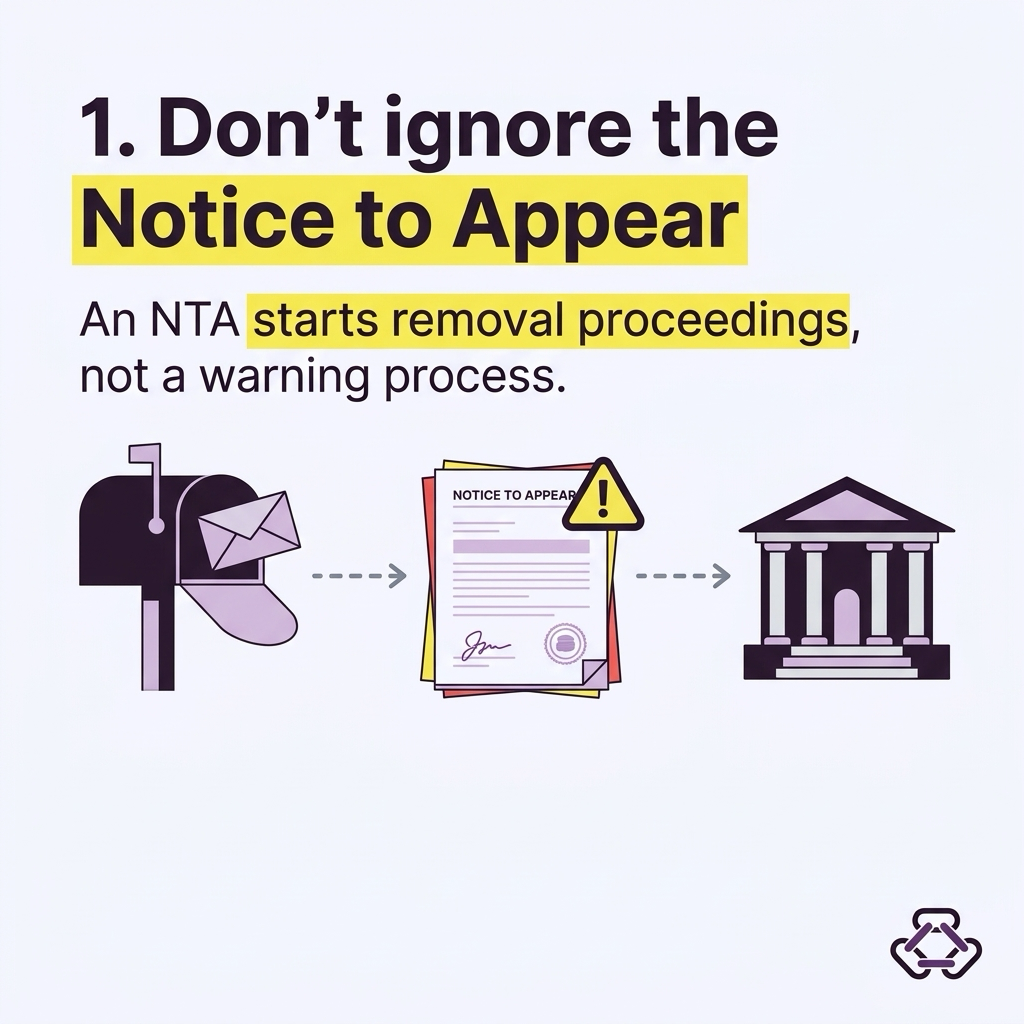
1. Ignoring A Notice To Appear Or Assuming It Is Just Paperwork
A Notice to Appear, or NTA, is the document that starts removal proceedings. The Department of Homeland Security uses it to list allegations and the legal charges it believes make a person removable, according to the Executive Office for Immigration Review. Sometimes the first hearing date appears on the NTA. Sometimes it does not, and the immigration court later sends a separate hearing notice.
One of the most damaging mistakes is treating the NTA like a warning letter instead of a live court matter.
Here’s what often gets missed:
- The allegations and charges matter
- Errors on the form may matter
- A hearing may be scheduled later even if the NTA has blanks
- The court may send notices to the address in its system, not the address a person informally mentioned elsewhere
EOIR explains that if hearing details are missing from the NTA, the court may later send a Notice of Hearing, and respondents can also check case status through EOIR’s case information system and hotline at the contact points listed by the agency on its Notice to Appear page.
For many people, the first practical challenge is simply understanding what arrived in the mail and what comes next. That’s why related guidance on what to do after an NTA arrives and how to organize an immigration court case often becomes important very early.
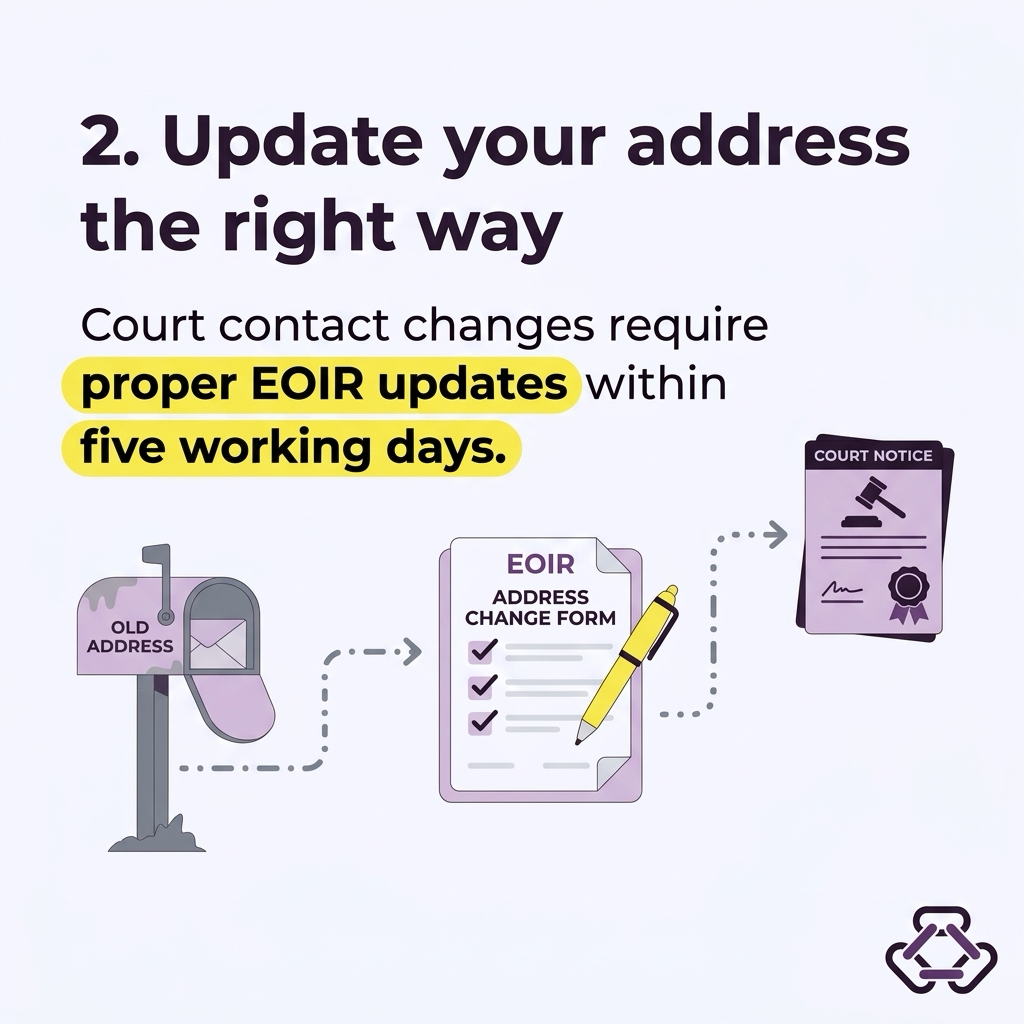
2. Missing Court Dates Because The Address Was Never Properly Updated
This is one of the most common ways a bad situation gets worse.
EOIR states that a respondent has to provide any change of address or contact information to the immigration court or the Board of Immigration Appeals within five working days of the change, using the appropriate EOIR-33 form or Respondent Access, as described on EOIR’s update contact information page. EOIR also notes that the court does not update contact information just because a different address appears in motions or other filings, as explained in the agency’s EOIR-33 instructions.
That detail surprises a lot of people. They may think:
- “My lawyer filed something with my new address”
- “I told ICE”
- “USCIS already has my new address”
- “I wrote the new address in another form”
In immigration court, those assumptions can be dangerous. Different agencies and systems do not always update each other automatically.
A missed hearing can lead to an in absentia removal order, meaning the judge proceeds without the respondent present. Whether there are options to challenge that later depends on the facts and timing, and an attorney may help assess that quickly. But from a damage-control perspective, many cases become harder the moment the person stops receiving official notices.
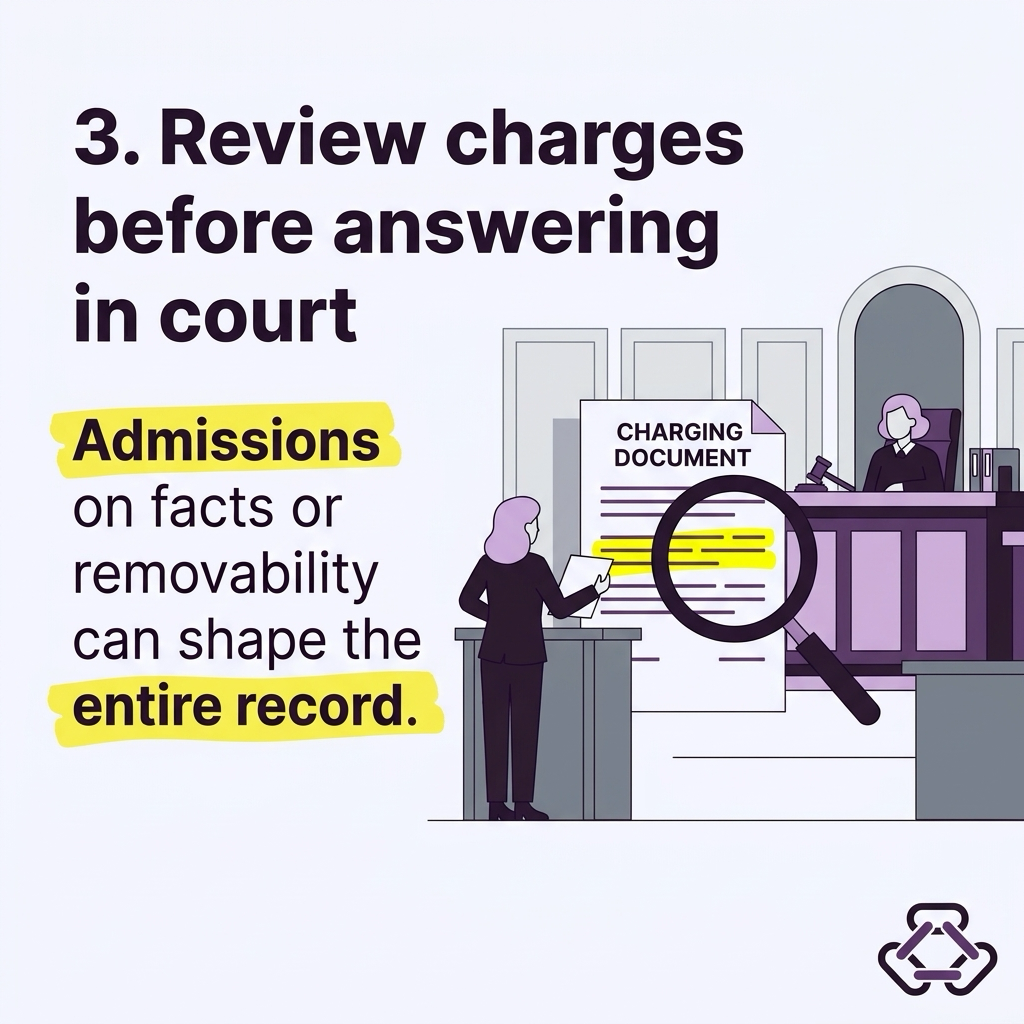
3. Going To Court Unprepared To Admit, Deny, Or Correct The Charges
At a hearing, the immigration judge may ask whether the allegations in the NTA are true and whether the respondent admits the legal charges. EOIR explains this directly on its NTA guidance. If there is an error in the NTA, EOIR says that issue can be raised with the immigration judge.
A common mistake is answering too quickly without understanding what is being admitted.
That can include:
- Facts about entry or status
- Prior immigration history
- Criminal history references
- Family relationships
- Dates and locations
- The legal charge of removability itself
Some people assume the first hearing is informal and can be handled casually. In reality, the record created there may shape everything that follows.
In general terms, immigration judges often use early hearings to identify what is contested, whether the person seeks relief, and what deadlines apply. A person who walks into court without reviewing the NTA line by line may accidentally concede a point that later becomes difficult to unwind. That is one reason many respondents try to get organized early, gather records, and understand the basic structure of the case before appearing.
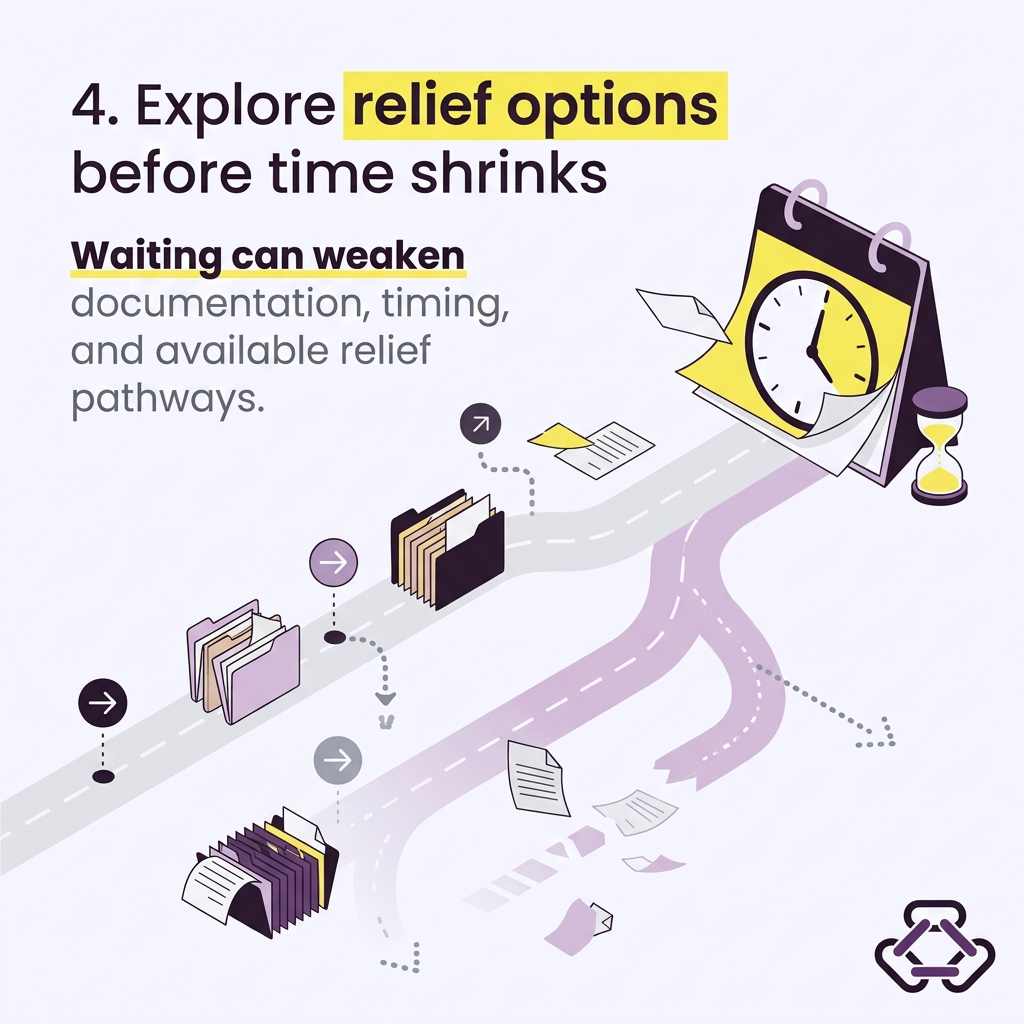
4. Waiting Too Long To Explore Relief Options
One of the most harmful removal defense mistakes is assuming that “defense” only means arguing that DHS is wrong. In many cases, defense also involves exploring relief from removal.
Depending on the facts, relief can include things such as asylum, withholding of removal, protection under the Convention Against Torture, cancellation of removal, adjustment of status, voluntary departure, TPS-related arguments in some cases, or other forms of relief. EOIR’s general materials and BIA practice resources discuss proceedings and appeals, while USCIS materials explain several related humanitarian and status-based pathways, including asylum, Form I-589, and Temporary Protected Status.
The mistake is not always “failing to apply.” Sometimes it’s waiting so long that the relief strategy becomes weaker, less complete, or harder to document.
For example, asylum claims often involve timing questions, including the well-known one-year filing issue discussed in USCIS training and form materials on Form I-589. Cancellation cases often require detailed proof about time in the United States, qualifying relatives, and hardship. Adjustment-based defenses may depend on visa availability, admissibility issues, or prior filings. TPS can matter, but it is not a universal shield against removal, and current TPS rules vary by country designation and procedural posture, as USCIS explains on its TPS page.
The longer someone waits to identify possible avenues, the less time there may be to collect declarations, country conditions evidence, medical records, tax records, identity documents, criminal dispositions, expert reports, or proof of continuous presence. For a broader overview, many readers also look into the range of relief people sometimes explore in immigration court, because the available path is often more fact-specific than it first appears.
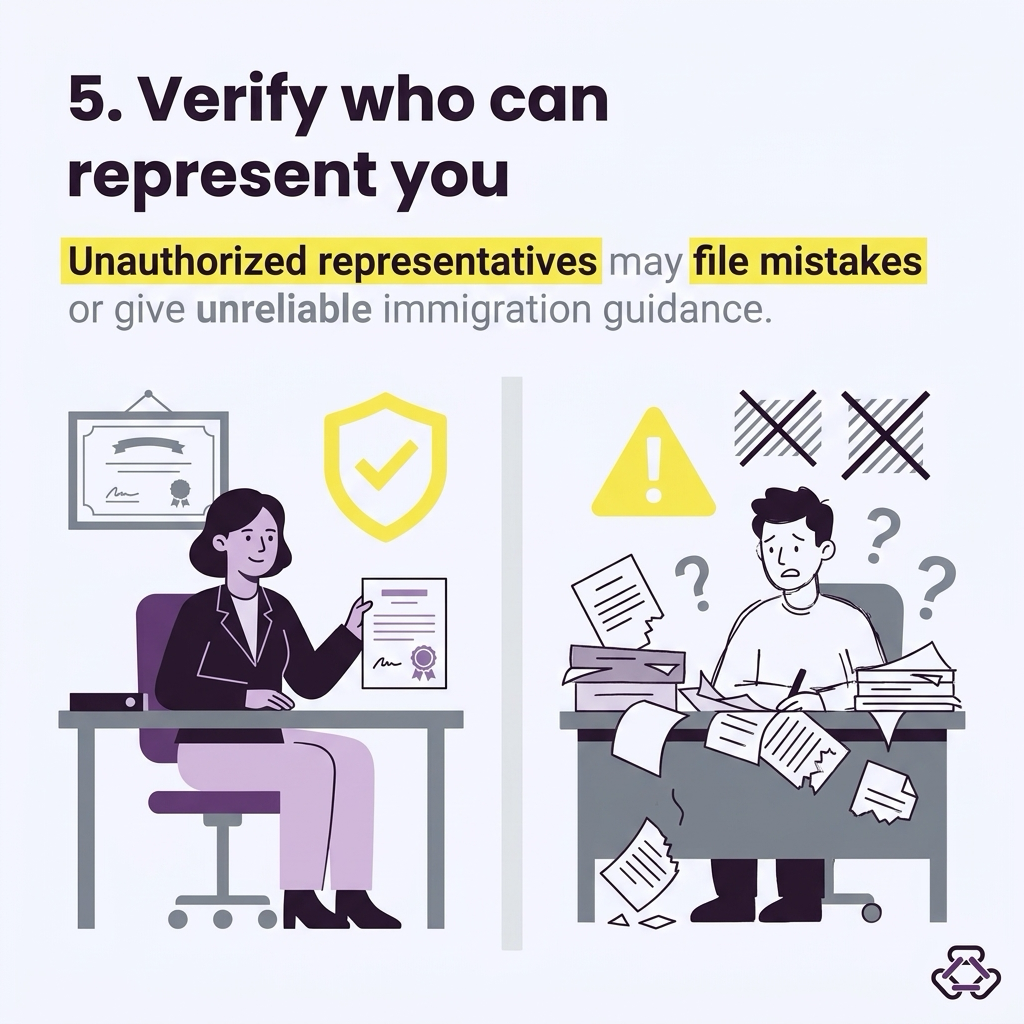
5. Trusting A Notario, Consultant, Or Unlicensed “Immigration Expert”
This mistake can quietly ruin a case.
EOIR states that only certain individuals can represent someone before the immigration courts or the BIA, and it specifically warns that unauthorized individuals cannot give legal advice, determine eligibility for relief, or represent someone in immigration court on that basis, as explained on EOIR’s page about who can represent you before EOIR. State and nonprofit resources also continue to warn about immigration-services fraud. For example, Massachusetts describes notario fraud as devastating and encourages people to ask for copies of anything filed in their name, while the State Bar of California collects immigrant fraud-prevention resources and reporting guidance.
This problem is not theoretical. Unlicensed preparers sometimes:
- File the wrong application
- Miss deadlines
- Use false facts
- Fail to explain hearing obligations
- Disappear after taking payment
- Tell clients a work permit strategy is “automatic”
- Submit asylum filings without explaining long-term consequences
By the time a real attorney sees the file, the court record may already contain damaging admissions or inaccurate claims.
People often use the word “notario” because in some countries that title carries legal authority. In the U.S. immigration context, that assumption can be costly. If someone is helping with a removal case, it is worth verifying whether that person is actually authorized to represent respondents before EOIR.
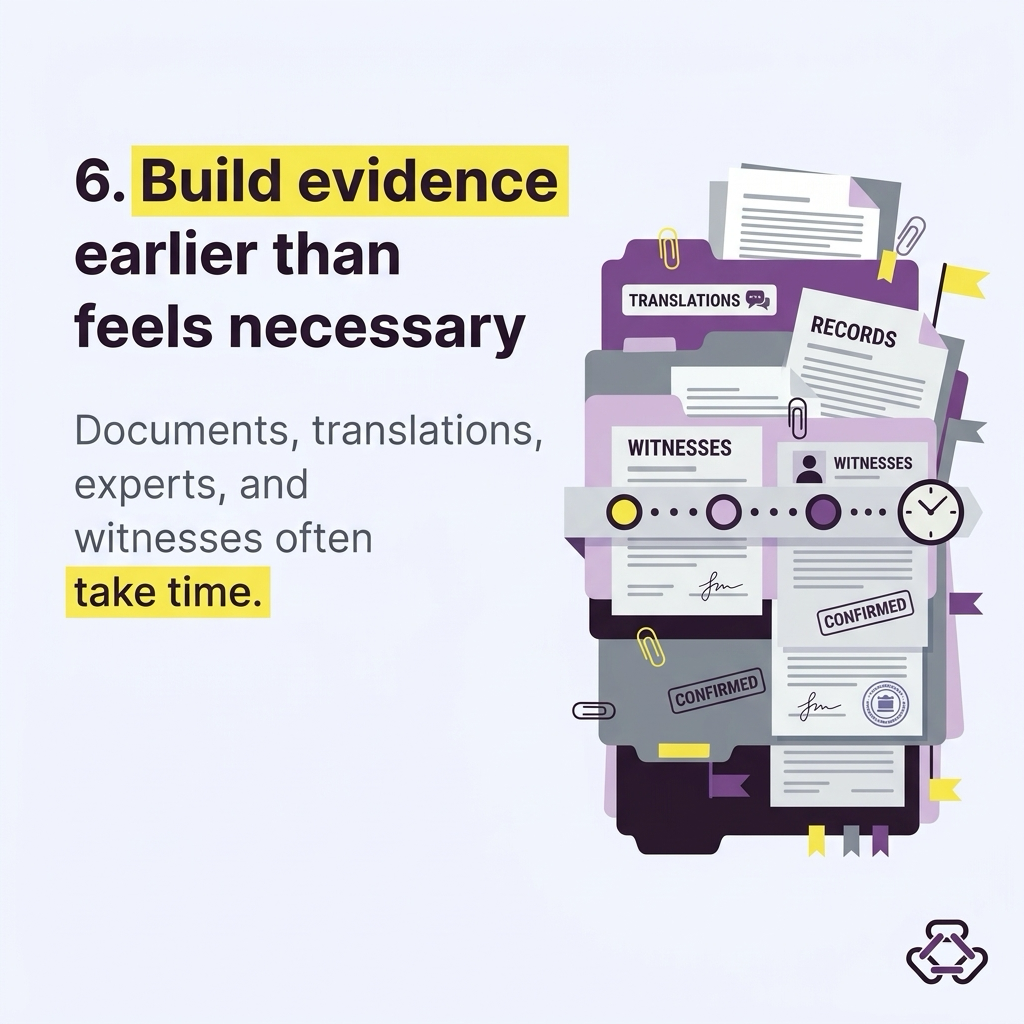
6. Failing To Build Evidence Early Because “I Can Explain It To The Judge”
Many respondents understandably believe that if they tell the truth clearly, the judge will understand. But immigration court usually turns on evidence, not just sincerity.
Different defenses call for different proof. Depending on the issue, that might include:
- Identity documents
- Entry records
- Marriage and birth records
- Tax filings
- Lease records
- School records
- Medical evidence
- Country conditions reports
- Police reports
- Certified criminal case dispositions
- Psychological evaluations
- Affidavits from family or community members
EOIR’s policy materials include deadlines for filing documents in advance of hearings, including a general reference point of 30 days before the individual hearing for many filings, unless the court orders otherwise or detention changes the timeline, according to EOIR’s deadlines appendix.
That timing matters. If evidence collection starts too late, several problems can follow:
- Records may take weeks or months to obtain
- Documents may need certified translations
- Witnesses may be unavailable
- Expert evaluations may take time
- Court filing deadlines may pass before the record is complete
A strong factual story in immigration court is often a documented story. That’s one reason people dealing with removal cases often look for practical help on getting organized for immigration court without missing key steps. Good organization does not decide a case by itself, but poor organization often makes everything harder.
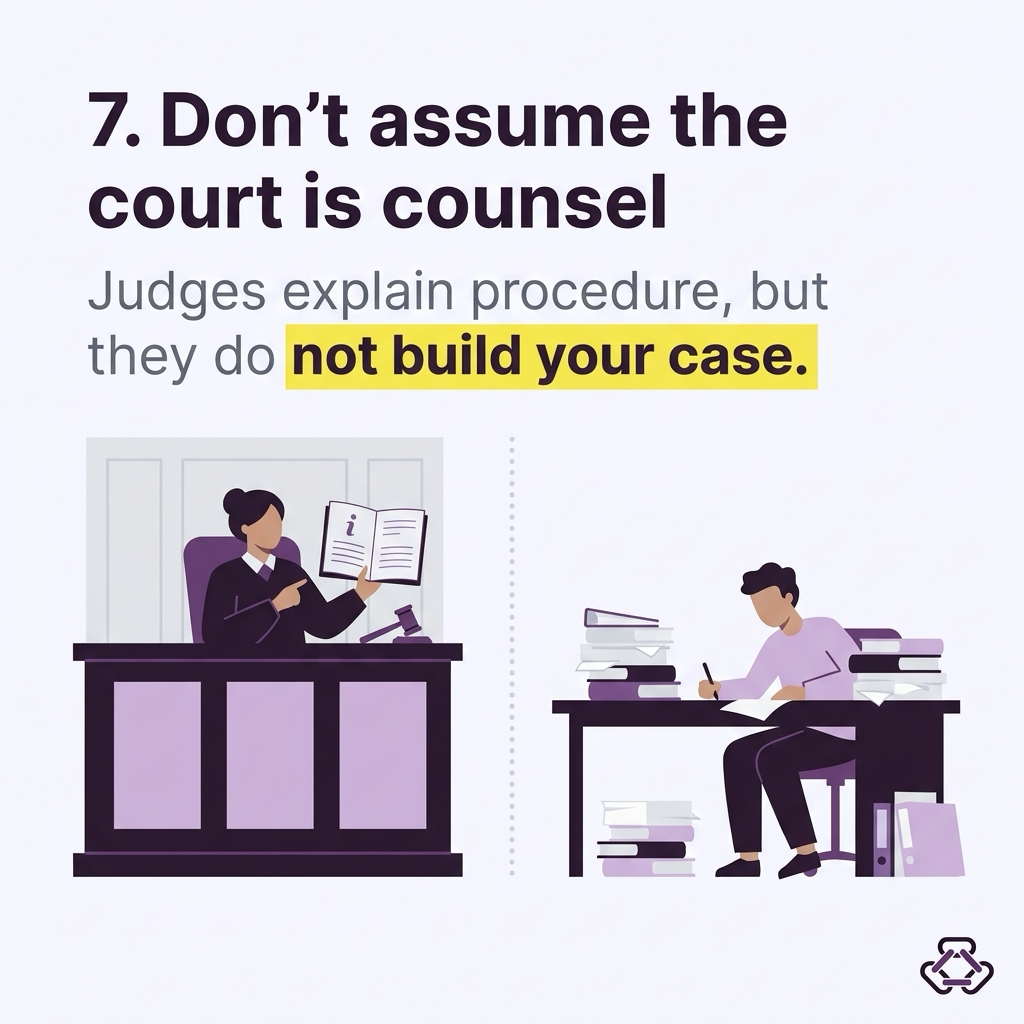
7. Assuming There Is No Point In Finding Counsel Because The Court Will Explain Everything
Immigration court is civil, not criminal, so there is generally no government-appointed attorney for everyone in removal proceedings. EOIR provides legal access materials and programs, including public resources and help for certain limited populations, on its Public Resources Program page and through its legal access initiatives. But broad appointed counsel is not the norm.
That gap has real-world consequences. An ACLU report summary found that in FY 2022, 79 percent of detained people in removal proceedings lacked counsel. Older research cited by the ACLU has also described how many respondents face trained government attorneys while representing themselves.
Judges can explain procedure to some extent, but the court is not there to act as personal counsel. The judge cannot strategically develop the case for the respondent. The government attorney is not there to protect the respondent’s immigration options. And the wrong concession, waiver, or filing choice can shape the case long after one hearing ends.
That does not mean every case has the same level of complexity. It does mean many people underestimate how much legal analysis is packed into issues like removability, relief eligibility, criminal-immigration overlap, continuances, appeals, and deadlines.
For people trying to make sense of the process from the ground up, it often helps to start with a broader explanation of what removal proceedings involve from the NTA through possible defenses and relief. Understanding the map of the process can make attorney consultations much more productive.
8. Giving Up Appeal Rights Too Quickly Or Missing The Deadline Entirely
Sometimes the most serious mistake happens after the immigration judge issues a decision.
EOIR states that a Notice of Appeal to the Board of Immigration Appeals, Form EOIR-26, has to be received no later than 30 calendar days after the immigration judge renders an oral decision or mails a written decision, according to the agency’s appeal instructions and the BIA practice manual section on appeal deadlines. EOIR also notes that if a respondent waives appeal in court, or fails to file on time, the judge’s decision becomes final.
There are two separate mistakes here:
Waiving Appeal Without Understanding The Consequences
In some courtrooms, a respondent may feel pressure to answer quickly. If appeal is waived on the record, options can narrow fast. Whether there is any later path to revisit that depends on the facts and posture of the case.
Missing The 30-Day Receipt Deadline
EOIR is explicit that the Board calculates by receipt, not a mailbox rule, in its practice manual. In practical terms, mailing something near the deadline may not be enough if it arrives late.
Appeals are not right for every case. But losing the ability to evaluate one because of a rushed waiver or missed filing date can turn a difficult case into a much worse one.
9. Believing Delay Is A Strategy By Itself
A lot of people enter removal proceedings hoping that time alone will solve the problem. Sometimes that belief comes from fear. Sometimes from bad advice. Sometimes from stories about old cases that sat for years.
It is true that the immigration court system is heavily backlogged. TRAC’s latest reporting shows millions of pending cases and significant variation in completions and scheduling across courts, judges, and regions. But backlog is not the same thing as protection.
Delay by itself can create new risks:
- Missed notices after a move
- Lost evidence
- Changing country conditions
- New arrests or convictions
- Expiring forms of eligibility
- More confusion about what was filed and when
- Missed opportunities to preserve appeal issues or relief applications
In some cases, continuances or procedural timing may be part of a legitimate legal strategy. In other cases, “just wait” ends up meaning “do nothing until a deadline is gone.”
That distinction matters. A considered timeline built around filings, evidence, and case posture is very different from drift.
Why These Mistakes Happen So Often
None of these errors are unusual because people are careless. They happen because removal proceedings are complex, high-stress, and often rushed. The system uses technical language, multiple agencies, overlapping deadlines, and serious consequences. Many respondents are also dealing with detention, language barriers, trauma, work disruptions, or family emergencies at the same time.
And the stakes are not abstract. According to TRAC, immigration judges completed 67,908 deportation cases in February 2026, issuing 46,786 removal orders and 8,843 voluntary departure orders that month. In other words, the process moves through large numbers of cases, and procedural mistakes can become outcome-shaping very quickly.
A Better Way To Think About Removal Defense
The most helpful mindset is often this: removal defense is not just one hearing and not just one argument. It is a sequence of decisions about facts, timing, evidence, legal eligibility, credibility, and procedure.
In general terms, people in this situation often focus on a few practical questions early:
- What exactly is DHS alleging?
- What hearings are scheduled?
- Is the court using the correct address?
- What forms of relief may be available?
- What documents are missing?
- Are there deadlines already running?
- Is there an appeal issue to preserve?
- Is the person helping with the case actually authorized to do so?
Those questions may sound basic, but they often separate manageable cases from cases that spiral.
Final Takeaway
Removal proceedings are hard enough without preventable errors making them worse. The most common mistakes include ignoring the NTA, missing hearings because the address was not formally updated, making admissions without understanding them, waiting too long to explore relief, trusting unauthorized representatives, failing to build evidence early, underestimating the value of counsel, mishandling appeal rights, and treating delay as a plan.
For anyone trying to make sense of the bigger picture, it can help to read more about how immigration court cases usually unfold from start to finish.
Visit ReferU.AI to get matched with an attorney who has demonstrable experience in cases like yours — for free.
