Table of Contents
- Removal Proceedings Explained: Notice to Appear, Immigration Court, Relief, and Defense
- What Are Removal Proceedings?
- What Is A Notice To Appear?
- Why Updating Your Address Matters So Much
- What Happens In Immigration Court?
- Do People Have A Right To A Lawyer In Immigration Court?
- What Does “Relief” Mean In Removal Proceedings?
- What Does A Removal Defense Usually Involve?
- Is The Government’s Charge Legally Correct?
- Is There A Form Of Relief Available?
- What Evidence Exists?
- Are There Deadline Or Filing Issues?
- Is There A Prior Order Or Prior Case History?
- Is The Person Detained Or Non-Detained?
- Common Problems That Make Removal Cases Harder
- How Long Do Removal Proceedings Take?
- What If Someone Misses Court?
- Why Evidence And Preparation Matter More Than Most People Expect
- The Bottom Line On Removal Proceedings

Type
Grandchild
Status
Approved
Title (YouTube)
Images Failed (Social)
Images Failed (Social)
Do not index
Parent item
Publish Date (TikTok)
Apr 25, 2027 09:15
Videos Post IDs (Social)
Hashtags (Social)
#LegalAdvice #LegalHelp #Immigration #RemovalProceedings
Caption
Caption X
Cover

OG Image

Alt Image Text
Flat vector illustration of removal proceedings and immigration court, showing a Notice to Appear, legal relief options, and defense preparation.
Images



Videos

Publish Date (Social)
Feb 19, 2027 06:00
Scheduled (Social)
Scheduled (Social)
Images Posted (Social)
Images Posted (Social)
Videos Posted (Social)
Videos Posted (Social)
Featured
Created time
Apr 7, 2026 12:01 AM
Authors
CTA Practice Area (Social)
Immigration
TikTok Failed (Social)
TikTok Failed (Social)
Videos Post Links (Social)
TikTok Post Links (Social)
Images Post IDs (Social)
YT Post ID
Video Pending Manual (Social)
TikTok Posted (Social)
TikTok Posted (Social)
TikTok Post IDs (Social)
Video Cover (Social)

Images Post Links (Social)
First Comment (Social)
Videos Failed (Social)
Videos Failed (Social)
YT Embedded
YT Embedded
Images Delete (Social)
Videos Delete (Social)
Carousel Video URL (Social)
Removal Proceedings Explained: Notice to Appear, Immigration Court, Relief, and Defense
For many families, the words “removal proceedings” arrive in a moment of panic. A letter shows up. A court date appears online. Someone hears the word “deportation” and assumes the outcome is already decided.
In general terms, that is not how the process works.
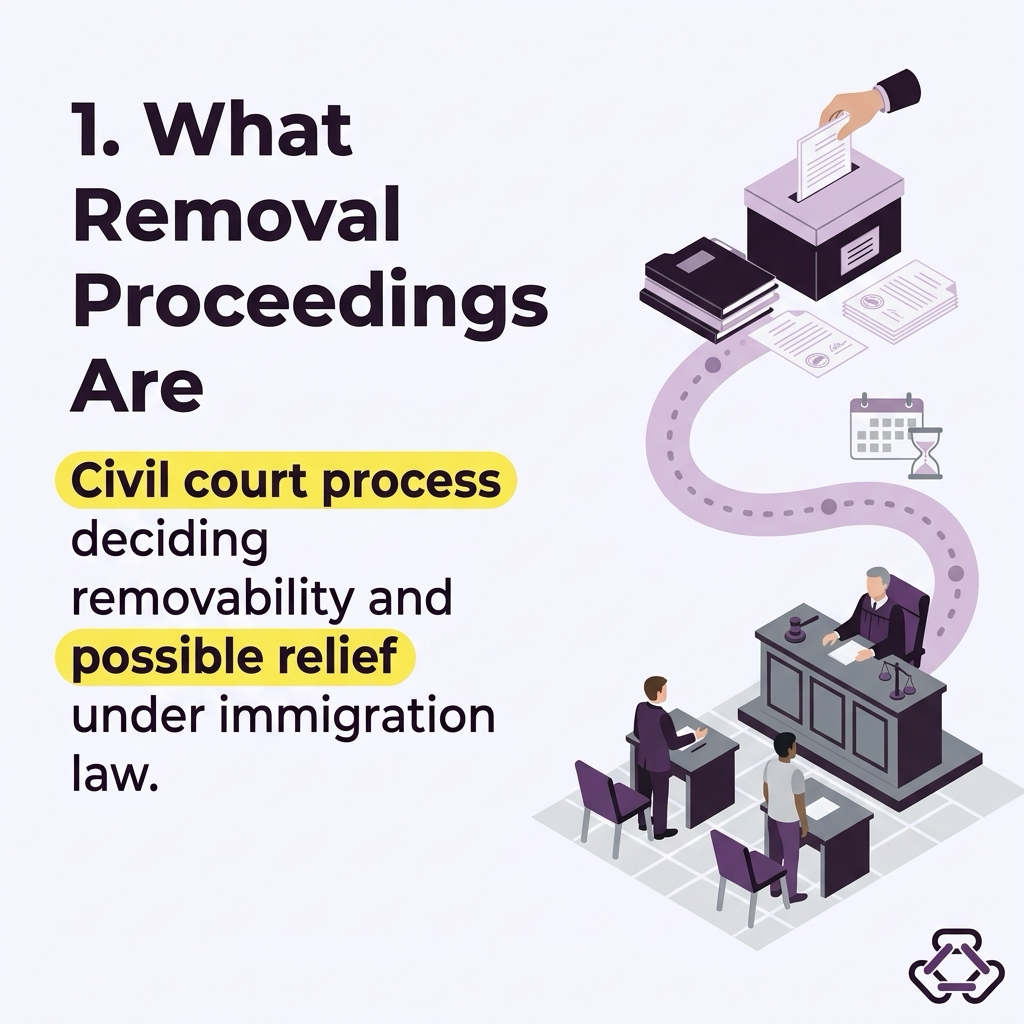
Removal proceedings are the formal court process the federal government uses to decide whether a noncitizen can remain in the United States or will be ordered removed. The process often begins with a Notice to Appear, moves through hearings in immigration court, and may involve one or more forms of relief or protection, depending on the person’s facts, history, and eligibility under immigration law.
If you want a broader foundation first, it may help to start with this plain-English overview of immigration law issues. If you are already dealing with court, this post focuses on what removal proceedings are, how the court process generally works, what “relief” means, and how a defense is often built.
In this post you’ll learn:
Scroll to the bottom for every post in this series.
- what a Notice to Appear is
- what happens in immigration court
- what kinds of relief people sometimes pursue
- what a removal defense often involves
- why organization and early legal help can matter so much
What Are Removal Proceedings?
Removal proceedings are civil proceedings conducted by the Executive Office for Immigration Review (EOIR), the agency within the U.S. Department of Justice that oversees immigration courts and the Board of Immigration Appeals. EOIR’s role is to adjudicate whether a person is removable under the immigration laws and whether that person qualifies for relief or protection from removal. EOIR also maintains public case information tools and court guidance, including the EOIR case information system.
Although people often call this “deportation court,” the legal term used in current federal law is removal proceedings. The statute governing the initiation of proceedings is 8 U.S.C. § 1229, and the core hearing procedures are addressed in 8 U.S.C. § 1229a.
A person may end up in removal proceedings for many different reasons, including:
- alleged entry without admission or parole
- alleged overstay of a visa
- alleged violation of immigration status
- certain criminal convictions or allegations
- denial or referral of another immigration application
- arrival at the border followed by placement in court proceedings
That wide range of situations is one reason removal defense is so fact-specific. Two people can both be in immigration court and still have completely different legal options.
If you want a more basic walkthrough of the court process itself, this companion piece on how immigration court and defense options usually unfold can help fill in the bigger picture.
What Is A Notice To Appear?
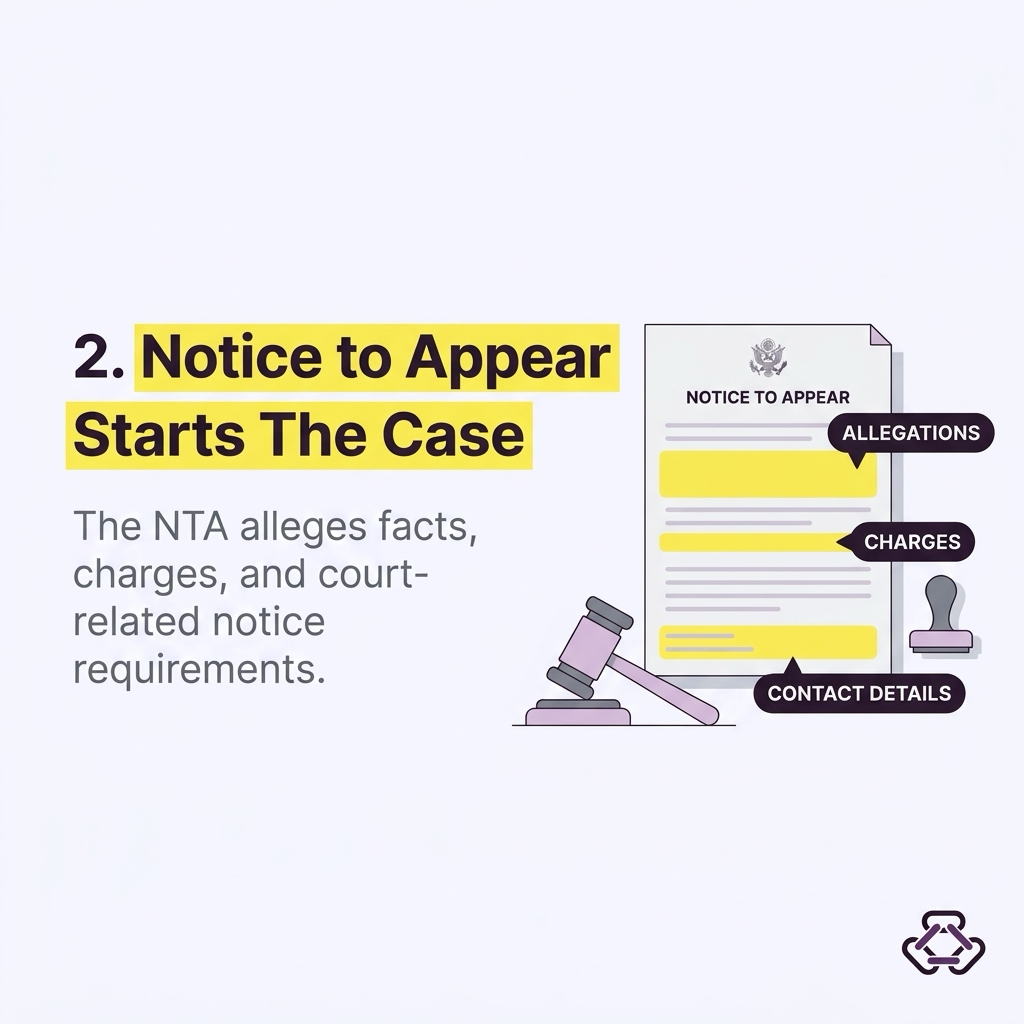
A Notice to Appear, often called an NTA, is the charging document that starts removal proceedings. Federal law says the notice is supposed to include key information such as the nature of the proceedings, the legal authority for them, the acts or conduct alleged, the charges against the person, and the requirement to provide a current address and telephone number to the court. The statute also discusses hearing notice requirements and the consequences of failing to appear. See 8 U.S.C. § 1229.
In practical terms, the NTA is the government’s way of saying: “We are putting you into immigration court, and here is why.”
An NTA may include:
- the person’s A-number
- allegations about entry, status, or conduct
- one or more legal charges of removability
- instructions about address updates
- in some cases, hearing information, though later hearing notices may follow separately
This is an area where people often get tripped up. Sometimes the first document creates the case, and a separate notice later provides the hearing date, time, or location. EOIR also states that respondents can track certain case details through its Automated Case Information System and related case information resources.
That gap between “I got paperwork” and “I know exactly when to appear” is one reason many people scramble. If you are dealing with that right now, this guide on what people often do after getting an NTA goes deeper into the first steps and documents people try to gather.
Why Updating Your Address Matters So Much
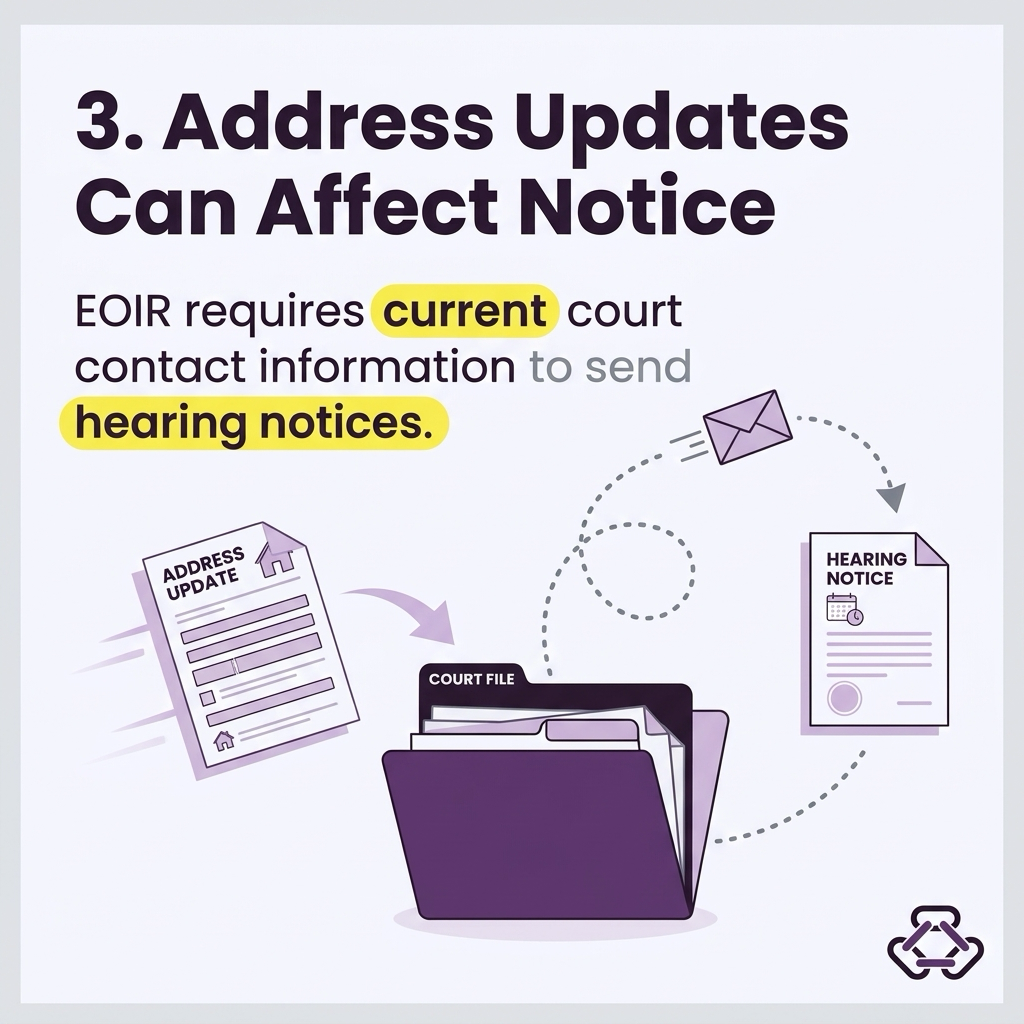
One of the most important details in removal proceedings is also one of the easiest to underestimate: the court needs your current address.
EOIR instructs respondents to update address or contact information with the immigration court using Form EOIR-33/IC for the court where the case is being heard. The agency provides instructions through its Update Respondent or Alien Information page and its Change of Address / Immigration Courts resource.
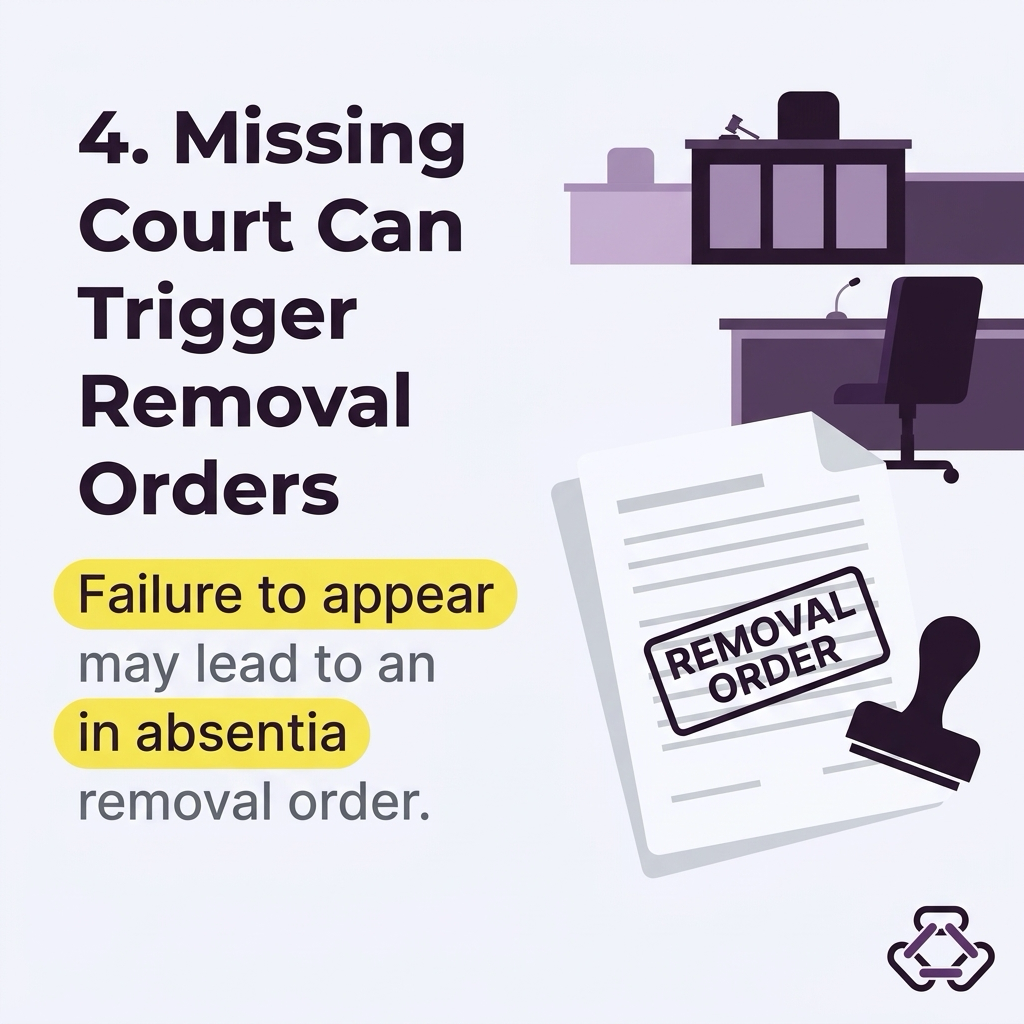
Why does this matter? Because a missed hearing can lead to an in absentia removal order, meaning the immigration judge orders removal when the person does not appear. EOIR’s practice materials explain that a motion to reopen may be used to try to rescind an in absentia order in certain circumstances, such as lack of proper notice, custody through no fault of the person, or certain exceptional circumstances. See EOIR’s guidance on motions to reopen in absentia orders.
That does not mean every missed hearing is final forever, but it often makes a difficult situation much harder.
This is also why court organization matters. Many families keep notices in different places, rely on text screenshots, or assume the government “already has the address from another case.” In practice, different agencies and different systems do not always update the same way. This article on getting organized for immigration court covers the basics of tracking deadlines, hearing notices, and filings in a more systematic way.
What Happens In Immigration Court?
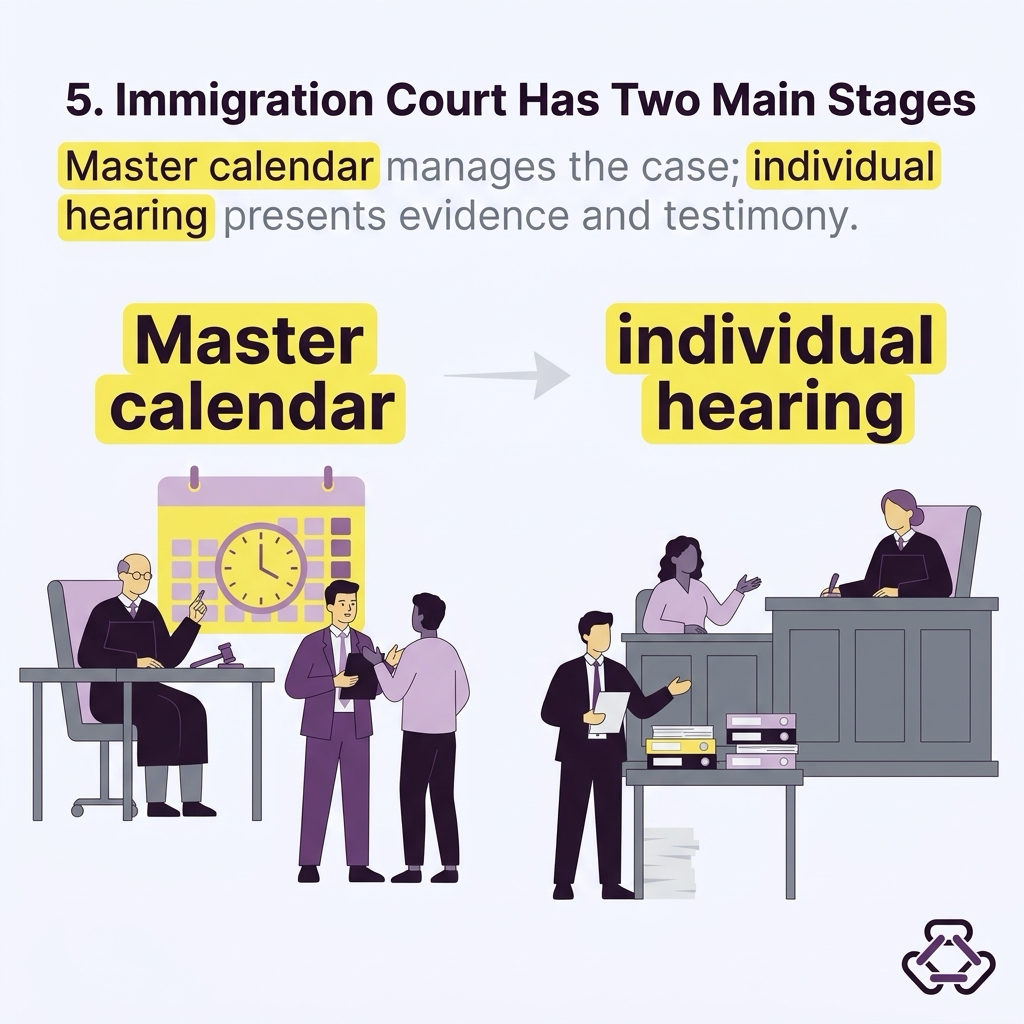
Immigration court proceedings often begin with a master calendar hearing, which is usually a shorter hearing focused on case management. EOIR’s Immigration Court Practice Manual and policy materials explain that respondents may be represented by an attorney or accredited representative at no expense to the government, and practitioners generally appear by filing Form EOIR-28. See EOIR’s guidance on representation and appearances.
At an early hearing, the judge may address:
- whether the person received the NTA
- whether the factual allegations are admitted or denied
- whether the charges of removability are conceded or contested
- whether the person wants time to seek counsel
- what forms of relief, if any, may be pursued
- future filing deadlines and hearing dates
Later, if the case is not resolved at the master calendar stage, the court may schedule an individual hearing. That is typically the more detailed merits hearing where testimony, evidence, and legal arguments are presented.
Some people are surprised to learn that immigration court is not exactly like criminal court. Removal proceedings are civil, not criminal. The government is represented by a trial attorney from DHS, the respondent may have counsel, and the immigration judge decides removability and eligibility for relief. EOIR also notes that court staff cannot provide legal advice, even though they can provide certain procedural information through official channels such as public inquiries guidance.
Do People Have A Right To A Lawyer In Immigration Court?
People in removal proceedings generally may be represented by counsel of their choosing, at no expense to the government. That wording matters. EOIR states this directly in its practice manual section on representation.
So, unlike a criminal case, the government generally does not provide a free attorney for every respondent in immigration court.
That creates a very real challenge. Immigration law is document-heavy, deadline-driven, and intensely fact-specific. The court process may involve applications, supporting declarations, country-condition evidence, records requests, witness preparation, objections, and legal briefing. Even a case that sounds simple at first can turn on a technical issue involving entry history, inadmissibility, prior filings, criminal records, family relationships, or timing.
EOIR’s Office of Legal Access Programs also operates and supports legal orientation and access initiatives designed to improve understanding and representation, including the Legal Orientation Program and related access efforts.
In practical terms, many people start by looking for legal help not because they know they qualify for relief, but because they are trying to understand what kind of case they even have.
What Does “Relief” Mean In Removal Proceedings?
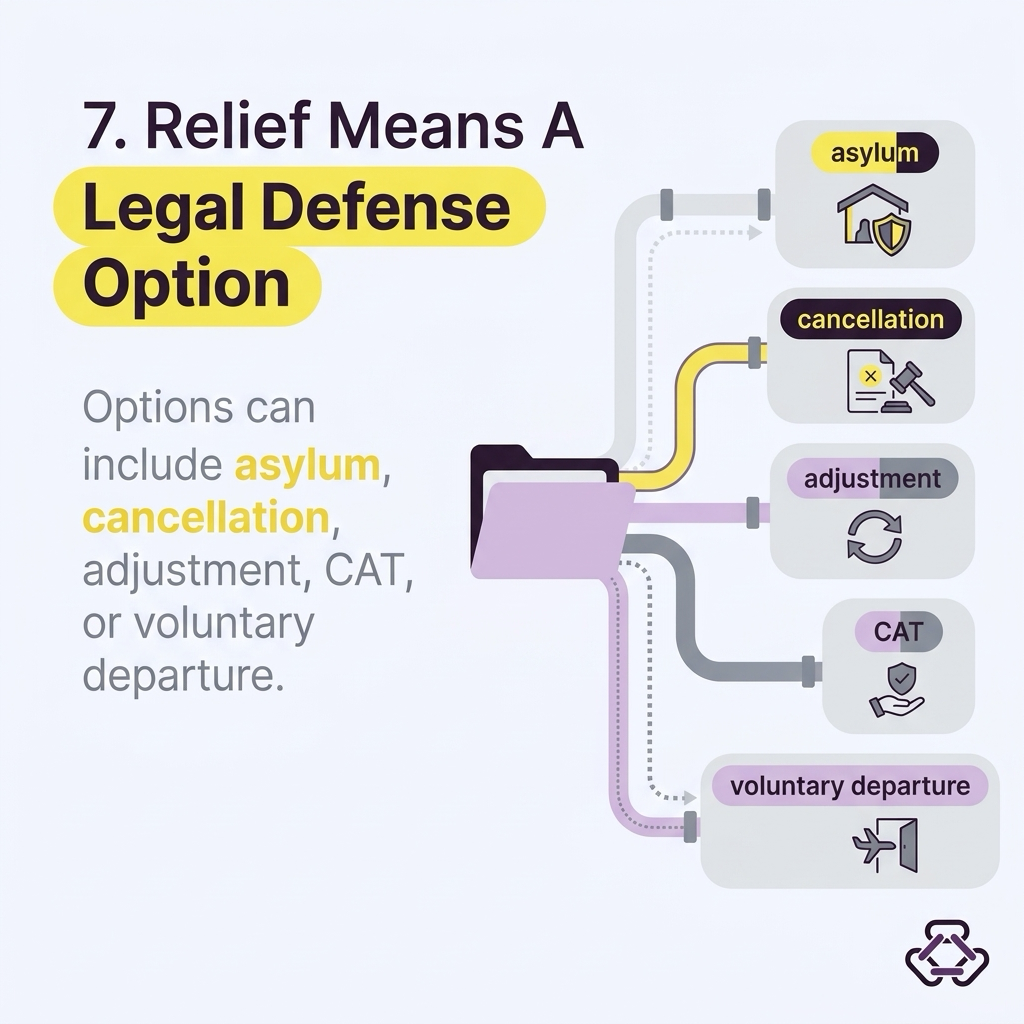
In immigration court, relief refers to a legal basis for asking the judge not to order removal, or to allow some other immigration outcome under the law.
The exact options depend on the person’s facts. USCIS and EOIR materials reflect that immigration benefits and defenses in court can include matters such as asylum-related protection, cancellation of removal, adjustment of status in some circumstances, and other forms of relief handled in EOIR proceedings. USCIS also has a page discussing immigration benefits in EOIR proceedings.
Common examples may include:
- Asylum
- Withholding of removal
- Protection under the Convention Against Torture (CAT)
- Cancellation of removal for certain lawful permanent residents
- Cancellation of removal for certain nonpermanent residents
- Special rule cancellation in certain VAWA-related cases, described by EOIR here
- Adjustment of status, where legally available
- Voluntary departure, in some cases
- Termination or dismissal issues, depending on procedure and posture
- Administrative closure or prosecutorial discretion issues, depending on the current legal landscape and case facts
Each of those has its own eligibility rules, evidence standards, and strategic tradeoffs. Some forms of relief offer a path to permanent status. Others offer protection from removal without creating a green card path. Some depend heavily on family relationships. Others depend on hardship, time in the United States, fear of persecution, or prior immigration history.
For a broader menu of possibilities, this article on the types of relief people often explore in immigration court can be a helpful companion.
What Does A Removal Defense Usually Involve?
A removal defense is rarely one single argument. More often, it is a combination of procedural review, factual development, legal analysis, and evidence gathering.
That often includes questions like:
Is The Government’s Charge Legally Correct?
Sometimes the first issue is whether the person is actually removable as charged. The NTA may allege certain facts or legal grounds, and those may be contested in whole or in part.
Is There A Form Of Relief Available?
Even where removability is established, the case may still turn on whether the person qualifies for asylum, cancellation, adjustment, waivers, or another form of protection.
What Evidence Exists?
Evidence may include:
- identity records
- passports and entry documents
- prior immigration filings
- family relationship documents
- medical and psychological records
- police or court records
- tax records and proof of residence
- country-condition materials
- declarations from the respondent and supporting witnesses
Are There Deadline Or Filing Issues?
Immigration court deadlines can be unforgiving. Late filings, incomplete applications, missing biometrics steps, untranslated records, or absent proof of service can complicate a case significantly.
Is There A Prior Order Or Prior Case History?
Old border encounters, prior voluntary returns, earlier applications, prior removal orders, and motions history can all affect strategy.
Is The Person Detained Or Non-Detained?
Detention changes logistics, timing, evidence access, and hearing preparation in major ways.
These details are part of why removal defense work often revolves around case theory. The judge is not only deciding whether the person can stay; the judge is also evaluating whether the legal claim is supported by admissible, credible, and sufficiently organized evidence.
Common Problems That Make Removal Cases Harder
A lot of removal cases become more difficult for avoidable reasons.
In general terms, some of the most common problems include:
- missing a hearing
- failing to update the court address
- assuming a pending petition automatically stops removal proceedings
- filing the wrong form with the wrong agency
- not understanding the difference between USCIS and EOIR
- appearing without key records
- making inconsistent statements across applications and testimony
- relying on notarios or unlicensed consultants
- waiting too long to assess eligibility for relief
EOIR data and public reporting continue to show how serious the court system’s backlog is. TRAC reported that the immigration court backlog stood at 3,318,099 active cases at the end of February 2026, underscoring how crowded and high-pressure the system remains (TRAC). In a system this large, missed details can have outsized consequences.
If you want a concise warning list, this post on mistakes that can make a removal case worse breaks down several issues that tend to show up again and again.
How Long Do Removal Proceedings Take?
There is no single timeline.
Some cases move relatively quickly, especially if they are detained, legally narrow, or assigned to faster-moving dockets. Others last years because of continuances, appeals, relief applications, changing law, court congestion, or overlapping agency processing.
The broader environment is important here. Public data continue to show an extremely large immigration court backlog, with millions of pending matters nationwide. TRAC’s recent reporting indicates the system remains under extraordinary strain, even as monthly filings and completions fluctuate (TRAC). EOIR also notes that staff generally cannot predict processing times for individual cases through public inquiries alone (EOIR public inquiries guidance).
That uncertainty can be emotionally exhausting for families. It can also create false confidence. A long timeline does not necessarily mean a case is safe, and a near hearing date does not necessarily mean all options are gone. Timing is only one part of the analysis.
What If Someone Misses Court?
If a person fails to appear, the immigration judge may enter an in absentia removal order if the legal notice requirements are met. Congress’s research service summarizes that removal orders entered after a failure to appear can sometimes be challenged through a motion to reopen when the person can show lack of proper notice, custody through no fault of their own, or certain exceptional circumstances (Congressional Research Service). EOIR’s own materials likewise explain that rescinding an in absentia order generally requires a granted motion to reopen, and some notice-based motions may be filed at any time (EOIR).
This area is often very technical. The details may include when notices were mailed, what address was on file, whether a change-of-address form was properly submitted, and what documentation exists for the reason the hearing was missed.
That is one reason many families look for counsel quickly after discovering a missed hearing or old removal order.
Why Evidence And Preparation Matter More Than Most People Expect
Many respondents assume the main issue is simply “telling the judge what happened.” In reality, immigration court often turns on whether a claim is supported in a way the court can legally evaluate.
For example:
- A hardship case may depend on records about a U.S. citizen child’s medical or educational condition.
- A fear-based case may depend on country reports, expert opinions, and internally consistent testimony.
- A status-based case may depend on marriage records, entry records, prior filings, and proof of eligibility.
- A discretionary case may depend on showing equities, rehabilitation, family ties, and community history.
Preparation often means building a coherent record, not just preparing to speak.
EOIR’s modernization efforts also mean some court filings and records may be handled electronically in eligible cases and courts through ECAS and related systems, although procedural requirements still matter greatly (EOIR ECAS overview).
The Bottom Line On Removal Proceedings
Removal proceedings are the formal process used to decide whether someone will be removed from the United States and whether any legal defense, protection, or other form of relief applies. The process often starts with a Notice to Appear, continues through immigration court hearings, and may involve complex questions about evidence, eligibility, deadlines, and legal strategy.
For some people, the key issue is contesting the charge. For others, the focus is pursuing relief such as asylum, cancellation, adjustment, or another defense recognized by law. In many cases, the hardest part is not one hearing or one document. It is understanding how all the moving parts fit together before a small mistake becomes a much bigger problem.
Visit ReferU.AI to get matched with an attorney who has demonstrable experience in cases like yours — for free.


