Table of Contents
- Removal Proceedings: A Beginner’s Guide to Immigration Court and Defense Options
- What Are Removal Proceedings?
- Who Runs Immigration Court?
- What Usually Starts The Case?
- What Happens After Someone Is Placed In Proceedings?
- What Rights Does A Person Have In Immigration Court?
- Why Does Keeping Your Address Updated Matter So Much?
- How Does The Government Try To Prove Removability?
- What If The Person Admits Some Facts But Wants To Stay?
- What Defense Options Commonly Come Up?
- Asylum, Withholding Of Removal, And CAT Protection
- Cancellation Of Removal
- Adjustment Of Status In Court
- Voluntary Departure
- Motions, Termination Issues, And Procedural Defenses
- How Long Do Removal Proceedings Take?
- What Happens At The End Of The Case?
- Why Do So Many People Look For An Attorney Quickly?
- What Makes Finding The Right Immigration Defense Attorney So Difficult?
- What Beginners Often Get Wrong About Removal Proceedings
- “If I Got A Court Notice, It’s Already Over”
- “If My Case Is Civil, A Lawyer Isn’t As Important”
- “If My Hearing Is Far Away, I Have Plenty Of Time”
- “Any Immigration Lawyer Will Be The Same”
- A Short Summary For Beginners

Type
Great Grandchild
Status
Approved
Title (YouTube)
Images Failed (Social)
Images Failed (Social)
Do not index
Publish Date (TikTok)
Apr 25, 2027 08:15
Videos Post IDs (Social)
Hashtags (Social)
#LegalAdvice #LegalHelp #Immigration #RemovalProceedings
Caption
Caption X
Cover

OG Image

Alt Image Text
Flat vector illustration of removal proceedings in immigration court with defense options, showing a respondent, attorney, judge, legal documents, and a court date in a modern minimal style.
Images


Videos
Publish Date (Social)
Feb 18, 2027 15:00
Scheduled (Social)
Scheduled (Social)
Images Posted (Social)
Images Posted (Social)
Videos Posted (Social)
Videos Posted (Social)
Featured
Created time
Apr 7, 2026 12:02 AM
Sub-item
Authors
CTA Practice Area (Social)
Immigration
TikTok Failed (Social)
TikTok Failed (Social)
Videos Post Links (Social)
TikTok Post Links (Social)
Images Post IDs (Social)
YT Post ID
Video Pending Manual (Social)
TikTok Posted (Social)
TikTok Posted (Social)
TikTok Post IDs (Social)
Video Cover (Social)
Images Post Links (Social)
First Comment (Social)
Videos Failed (Social)
Videos Failed (Social)
YT Embedded
Images Delete (Social)
Videos Delete (Social)
Carousel Video URL (Social)
Removal Proceedings: A Beginner’s Guide to Immigration Court and Defense Options
Getting placed in removal proceedings can feel disorienting fast. A single document, a court date, or a notice in the mail can suddenly raise questions about detention, deportation, deadlines, family, work, and whether there is any path to stay in the United States.
If you’re trying to understand what happens next, you’re not alone. The immigration court system is large, technical, and heavily backlogged. As of the end of February 2026, the pending caseload in U.S. immigration courts stood at 3,318,099 active cases, according to Syracuse University’s Transactional Records Access Clearinghouse (TRAC). At the same time, the Executive Office for Immigration Review (EOIR) reported record case completions during fiscal year 2025, which gives some context for why hearings can move quickly in some cases and take years in others (TRAC, EOIR).
In this post you’ll learn what removal proceedings are, how immigration court works, what rights and defense options may come up, and where legal help often becomes especially important. If you want a broader overview of how the whole process fits together, this more detailed guide on what the court process and available defenses often look like can help add context.
Scroll to the bottom for every post in this series.
What Are Removal Proceedings?
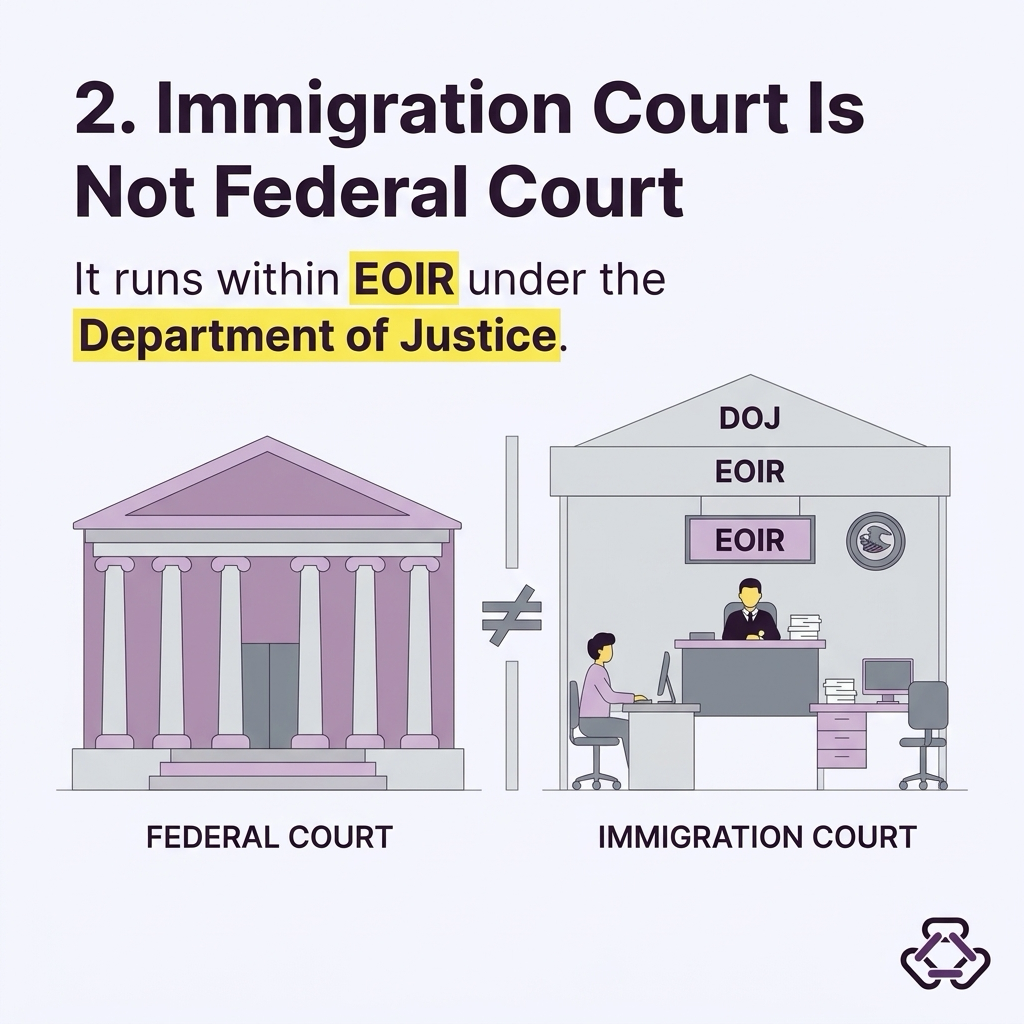
Removal proceedings are the formal court process the federal government uses to determine whether a noncitizen can remain in the United States or may be ordered removed. These cases are handled by immigration courts within EOIR, a component of the U.S. Department of Justice, not by the federal judiciary (EOIR, EOIR Policy Manual).
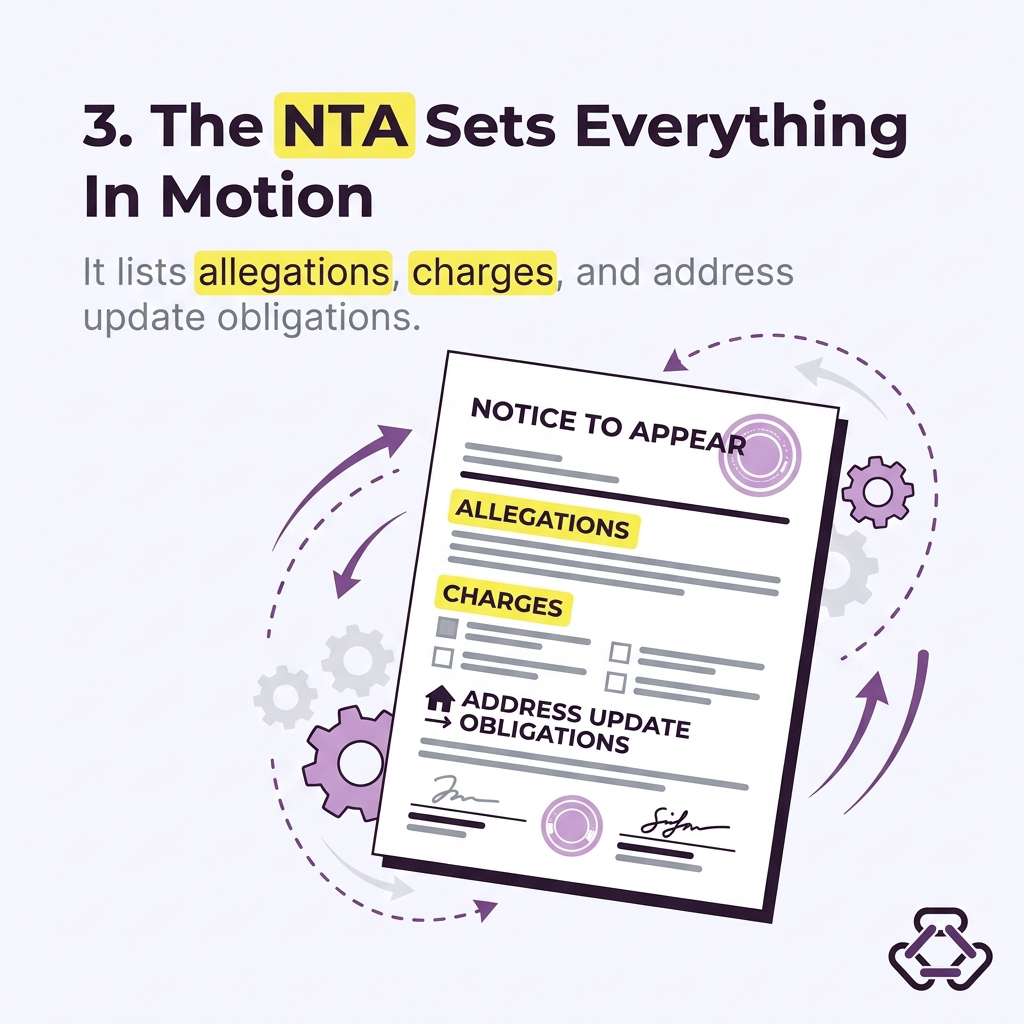
In general terms, the process begins when the government serves a Notice to Appear, often called an NTA, and files it with the immigration court. Federal regulations describe the information an NTA is expected to contain, including allegations, charges, and notice about address obligations (8 C.F.R. § 1003.15).
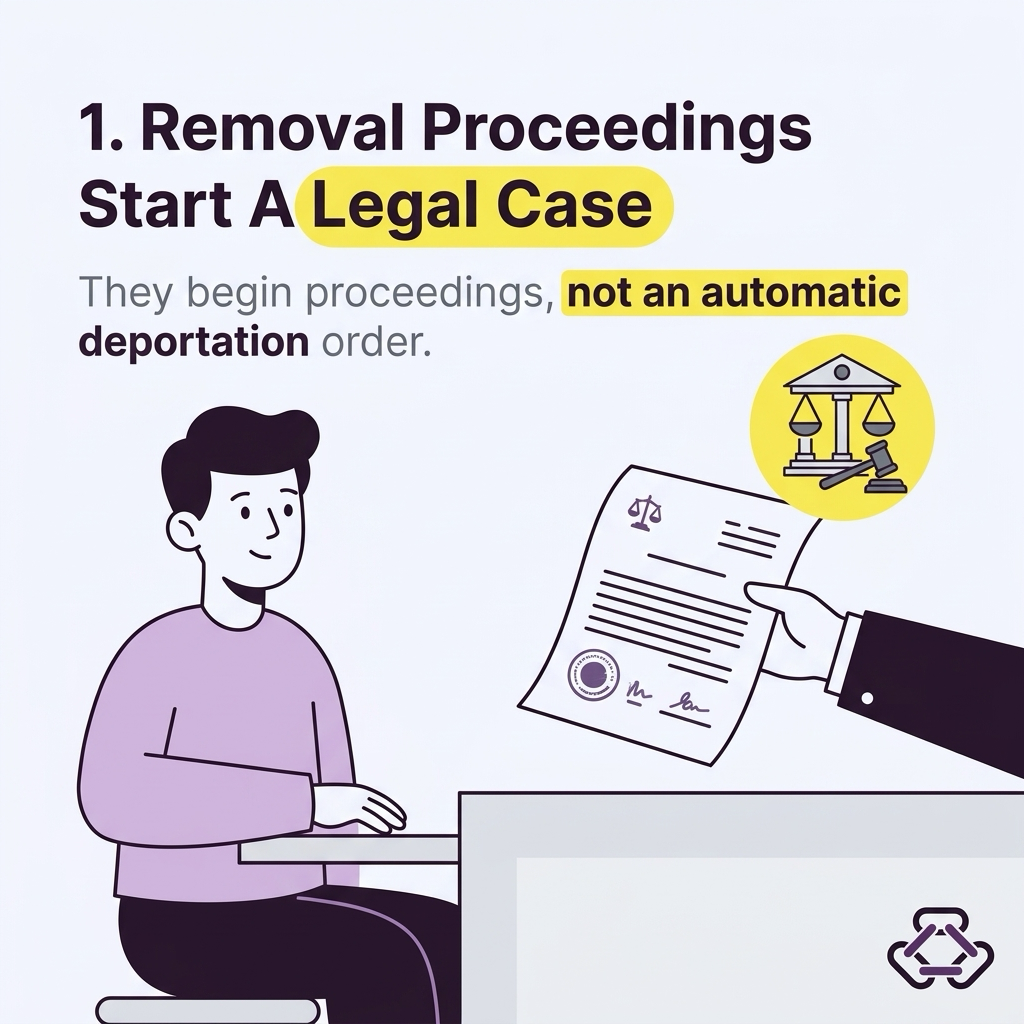
A removal case is not automatically the same thing as an immediate deportation order. It is the start of a legal proceeding where the government presents charges and the person in proceedings, called the respondent, may contest those charges and/or request relief from removal.
Who Runs Immigration Court?
Many people assume immigration court is part of the regular judicial branch. It isn’t. Immigration judges work within EOIR, which is part of the Department of Justice (EOIR).
That distinction matters because immigration court has its own rules, procedures, filing systems, and terminology. Hearings may happen in person, by video, or in some settings by other approved means, and local court practices can affect scheduling and logistics. The result is a system that feels court-like in every practical sense but operates under a distinct administrative framework.
What Usually Starts The Case?
For many people, the first major document is the Notice to Appear. This charging document lays out the government’s factual allegations and legal basis for claiming the person is removable. It also warns the respondent to keep the court updated with a current address and telephone number. Failing to update that information can have serious consequences, including the risk of a hearing going forward without the person present (8 C.F.R. § 1003.15).
USCIS and DHS policies around when NTAs are issued have changed over time and continue to evolve. USCIS released updated policy guidance on NTAs in late February 2025, a useful reminder that the path into immigration court can differ depending on whether the case arose from an enforcement action, a denied application, a status violation, criminal allegations, or another issue (USCIS Policy Alert).
What Happens After Someone Is Placed In Proceedings?
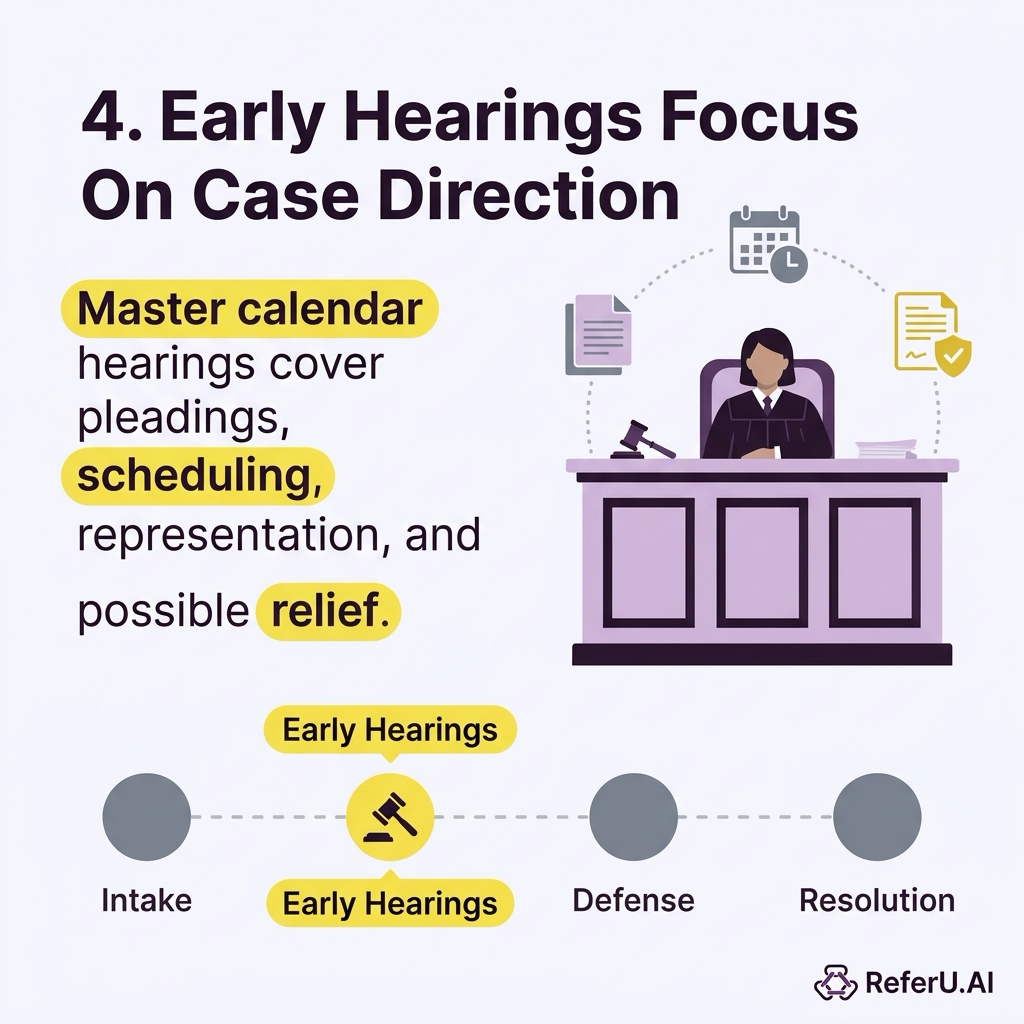
The first hearing is often a master calendar hearing. Think of this as the case-management stage. According to EOIR guidance, this hearing is generally where the immigration judge addresses pleadings, scheduling, representation, and the general direction of the case (EOIR Policy Manual, EOIR Reference Materials).
At a master calendar hearing, several things may happen:
- the judge may confirm the respondent’s identity and address
- the government’s allegations and charges may be reviewed
- the respondent may admit or deny allegations
- the respondent may concede or contest removability
- the court may discuss possible applications for relief
- deadlines may be set for filings and evidence
- a future hearing may be scheduled
If the case is contested or relief is being requested, it may later move to an individual hearing, which is closer to a trial. That is usually where testimony, documents, and legal arguments are presented in more detail.
What Rights Does A Person Have In Immigration Court?
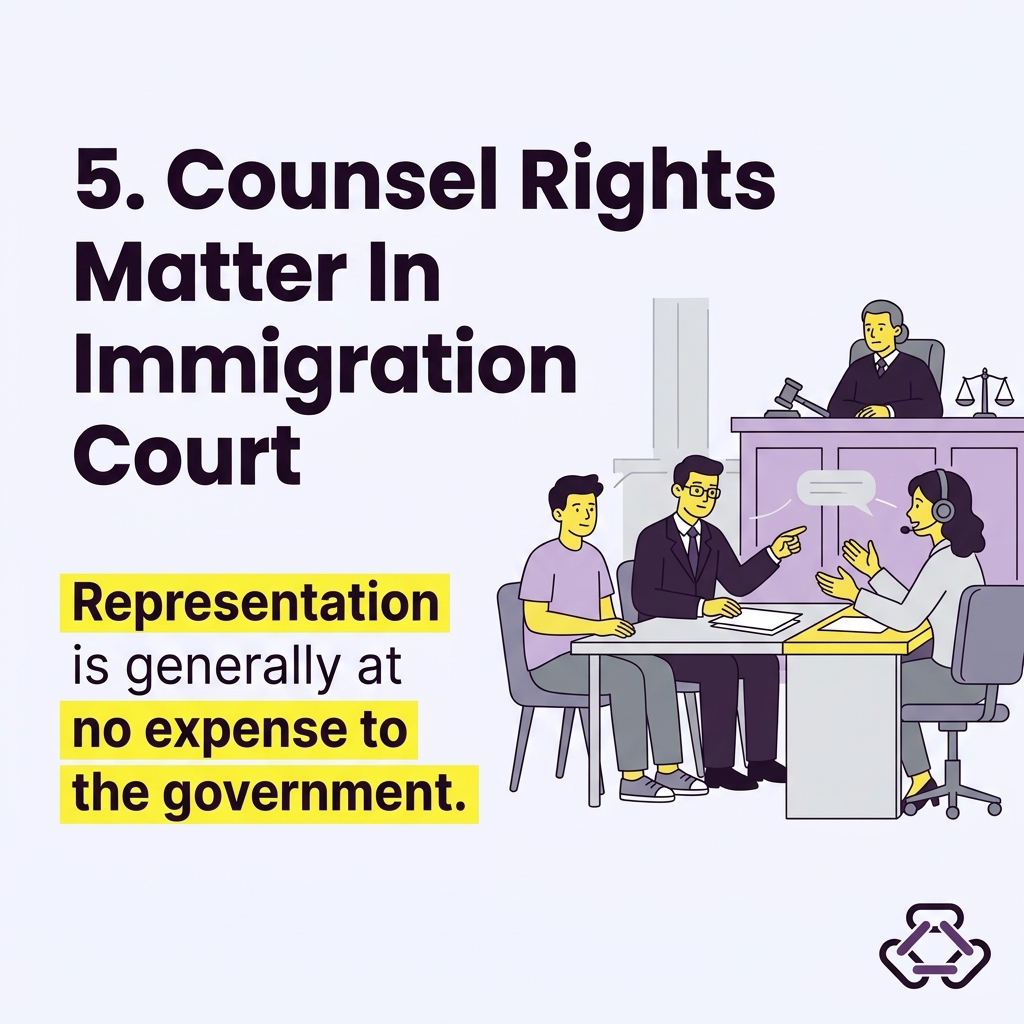
One of the most important points for beginners is this: people in removal proceedings generally have the privilege of being represented by counsel at no expense to the government. The immigration judge is directed by regulation to advise the respondent of that right and ask whether the person wants representation (8 C.F.R. § 1240.10, Congressional Research Service).
That is different from criminal court. In immigration court, appointed government-paid counsel is generally not provided the way it may be in criminal cases. EOIR also provides a list of free legal service providers, and legal access programs have been developed to help some respondents better understand the process (CRS, TRAC Library PDF).
Other basic procedural protections can include:
- notice of hearings
- the opportunity to present evidence
- the opportunity to examine and object to evidence
- the opportunity to apply for relief, if eligible
- interpretation in many hearings where needed
- appeal rights after an immigration judge’s decision
Exactly how those rights play out depends heavily on the facts, the form of relief involved, and whether there are jurisdictional or procedural complications.
Why Does Keeping Your Address Updated Matter So Much?
This issue comes up constantly in removal cases. Under federal regulations, respondents are expected to notify the immigration court of an address change and updated contact information. If the court sends notice to the address on file and the person does not appear, the judge may in some circumstances enter an in absentia removal order, meaning an order entered in the person’s absence (8 C.F.R. § 1003.15, EOIR Reference Materials).
For beginners, this is one of the easiest details to underestimate. A missed notice can create a much harder legal problem later, especially if deadlines pass or a motion to reopen becomes necessary.
How Does The Government Try To Prove Removability?
In general terms, the government alleges facts and legal charges in the NTA, then presents evidence through DHS counsel where required. Federal regulations describe DHS counsel’s role in presenting evidence material to deportability or inadmissibility and other issues before the immigration judge (8 C.F.R. § 1240.2).
Some cases turn on relatively straightforward questions, like manner of entry, overstaying a visa, or certain criminal convictions. Others involve highly technical disputes over lawful admission, status history, prior filings, fraud allegations, or whether a conviction fits a removability ground under immigration law.
That difference is one reason experienced legal analysis often matters so much. Two cases may sound similar in conversation and still be legally very different once records, timelines, and statutes are reviewed closely.
What If The Person Admits Some Facts But Wants To Stay?
This is where defense options and relief from removal become central.
A respondent may concede some allegations or even concede removability while still applying for a form of relief that, if granted, could allow the person to remain in the United States, obtain status, or leave under a less damaging outcome. Federal regulations specifically address applications for relief in removal proceedings, including asylum-related claims and other applications handled before the immigration judge (8 C.F.R. § 1240.11).
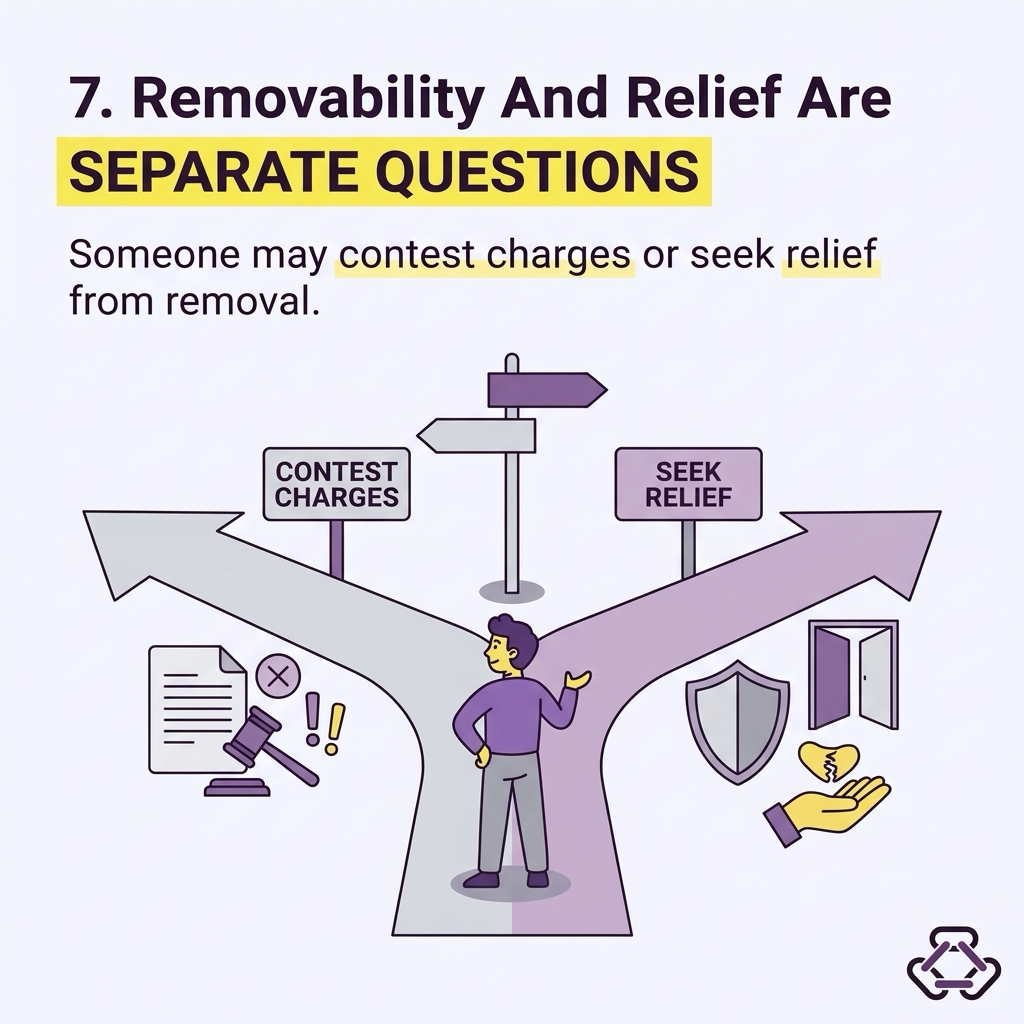
In practical terms, a removal case often has two separate layers:
- Is the government legally able to remove the person?
- If yes, is there a legal defense or form of relief that may prevent removal or change the outcome?
Understanding the difference between those layers is one of the biggest beginner breakthroughs.
What Defense Options Commonly Come Up?
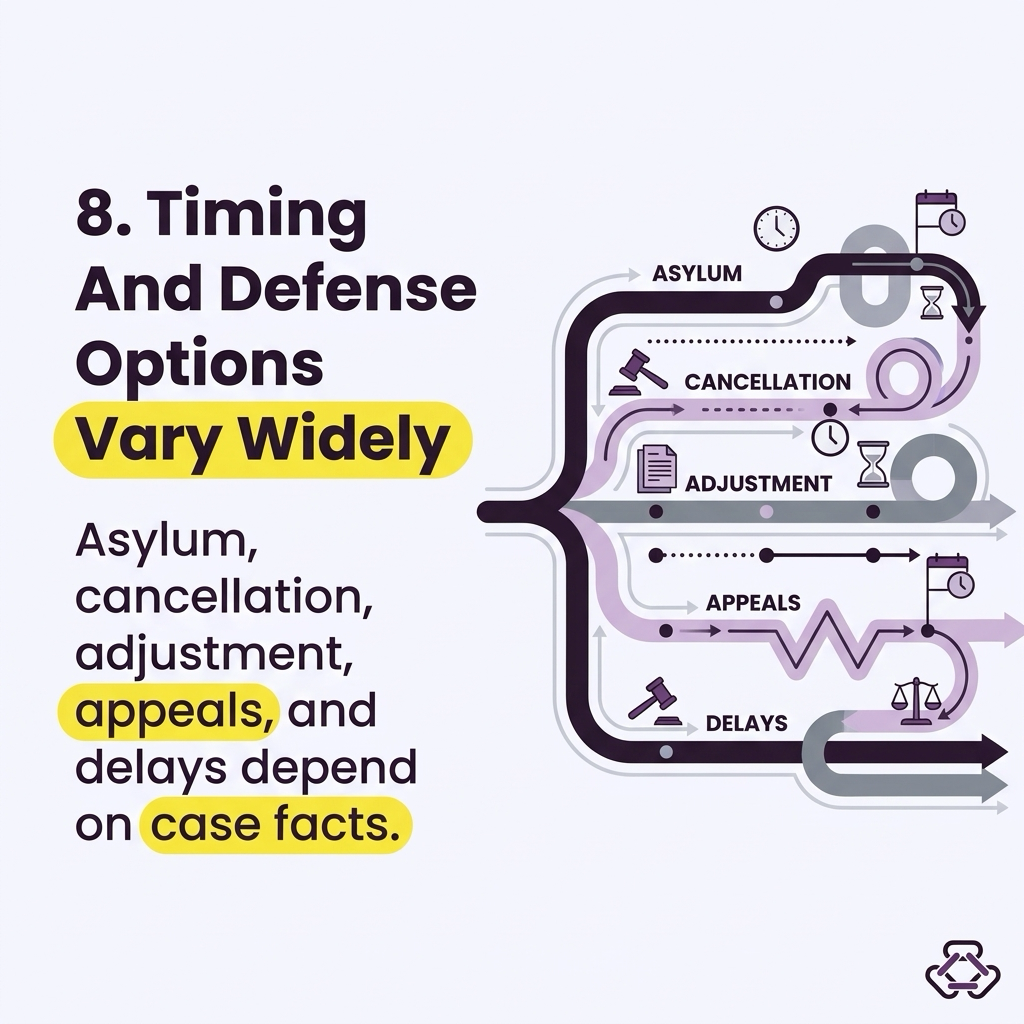
The answer depends on the person’s immigration history, family ties, fear of return, criminal record if any, entry history, prior orders, and many other factors. Still, some common categories include the following.
Asylum, Withholding Of Removal, And CAT Protection
People who fear persecution or torture in their home country may explore:
- asylum
- withholding of removal
- protection under the Convention Against Torture (CAT)
These forms of relief have different legal standards, filing rules, and consequences. EOIR regulations discuss what happens when a person expresses fear of return and applies for asylum-related protection before the court (8 C.F.R. § 1240.11).
Cancellation Of Removal
Some longtime residents placed in proceedings explore cancellation of removal, though eligibility rules are narrow and fact-specific. The analysis may involve continuous physical presence or residence, qualifying relatives, criminal bars, and discretionary factors.
Adjustment Of Status In Court
In some situations, a respondent may pursue adjustment of status while in removal proceedings, often tied to a family- or employment-based petition, assuming jurisdiction and eligibility align.
Voluntary Departure
In certain cases, voluntary departure may be discussed as an alternative outcome. This does not erase immigration consequences, but it can matter strategically in some cases. Immigration judges may enter summary decisions in limited situations that involve voluntary departure or cases where relief is not pursued (8 C.F.R. § 1240.12).
Motions, Termination Issues, And Procedural Defenses
Some cases involve challenges to the charging document, service, evidence, jurisdictional questions, continuances, reopening, or termination arguments. These are often highly technical. For many respondents, this is where having counsel with documented experience in highly similar matters can change the clarity of the analysis substantially.
How Long Do Removal Proceedings Take?
There is no single answer. Some cases move quickly, especially detained matters or cases placed on accelerated schedules. Others can take years because of backlog, continuances, transfers, appeals, or complex applications for relief.
The scale of the backlog is hard to overstate. TRAC reported 3,318,099 active pending cases at the end of February 2026. Meanwhile, EOIR announced it had completed more than 722,000 cases during the first 11 months of fiscal year 2025, the highest single-fiscal-year completion total in agency history (TRAC, EOIR).
Here’s what this often means in real life: one person may wait a long time for an individual hearing, while another may see fast deadlines and limited room for error. Delay does not necessarily mean a case is inactive, and speed does not necessarily mean the case is simple.
What Happens At The End Of The Case?
An immigration judge may:
- terminate proceedings in some circumstances
- sustain charges and order removal
- grant a form of relief
- grant voluntary departure in qualifying cases
- issue other rulings affecting the next stage of the matter
Regulations also address appeal rights after a decision. In many situations, the respondent may appeal to the Board of Immigration Appeals (BIA), though deadlines are strict and strategy depends on the type of ruling and procedural posture (8 C.F.R. § 1240.10).
Why Do So Many People Look For An Attorney Quickly?
Immigration court is civil, but the stakes are still enormous: separation from family, work disruption, detention exposure, bars to returning, and loss of future immigration options.
At the same time, the legal issues can be unusually technical. A case may involve overlapping systems such as USCIS, ICE, CBP, criminal court records, prior petitions, asylum deadlines, or prior orders. Even basic-seeming questions like whether to concede a charge, ask for more time, file a specific application, or pursue one form of relief instead of another can have long-term consequences.
That is why many people in removal proceedings try to find counsel with relevant, documented experience handling highly similar matters in immigration court. The question is often less about broad reputation and more about fit: Has this lawyer handled cases involving the same type of removability issue, the same defense options, the same court posture, and similar factual complications?
What Makes Finding The Right Immigration Defense Attorney So Difficult?
A lot of people start by searching online, asking friends, or calling the first office that answers. That can be understandable, but removal defense is one of those areas where surface-level information may not say much about actual case fit.
Some attorneys focus heavily on affirmative applications with USCIS. Others spend more time in detained defense, cancellation cases, asylum hearings, criminal-immigration overlap, or motions to reopen old removal orders. Those are not interchangeable skill sets.
In general terms, people often want a lawyer whose experience is based on evidence, not marketing language. That can include court-record-based insight into whether the attorney has handled similar issues before, in similar forums, with similar procedural demands.
What Beginners Often Get Wrong About Removal Proceedings
A few misunderstandings show up again and again:
“If I Got A Court Notice, It’s Already Over”
Not necessarily. A court notice often means the legal process is beginning or continuing, not that every option is gone.
“If My Case Is Civil, A Lawyer Isn’t As Important”
Immigration court is civil, but the consequences can be life-altering. Complexity does not depend on whether a case is civil or criminal.
“If My Hearing Is Far Away, I Have Plenty Of Time”
Sometimes yes, sometimes no. Filing deadlines, evidence collection, witness preparation, and strategic decisions often start long before the final hearing.
“Any Immigration Lawyer Will Be The Same”
That is rarely how it works in practice. Case type, court posture, prior history, and defense theory all affect what kind of experience may be most relevant.
A Short Summary For Beginners
Removal proceedings are the legal process used to decide whether someone may be removed from the United States. They usually begin with a Notice to Appear, move through immigration court hearings before EOIR, and may involve both challenges to removability and applications for relief. Respondents generally have the right to be represented by counsel at no expense to the government, and many cases turn on detailed procedural and factual issues that are difficult to evaluate without experienced legal help.
For people facing immigration court, one of the most important early questions is often not just “Do I know a lawyer?” but “Can I find an attorney with demonstrable experience in highly similar matters, based on objective criteria and court records?”
Visit ReferU.AI to get matched with an attorney who has demonstrable experience in cases like yours — for free.
