Table of Contents
- How to Avoid Common TPS Problems While Your Status Is Active
- Why TPS Problems Often Happen During An Active Grant
- 1. Keep Track Of Your Country’s Exact Re-Registration Window
- 2. Do Not Assume Your EAD Expiration Date Tells The Whole Story
- 3. Update Your Address Quickly And In The Right System
- 4. Use A USCIS Online Account Even If You Filed On Paper
- 5. Be Careful With International Travel
- 6. Save Copies Of Every Filing, Notice, Receipt, And Delivery Confirmation
- 7. Watch For Employer Verification Issues Before They Become Job Problems
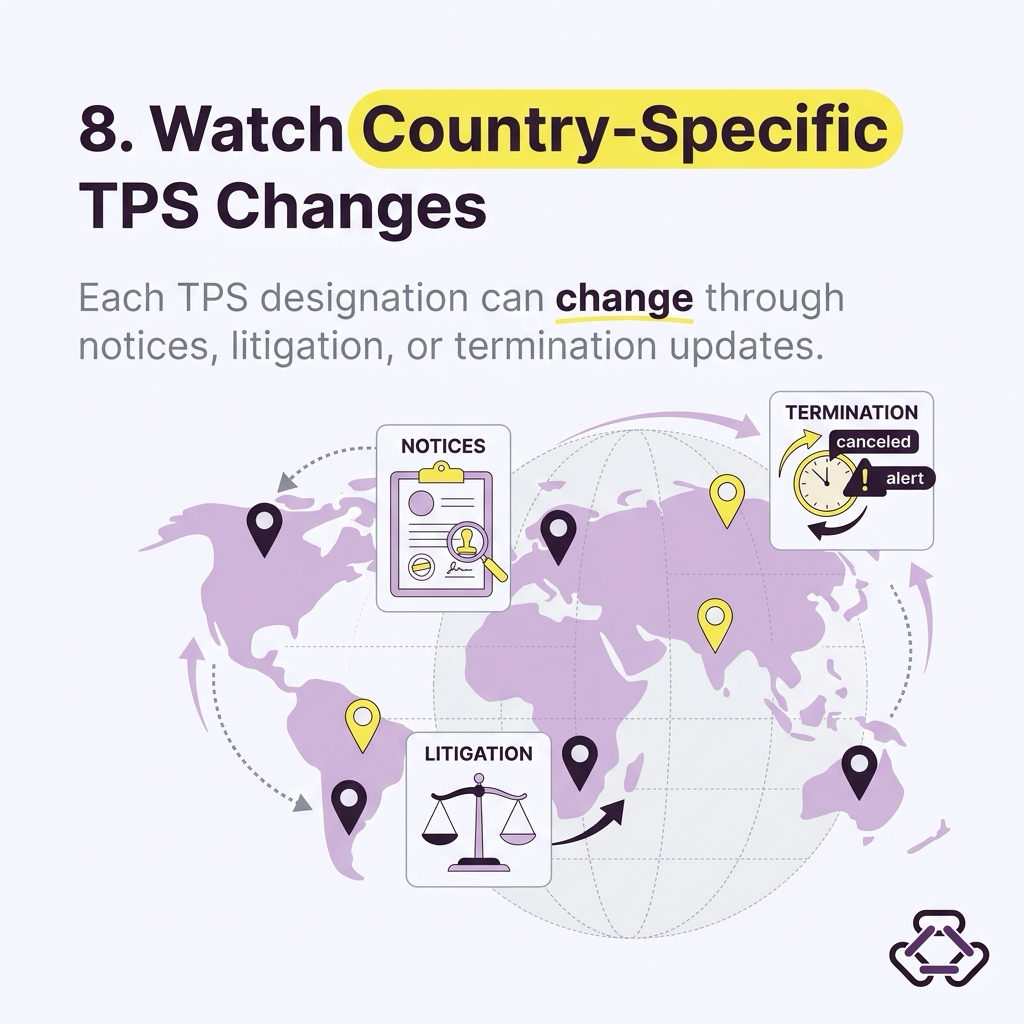
- 8. Pay Attention To Country-Specific TPS Changes
- 9. Do Not Ignore Small Problems Because Your Status Is “Still Active”
- When It May Be Time To Talk With An Attorney
- The Bottom Line

Type
Great Grandchild
Status
Approved
Title (YouTube)
Images Failed (Social)
Images Failed (Social)
Do not index
Publish Date (TikTok)
Apr 22, 2027 15:15
Videos Post IDs (Social)
Hashtags (Social)
#LegalAdvice #LegalHelp #Immigration #TemporaryProtectedStatus
Caption
Caption X
Cover

OG Image

Alt Image Text
Flat vector illustration of common TPS problems during active status, showing organized documents, calendar reminders, travel papers, and work permit tracking to avoid TPS problems while status is active.
Images

Videos
Publish Date (Social)
Feb 17, 2027 11:00
Scheduled (Social)
Scheduled (Social)
Images Posted (Social)
Images Posted (Social)
Videos Posted (Social)
Videos Posted (Social)
Featured
Created time
Apr 7, 2026 12:02 AM
Sub-item
Authors
CTA Practice Area (Social)
Immigration
TikTok Failed (Social)
TikTok Failed (Social)
Videos Post Links (Social)
TikTok Post Links (Social)
Images Post IDs (Social)
YT Post ID
Video Pending Manual (Social)
TikTok Posted (Social)
TikTok Posted (Social)
TikTok Post IDs (Social)
Video Cover (Social)
Images Post Links (Social)
First Comment (Social)
Videos Failed (Social)
Videos Failed (Social)
YT Embedded
Images Delete (Social)
Videos Delete (Social)
Carousel Video URL (Social)
How to Avoid Common TPS Problems While Your Status Is Active
Temporary Protected Status can offer critical protection, work authorization, and some breathing room during a very uncertain time. But many TPS problems do not start with a denial. They start with small administrative issues while status is still active: a missed re-registration window, a travel mistake, an address change that never gets updated, or confusion about an automatically extended work permit.
That is why staying organized during an active TPS period matters just as much as getting approved in the first place.
In this post you’ll learn how common TPS problems happen, how people often reduce the risk of avoidable issues, and when an immigration attorney may help sort out a more complicated situation. If you want a broader overview of how TPS works from start to finish, this guide on the basics of TPS, re-registration, travel, and risk may also help.
Scroll to the bottom for every post in this series.
Why TPS Problems Often Happen During An Active Grant
A lot of people think the hardest part is getting TPS approved. In many cases, the harder part is maintaining everything correctly after approval.
TPS is country-specific and time-sensitive. DHS announces extensions, redesignations, terminations, and re-registration windows through Federal Register notices and related USCIS TPS updates. USCIS also notes that applicants and beneficiaries often rely on those country-specific notices for filing instructions, deadlines, and employment authorization details. USCIS explains on its Form I-821 page that TPS applicants generally wait for the Federal Register notice for their country before filing. That timing issue alone can create confusion if someone assumes TPS renewal works automatically.
Another challenge is that TPS and work authorization are related, but not always identical in practice. USCIS explains that TPS beneficiaries may be work-authorized while their documentation questions can still involve auto-extensions, category codes like A12 or C19, and country-specific notices for employers. USCIS I-9 guidance and TPS employment documentation guidance both reflect how easy it is for paperwork confusion to happen even when status is still active.
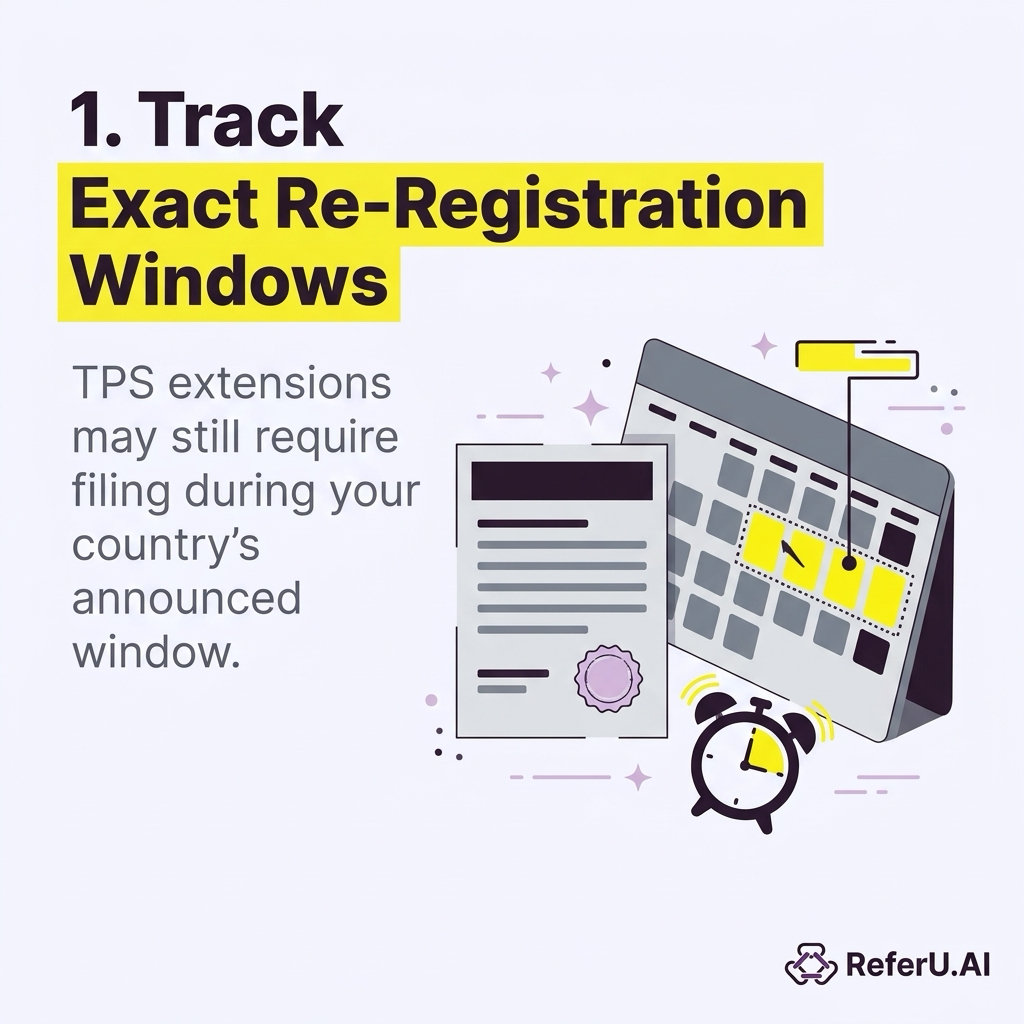
1. Keep Track Of Your Country’s Exact Re-Registration Window
One of the most common TPS problems is assuming re-registration is automatic or that a general TPS extension means no filing is required.
In general terms, DHS may extend a country’s TPS designation, but individual beneficiaries often still have to re-register during the specific filing window announced for that country. USCIS says people granted TPS by an immigration judge or the Board of Immigration Appeals also re-register with USCIS during each future extension period if they want future TPS benefits. USCIS TPS guidance and recent Federal Register TPS notices repeatedly outline that re-registration periods are tied to the notice for the specific country.
A missed window can lead to major disruption. Some Federal Register notices state that if a person does not re-register properly during the designated re-registration period, USCIS may withdraw TPS. That language appears in recent TPS notices, including the Ukraine extension materials published for 2025. USCIS’s Ukraine TPS announcement and the corresponding Federal Register notice materials illustrate how closely these deadlines are tied to continued protection and updated documents.
Many people keep a screenshot of the country notice, save the filing window in a calendar, and keep proof of timely filing in one place. If you want more detail on common filing errors, it may also help to read about TPS filing mistakes that can create status problems, especially where deadlines and incomplete submissions overlap.
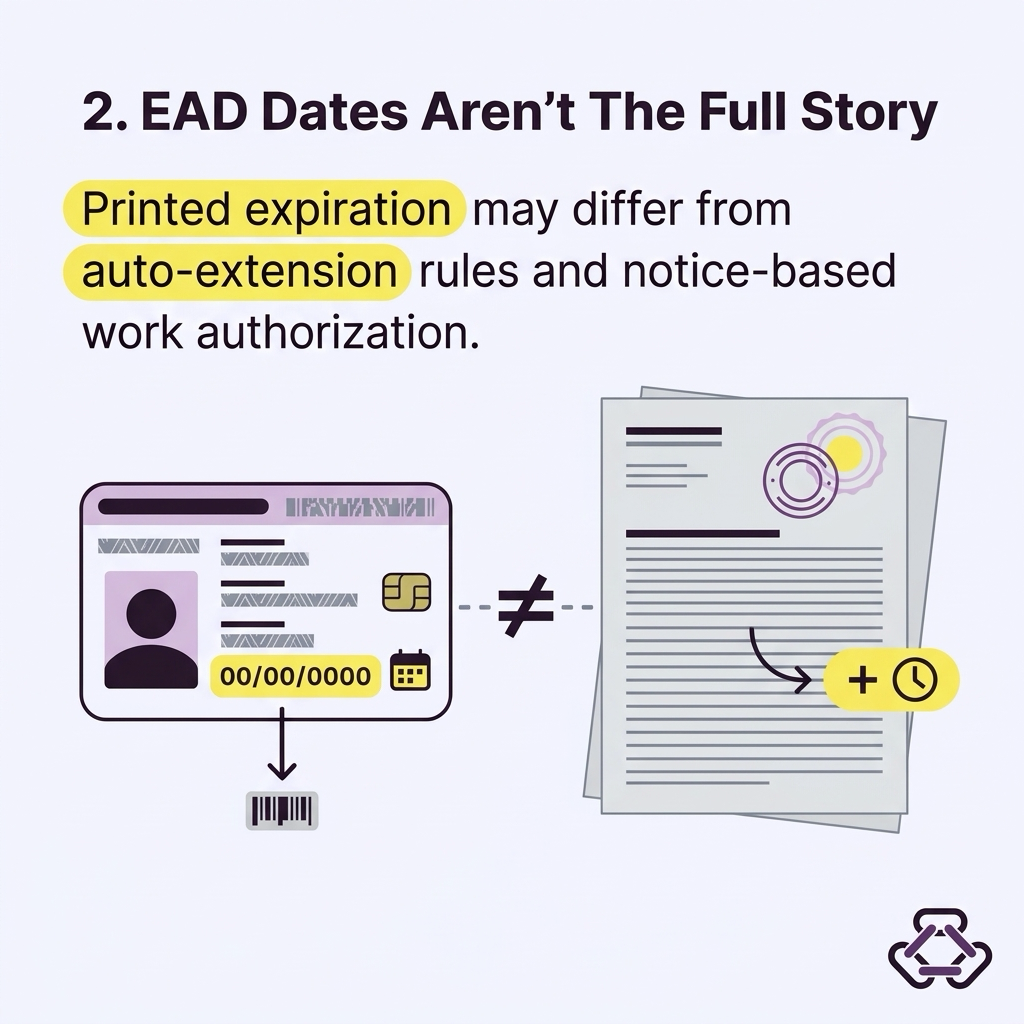
2. Do Not Assume Your EAD Expiration Date Tells The Whole Story
Work permit confusion is one of the biggest day-to-day TPS issues.
A TPS-based Employment Authorization Document may show a printed expiration date on the card, but that is not always the end of employment authorization. USCIS explains that some TPS EADs are automatically extended by Federal Register notice, and employers may be required to accept the auto-extended card when the notice covers that country and document category. USCIS TPS employment documentation guidance and USCIS I-9 TPS guidance both address this.
USCIS also finalized a broader rule increasing the automatic extension period for certain EAD renewal applicants to up to 540 days, and USCIS specifically notes that for TPS applicants, category codes do not have to match if one is A12 and the other is C19. USCIS’s automatic extension page, its I-9 news update on the permanent 540-day rule, and SAVE guidance for agencies all discuss how these extensions work.
Here’s what this often means in practice:
- The expiration date printed on the card may not be the only date that matters.
- The Federal Register notice for your TPS country may control whether the card is automatically extended.
- Your receipt notice and category code may matter for employer verification.
- Confusion at work does not always mean you lost TPS.
Some people carry a copy of the relevant Federal Register notice and USCIS guidance if an HR department is unfamiliar with TPS auto-extensions. An attorney may help if a job issue becomes more than a paperwork misunderstanding.
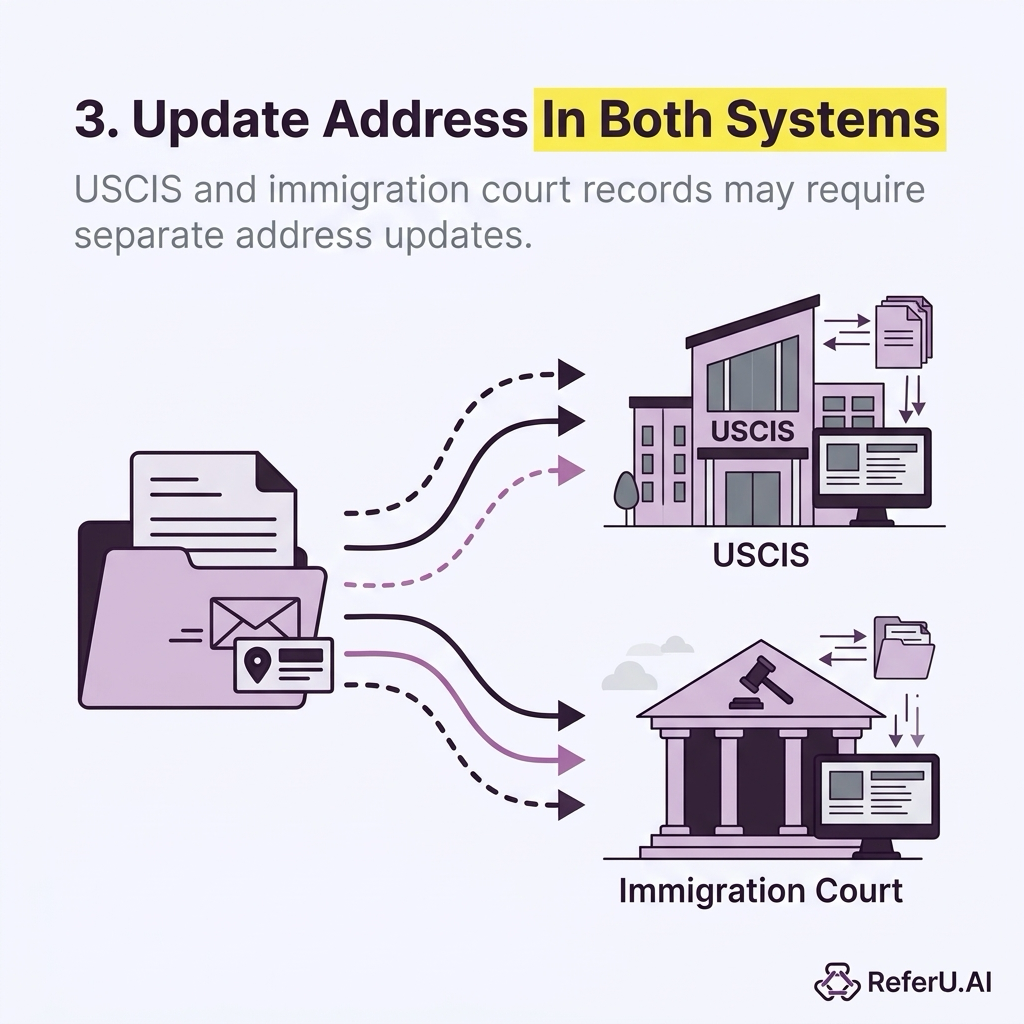
3. Update Your Address Quickly And In The Right System
Missed notices are a very common way TPS problems start.
USCIS says noncitizens in the United States generally report a change of address within 10 days of moving, and USCIS strongly encourages people to use the self-service address change tool in their online account because it updates systems more quickly than mailing a paper AR-11. USCIS’s AR-11 page and its change-of-address tool announcement both emphasize this point.
If you have immigration court proceedings, there may be a second layer. The Department of Justice explains that updating USCIS is not the same as updating the immigration court or BIA. EOIR says address or contact changes are submitted on the appropriate EOIR-33 form, and recent DOJ guidance states that respondents provide address changes to the court or BIA within five working days. DOJ EOIR respondent update guidance, EOIR’s address change form page, and even the AR-11 form itself reflect that one system does not automatically update the other.
This issue matters because travel documents, biometrics notices, RFEs, approval notices, and EADs can all be delayed or missed when the address on file is old. A missed notice can create cascading problems that look bigger than they started.
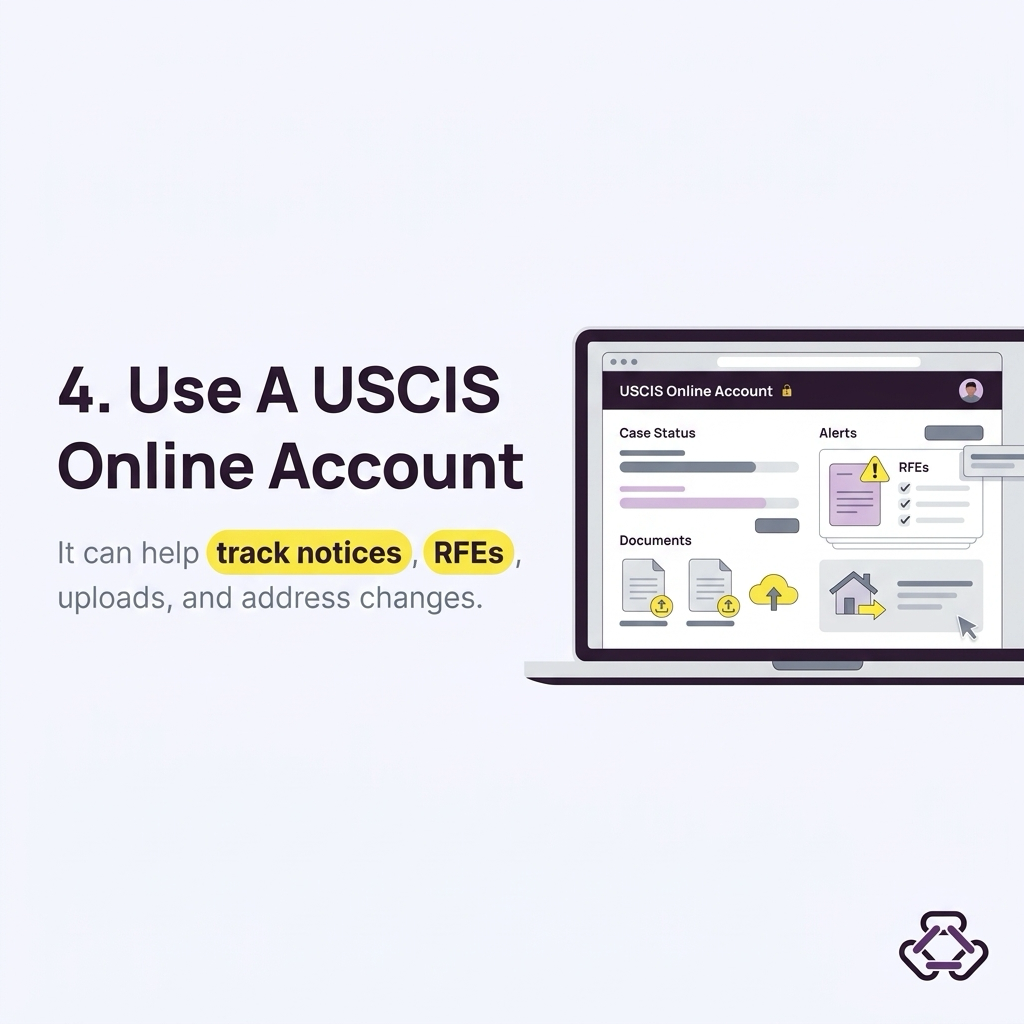
4. Use A USCIS Online Account Even If You Filed On Paper
A USCIS online account can reduce a surprising amount of stress.
USCIS states that an online account may allow people to track case status, access notices, update their address, upload evidence, and respond to Requests for Evidence. USCIS also says people can often link paper-filed cases to the account. USCIS’s online account benefits page, Case Status Online guidance, and USCIS Contact Center information all point to the account as a central tool for case management.
That does not make the process simple, but it can make it easier to catch issues early, such as:
- a receipt notice that never arrived by mail
- a request for evidence with a deadline
- a document uploaded by USCIS but not yet seen
- an address problem
- an EAD issue that needs follow-up
For many TPS holders, the problem is not lack of eligibility. It is not seeing a problem early enough to fix it.
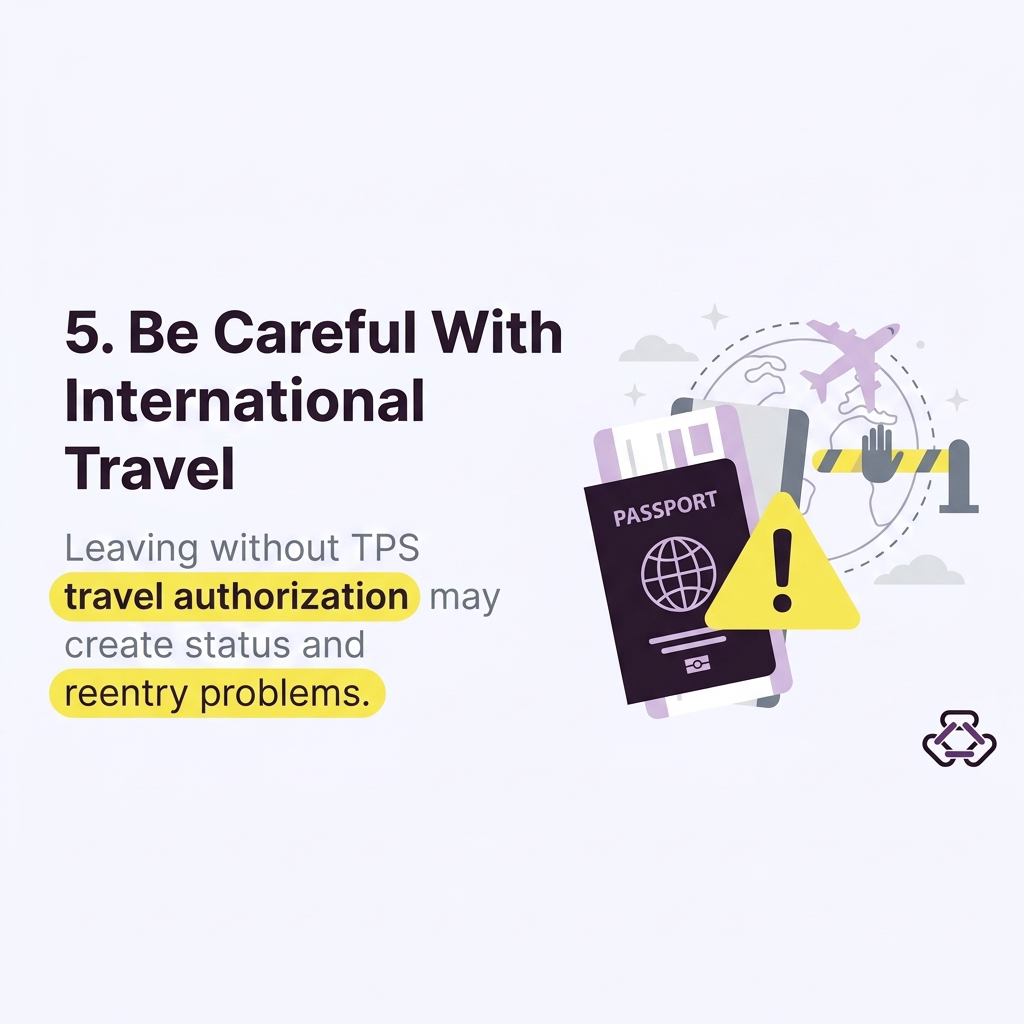
5. Be Careful With International Travel
Travel is one of the most misunderstood TPS issues.
USCIS says that if you have TPS and leave the United States without first obtaining TPS travel authorization, you may lose TPS and may not be able to reenter the United States. If your TPS application is still pending and you travel without advance authorization, USCIS may deny the application and reentry may also become a problem. USCIS’s TPS page is very direct on this point.
USCIS also explains that TPS beneficiaries who file Form I-131 and are approved for travel receive documentation authorizing travel, currently identified on the Form I-131 page as Form I-512T for TPS beneficiaries in the United States who want to travel abroad. USCIS Form I-131 guidance and the main TPS page provide the current framework.
Travel can also intersect with other immigration issues in ways that are not obvious from a TPS approval notice alone. For example, prior removal orders, inadmissibility concerns, prior unlawful presence issues, or parole history may affect the analysis. USCIS itself encourages people to read the travel warning carefully and notes that legal advice may be worth considering before requesting travel authorization. USCIS TPS travel guidance says as much.
If travel is part of your plan, it may help to first get grounded in a plain-English overview of TPS travel, re-registration, and risk, then speak with an attorney if your history is more complicated than a straightforward round trip.
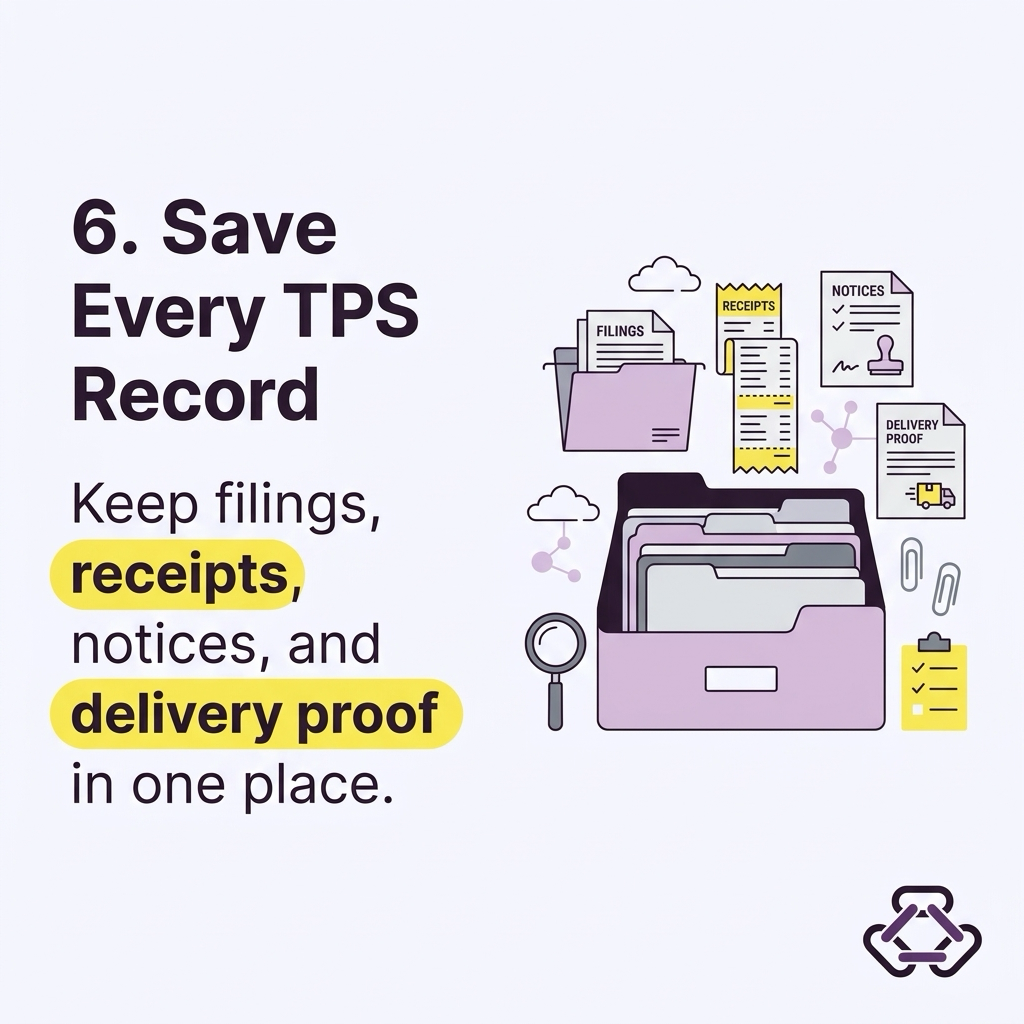
6. Save Copies Of Every Filing, Notice, Receipt, And Delivery Confirmation
TPS problems often become harder when there is no paper trail.
In immigration matters, the difference between “I filed that” and “I can prove I filed that on time” can be enormous. USCIS’s systems are better than they used to be, but filing records still matter. Receipts, delivery confirmations, copies of the forms submitted, filing fee proof, biometric notices, RFEs, and approval notices can all become important later.
This matters for several reasons:
- proving a timely re-registration
- showing EAD renewal is pending
- clarifying whether an auto-extension applies
- responding to an employer or agency that is unsure about documentation
- preparing for a legal consultation
- dealing with replacement requests if a document is lost in the mail
Some people keep a digital folder and a printed folder with the same documents. That simple habit often reduces panic later.
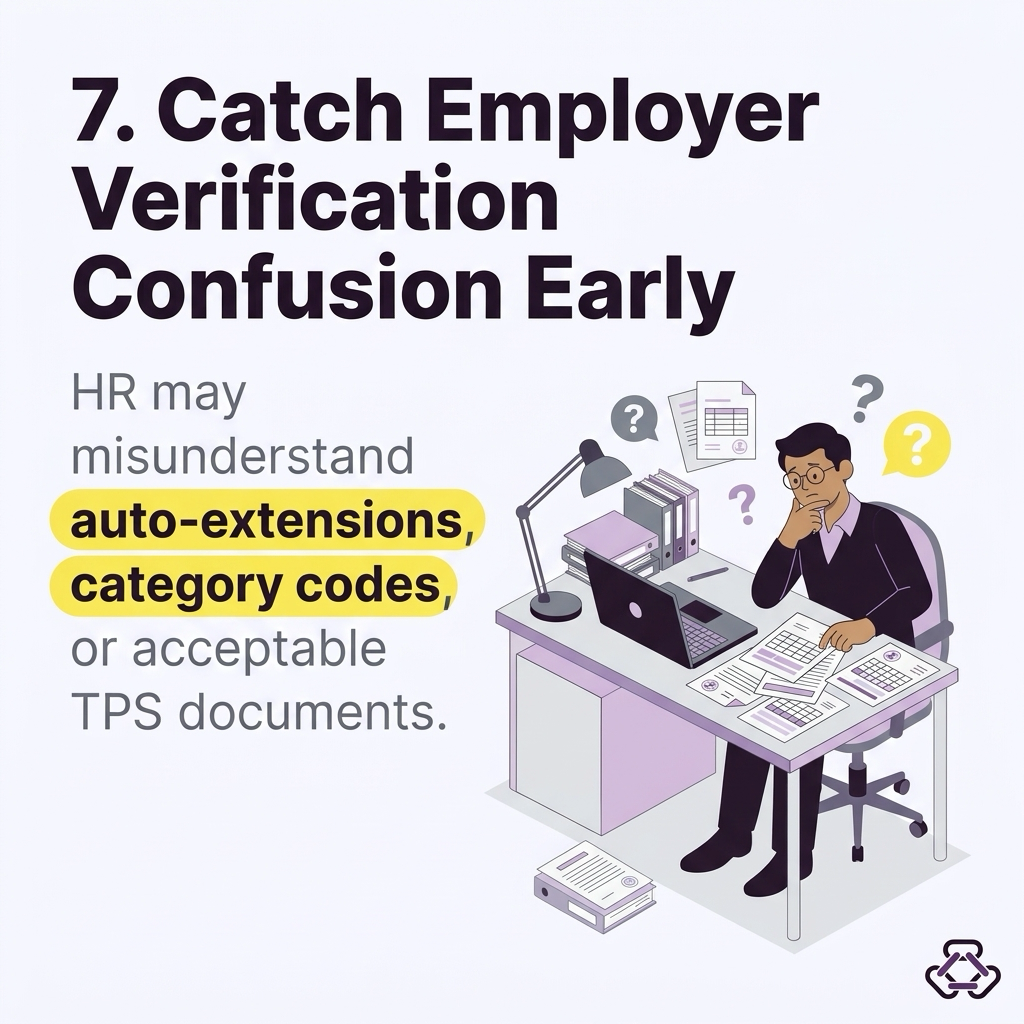
7. Watch For Employer Verification Issues Before They Become Job Problems
Many TPS holders run into problems not because their status ended, but because an employer does not understand TPS documentation.
USCIS explains that TPS beneficiaries can present acceptable documents for Form I-9 purposes like any other employee, and that employers may not use E-Verify to re-check current employees outside the normal rules just because the employee has TPS. USCIS’s TPS employment page states that where a TPS-based EAD has been auto-extended by Federal Register notice, the employer accepts that documentation for I-9 purposes through the extension period. USCIS TPS documentation guidance and I-9 guidance on TPS and DED address these issues in detail.
USCIS also notes that reverification happens through Supplement B of Form I-9 when employment authorization documentation requires it. USCIS’s reverification guidance explains how that process works.
In practical terms, a TPS worker may face issues like:
- HR looking only at the card’s printed date
- confusion over A12 and C19 category codes
- a request for extra documents that are not actually required
- mistaken assumptions that auto-extended TPS documents are invalid
Sometimes a short conversation with HR and the right USCIS materials clears this up. In other situations, especially where pay or job continuity is affected, speaking with an immigration attorney may help frame the issue more clearly.
8. Pay Attention To Country-Specific TPS Changes
TPS is not one single program with one single timeline.
Each designated country has its own history of extensions, redesignations, terminations, injunctions, and litigation. USCIS’s main TPS page currently includes country-by-country information, and some designations have changed rapidly. For example, USCIS states that the 2023 Venezuela TPS designation was terminated effective April 7, 2025, subject to related litigation developments reflected in agency guidance. USCIS’s main TPS page and SAVE agency FAQs discussing TPS changes for Venezuelans show how quickly this area can shift.
That is why generic TPS advice can be risky. Advice that is accurate for one nationality or one notice period may not fit another person’s case at all.
If your TPS country has had recent announcements, litigation, or mixed messages online, an attorney may help determine what is still active, what has been extended, and what documentation remains valid right now.
9. Do Not Ignore Small Problems Because Your Status Is “Still Active”
A lot of TPS issues start with something that feels minor:
- the EAD has not arrived yet
- mail is going to an old address
- the employer is confused
- a re-registration notice is hard to understand
- travel plans are coming up
- a court case and USCIS case are happening at the same time
Those are exactly the kinds of situations where people often wait too long because they assume active TPS solves everything by itself.
In reality, TPS can remain active while related benefits, deadlines, travel rights, or documentation become messy. An attorney may help separate a temporary paperwork problem from a genuine status problem.
When It May Be Time To Talk With An Attorney
Some TPS issues stay administrative. Others become more serious very quickly.
People often look for legal help when:
- a re-registration may have been late
- travel happened without authorization
- removal proceedings are involved
- USCIS sent a notice that is confusing or alarming
- work authorization is being questioned
- a country-specific TPS change created uncertainty
- there may be another immigration option beyond TPS
The value of an attorney in this setting is often less about generic immigration knowledge and more about relevant experience with highly-similar matters. TPS cases can involve court records, filing history, employment questions, travel questions, and overlapping forms of relief. A lawyer with documented experience handling cases like yours may be better positioned to spot issues that are easy to miss in general online advice.
The Bottom Line
Avoiding common TPS problems while your status is active often comes down to staying ahead of deadlines, keeping records, watching for country-specific updates, and treating travel and work authorization questions carefully.
TPS can provide meaningful protection, but it also creates ongoing administrative responsibilities. The good news is that many problems begin as preventable misunderstandings, not permanent case failures. When the facts are more complicated, an attorney may help determine what options remain available and what evidence matters most.
Visit ReferU.AI to get matched with an attorney who has demonstrable experience in cases like yours — for free.
