Table of Contents
- How to Prepare a TPS Filing or Re-Registration
- Why TPS Preparation Deserves Extra Attention
- Step 1: Confirm Which TPS Notice Applies To You
- Step 2: Decide Whether This Is An Initial Filing Or A Re-Registration
- Step 3: Use The Correct Forms
- Form I-821
- Form I-765
- Form I-912
- Form I-131
- Step 4: Gather Identity, Nationality, And Residence Evidence
- Step 5: Pay Close Attention To Fees And Fee Waivers
- Step 6: Prepare The EAD Portion Carefully
- Step 7: Review Travel Plans Before Filing Or Re-Registering
- Step 8: Build A Filing Package That Is Easy To Review
- Step 9: Watch For The Most Common TPS Filing Problems
- When An Attorney May Add Real Value
- A Short Summary Before You File

Type
Great Grandchild
Status
Approved
Title (YouTube)
Images Failed (Social)
Images Failed (Social)
Do not index
Publish Date (TikTok)
Apr 22, 2027 16:15
Videos Post IDs (Social)
Hashtags (Social)
#LegalAdvice #LegalHelp #Immigration #TemporaryProtectedStatus
Caption
Caption X
Cover

OG Image

Alt Image Text
Flat vector illustration of TPS filing and TPS re-registration preparation with organized forms, identity documents, calendar, and checklist on a desk.
Images

Videos
Publish Date (Social)
Feb 17, 2027 11:30
Scheduled (Social)
Scheduled (Social)
Images Posted (Social)
Images Posted (Social)
Videos Posted (Social)
Videos Posted (Social)
Featured
Created time
Apr 7, 2026 12:02 AM
Sub-item
Authors
CTA Practice Area (Social)
Immigration
TikTok Failed (Social)
TikTok Failed (Social)
Videos Post Links (Social)
TikTok Post Links (Social)
Images Post IDs (Social)
YT Post ID
Video Pending Manual (Social)
TikTok Posted (Social)
TikTok Posted (Social)
TikTok Post IDs (Social)
Video Cover (Social)
Images Post Links (Social)
First Comment (Social)
Videos Failed (Social)
Videos Failed (Social)
YT Embedded
Images Delete (Social)
Videos Delete (Social)
How to Prepare a TPS Filing or Re-Registration
Temporary Protected Status, or TPS, can feel paperwork-heavy even when the goal is straightforward: file correctly, on time, and with the right evidence. For many families, the hardest part is not the form itself. It is figuring out which notice applies, which documents matter, whether work authorization is included, and what can cause delays or rejection.
In this post you’ll learn how a TPS filing or TPS re-registration is typically prepared, what forms are commonly involved, how to organize supporting documents, and where people often run into trouble. If you want a broader overview of how TPS works before diving into the paperwork, this guide on understanding TPS eligibility, travel, and re-registration may help with the bigger picture.
Scroll to the bottom for every post in this series.
Why TPS Preparation Deserves Extra Attention
TPS is country-specific and date-specific. USCIS explains that people generally file TPS using Form I-821, and that the filing window depends on the relevant Federal Register notice for their country’s designation, redesignation, or extension. USCIS also notes that eligible applicants can file Form I-821 online, and may request an Employment Authorization Document, or EAD, with Form I-765 at the same time using the USCIS online system or by paper filing, depending on the situation (USCIS Form I-821; USCIS TPS page).
That timing issue is a big deal. A person may be fully eligible for TPS in general terms, but still face problems if the filing is outside the correct registration or re-registration period, if the wrong edition of a form is used, or if fees and fee-waiver documents do not line up with the filing package (USCIS Form I-821; USCIS Form I-912).
For people already in TPS, re-registration can look deceptively simple. In practice, many filings are delayed by small issues like missing signatures, outdated addresses, incomplete identity records, or confusion about whether to file an EAD request now or later. USCIS states that there is no fee for Form I-821 when re-registering for TPS, but other TPS-related fees can still vary depending on whether the person requests work authorization or seeks a waiver of inadmissibility, and USCIS warns that incorrect fees or an improper fee-waiver submission can lead to rejection (USCIS TPS page).
Step 1: Confirm Which TPS Notice Applies To You
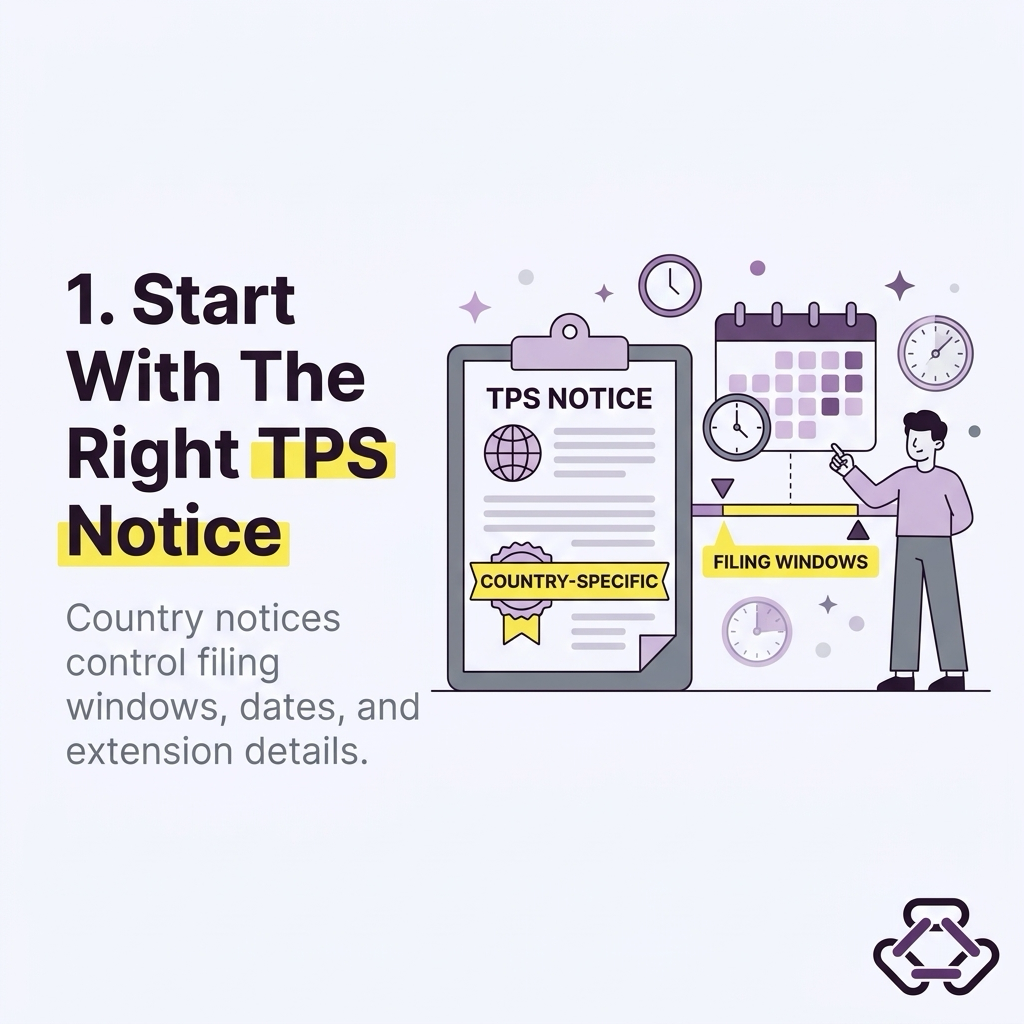
Before preparing anything, it helps to identify the exact TPS designation involved. USCIS says all TPS applicants should wait to file until the Federal Register notice for their country is published, and that first-time applicants and re-registrants are governed by the filing periods in those notices (USCIS Form I-821).
This is where many people lose time. TPS rules are not one-size-fits-all. Some countries are in an initial designation period, others in a redesignation, and others in an extension with a re-registration window. The deadlines, continuous residence dates, and automatic EAD extension language may differ from one country notice to another. USCIS maintains country-specific TPS pages and links them to the governing notices (USCIS TPS page).
As one example of how country-specific these details are, USCIS states that for Ukraine, DHS extended TPS from April 20, 2025, through October 19, 2026, and current beneficiaries had to re-register during the period announced for that extension. USCIS also explains that certain EADs tied to Ukraine TPS were automatically extended through April 19, 2026, while newly approved re-registration EADs may carry a later expiration date tied to the current designation period (USCIS Ukraine TPS page; USCIS archive notice on Ukraine TPS extension).
In practical terms, many people start by printing or saving:
- the country-specific TPS page,
- the related Federal Register notice,
- the current form instructions,
- and the current fee information.
That creates a clean reference set before any forms are filled out.
Step 2: Decide Whether This Is An Initial Filing Or A Re-Registration
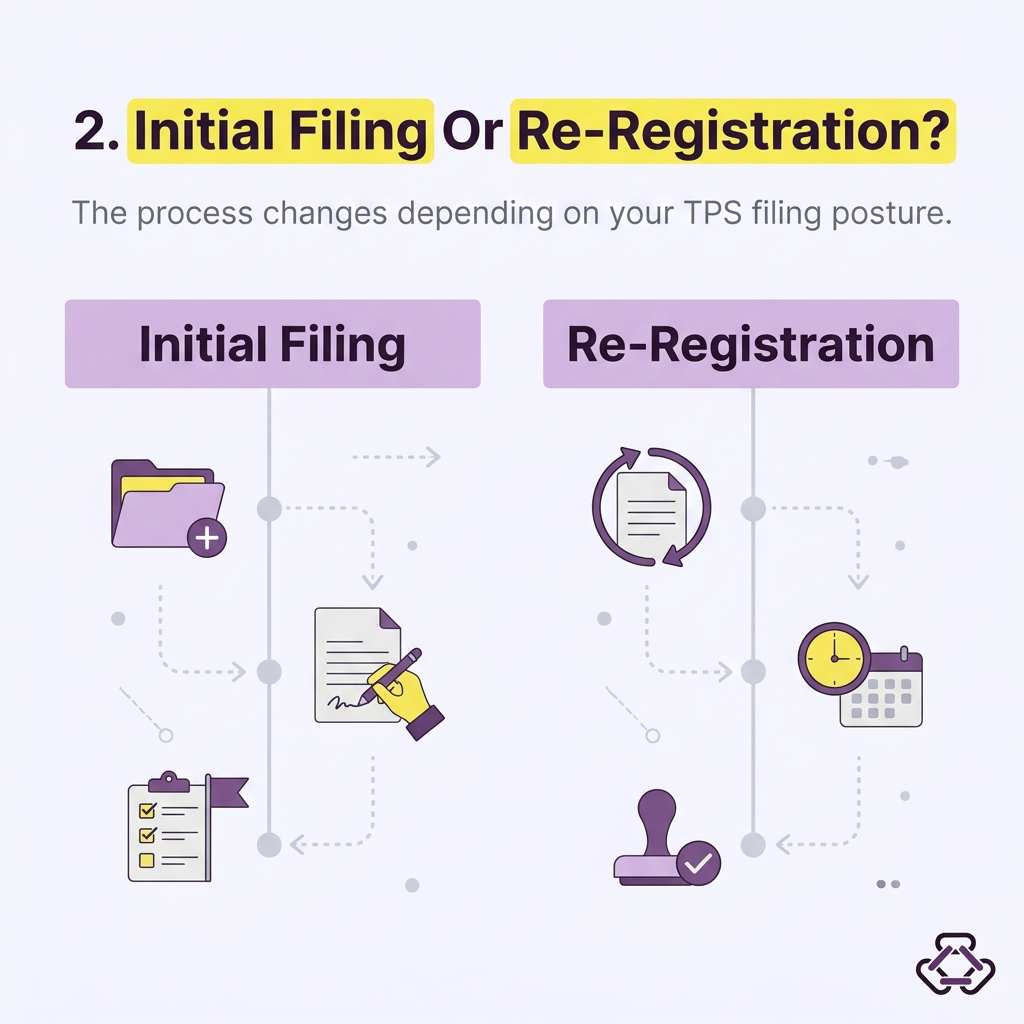
A TPS filing and a TPS re-registration often use the same core form, but they are not the same process.
USCIS explains that:
- Initial TPS applicants file during the registration period for the country’s designation or redesignation.
- Current TPS beneficiaries file during the re-registration period to maintain TPS.
- USCIS may accept a late re-registration in some cases if the person shows good cause for filing after the designated period (USCIS TPS page).
That distinction affects the evidence package. Initial filings often involve more proof about nationality, identity, date of entry, and continuous residence. Re-registration packets are sometimes lighter, but they still have to be complete and consistent.
If an Immigration Judge or the Board of Immigration Appeals granted TPS, USCIS says the person generally has to provide proof of that grant when filing for the first TPS benefit with USCIS, including a first re-registration application filed with USCIS (USCIS TPS page).
Step 3: Use The Correct Forms
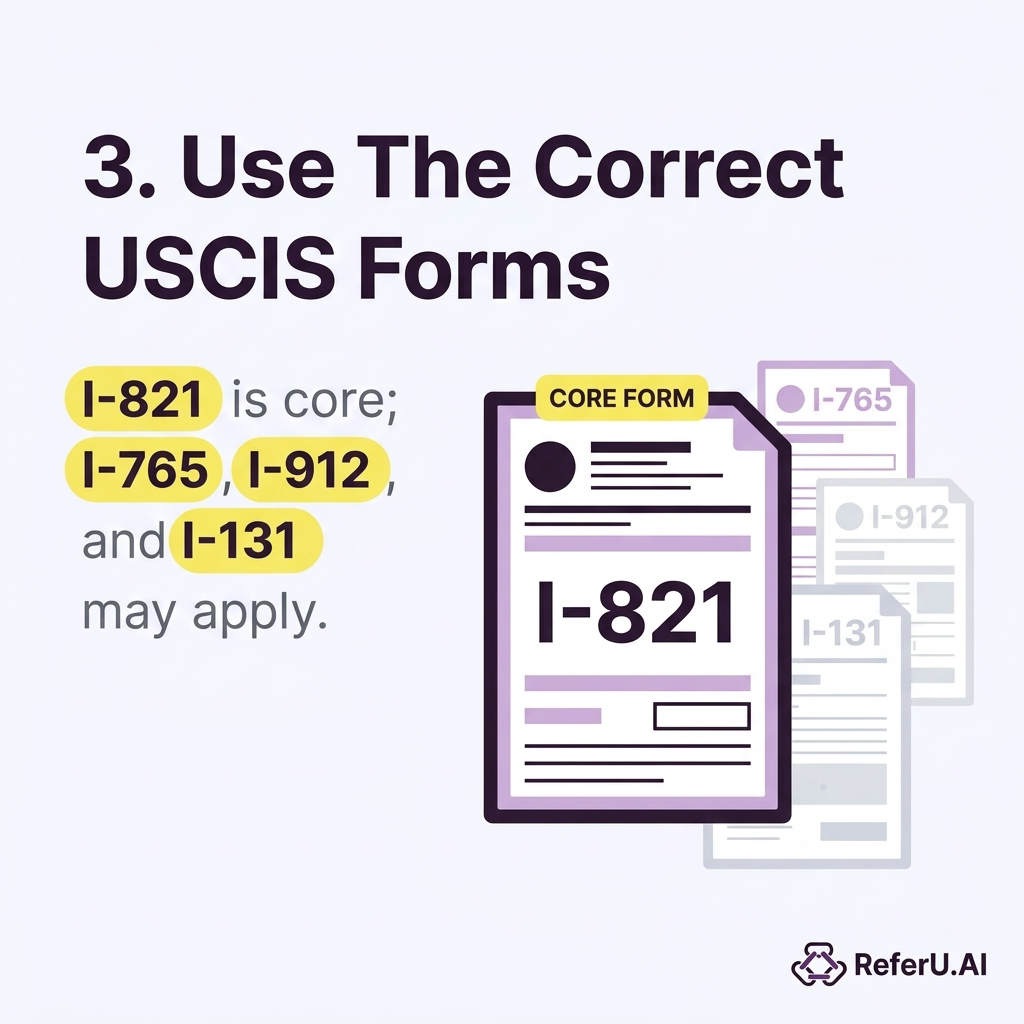
For most TPS matters, the forms at the center of the process are:
Form I-821
This is the main application for TPS. USCIS states that Form I-821 is used to apply for TPS or re-register for TPS, and that all applicants eligible under current designations may file it online (USCIS Form I-821).
Form I-765
This form is used to request an EAD. USCIS explains that TPS applicants can submit Form I-765 together with Form I-821 or file it later. USCIS also notes that employment authorization categories for TPS commonly include (a)(12) for approved TPS beneficiaries and (c)(19) for certain pending TPS applicants who are prima facie eligible (USCIS Form I-821; USCIS Employment Authorization page; USCIS forms available online).
Form I-912
This is the fee-waiver request. USCIS explains that if a person cannot afford an eligible fee, they may submit Form I-912 or another written fee-waiver request with supporting documentation, but USCIS also notes that certain newer fees created by federal legislation are not waivable in most cases (USCIS Form I-912; USCIS additional fee-waiver information).
Form I-131
This form is for TPS-related travel authorization. USCIS states that TPS beneficiaries and some people with pending initial TPS applications may request travel authorization using Form I-131, and that traveling without the proper document can create serious problems, including loss of TPS or an inability to return as expected (USCIS Form I-131; USCIS TPS page).
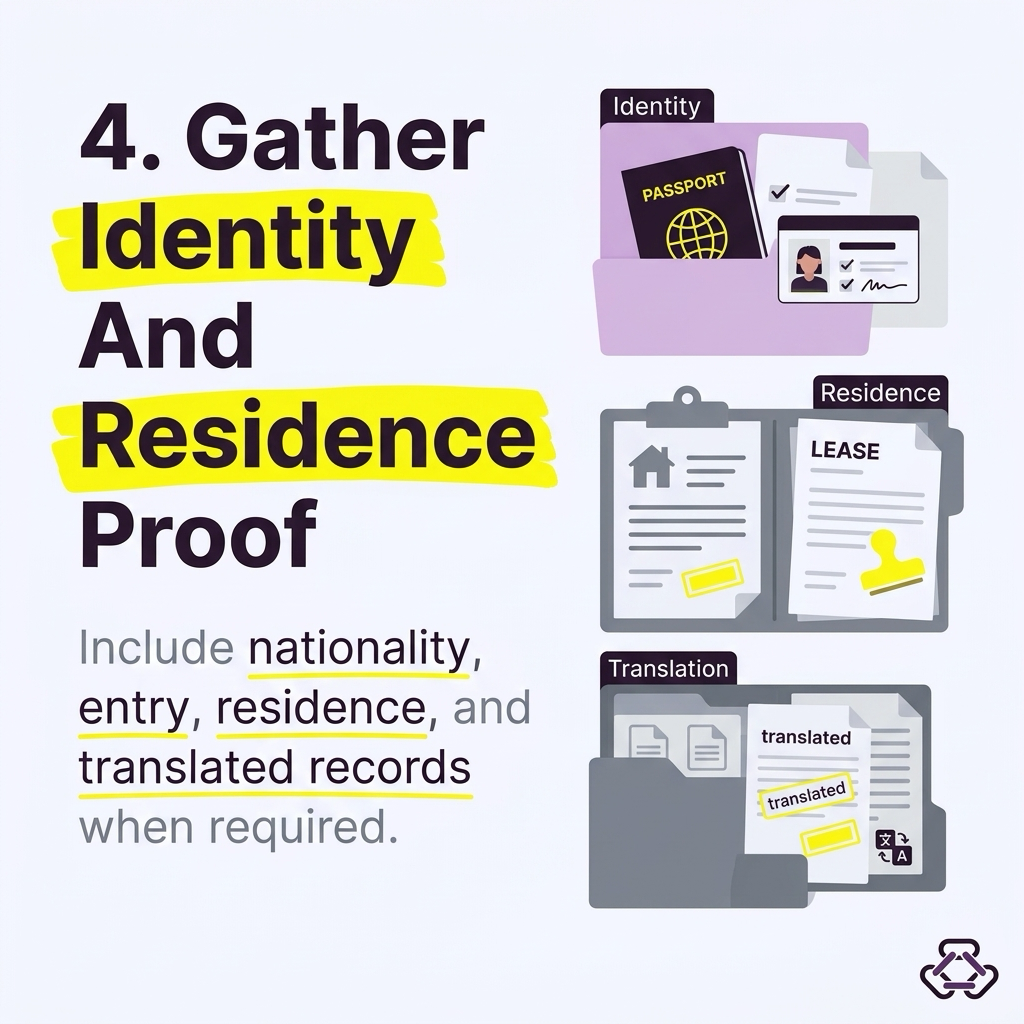
Step 4: Gather Identity, Nationality, And Residence Evidence
USCIS says TPS applicants should review the Form I-821 instructions for acceptable evidence, and the agency’s TPS page notes examples such as documents showing nationality and records that support the applicant’s presence and residence in the United States (USCIS TPS page; Form I-821 instructions).
In many TPS filings, the document set may include:
- passport biographic page,
- birth certificate with translation if needed,
- national identity document,
- I-94 records if available,
- prior immigration notices,
- proof of date of entry,
- and records showing residence during the required period.
USCIS also states that foreign-language documents generally require a full English translation with the translator’s certification that the translation is complete and accurate and that the translator is competent to translate (USCIS TPS page; USCIS Form I-912).
A common preparation step is to sort documents into folders:
- identity and nationality,
- U.S. entry records,
- residence evidence,
- prior USCIS notices,
- work permit materials,
- and fee or fee-waiver materials.
That type of organization can make online upload or paper assembly much easier.
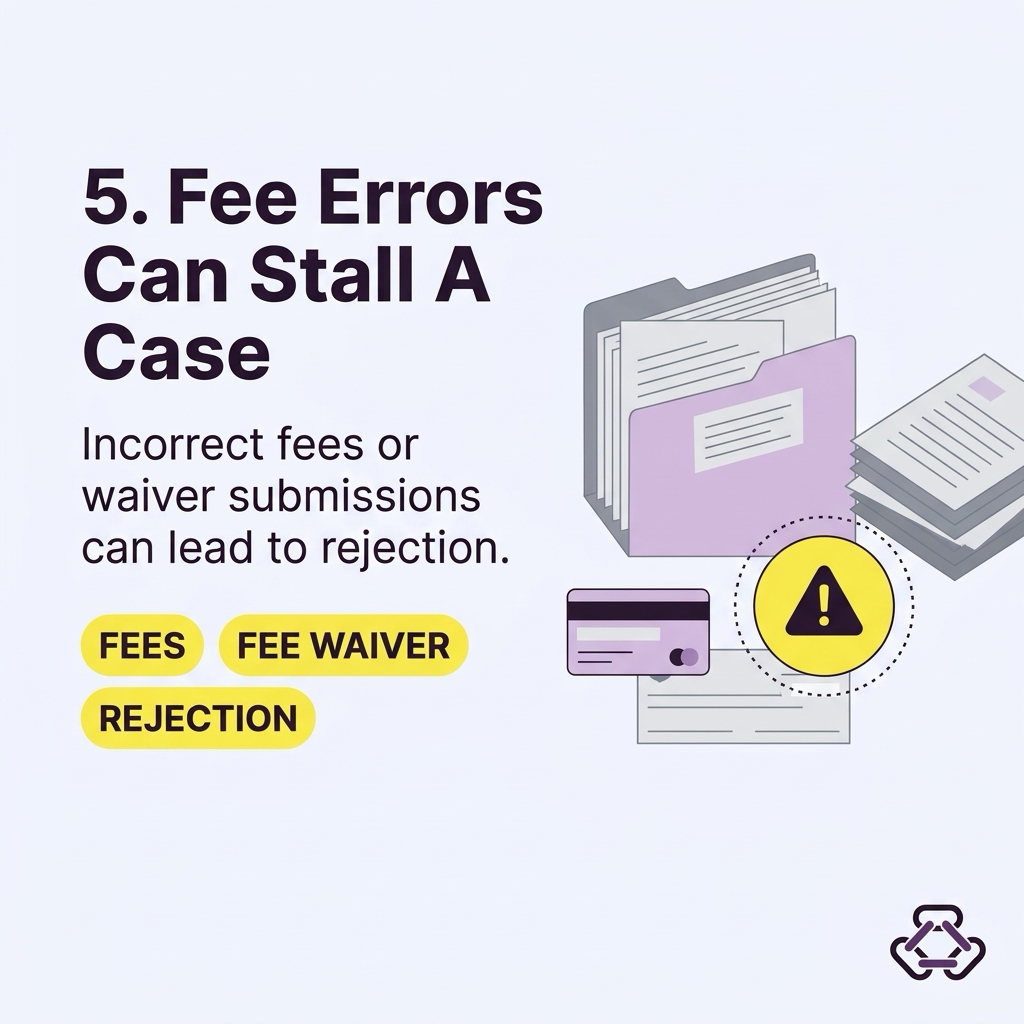
Step 5: Pay Close Attention To Fees And Fee Waivers
Fee mistakes are one of the easiest ways for a filing to stall before USCIS even reviews eligibility.
USCIS says:
- there is no fee for Form I-821 if the person is re-registering for TPS,
- other TPS-related fees can apply depending on the request,
- current fee rules changed after July 18, 2025 announcements implementing new fees,
- and filings postmarked on or after August 21, 2025 without the proper fees can be rejected under the updated fee structure (USCIS TPS page; USCIS Form I-821; USCIS Form I-912).
USCIS also explains that a fee-waiver request generally has to be submitted with the underlying application, not later, and that the request has to include supporting evidence of inability to pay. The agency lists examples such as proof of means-tested benefits, low household income, or financial hardship (USCIS Form I-912).
In real-world filing prep, this often means double-checking:
- whether the case is an initial filing or re-registration,
- whether Form I-765 is included,
- whether any inadmissibility waiver request is being filed,
- and whether a fee waiver is actually available for each fee in the packet.
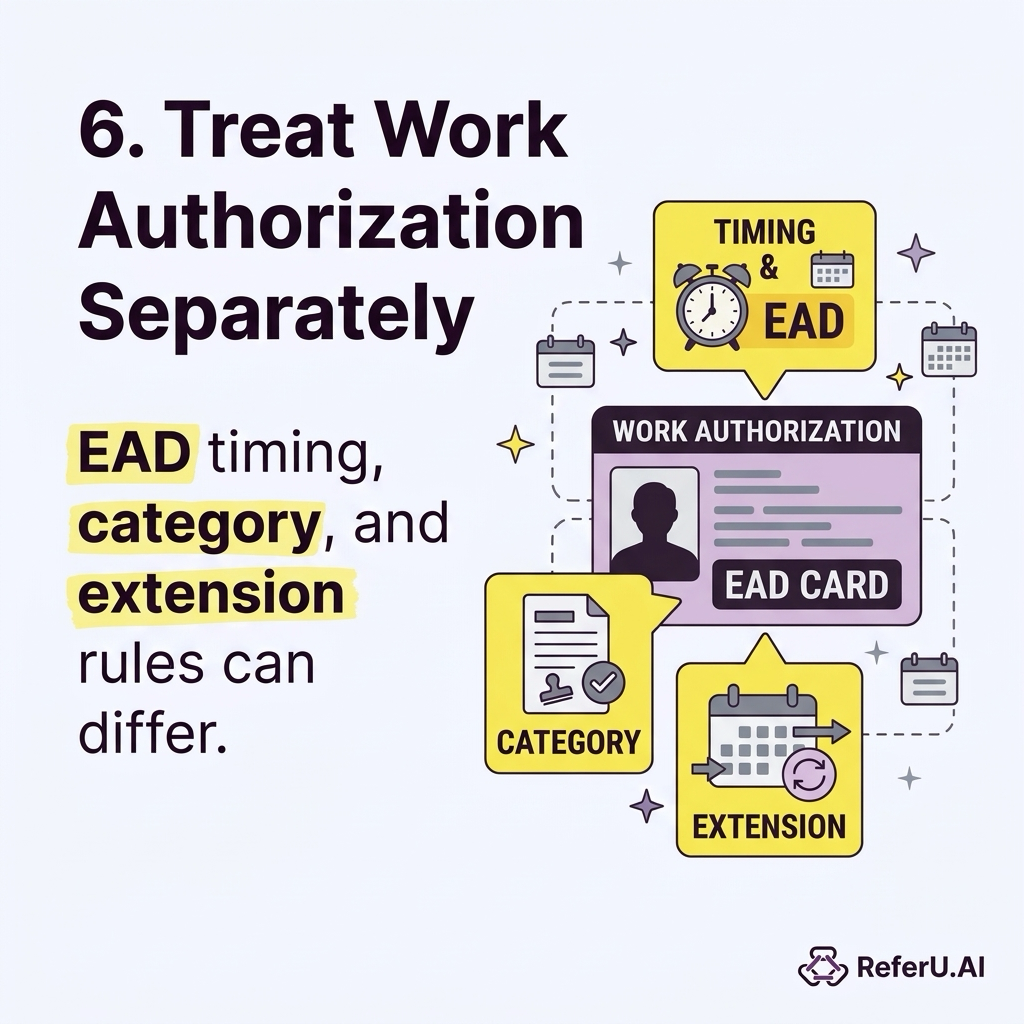
Step 6: Prepare The EAD Portion Carefully
Many TPS applicants are focused on work authorization as much as TPS itself. That makes the EAD portion of the filing especially important.
USCIS states that TPS applicants may file Form I-765 together with Form I-821 or later, and that some TPS-related Form I-765 requests can also be handled online depending on the category and filing posture (USCIS Form I-821; USCIS forms available online).
There are a few details people often miss:
- the eligibility category listed on Form I-765,
- whether the EAD is being requested for the first time, renewed, or replaced,
- and whether an automatic extension already exists by law or notice for that country’s TPS designation.
USCIS’s I-9 guidance and country-specific TPS notices often explain which EADs are automatically extended and for how long, which can matter for employment verification and renewal timing (USCIS Temporary Protected Status and Deferred Enforced Departure page; USCIS Ukraine TPS page).
For readers trying to avoid filing errors that can affect work authorization timing, it may also help to read about common TPS issues while status is active and mistakes that can create TPS status problems, especially if employment records, addresses, or travel history have changed.
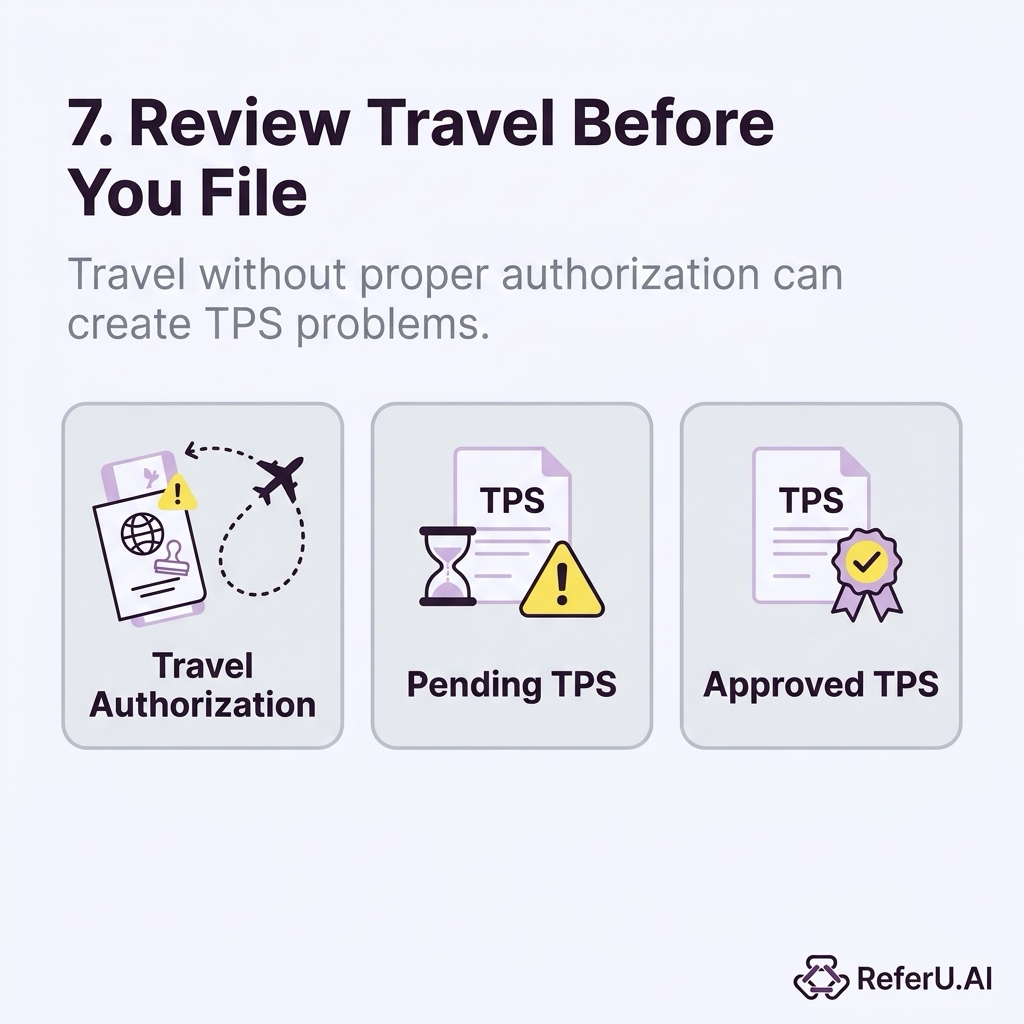
Step 7: Review Travel Plans Before Filing Or Re-Registering
Travel is one of the most sensitive parts of TPS practice.
USCIS says that if a person with TPS leaves the United States without first obtaining TPS travel authorization, that person may lose TPS and may not be able to reenter the United States. USCIS also says that if a person with a pending TPS application leaves without advance parole, USCIS may deny the TPS application and the person may not be able to return as expected (USCIS TPS page; USCIS Form I-131).
USCIS currently allows online filing for some TPS-related Form I-131 travel requests, including travel authorization documents for TPS beneficiaries inside the United States under the designated box on the form (USCIS Form I-131).
This area often raises very fact-specific questions:
- Is TPS already approved, or is the first application still pending?
- Is the person asking for TPS travel authorization or advance parole?
- Is there any prior removal history, parole history, or inadmissibility concern?
- Will the person be outside the United States while a request for evidence or interview notice is issued?
USCIS expressly notes that people with TPS or pending TPS applications may want legal advice before requesting TPS travel authorization or advance parole, because travel can carry immigration-related consequences beyond the form itself (USCIS TPS page).
Step 8: Build A Filing Package That Is Easy To Review
Whether filing online or by mail, clarity matters.
A clean TPS package often includes:
- the signed form set,
- a cover letter or short table of contents,
- filing fee or fee-waiver materials,
- a copy of the relevant TPS notice if helpful,
- identity and nationality evidence,
- residence evidence,
- prior TPS approval notices if re-registering,
- and copies of prior EADs if requesting renewal.
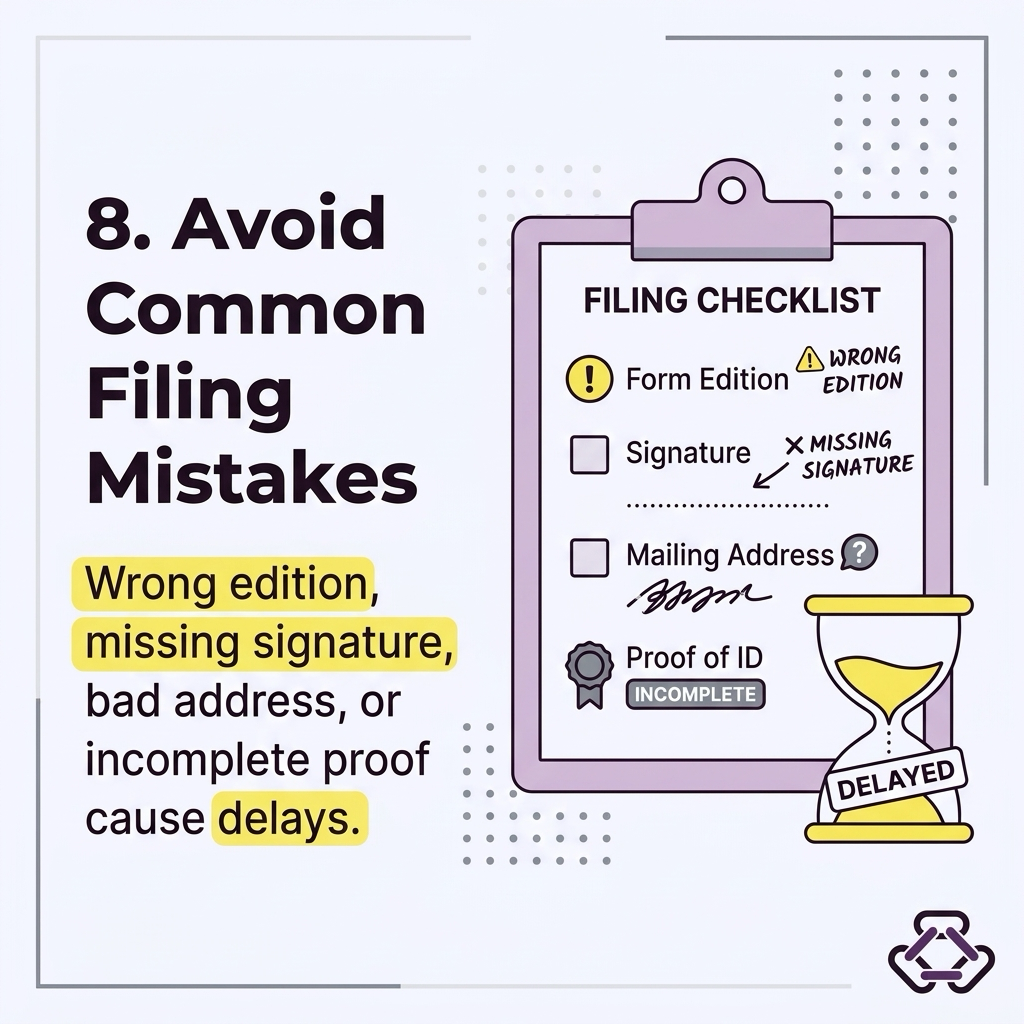
USCIS warns that unsigned forms can be rejected, and that paper filers using downloaded forms should confirm the edition date and make sure all pages come from the same form edition (USCIS Form I-821; USCIS Form I-912; USCIS Form I-131).
For online filers, USCIS says eligible TPS applicants can use a USCIS online account to submit Form I-821, and online filing can also make it easier to receive receipt notices, track the case, and communicate through the secure inbox (USCIS Form I-821; USCIS online filing announcement).
Step 9: Watch For The Most Common TPS Filing Problems
Some TPS problems are legal eligibility issues. Others are basic filing issues that create delays, denials, or rejections.
Frequent trouble spots include:
- filing outside the registration or re-registration period,
- using the wrong form edition,
- forgetting a signature,
- omitting translation certifications,
- paying the wrong amount,
- filing the EAD request incorrectly,
- mailing to an outdated address,
- or failing to include proof of prior TPS if the case history is unusual.
USCIS also notes that country-specific pages govern where paper applications go, while separate direct filing pages govern some standalone filings like Form I-131 or certain I-765 requests (USCIS TPS page; USCIS I-131 addresses; USCIS I-765 addresses).
People often assume a re-registration is “just a renewal,” but TPS status can intersect with removal proceedings, criminal history, travel issues, employment gaps, prior denials, or changes in the law. In those cases, preparation may involve more than assembling a packet. It may involve figuring out whether the filing strategy matches the person’s broader immigration history.
If you’re sorting through those kinds of questions, it may help to compare this checklist with a broader explainer on how TPS works from eligibility to travel issues.
When An Attorney May Add Real Value
A straightforward TPS filing can still become complex when:
- the person missed a re-registration window,
- USCIS issued a request for evidence,
- there are criminal or arrest records,
- identity documents are inconsistent,
- the person traveled without permission,
- an Immigration Judge or the BIA was involved,
- or another immigration application is happening at the same time.
In situations like these, an attorney may help identify whether the issue is procedural, evidentiary, or legal. That can matter because TPS filings are often less about one dramatic problem and more about several smaller issues interacting at the same time.
And when people start looking for legal help, the challenge is often not just finding any immigration lawyer. It is finding one with documented experience in highly similar matters, based on objective criteria and court-record evidence, rather than advertising or generic directory placement.
A Short Summary Before You File
Preparing a TPS filing or re-registration usually comes down to a few core steps: identify the correct country notice, confirm whether the case is initial or re-registration, use the right forms, gather strong identity and residence evidence, review fees carefully, and treat work authorization and travel as separate parts of the strategy.
For many people, the forms are manageable once the framework is clear. The harder part is spotting the issue that is not obvious yet: a timing problem, a fee problem, a travel problem, or a case-history issue that changes how the filing should be prepared.
Visit ReferU.AI to get matched with an attorney who has demonstrable experience in cases like yours — for free.
