Table of Contents
- 5 TPS Mistakes That Can Create Status Problems
- Why TPS Mistakes Can Become Bigger Than They Look
- 1. Missing The Re-Registration Window
- Why This Happens
- What This Often Means
- 2. Filing Based On Old Forms, Old Fees, Or The Wrong Notice
- Why This Happens
- What This Often Means
- 3. Traveling Without The Right Authorization
- Why This Happens
- What This Often Means
- 4. Failing To Update USCIS After Moving
- Why This Happens
- What This Often Means
- 5. Assuming TPS Automatically Protects Every Part Of Immigration Status
- Why This Happens
- What This Often Means
- A Few Practical Signs A TPS Issue May Be Getting More Serious
- Why Many People Look For A Lawyer After A TPS Mistake
- Final Thoughts

Type
Great Grandchild
Status
Approved
Title (YouTube)
Images Failed (Social)
Images Failed (Social)
Do not index
Publish Date (TikTok)
Apr 22, 2027 14:15
Videos Post IDs (Social)
Hashtags (Social)
#LegalAdvice #LegalHelp #Immigration #TemporaryProtectedStatus
Caption
Caption X
Cover

OG Image

Alt Image Text
Flat vector illustration of TPS mistakes and status problems, showing an applicant reviewing immigration documents, calendar deadlines, travel papers, and work authorization-related symbols.
Images

Videos
Publish Date (Social)
Feb 17, 2027 10:30
Scheduled (Social)
Scheduled (Social)
Images Posted (Social)
Images Posted (Social)
Videos Posted (Social)
Videos Posted (Social)
Featured
Created time
Apr 7, 2026 12:03 AM
Sub-item
Authors
CTA Practice Area (Social)
Immigration
TikTok Failed (Social)
TikTok Failed (Social)
Videos Post Links (Social)
TikTok Post Links (Social)
Images Post IDs (Social)
YT Post ID
Video Pending Manual (Social)
TikTok Posted (Social)
TikTok Posted (Social)
TikTok Post IDs (Social)
Video Cover (Social)
Images Post Links (Social)
First Comment (Social)
Videos Failed (Social)
Videos Failed (Social)
YT Embedded
Images Delete (Social)
Videos Delete (Social)
Carousel Video URL (Social)
5 TPS Mistakes That Can Create Status Problems
Temporary Protected Status, or TPS, can offer temporary protection from removal and temporary work authorization for people from countries facing armed conflict, environmental disaster, or other extraordinary conditions. But TPS is also document-heavy, deadline-driven, and very country-specific. Small filing errors, missed updates, or travel decisions can turn into bigger status problems than many people expect. According to USCIS’s TPS guidance, even routine issues like late re-registration, travel without authorization, or missing country-specific instructions can affect benefits or create gaps in work authorization. For a broader overview of how TPS works from start to finish, it may help to read this guide on how TPS generally works, including re-registration and travel issues.
In this post, you’ll learn about five common TPS mistakes that can create status problems, why they happen, and what people in this situation often look at next with an immigration attorney.
Scroll to the bottom for every post in this series.
Why TPS Mistakes Can Become Bigger Than They Look
One of the hardest parts of TPS is that it often feels simple on the surface: renew on time, keep your work card current, and stay eligible. In practice, though, TPS depends on several moving parts at once:
- your country’s current designation
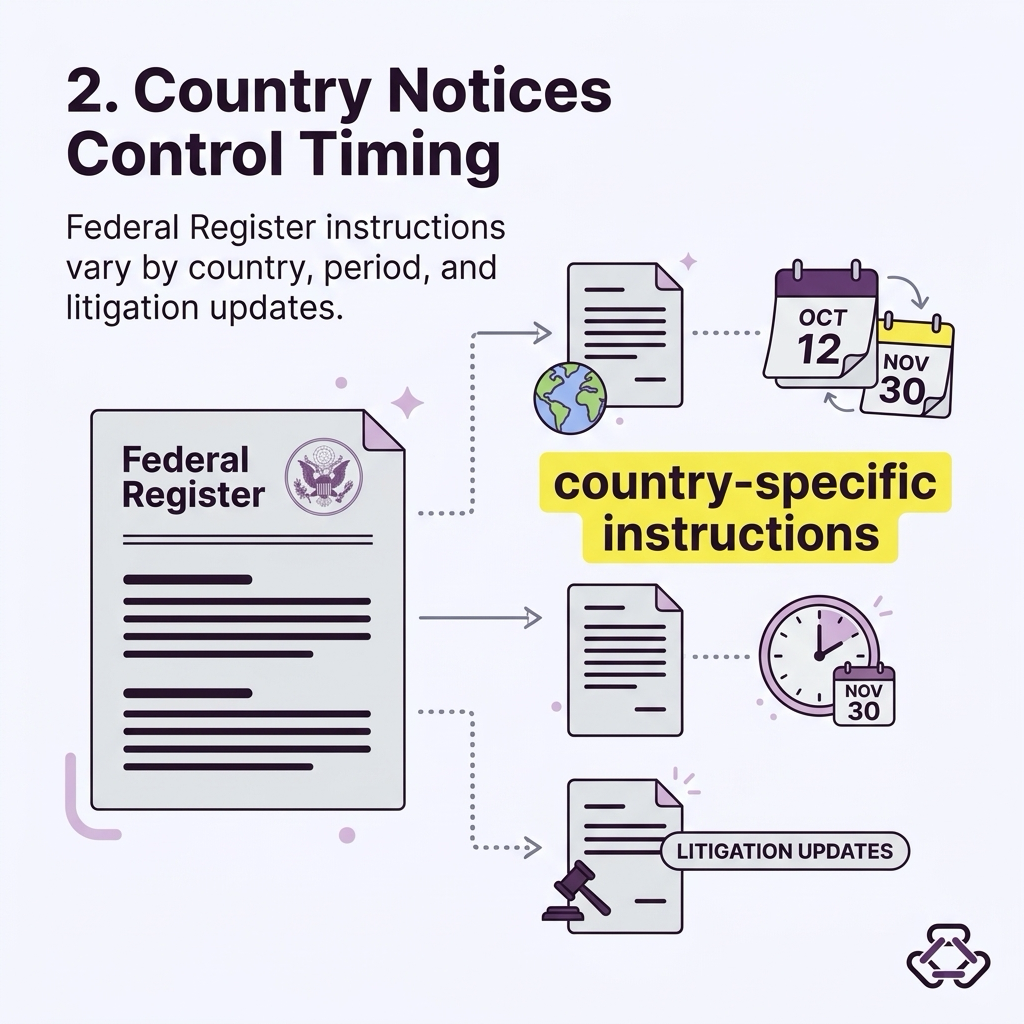
- the exact re-registration window in the latest Federal Register notice
- the right version of the right forms
- current filing fees
- address updates
- employment authorization timing
- travel authorization rules
- any court orders or litigation affecting your country’s TPS status
USCIS explains that TPS applicants and re-registrants are expected to wait for the country-specific Federal Register notice before filing, because timing and instructions vary by country and period. USCIS also notes that late re-registration may be accepted only if the person shows “good cause,” and even then, delays can lead to work authorization gaps. That combination is one reason TPS problems often start with something that looked minor at the time, like filing based on an old notice or assuming a past extension still applies. See USCIS Form I-821 instructions and the main TPS page.
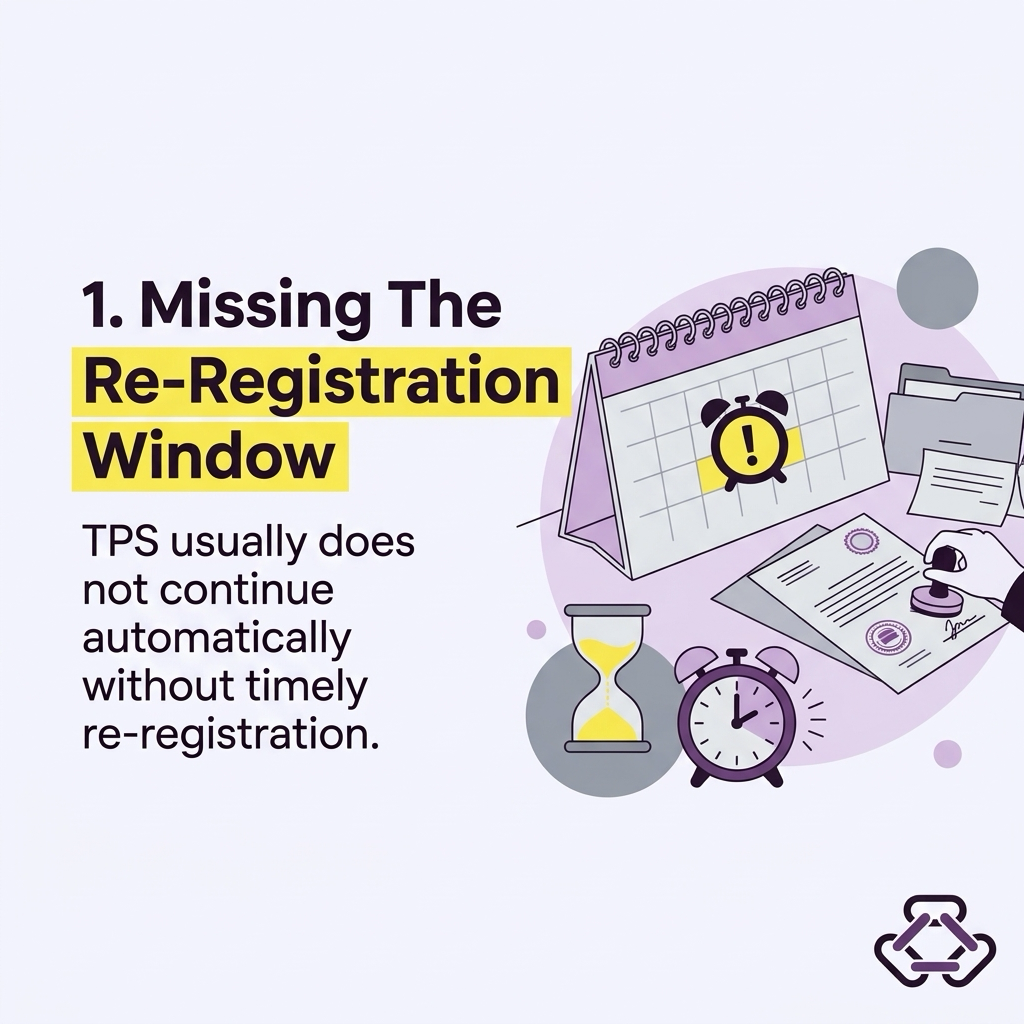
1. Missing The Re-Registration Window
The most common TPS problem is also one of the most serious: not re-registering during the correct period.
TPS does not usually continue automatically just because a country remains designated. USCIS states that current beneficiaries who want to keep TPS generally file re-registration during the re-registration period announced in the Federal Register notice for their country. If that window is missed, USCIS says it may accept a late filing only if the person can show good cause, and even then processing delays may create gaps in work authorization or other benefits. See USCIS TPS guidance and Form I-821.
Why This Happens
A lot of confusion comes from the fact that TPS is not one single program with one single deadline. Each designated country has its own notice, dates, and instructions. On top of that, litigation sometimes changes what people think the deadline is. The American Immigration Council’s TPS overview notes that several country designations and terminations have been affected by lawsuits and court orders, which can make the timeline even harder to follow.
What This Often Means
If a person misses the filing window, the issue is not always automatically fatal, but it can become complicated quickly. An attorney may look at questions such as:
- Was there a valid re-registration period in effect for that country?
- Was the filing actually late under the controlling notice?
- Is there evidence supporting good cause?
- Did the delay create a lapse in work authorization?
- Is there another immigration issue in the background, such as removal proceedings or a pending application in another category?
For readers trying to understand the bigger TPS framework before looking at filing mistakes, this article on the basics of TPS eligibility, renewals, travel, and risk can help connect the dots.
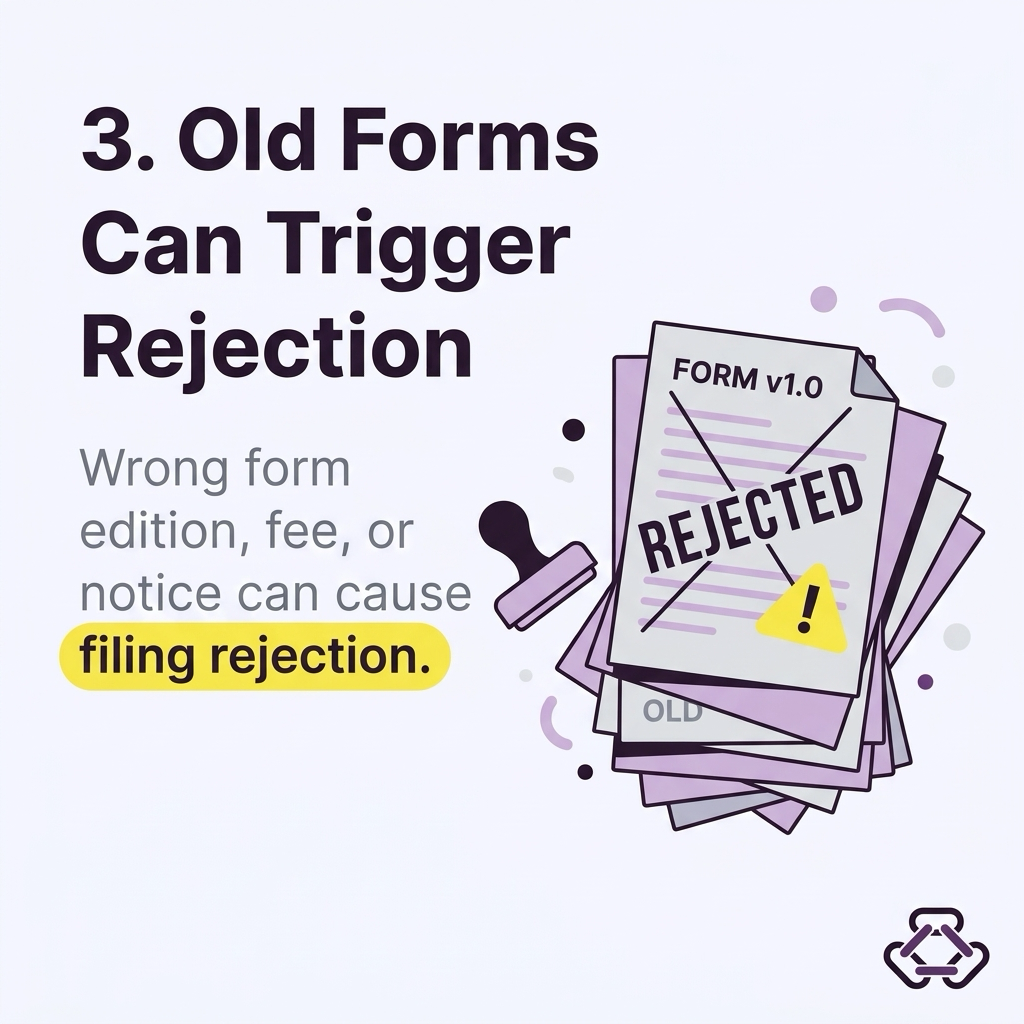
2. Filing Based On Old Forms, Old Fees, Or The Wrong Notice
Another very common problem is using outdated instructions.
USCIS specifically says TPS applicants should wait for the Federal Register notice for their country before filing, because that notice controls who qualifies, when to file, and where to send the application if filing by mail. USCIS also warns that filing with the wrong fee can lead to rejection, and it identifies the current Form I-821 edition date on its form page. As of the USCIS page currently available, the edition date listed for Form I-821 is 01/20/25, and USCIS notes that forms postmarked after certain fee changes without the proper fees may be rejected. See Form I-821.
Why This Happens
TPS information online is often mixed together with older extensions, prior redesignations, country-specific exceptions, and social media posts summarizing rules from months earlier. A person might see:
- an old fee chart
- an outdated mailing address
- a prior form edition
- a country notice that no longer applies
- an automatic EAD extension that applied only to certain card categories and expiration dates
That last point matters a lot. USCIS has issued automatic EAD extensions for some TPS beneficiaries in certain situations, but those extensions are highly specific. For example, USCIS has published notices extending certain TPS-related EADs only for people with qualifying categories and listed expiration dates, not for everyone with TPS. See USCIS guidance on TPS EAD extensions.
What This Often Means
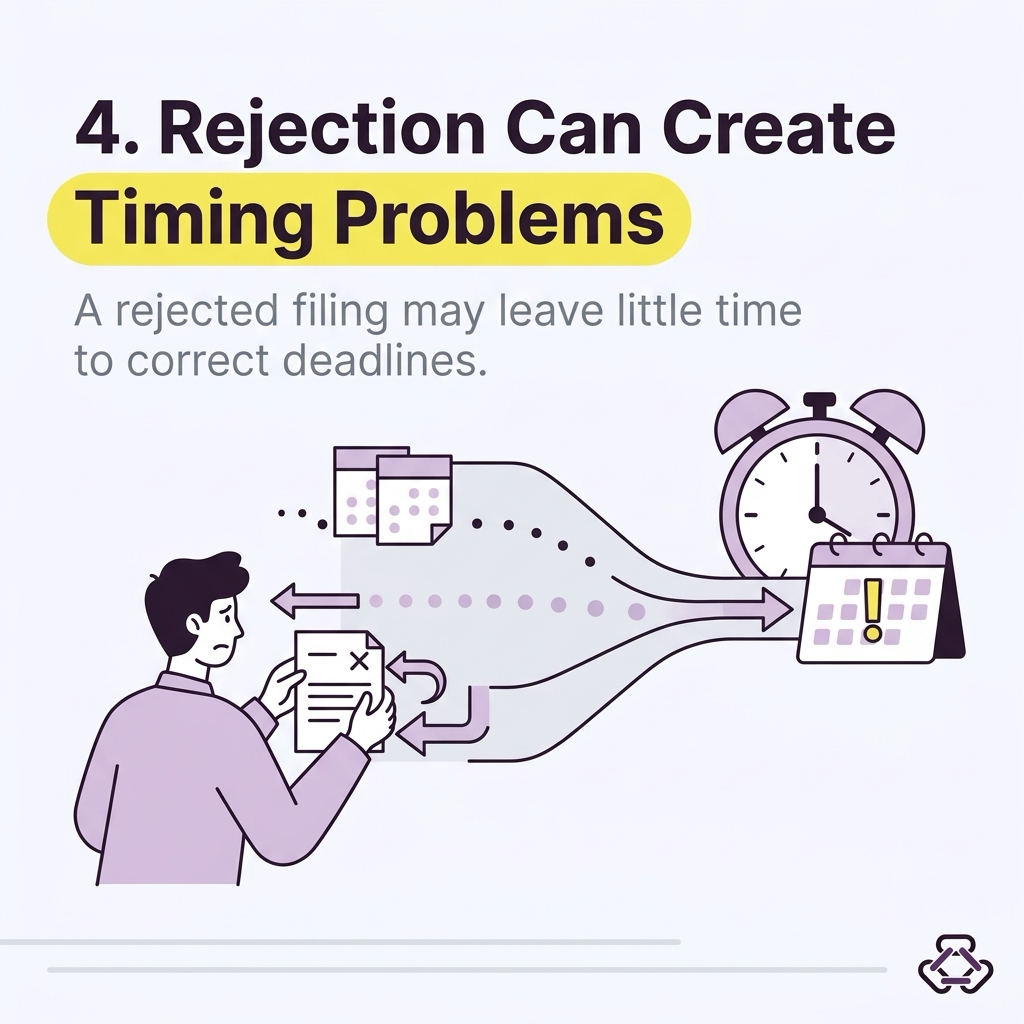
If USCIS rejects a filing because the wrong form edition or fee was used, timing can suddenly become a major issue. A rejection is different from an approval, receipt notice, or pending case. If the filing was close to a deadline, the person may end up outside the re-registration period by the time the problem is discovered.
This is one reason many people look for legal help when they realize the application was rejected rather than just delayed. An attorney may help evaluate whether the next step involves refiling, documenting the original attempt, explaining timing issues, or looking at a larger strategy if TPS is interacting with another pending immigration matter.
3. Traveling Without The Right Authorization
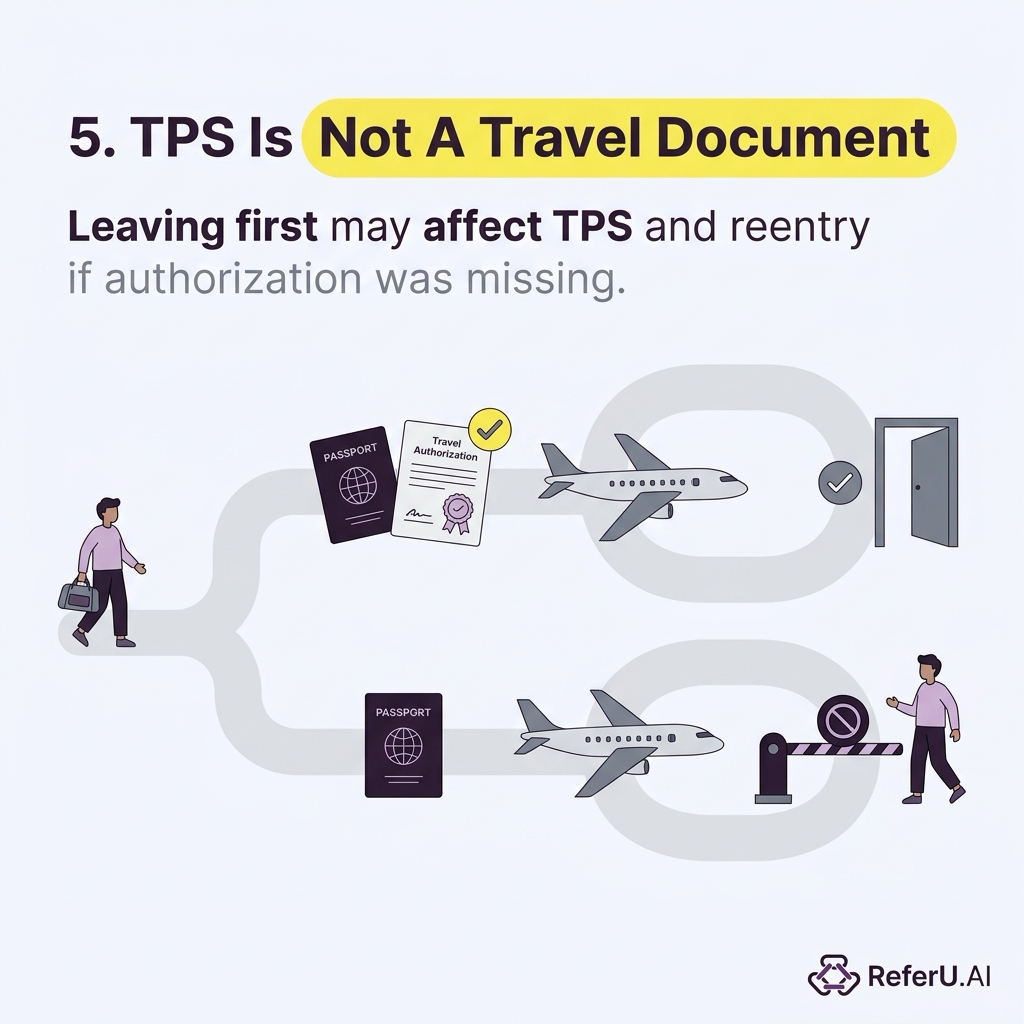
Travel is one of the riskiest TPS areas because many people assume TPS itself is a travel document. It is not.
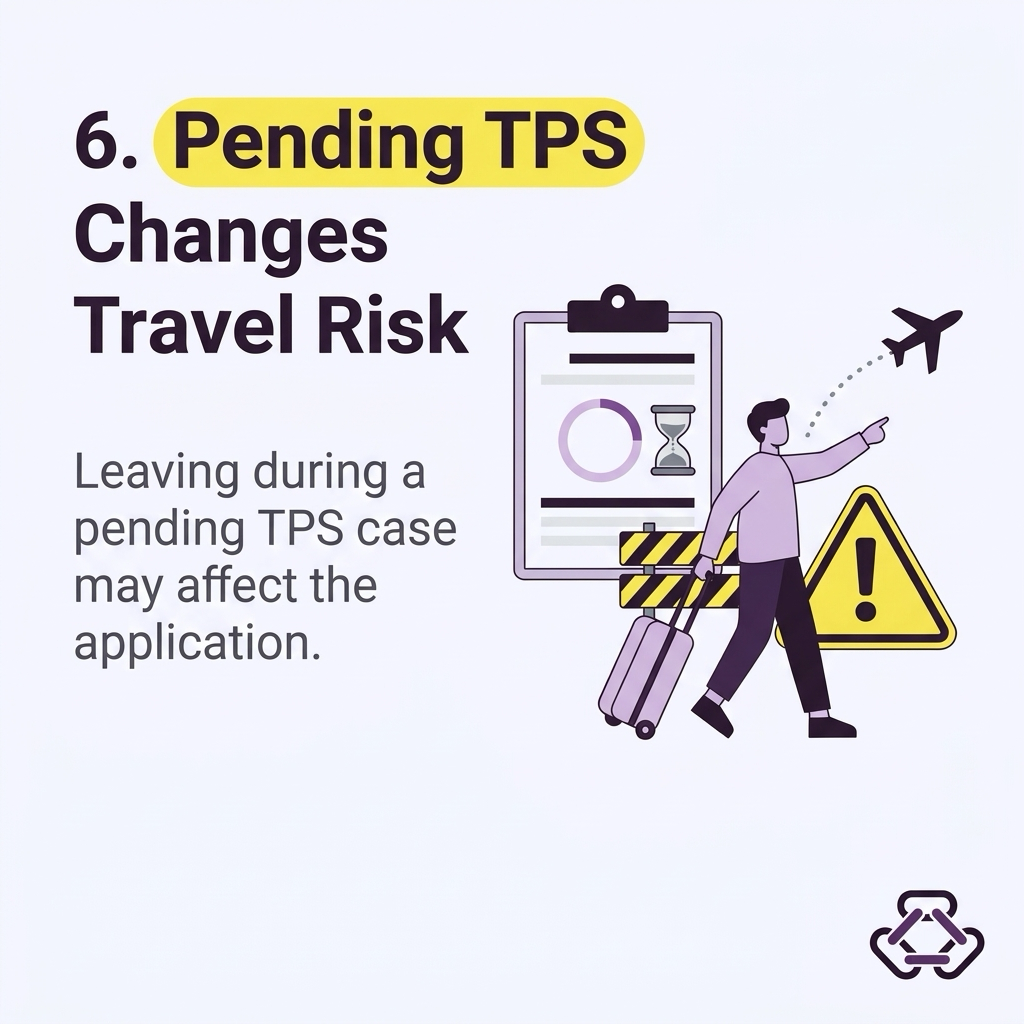
USCIS states that if a person has TPS and leaves the United States without first obtaining TPS travel authorization, that person may lose TPS and may not be able to reenter the United States. USCIS also explains that if a TPS application is still pending and the person leaves without advance parole, USCIS may deny the TPS application and reentry may also be affected. Travel requests are generally made on Form I-131, and USCIS notes that people may want legal advice before requesting TPS travel authorization or advance parole. See the main USCIS TPS page.
Why This Happens
People often hear different phrases used interchangeably:
- TPS
- travel authorization
- advance parole
- reentry permission
- parole
- admission
But those terms are not always interchangeable, and the legal consequences can vary based on a person’s history. USCIS also notes that if a person was previously granted parole, a later admission after TPS-authorized travel may affect eligibility for a new period of parole. That is exactly the kind of technical issue that may not be obvious from a simple travel checklist on social media. See USCIS TPS guidance.
What This Often Means
Travel questions under TPS can involve more than whether the person has a valid document in hand. An attorney may look at:
- whether the person currently has approved TPS or only a pending application
- whether the correct travel document was approved before departure
- whether any prior entries, removals, or parole history create extra risks
- whether the trip could affect another future immigration pathway
If travel already happened without proper authorization, the analysis can become highly fact-specific very quickly. Some people assume they can “fix it later,” but TPS-related travel issues often overlap with admissibility, prior status history, and future immigration options.
4. Failing To Update USCIS After Moving
Address problems can sound administrative, but they can create real status issues.
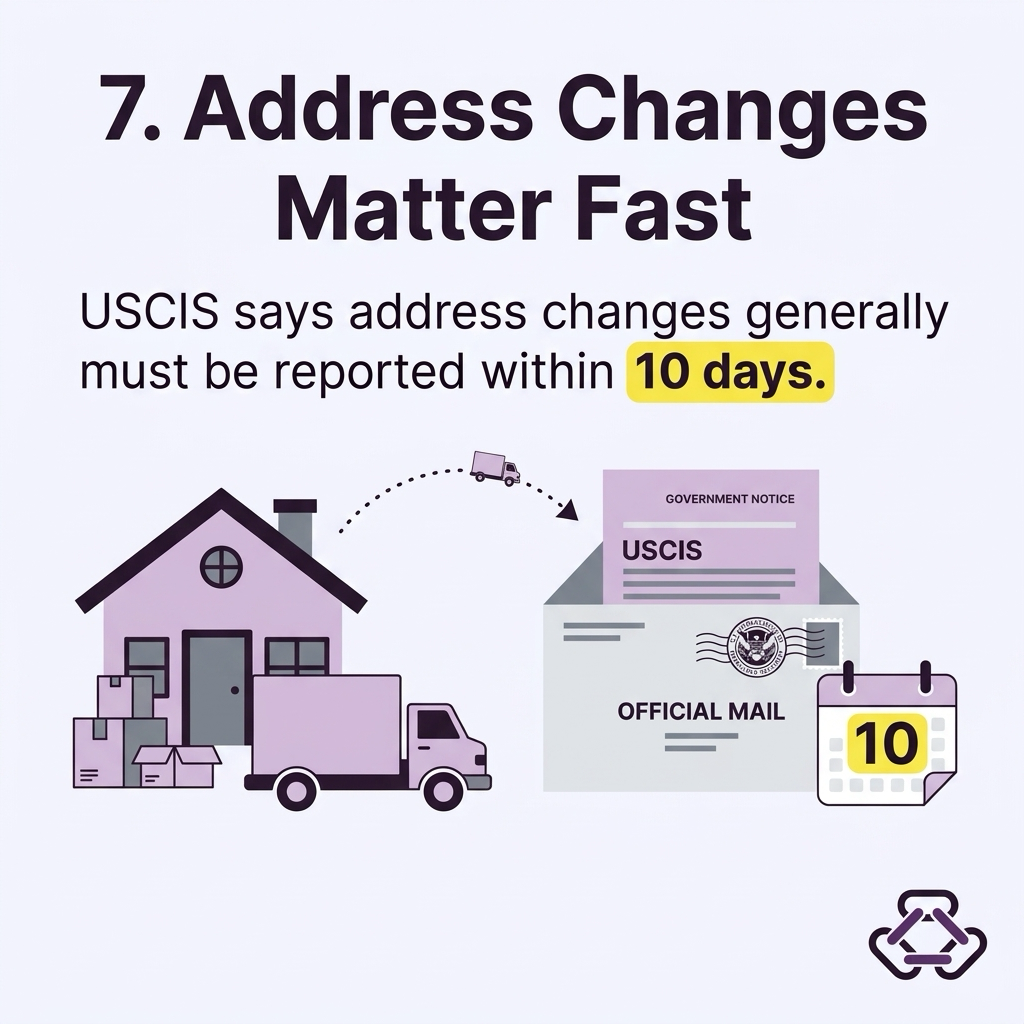
USCIS says that if a person has filed an immigration benefit request, they are expected to notify USCIS of any address change as soon as possible so correspondence and benefits are not delayed. USCIS also states that, with limited exceptions, noncitizens in the United States are generally required to report a change of address within 10 days of moving. USCIS further explains that changing an address with USPS does not update the address with USCIS, and USPS does not forward USCIS mail. See Form AR-11 and How to Change Your Address.
Why This Happens
A lot of people assume mail forwarding will catch government notices. Others update one pending case but not another. Some move temporarily and plan to change the address later. In TPS cases, those delays can lead to missing:
- biometrics notices
- requests for evidence
- receipt notices
- approval notices
- EAD-related notices
- country-specific correspondence
What This Often Means
A missed notice can trigger a chain reaction. If USCIS asks for more evidence and the person never receives the request, the case may be denied for reasons that look confusing from the outside. If an EAD or approval notice is sent to the wrong address, a person may not realize there is a problem until work authorization or identification issues come up.
This is also one of those mistakes that can hide a second problem. Sometimes the person updated their address informally but never changed it in the USCIS system. Sometimes they are also in immigration court, where a separate address update process may apply. An attorney may help sort out which agency had which address and whether any missed notice can still be addressed.
5. Assuming TPS Automatically Protects Every Part Of Immigration Status
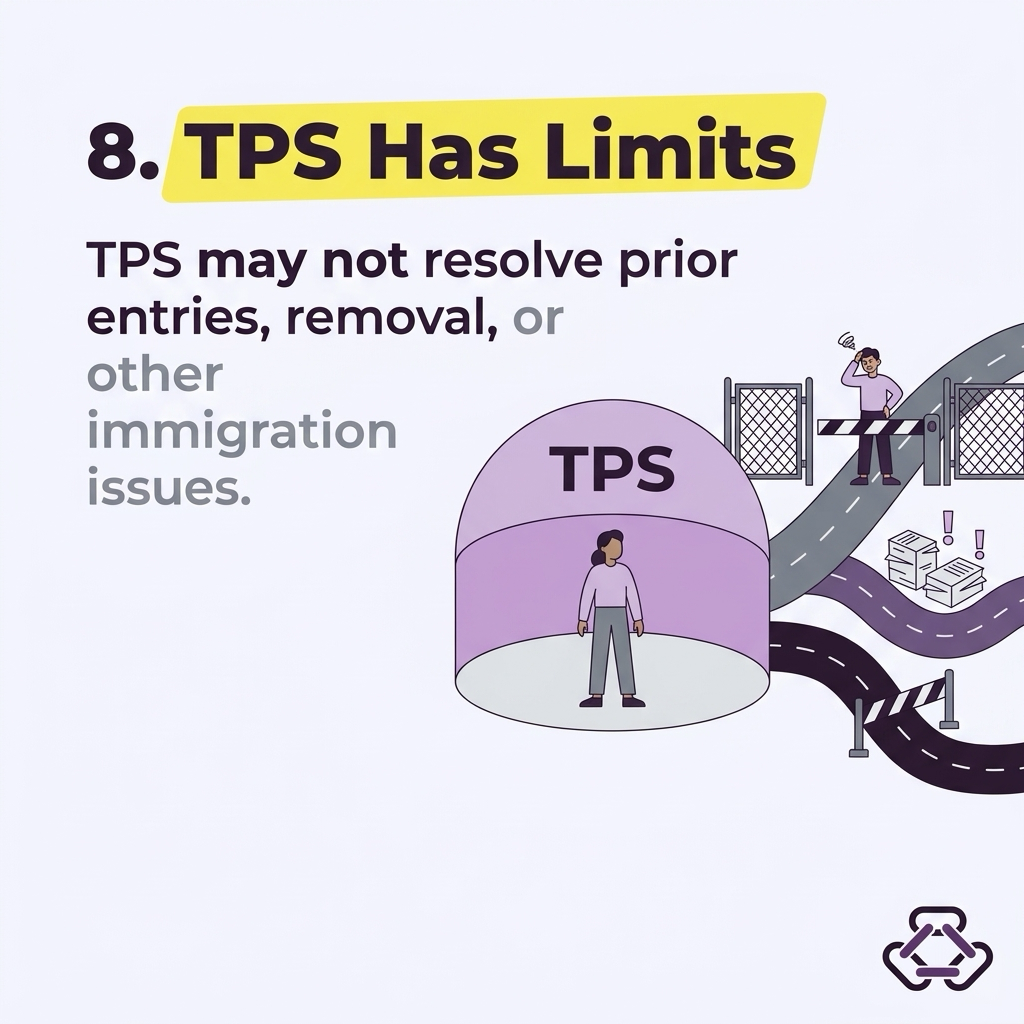
TPS is powerful, but limited. It offers temporary humanitarian protection and temporary work authorization if granted. It does not erase every prior immigration issue, and it does not automatically solve future ones.
The American Immigration Council’s overview explains that TPS provides protection from deportation and work authorization during the designated period, but it is temporary by design. USCIS likewise emphasizes that country designations can be extended, redesignated, or terminated, and those changes may also be affected by litigation. The current TPS landscape has included country-specific terminations, extensions, redesignations, and court-related updates, including litigation-related notices involving countries such as Venezuela. See USCIS TPS, USCIS SAVE TPS FAQs, and the American Immigration Council fact sheet.
Why This Happens
When someone has had TPS for years, it can feel like a stable long-term status even though the legal structure is temporary and country-specific. That can lead to assumptions like:
- “My TPS country was extended before, so it will probably be extended again.”
- “My work permit expiration date tells me everything I need to know.”
- “If I have TPS, older entry issues no longer matter.”
- “If my country is still in the news, the government will keep TPS in place.”
Those assumptions can become risky because TPS often exists alongside other immigration questions, not instead of them.
What This Often Means
An attorney may help evaluate whether TPS is interacting with:
- a pending asylum case
- adjustment of status options
- removal proceedings
- prior unlawful presence issues
- prior orders or entries
- travel history
- employment authorization timing
- family-based or other humanitarian options
That does not mean a problem automatically exists. It means TPS works best when people understand both what it does and what it does not do.
A Few Practical Signs A TPS Issue May Be Getting More Serious
Many TPS issues start quietly. People often first notice a problem when:
- a filing is rejected rather than receipted
- a re-registration period has already ended
- an EAD is expired and the employer asks for updated proof
- a travel plan is coming up but there is no approved travel authorization
- USCIS mail never arrived
- a country’s TPS designation changes and no one is sure which notice controls
- there is a second immigration case in the background
In general terms, those are the moments when individualized legal analysis tends to matter most. TPS is one of those areas where a person can appear “mostly compliant” and still have a serious timing or documentation problem underneath.
Why Many People Look For A Lawyer After A TPS Mistake
Not every TPS mistake leads to loss of status. But many mistakes create uncertainty about status, work authorization, travel, or future filings. That uncertainty is often difficult to resolve with general information alone because the answer may depend on:
- the person’s country of nationality
- the exact Federal Register notice in effect
- the date the filing was mailed or rejected
- whether the person is seeking initial TPS or re-registration
- whether there is good cause for late filing
- whether a travel document was approved before departure
- whether another immigration matter is pending
That is where documented, relevant experience can matter. Some immigration lawyers handle many different case types but only occasionally deal with TPS complications. Others have demonstrable experience with highly similar matters involving re-registration issues, travel problems, EAD gaps, or overlapping removal and humanitarian relief questions.
Final Thoughts
TPS can look straightforward until a deadline is missed, a notice never arrives, or a travel decision creates a problem that is harder to undo than people expected. The five mistakes above—missing re-registration, using outdated instructions, traveling without authorization, failing to update your address, and assuming TPS protects every part of your immigration situation—are common because TPS rules change by country, date, and procedural posture.
For a fuller picture of the program, including eligibility, re-registration, travel, and changing country conditions, take a look at this overview of how TPS works and where people often run into risk.
Visit ReferU.AI to get matched with an attorney who has demonstrable experience in cases like yours — for free.
