Table of Contents
- 8 Questions People Ask About TPS, Work Authorization, and Travel
- 1. Does TPS Automatically Give You Permission To Work?
- 2. If Your TPS Work Permit Expired, Can You Still Work?
- 3. What Can Employers Accept From TPS Holders For Form I-9?
- 4. Can A Person Travel Outside The United States With TPS?
- 5. Is Advance Parole Under TPS A Guarantee That You Can Reenter?
- 6. What Happens If You Leave While Your TPS Application Is Still Pending?
- 7. Can TPS Travel Help With Adjustment Of Status Or Other Immigration Options?
- 8. When Is It Time To Talk With An Immigration Attorney About TPS Work Or Travel Problems?
- Final Thoughts On TPS, Work Authorization, And Travel

Type
Great Grandchild
Status
Approved
Title (YouTube)
Images Failed (Social)
Images Failed (Social)
Do not index
Publish Date (TikTok)
Apr 22, 2027 13:15
Videos Post IDs (Social)
Hashtags (Social)
#LegalAdvice #LegalHelp #Immigration #TemporaryProtectedStatus
Caption
Caption X
Cover

OG Image

Alt Image Text
Flat vector illustration of TPS work authorization and travel questions, showing a person with immigration documents, ID card, passport, and airplane icons.
Images

Videos
Publish Date (Social)
Feb 17, 2027 10:00
Scheduled (Social)
Scheduled (Social)
Images Posted (Social)
Images Posted (Social)
Videos Posted (Social)
Videos Posted (Social)
Featured
Created time
Apr 7, 2026 12:03 AM
Sub-item
Authors
CTA Practice Area (Social)
Immigration
TikTok Failed (Social)
TikTok Failed (Social)
Videos Post Links (Social)
TikTok Post Links (Social)
Images Post IDs (Social)
YT Post ID
Video Pending Manual (Social)
TikTok Posted (Social)
TikTok Posted (Social)
TikTok Post IDs (Social)
Video Cover (Social)
Images Post Links (Social)
First Comment (Social)
Videos Failed (Social)
Videos Failed (Social)
YT Embedded
Images Delete (Social)
Videos Delete (Social)
Carousel Video URL (Social)
8 Questions People Ask About TPS, Work Authorization, and Travel
Temporary Protected Status, or TPS, often comes with a second layer of questions that feel even more urgent than the original filing: Can I work right now? What if my card expired? Can I travel for a family emergency? What happens when I come back?
Those questions matter because TPS is not just a label. It can affect employment, identification documents, travel plans, and how a person manages everyday life while immigration rules continue to shift. If you want a broader overview of how the program works, it may help to start with this plain-language overview of the program and its risks.
In this post, you’ll learn the answers to eight of the most common questions people ask about TPS, work authorization, and travel, based on current guidance from USCIS, CBP, the Department of Justice, and related federal materials.
Scroll to the bottom for every post in this series.
1. Does TPS Automatically Give You Permission To Work?
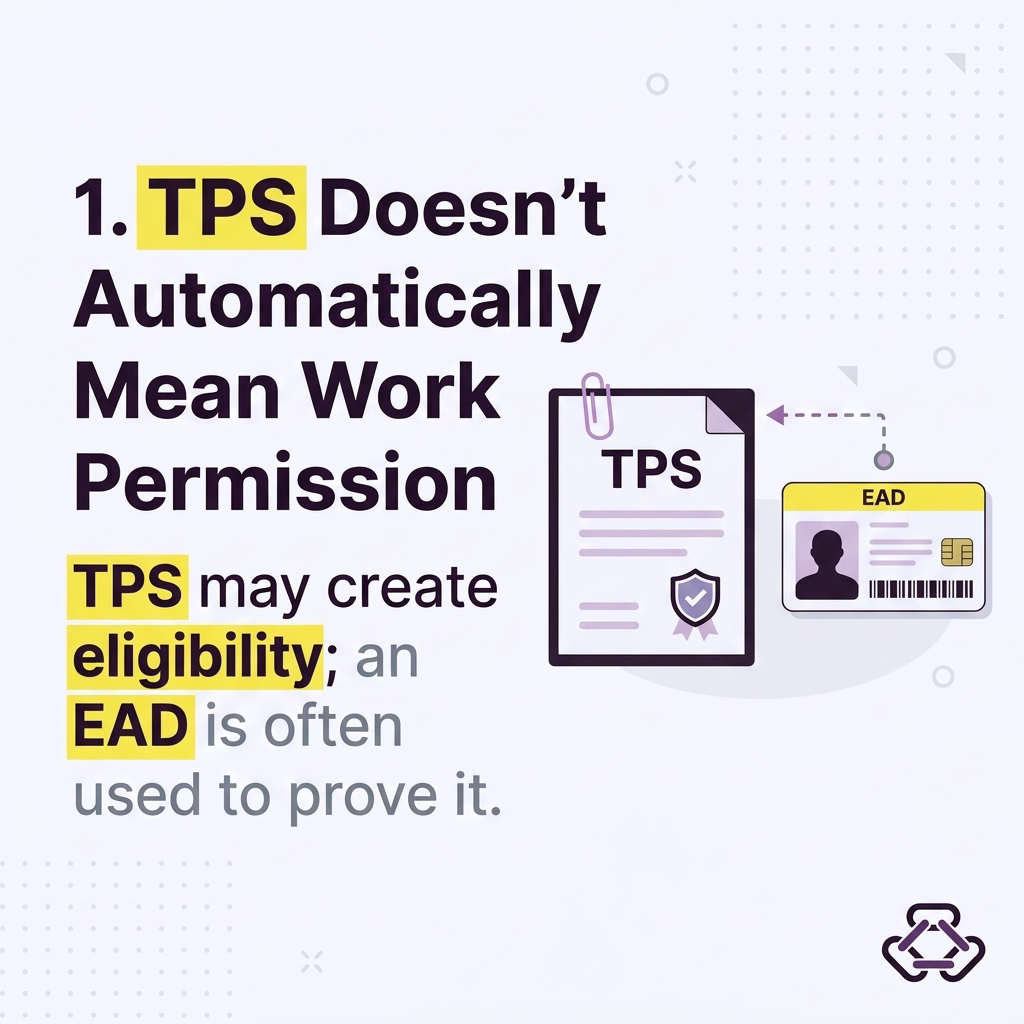
Not automatically in every practical sense, but TPS can make a person eligible to request work authorization.
According to USCIS’s TPS page, a person filing an initial TPS application or re-registration may also file Form I-765, Application for Employment Authorization, to request an Employment Authorization Document, often called an EAD. That card is what many employers expect to see during the employment verification process.
That distinction matters. TPS itself is a protected immigration status for a limited period, while the EAD is the document commonly used to show permission to work. In real life, people often use “TPS” and “work permit” interchangeably, but the system treats them as related, not identical.
Some people already have TPS and are waiting on a renewed EAD. Others are newly applying and want to know whether filing TPS alone is enough to begin working. In many situations, the answer depends on what documents are currently valid, whether an automatic extension applies, and what the relevant country-specific Federal Register notice says. USCIS directs applicants to the country-specific TPS notices because registration periods and document extensions are not identical for every designation.
Here’s what this often means in general terms:
- TPS may make someone eligible for work authorization
- The EAD is often the document used to prove that authorization
- The exact dates and extension rules can vary by country and filing history
- A pending application does not always function the same way as an approved one
Because that last point can create employment problems quickly, many people in similar situations talk with an immigration attorney when the timing of work authorization becomes unclear.
2. If Your TPS Work Permit Expired, Can You Still Work?
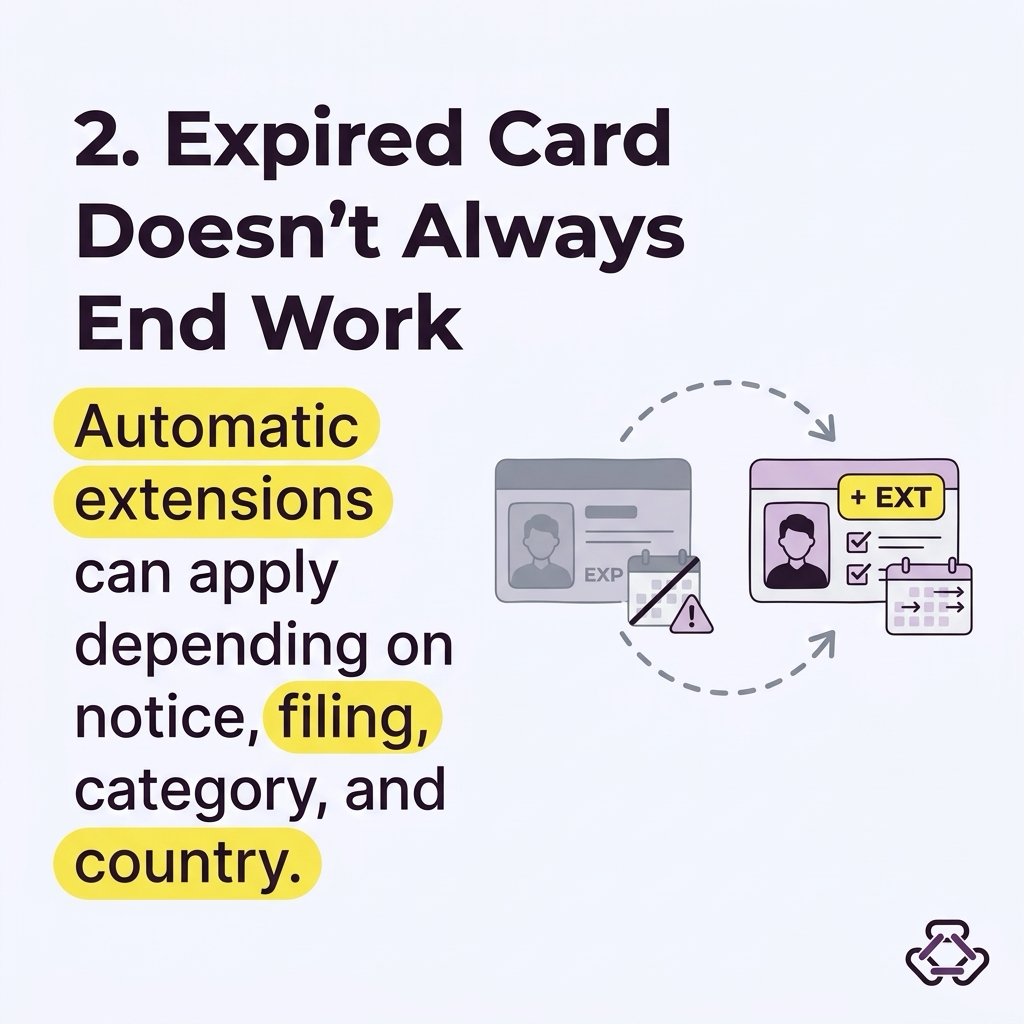
Sometimes yes, but it depends on why the card expired and whether an automatic extension applies.
USCIS has several different mechanisms that can keep employment authorization alive even when the date printed on the card has passed. One is a TPS-specific automatic extension announced in a Federal Register notice for a designated country. Another is the broader up to 540-day automatic EAD extension that may apply to certain timely filed renewal applicants while the new Form I-765 remains pending, as described by USCIS’s automatic extension guidance.
USCIS also maintains employer guidance explaining what TPS beneficiaries may present for Form I-9 purposes, including certain facially expired EADs when a valid automatic extension applies under the governing notice or individual documentation. See USCIS’s TPS employment documentation page and the M-274 employer handbook section on TPS automatic EAD extensions.
This is one of the most confusing areas of TPS practice because the answer is often document-specific:
- the category code on the card matters
- the filing date can matter
- the country designation matters
- the current Federal Register notice matters
- in some cases, an individual notice from USCIS matters too
So when people ask, “My card expired last month, am I still allowed to work?” the real answer is often, “Possibly, depending on the extension rules tied to your case.”
That uncertainty can create immediate risk with payroll, hiring, and reverification. An attorney may be able to evaluate whether the person is covered by a TPS-specific extension, a pending-renewal extension, both, or neither.
3. What Can Employers Accept From TPS Holders For Form I-9?
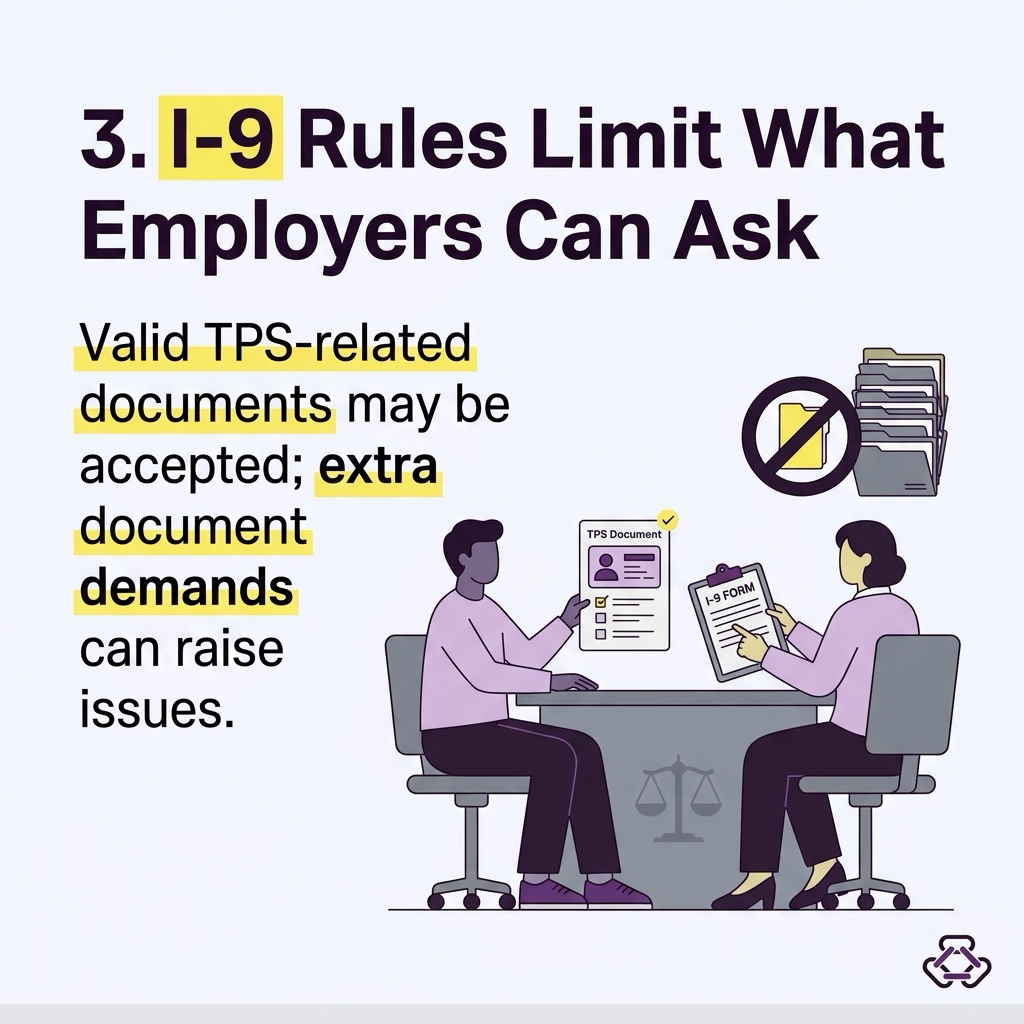
Employers are allowed to accept valid documents listed under Form I-9 rules, and TPS beneficiaries often use an EAD for that purpose. USCIS explains that an EAD is a List A document, meaning it can establish both identity and employment authorization if it is valid and acceptable under the rules. USCIS also explains that, in some TPS situations, an employer may accept an EAD that appears expired on its face if the card has been automatically extended by a Federal Register notice or qualifying documentation. That guidance appears on I-9 Central and in the TPS-specific documentation guidance.
The issue is not only what employers may accept, but also what employers may not demand. Federal anti-discrimination rules can come into play if an employer rejects valid TPS-related documents, asks for more or different papers than the law allows, or treats a work-authorized person differently because of citizenship or immigration status. The Department of Justice’s Immigrant and Employee Rights Section says the law generally prohibits certain kinds of citizenship-status discrimination, national-origin discrimination, unfair documentary practices, and retaliation.
The DOJ also provides a worker hotline and employer hotline for questions involving Form I-9 practices and TPS-related work authorization documents.
In practical terms, TPS employment problems often show up in three ways:
- An employer says the person cannot work because the card “looks expired”
- HR asks for a different document than the rules require
- A worker loses hours or pay while trying to explain an automatic extension
Those disputes may look administrative at first, but they can become legal issues quickly, especially when a person is suspended or terminated over a document misunderstanding.
4. Can A Person Travel Outside The United States With TPS?
A person with TPS may be able to travel, but not simply because TPS exists.
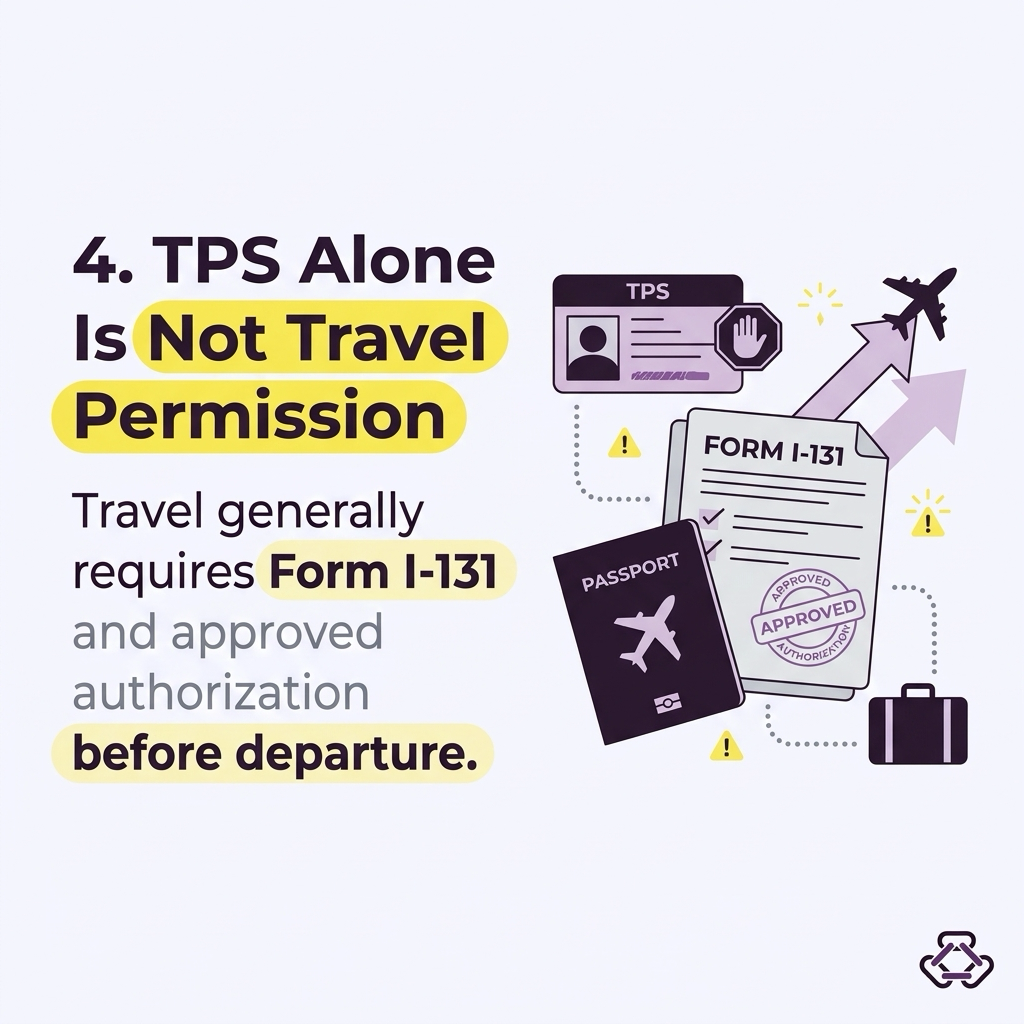
USCIS states clearly that a TPS beneficiary who wants to travel outside the United States generally has to apply for travel authorization. The agency instructs TPS beneficiaries to use Form I-131, Application for Travel Documents, Parole Documents, and Arrival/Departure Records, and USCIS explains on its TPS page that approved travel authorization may be issued on Form I-512L, Advance Parole Document, as evidence of DHS’s prior consent to travel.
That means TPS is not the same thing as permission to leave and reenter.
This is where people sometimes get caught off guard. They assume their valid TPS approval or valid EAD is enough for travel. USCIS says otherwise. The agency warns that if a person with TPS leaves the United States without first obtaining TPS travel authorization, that person may lose TPS and may not be able to reenter the United States. USCIS gives a similar warning for applicants with a pending TPS application who leave without advance parole.
So the short answer is:
- TPS alone does not equal travel permission
- travel generally involves Form I-131
- departure without proper authorization can trigger serious immigration consequences
For many families, this question comes up during emergencies involving illness, funerals, or children abroad. Those are exactly the situations where personalized legal advice can make a major difference, because the timing and immigration history behind a trip may matter as much as the TPS approval itself.
5. Is Advance Parole Under TPS A Guarantee That You Can Reenter?
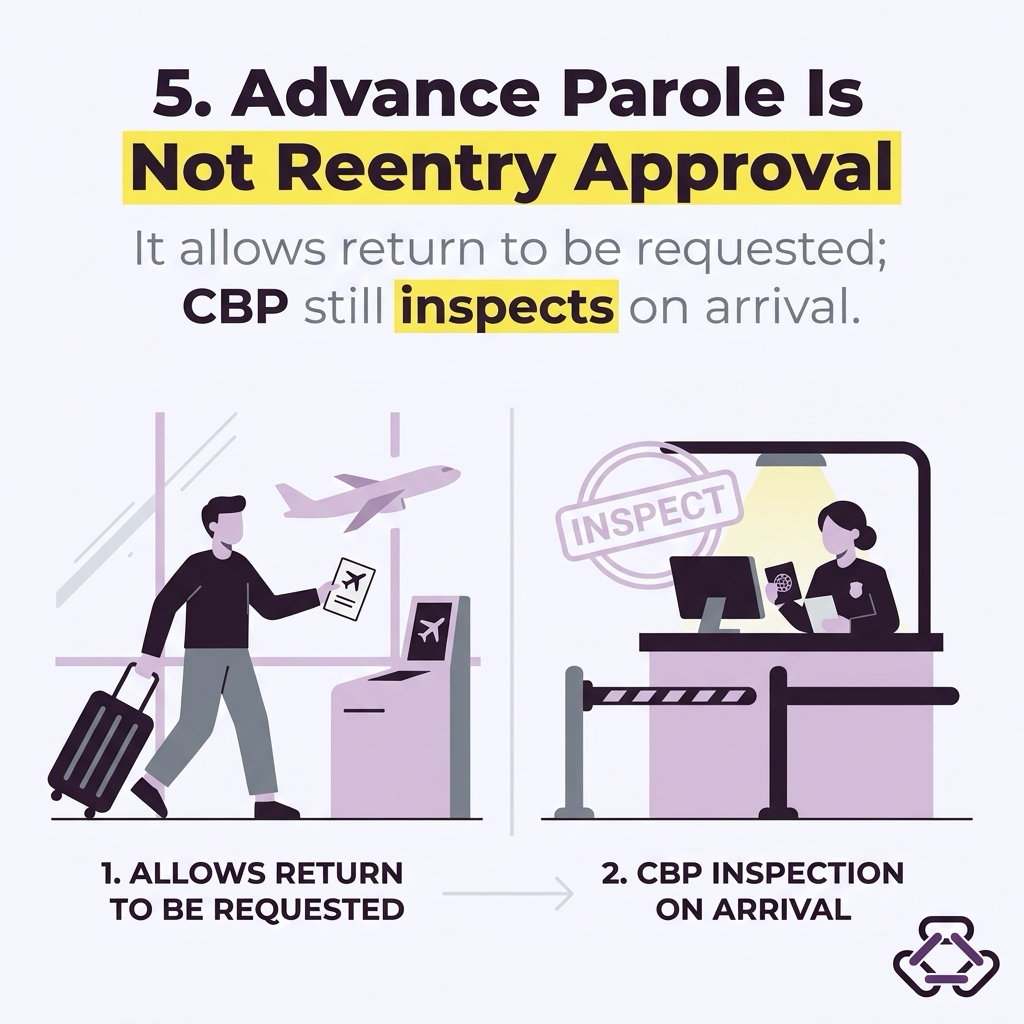
No. It is important authorization, but not a guarantee of admission.
CBP explains on its advance parole page that advance parole allows certain noncitizens with pending immigration benefits to seek reentry after travel, but inspection at the port of entry still occurs. USCIS makes a similar point on its TPS page, noting that if a CBP officer determines the person is eligible, the officer will admit the person into TPS upon return.
That wording matters. It reflects a two-step reality:
- USCIS may approve travel authorization before departure
- CBP still makes an admission decision at the border or airport on return
Some USCIS materials also emphasize that travel documents do not eliminate all inadmissibility concerns, and that people may want legal guidance before requesting TPS travel authorization. In other words, an approved document can be very important without removing every risk.
For a reader trying to translate that into plain English, here’s what this often means:
- advance parole is usually part of the process for TPS travel
- it can allow a person to seek return after travel
- it does not function like a promise that reentry will happen automatically
- prior immigration issues or other grounds of inadmissibility may still matter
That is one reason lawyers often look closely at prior removal orders, unlawful presence issues, criminal history, prior entries, and pending proceedings before anyone travels.
6. What Happens If You Leave While Your TPS Application Is Still Pending?
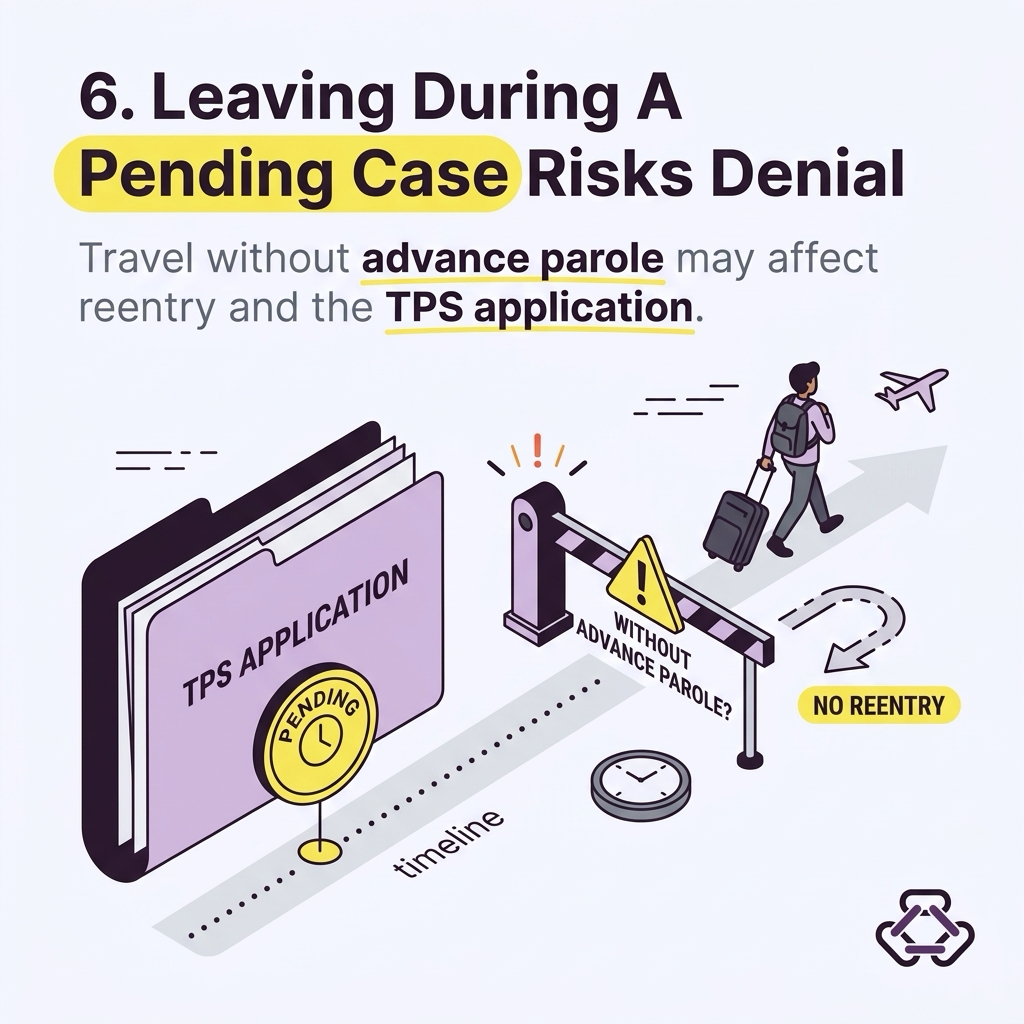
That can create serious problems.
USCIS says that if a person’s TPS application is still being adjudicated and the person wants to travel, they must apply for travel authorization. USCIS also warns that if someone with a pending TPS application leaves the United States without first obtaining advance parole, USCIS may deny the TPS application, and the person may not be able to reenter the country. USCIS further notes that applicants who are outside the United States while the case is pending may miss important notices, including Requests for Evidence, and a failure to respond can lead to denial. All of that appears on the agency’s TPS guidance page.
This question comes up often because immigration timelines are slow and real life is not. People face emergencies while cases are pending. But a pending case is not a neutral period for travel purposes.
A few common examples:
- a person files initial TPS and then wants to attend a funeral abroad
- a re-registration is pending and a parent becomes seriously ill
- a person assumes that filing the application “keeps everything open” for travel
In many situations, leaving during a pending case without the correct approval can change the legal posture of the entire matter. That is why pending-case travel questions tend to be the kind attorneys review carefully rather than answer casually.
7. Can TPS Travel Help With Adjustment Of Status Or Other Immigration Options?
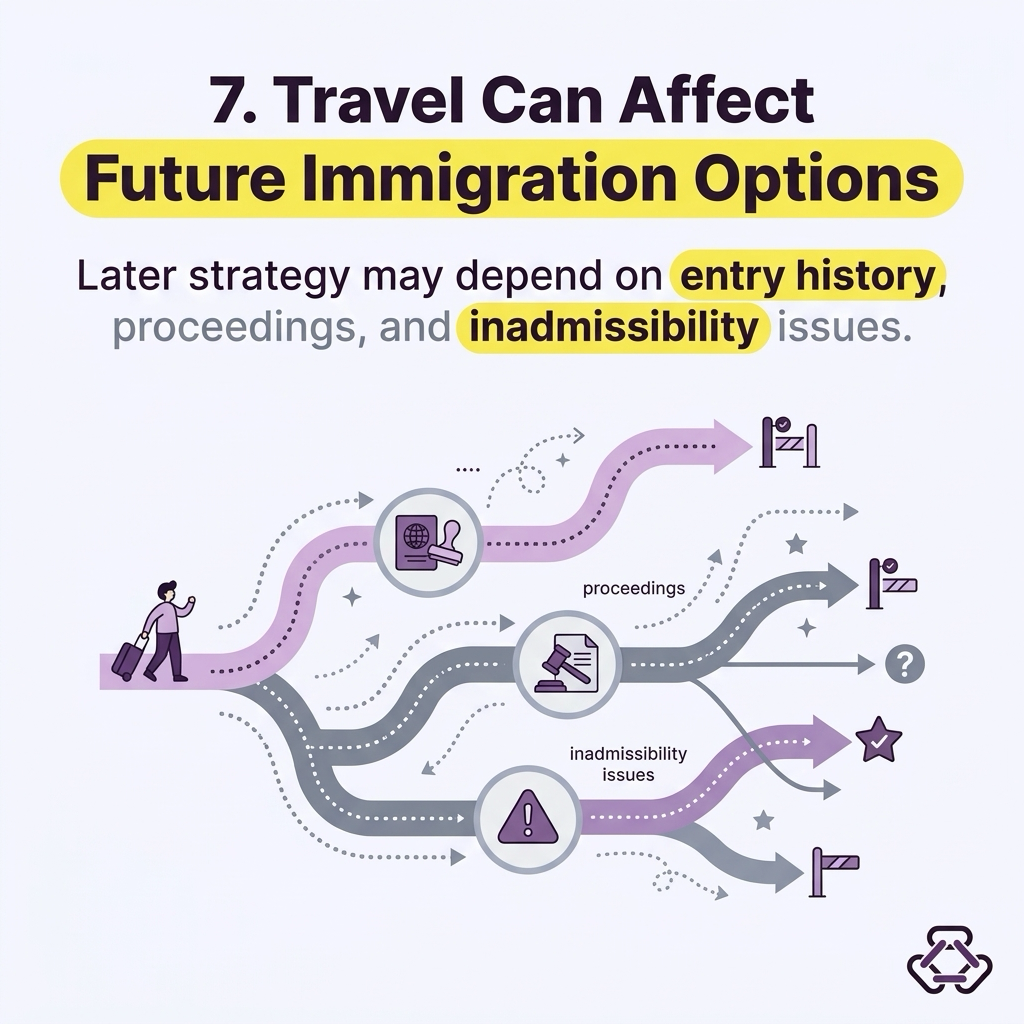
Sometimes it can affect future strategy, but this is one of the most fact-specific parts of immigration law.
People often ask whether travel on TPS-related advance parole can later help with adjustment of status, a family-based green card process, or another route to lawful permanent residence. The answer often depends on issues far beyond TPS alone, including:
- the manner of the person’s original entry
- whether the person was inspected and admitted or paroled after travel
- whether removal proceedings are involved
- whether there are inadmissibility issues
- what circuit law or agency interpretation applies to the case posture
USCIS’s TPS page states that when a person returns and a CBP officer determines they are eligible, the person may be admitted into TPS. USCIS also notes that if a person was previously granted parole, that later admission can render the person ineligible for a new period of parole. Those details can matter strategically, but they do not create a universal answer for every person.
This is the point where internet advice often becomes risky. A sentence like “travel fixes entry problems” can be badly misleading. For some people, travel documentation may become an important part of a later immigration strategy. For others, the same trip may complicate the record or create new problems.
That is why many people seek a lawyer’s case-specific review before making travel decisions that may affect future green card eligibility. The legal effect of travel is often about how TPS intersects with the rest of the person’s immigration history, not just whether TPS exists.
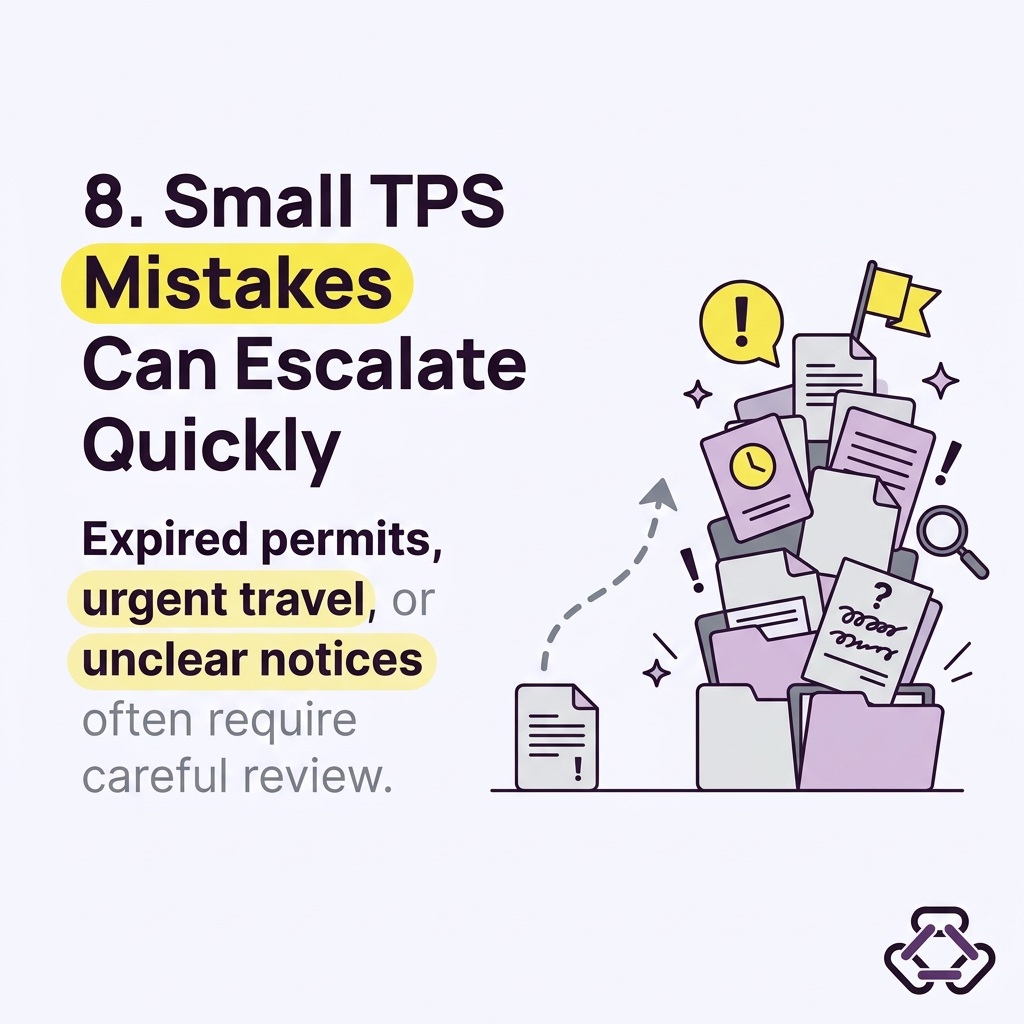
8. When Is It Time To Talk With An Immigration Attorney About TPS Work Or Travel Problems?
For many people, the answer is earlier than they first expected.
TPS issues can look simple from the outside. A card expired. A boss asked questions. A family emergency came up. A trip seems straightforward. But once work authorization, travel authorization, admission, or reentry enters the picture, even small misunderstandings can create major consequences.
People often reach out for legal help when:
- an employer refuses a valid TPS-related document
- a work permit is expired and it is unclear whether an automatic extension applies
- travel is urgent because of a death, illness, or family crisis
- a TPS application or re-registration is still pending
- there is prior unlawful presence, a removal order, or another complicated immigration history
- a person wants to understand whether travel could affect a future green card option
- USCIS has issued notices that are hard to interpret
- a case involves a country designation change, termination notice, redesignation, or litigation-related extension issue
Even where the legal rule exists in writing, the hard part is often applying it to one person’s timeline and document set. That is where documented, relevant legal experience becomes especially valuable.
If someone is trying to sort out the larger TPS landscape at the same time, it may help to read a broader explanation of how the program works, including re-registration, travel, and risk.
Final Thoughts On TPS, Work Authorization, And Travel
TPS can offer meaningful protection, but the day-to-day questions are often about work and movement: whether a person can keep a job, renew documents, travel for an emergency, or return without triggering a new problem.
The most important takeaway is that TPS-related work and travel issues are rarely just yes-or-no questions. They often turn on dates, forms, country-specific notices, automatic extension rules, inspection at reentry, and the person’s broader immigration history. That is why people facing urgent TPS questions often look for an attorney with demonstrable experience in highly similar matters, based on objective criteria and court-record evidence rather than advertising claims.
Visit ReferU.AI to get matched with an attorney who has demonstrable experience in cases like yours — for free.
