Table of Contents
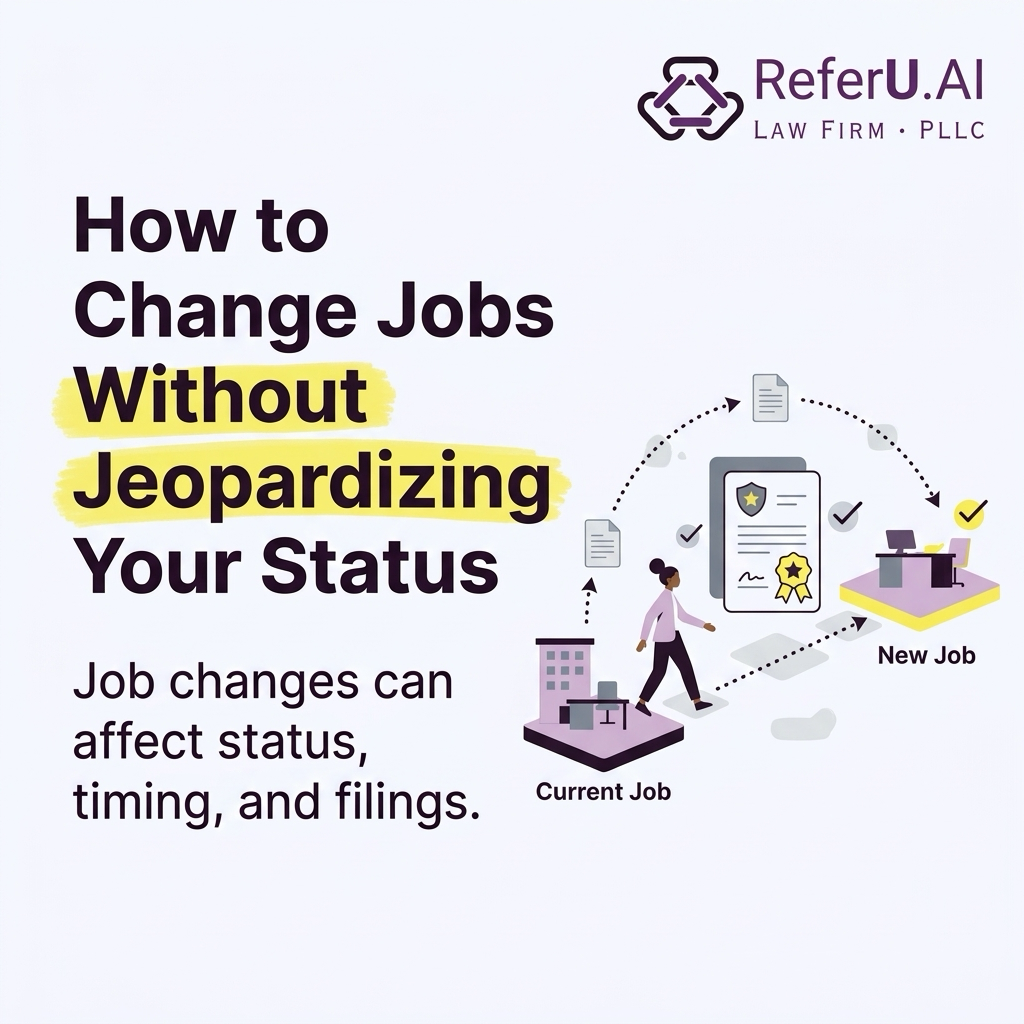
- How to Change Jobs or Employers Without Jeopardizing Your Status
- Why Changing Employers Can Affect Immigration Status
- Step 1: Identify Exactly What Status You Have Right Now
- Step 2: Understand Whether Your Category Allows “Portability”
- H-1B Portability
- Green Card Portability Under AC21
- Step 3: Separate The Visa Case From The Green Card Case
- Why The Stage Of The Case Matters
- Step 4: Pay Attention To Timing After Termination Or Resignation
- Step 5: Do Not Assume A “Similar Job” Is Automatically Safe
- Step 6: Remember That Work Authorization And I-9 Compliance Are Separate Issues
- Step 7: Watch For Location, Duties, And Corporate Structure Changes
- Common Mistakes People Make When Changing Employers
- Starting Too Early
- Relying On Informal Advice
- Ignoring The Green Card Timeline
- Assuming Any Better Job Is Safer
- Forgetting Dependents
- When An Attorney Can Add Real Value
- The Bottom Line

Type
Great Grandchild
Status
Approved
Title (YouTube)
Images Failed (Social)
Images Failed (Social)
Do not index
Publish Date (TikTok)
Apr 26, 2027 13:15
Videos Post IDs (Social)
Hashtags (Social)
#LegalAdvice #LegalHelp #Immigration #WorkVisas
Caption
Caption X
Cover

OG Image

Alt Image Text
Flat vector illustration of a professional changing jobs or employers without jeopardizing immigration status, balancing between two office buildings with visa documents and compliance symbols.
Images

Videos
Publish Date (Social)
Feb 19, 2027 13:30
Scheduled (Social)
Scheduled (Social)
Images Posted (Social)
Images Posted (Social)
Videos Posted (Social)
Videos Posted (Social)
Featured
Created time
Apr 7, 2026 12:01 AM
Sub-item
Authors
CTA Practice Area (Social)
Immigration
TikTok Failed (Social)
TikTok Failed (Social)
Videos Post Links (Social)
TikTok Post Links (Social)
Images Post IDs (Social)
YT Post ID
Video Pending Manual (Social)
TikTok Posted (Social)
TikTok Posted (Social)
TikTok Post IDs (Social)
Video Cover (Social)
Images Post Links (Social)
First Comment (Social)
Videos Failed (Social)
Videos Failed (Social)
YT Embedded
Images Delete (Social)
Videos Delete (Social)
Carousel Video URL (Social)
How to Change Jobs or Employers Without Jeopardizing Your Status
Changing jobs while you’re in the middle of a U.S. immigration process can feel like walking a tightrope. A better opportunity comes along, your current role changes, layoffs happen, or a relocation starts to look necessary — and suddenly the question isn’t just “Is this a good career move?” It’s “What happens to my status if I leave?”
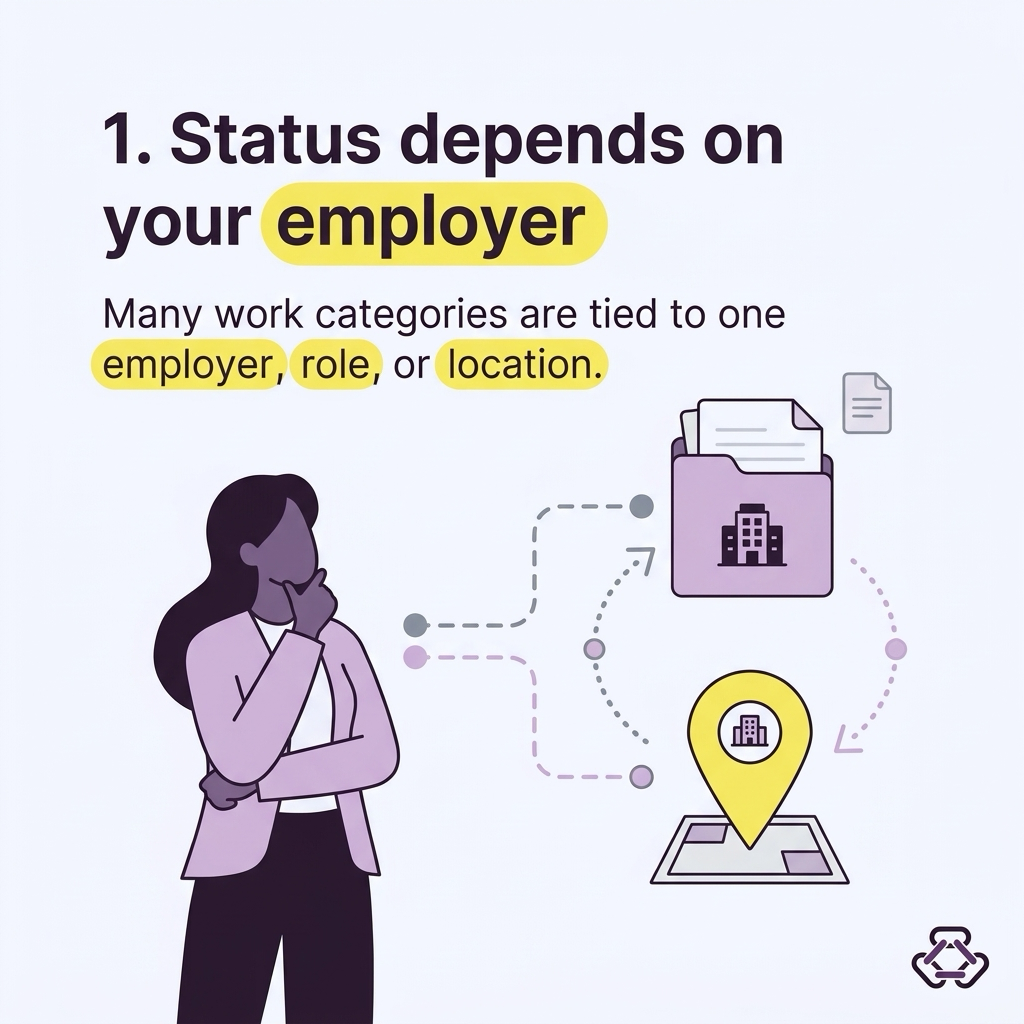
That concern is real. Many employment-based visas are tied to a specific employer, a specific petition, and sometimes even a specific work location. In general terms, changing employers is possible in many situations, but the timing, filing strategy, and visa category often matter a lot. A move that looks routine in HR terms can create immigration problems if the paperwork does not line up with the transition.
In this post you’ll learn how job changes usually work in employer-sponsored immigration cases, when a new employer filing may be required, how pending green card cases can affect mobility, and where people often run into avoidable problems. If you want a broader foundation first, it may help to start with our guide to employer-driven work visa options and sponsorship timing.
Scroll to the bottom for every post in this series.
Why Changing Employers Can Affect Immigration Status
For many foreign professionals, immigration status is not just about being employed somewhere in the United States. It is about being employed by the petitioning employer in the role described to the government.
That is especially true in employer-specific categories like H-1B, L-1, O-1, P-1, and TN. USCIS explains that current H-1B workers who were already counted against the cap can still file petitions to extend stay, change employment terms, work concurrently, or change employers without going back through the cap lottery, which is one reason H-1B mobility looks different from some other categories (USCIS H-1B cap announcement). USCIS also states that H-1B portability can allow eligible workers to begin working for a new employer once a properly filed, non-frivolous petition is submitted, rather than waiting for approval (USCIS H-1B specialty occupations; USCIS H-1B FAQs).
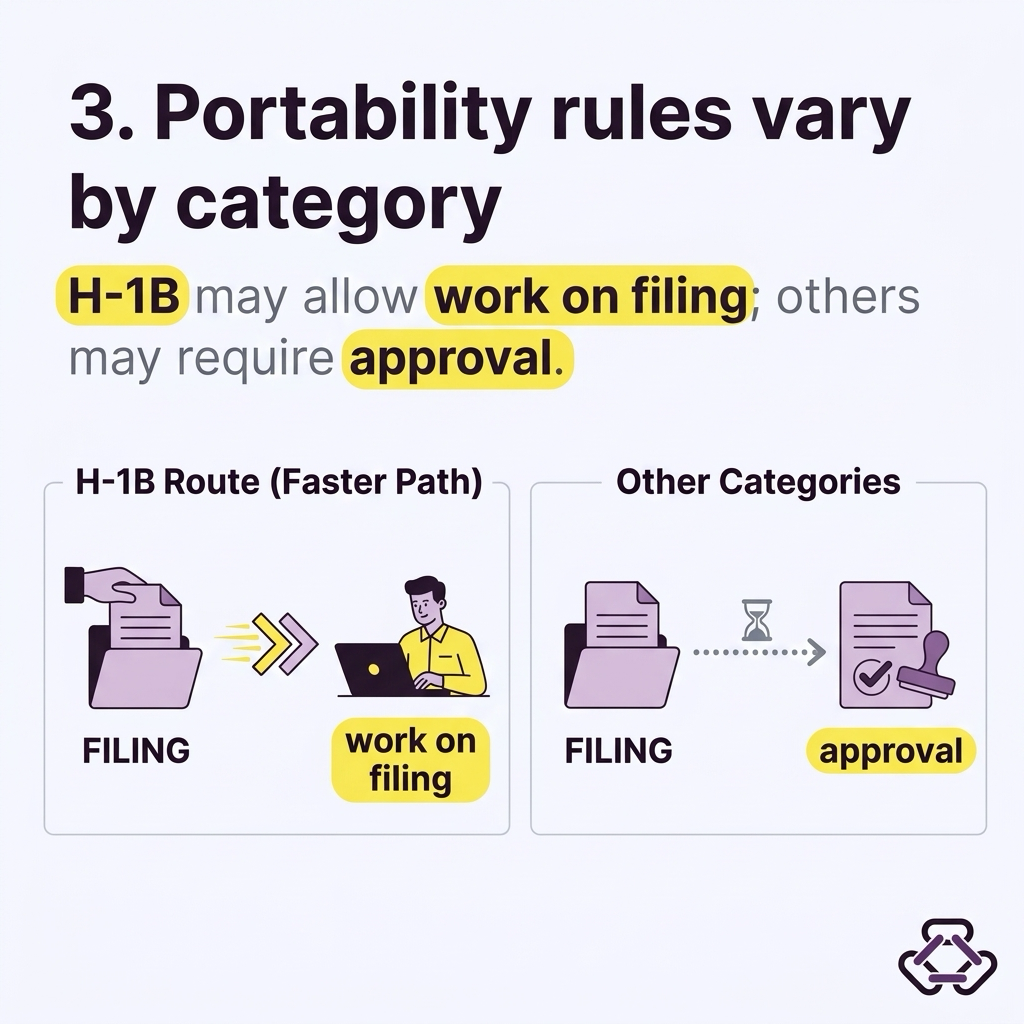
That flexibility is helpful, but it does not mean every job change is simple. Other visa categories often require approval before work with a new employer can begin, or require a new petition tied to a different organization. And for green card cases, a pending labor certification, I-140, or I-485 can each create a different set of consequences.
Step 1: Identify Exactly What Status You Have Right Now
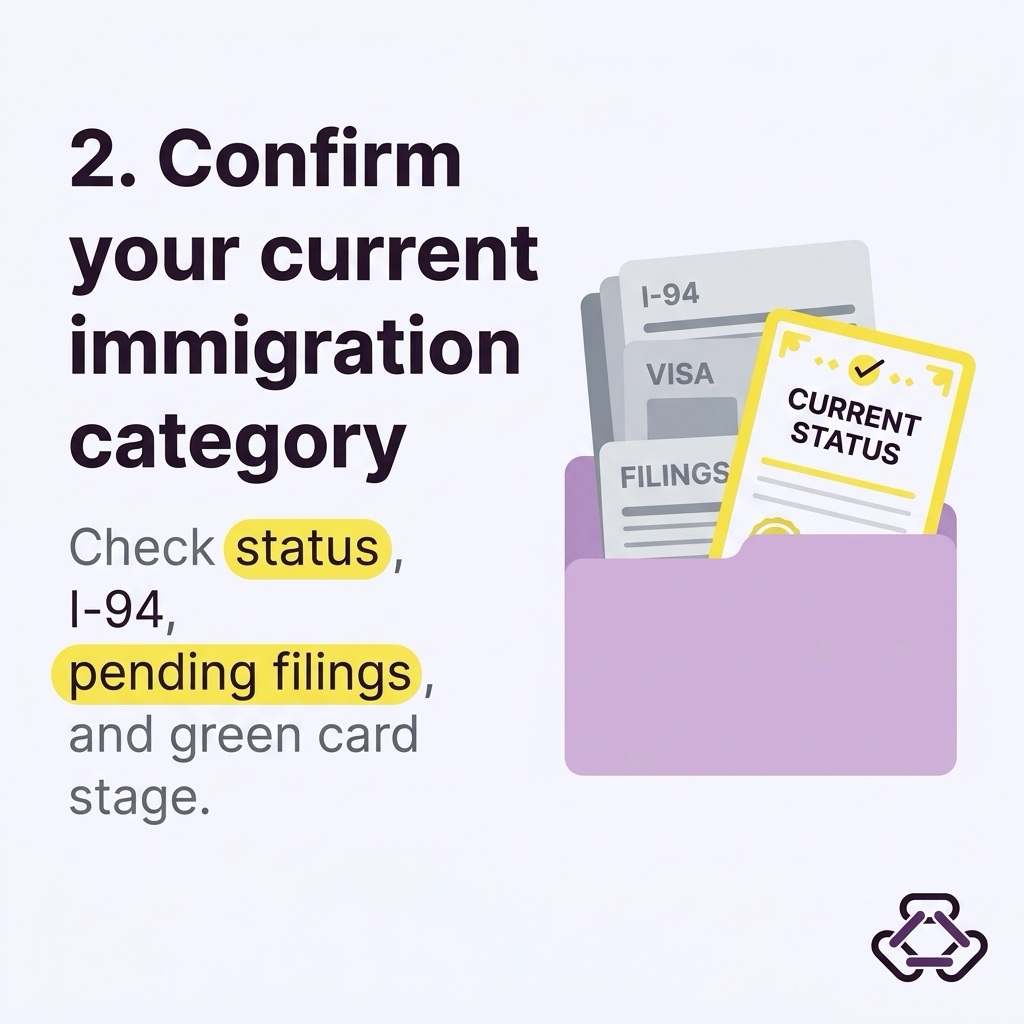
The first question is not “Can I change jobs?” It is “What immigration category am I in today, and what filing supports it?”
That may sound basic, but it is where many mistakes begin. People often refer to their “visa” when the more important issue is their status inside the United States, their most recent I-94, whether there is a pending extension or change-of-employer petition, and whether a green card process is also underway.
Here are a few examples of why that matters:
- An H-1B worker may be able to move to a new employer under portability rules after a proper filing.
- An O-1 worker changing employers generally requires the new employer to file Form I-129 with USCIS (USCIS O-1 guidance).
- A P-1 worker changing employers may not start with the new employer until the new petition is approved (USCIS P-1B guidance).
- TN professionals are admitted for a prearranged job with a specific U.S. employer or entity, and a new employer often means a new TN process or filing (USCIS TN USMCA professionals).
- L-1 classification depends on a qualifying corporate relationship and intracompany transfer structure, so moving to a different unrelated employer generally raises a very different issue than simply changing roles within the same multinational group (USCIS L-1A guidance).
Some people in similar situations also have a pending PERM, an approved I-140, or a pending I-485. Those facts can dramatically change what options are available.
Step 2: Understand Whether Your Category Allows “Portability”
“Portability” is one of the most commonly used words in employer-sponsored immigration, but it does not mean the same thing in every context.
H-1B Portability
For H-1B workers, USCIS says an eligible worker changing employers may begin working for the new employer as soon as the new employer properly files a non-frivolous Form I-129 petition, or on the requested start date, whichever is later (USCIS H-1B specialty occupations). USCIS also notes that this portability-based work authorization continues while the petition is pending, but ceases if the petition is denied (USCIS H-1B specialty occupations).
That is a major advantage for H-1B professionals. Even so, portability is not a free pass. The filing still has to be timely and properly prepared, and the underlying eligibility still matters. For a deeper overview of sponsorship mechanics, timelines, and category differences, our article on how employer sponsorship typically works in practice provides useful context.
Green Card Portability Under AC21
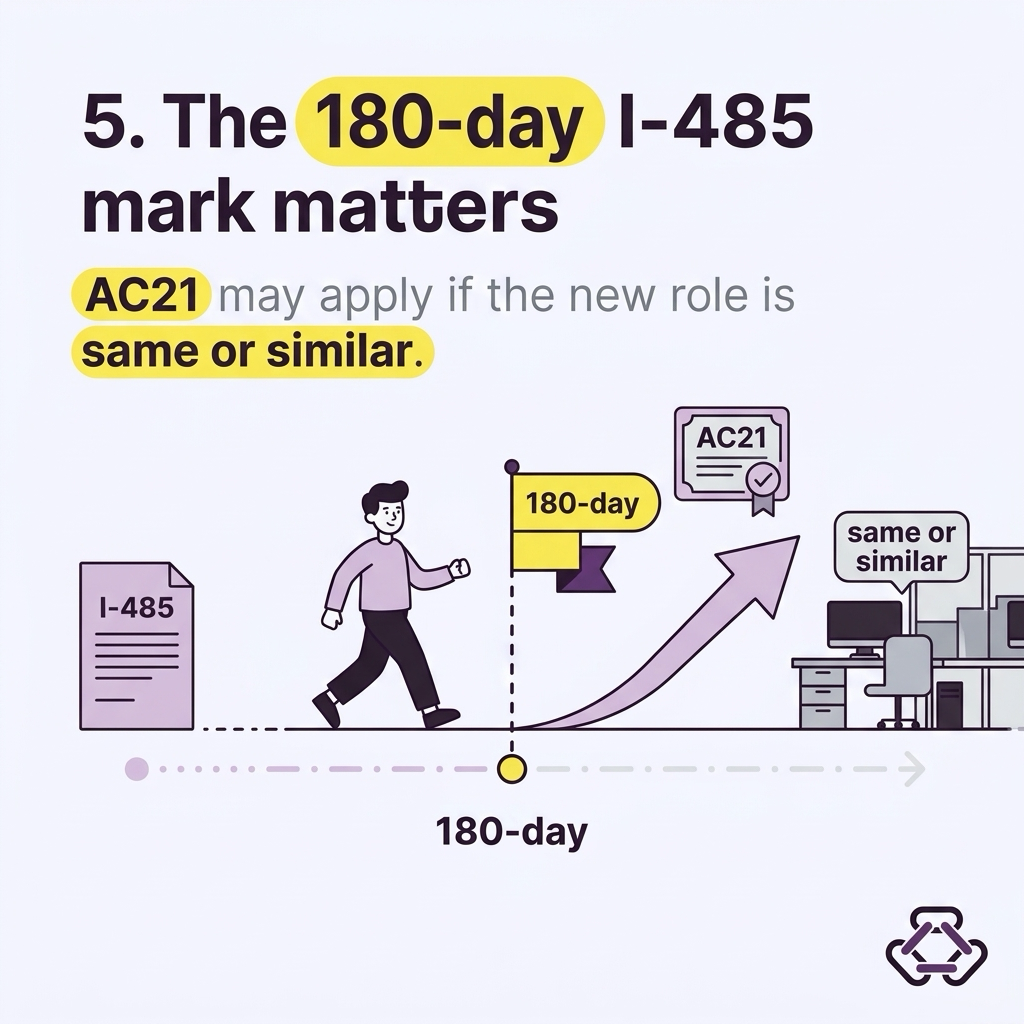
A separate kind of portability applies in some employment-based green card cases. USCIS explains that certain employment-based adjustment applicants may change jobs or employers if their Form I-485 has been pending for 180 days or more and the new job is in the same or similar occupational classification as the original job offer (USCIS Policy Manual, Job Portability After Adjustment Filing and Other AC21 Provisions).
This is often called AC21 portability. It can be extremely important for people caught in long visa backlogs. USCIS also recognizes that differences in duties, employers, or even sectors do not automatically prevent two positions from being considered “same or similar” (USCIS Policy Manual, Job Portability After Adjustment Filing and Other AC21 Provisions).
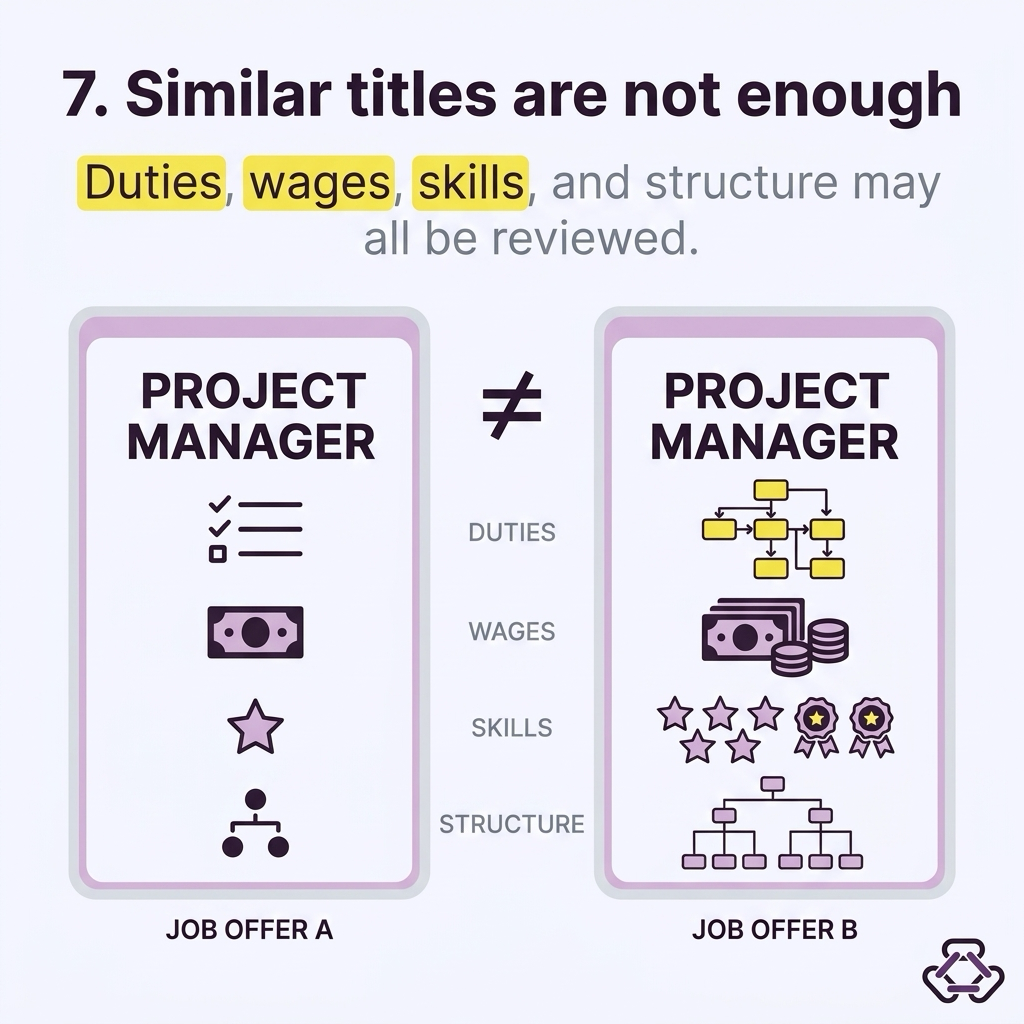
That said, AC21 portability is highly fact-specific. Job titles alone rarely tell the whole story. Salary, duties, SOC codes, reporting structure, and the overall nature of the role can all become relevant.
Step 3: Separate The Visa Case From The Green Card Case
A common source of confusion is assuming that an approved I-140 or pending green card case automatically protects current work authorization. In many cases, it does not.
An approved I-140 can be valuable for retention of priority date and certain H-1B extension benefits, but it is not itself a work permit. A pending I-485 may create additional flexibility later, especially after the 180-day mark in qualifying AC21 cases, but the person may still need to maintain valid nonimmigrant status or a valid EAD depending on strategy and timing.
USCIS has also issued policy guidance explaining how the “ability to pay” analysis applies when adjustment applicants change employers while an I-140 is pending and portability issues arise (USCIS policy guidance on ability to pay and change of employer). For many workers, the practical takeaway is that a green card case can survive a job change in some circumstances, but not every stage of the process provides the same protection.
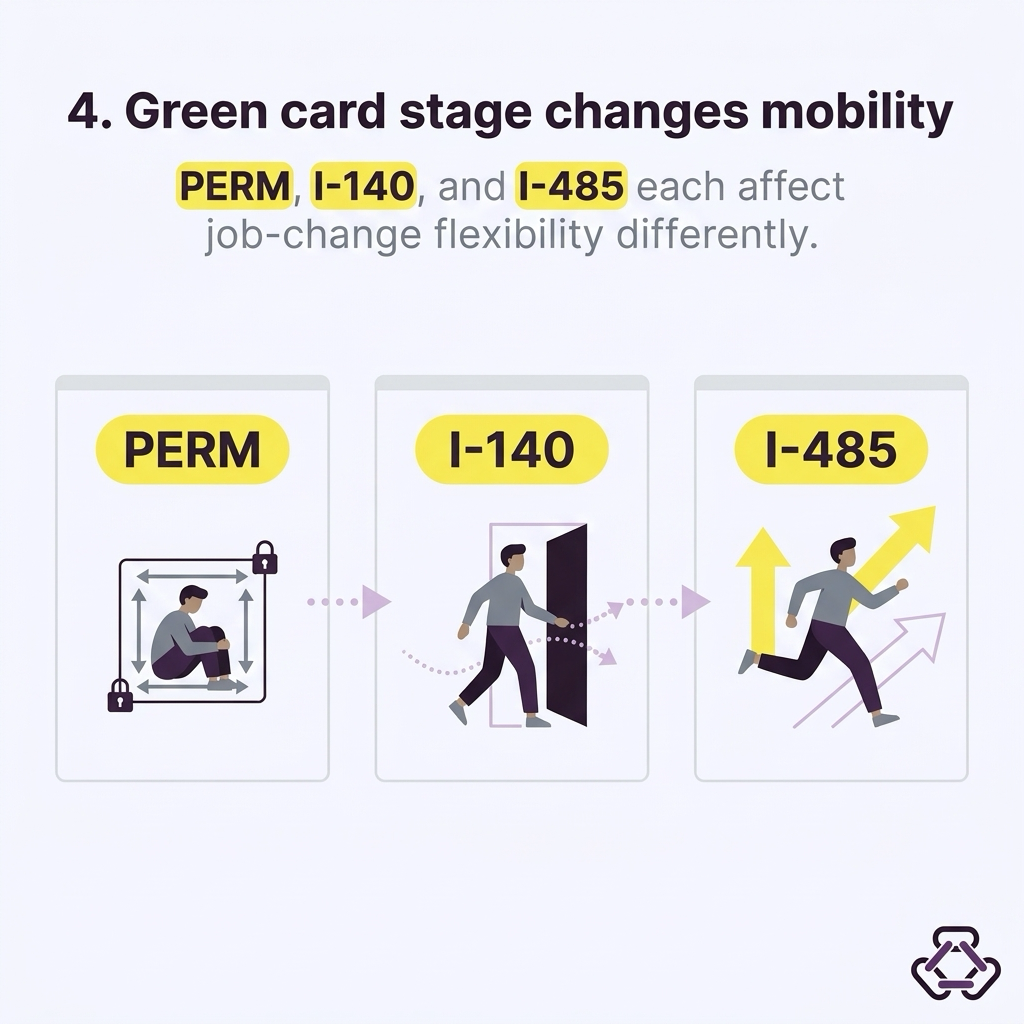
Why The Stage Of The Case Matters
Here is the short version:
- PERM pending: often the least portable stage, because the labor market test and offered position are employer-specific.
- I-140 approved, no I-485 filed: some benefits may exist, but job mobility may still be limited depending on category and goals.
- I-485 pending less than 180 days: portability may not yet be available.
- I-485 pending 180 days or more: AC21 portability may be possible if the new role is same or similar.
This is one area where small differences in dates can change the analysis. A move on day 170 and a move on day 190 can look very different.
Step 4: Pay Attention To Timing After Termination Or Resignation
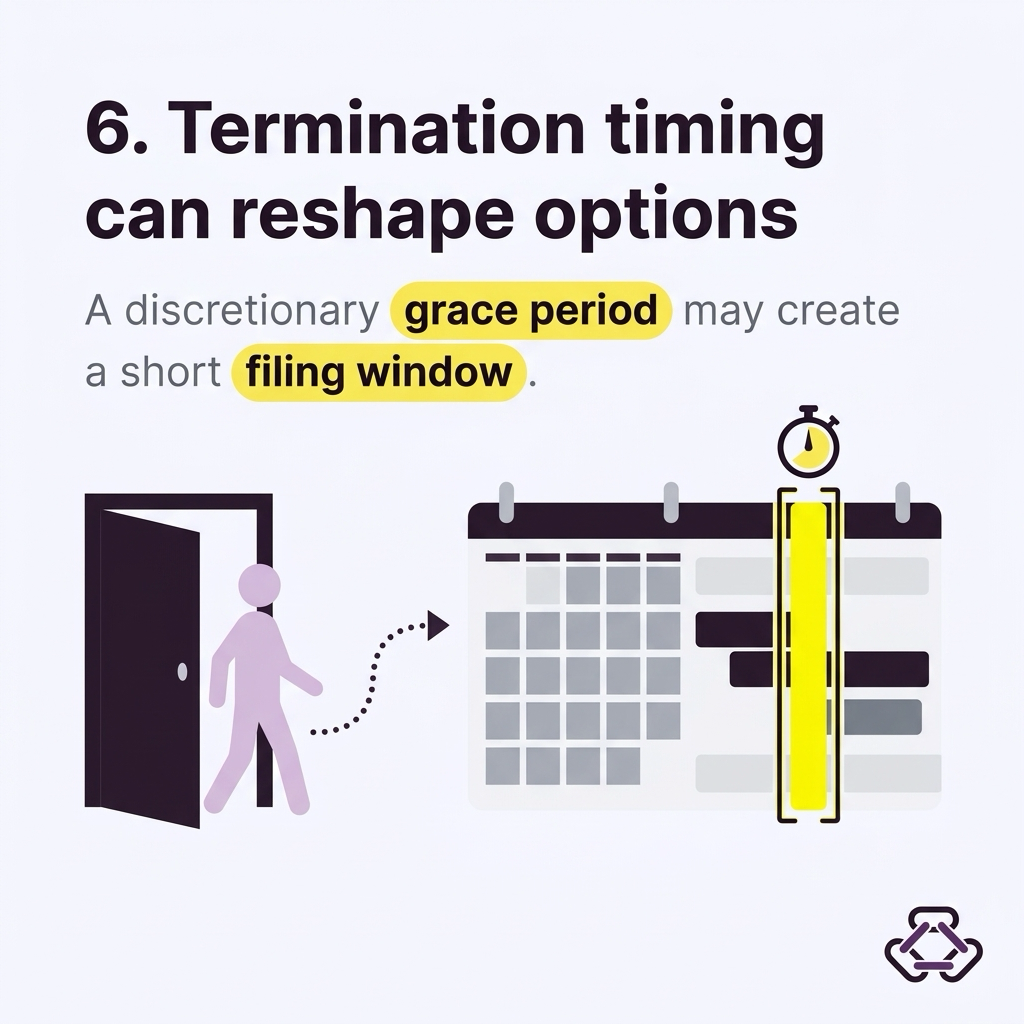
Many workers first start researching this topic after a layoff or abrupt departure. USCIS states that certain employment-based nonimmigrants may receive a discretionary grace period of up to 60 consecutive days following cessation of employment, or until the end of the authorized validity period, whichever is shorter (USCIS options for nonimmigrant workers following termination of employment).
That grace period can be critically important for people in categories such as H-1B, L-1, O-1, and TN, but it is not the same as indefinite authorization to stay and work. In general terms, it can offer a window to file for a change of employer, change of status, or other immigration relief if available.
USCIS also notes that if a new H-1B employer files a proper petition, the worker may use portability rules to begin work without waiting for approval, assuming eligibility requirements are met (USCIS H-1B FAQs).
This is often where experienced legal review becomes especially valuable. Questions about final pay dates, payroll end dates, severance arrangements, last day of productive work, and I-94 expiration can all matter more than people expect.
Step 5: Do Not Assume A “Similar Job” Is Automatically Safe
People often hear that a new role is “basically the same job,” especially when staying in the same industry. Immigration law can be more technical than that.
For AC21 portability, USCIS evaluates whether the new job is in the same or similar occupational classification as the job in the underlying immigrant petition (USCIS Policy Manual, Chapter 5). USCIS has explained that occupational classification, job duties, skills, experience, education, training, licenses, and wages may all be part of the analysis. A promotion can still qualify in some cases, and a change across sectors may still work if the occupational core remains similar, but it is not automatic (USCIS Policy Manual, Chapter 5).
That becomes especially important when:
- the title changes from engineer to manager
- compensation jumps significantly
- the role shifts from hands-on technical work to strategy
- the new employer describes the role differently than the original petition
- the original PERM or I-140 was drafted narrowly
An attorney might help compare the underlying labor certification or I-140 record to the new offer before a transition becomes harder to unwind.
Step 6: Remember That Work Authorization And I-9 Compliance Are Separate Issues
A status-preserving filing strategy is only one part of the transition. The new employer also has to complete Form I-9 correctly.
USCIS’s I-9 guidance explains that certain EAD holders may receive automatic extensions if they file a timely renewal and meet category requirements. DHS finalized a rule permanently increasing the automatic extension period for eligible EAD renewal applicants from up to 180 days to up to 540 days, effective January 13, 2025 (USCIS final rule announcement; USCIS news release). USCIS also provides I-9 instructions on how employers may document automatic extensions and reverification (USCIS M-274 guidance on automatic extensions; USCIS reverification guidance).
This matters because some job changes involve a person moving from employer-specific status to EAD-based work authorization, or vice versa. Others involve spouses in employment-authorized dependent statuses, such as some E and L spouses, where the work authorization rules are different from principal workers (USCIS options after termination; USCIS Policy Manual on L classification).
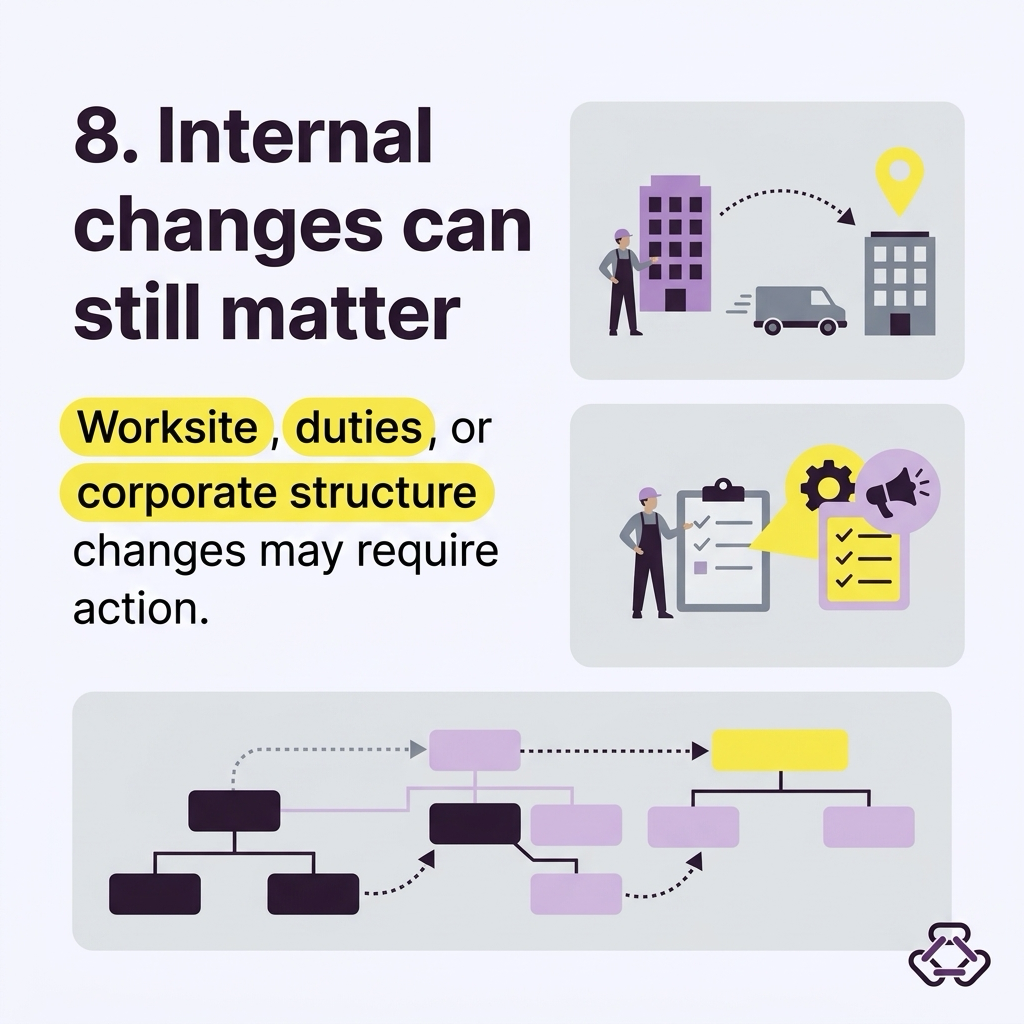
Step 7: Watch For Location, Duties, And Corporate Structure Changes
Even if you are not changing employers completely, a change in where you work or what you do can matter.
USCIS has long taken the position that certain material changes in H-1B employment, including some worksite changes, may require an amended petition, and that filing can permit the employee to begin work at the new location without waiting for final adjudication (USCIS Simeio guidance archive). DHS’s 2025 H-1B modernization rule also emphasized that the Labor Condition Application must support and properly correspond with the petition, and that the employer must establish a bona fide specialty occupation position as of the requested start date (USCIS H-1B final rule alert; USCIS DHS strengthens H-1B program release).
For L-1 cases, corporate relationships matter. The visa category is built around intracompany transfer between qualifying entities, so a move outside that structure can raise a fundamentally different issue than a reassignment within the same multinational group (USCIS L-1A guidance).
Common Mistakes People Make When Changing Employers
Starting Too Early
This often happens when someone assumes an offer letter is enough. In some categories, it may be possible to start upon filing. In others, approval may be required first. The difference can be decisive.
Relying On Informal Advice
HR teams and recruiters often understand business onboarding, but immigration-specific timing questions can be more nuanced. Even well-meaning advice can leave gaps if it is not tied to the exact status category and filing posture.
Ignoring The Green Card Timeline
Some workers focus only on the next visa petition and overlook how a move could affect a PERM case, an approved I-140, or portability under a pending I-485.
Assuming Any Better Job Is Safer
A higher salary or more senior title may be good news professionally, but it can complicate same-or-similar analysis if the underlying green card case depends on a narrower role description.
Forgetting Dependents
A principal worker’s move can affect spouses and children in dependent status, including work authorization questions for dependent spouses in certain categories.
If you want to avoid the issues that frequently derail employer-sponsored matters, it may also help to read about mistakes that commonly put work status at risk.
When An Attorney Can Add Real Value
A job change in an immigration case often involves multiple layers at once:
- current nonimmigrant status
- timing of resignation or termination
- petition filing strategy
- work authorization start date
- I-9 onboarding
- green card portability analysis
- dependent status planning
- travel timing and visa stamping concerns
That combination is one reason many people look for counsel with documented experience in highly-similar matters, not just general immigration practice. A lawyer who regularly handles employer transitions for the same visa category, same filing stage, and similar fact pattern may be better positioned to spot issues early.
Some people also look for attorneys based on objective fit rather than marketing language. That is especially relevant in employment-based immigration, where the difference between a routine transfer and a status problem can come down to details in court records, filings, and prior case work.
The Bottom Line
Changing jobs or employers without jeopardizing status is often possible, but the answer usually depends on which status you hold, what stage your green card case is in, when the transition happens, and what the new role looks like compared to the old one.
H-1B workers may have more short-term mobility because portability can allow work to begin upon proper filing in eligible cases. Green card applicants with a pending I-485 of at least 180 days may have added flexibility under AC21 if the new job is in the same or similar occupational classification. Other categories, including O-1, P-1, L-1, and TN, can involve very different rules and timing requirements. And when a job ends unexpectedly, the 60-day grace period can create options, but often only if the next steps are mapped out carefully and promptly.
Visit ReferU.AI to get matched with an attorney who has demonstrable experience in cases like yours — for free.
