Table of Contents
- 10 Questions Foreign Professionals Ask About Employer Sponsorship
- 1. What Does Employer Sponsorship Actually Mean?
- 2. Does Every Foreign Professional Need Employer Sponsorship To Work In The U.S.?
- 3. Which Visas Usually Involve Employer Sponsorship?
- 4. Can Any Employer Sponsor Me?
- 5. Is Sponsorship The Same Thing As An H-1B?
- 6. How Long Does Employer Sponsorship Take?
- 7. Who Pays For Employer Sponsorship?
- 8. What Happens If I Change Jobs?
- 9. Can My Employer Sponsor Me For A Green Card Right Away?
- 10. When Does It Make Sense To Speak With An Immigration Attorney?
- Final Thoughts On Employer Sponsorship

Type
Great Grandchild
Status
Approved
Title (YouTube)
Images Failed (Social)
Images Failed (Social)
Do not index
Publish Date (TikTok)
Apr 26, 2027 11:15
Videos Post IDs (Social)
Hashtags (Social)
#LegalAdvice #LegalHelp #Immigration #WorkVisas
Caption
Caption X
Cover

OG Image

Alt Image Text
Flat vector illustration of employer sponsorship for foreign professionals, showing a job candidate and employer reviewing visa-related documents and process steps.
Images

Videos
Publish Date (Social)
Feb 19, 2027 12:30
Scheduled (Social)
Scheduled (Social)
Images Posted (Social)
Images Posted (Social)
Videos Posted (Social)
Videos Posted (Social)
Featured
Created time
Apr 7, 2026 12:01 AM
Sub-item
Authors
CTA Practice Area (Social)
Immigration
TikTok Failed (Social)
TikTok Failed (Social)
Videos Post Links (Social)
TikTok Post Links (Social)
Images Post IDs (Social)
YT Post ID
Video Pending Manual (Social)
TikTok Posted (Social)
TikTok Posted (Social)
TikTok Post IDs (Social)
Video Cover (Social)
Images Post Links (Social)
First Comment (Social)
Videos Failed (Social)
Videos Failed (Social)
YT Embedded
Images Delete (Social)
Videos Delete (Social)
10 Questions Foreign Professionals Ask About Employer Sponsorship
If you’re exploring a U.S. work visa, “employer sponsorship” can feel like one of the most confusing parts of the process. People often hear the phrase in job postings, recruiter calls, and online forums, but the real legal meaning is often narrower than it sounds.
In general terms, employer sponsorship usually refers to a U.S. employer filing immigration paperwork so a foreign professional can work in the United States in a specific role. That can involve temporary work visas, employment-based green card processes, Department of Labor filings, USCIS petitions, and consular processing depending on the category. The details vary a lot from one visa path to another, which is why many professionals start with broad questions before they can even tell what applies to them.
In this post you’ll learn the answers to 10 of the most common questions foreign professionals ask about sponsorship, including who can sponsor, what employers look at, how timing works, what happens when jobs change, and when an immigration attorney may help clarify the safest path. If you want a broader overview of how employer-driven immigration works, this guide on work visa basics and sponsorship timing is a helpful place to start.
Scroll to the bottom for every post in this series.
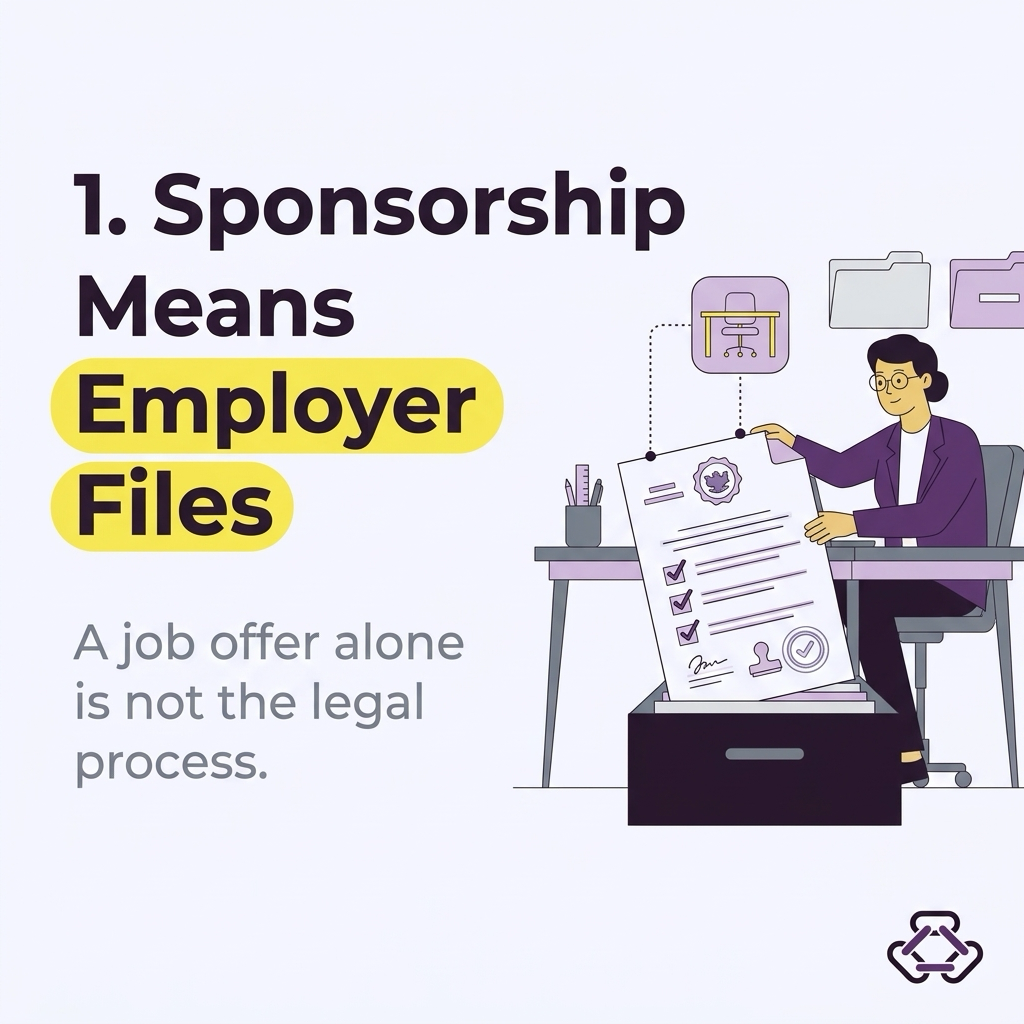
1. What Does Employer Sponsorship Actually Mean?
Employer sponsorship usually means the employer—not the employee—files a petition or labor-related application tied to a specific immigration benefit.
For many temporary work visas, the employer files Form I-129 with U.S. Citizenship and Immigration Services. The Department of State explains that most temporary worker visa applicants first need an approved petition before they can apply for a visa abroad, and USCIS states that many work-authorized categories are employer-driven rather than self-filed (State Department, USCIS).
In some categories, sponsorship also includes a Department of Labor step. For example, H-1B cases typically involve a Labor Condition Application, while many employment-based green card cases involve the PERM labor certification process through the Department of Labor’s Office of Foreign Labor Certification (DOL OFLC, USCIS).
A key point that surprises many people: sponsorship is not the same as simply giving someone a job offer. A company may be willing to hire a candidate but not willing to take on the filing costs, compliance obligations, timing, or uncertainty involved in a visa petition.
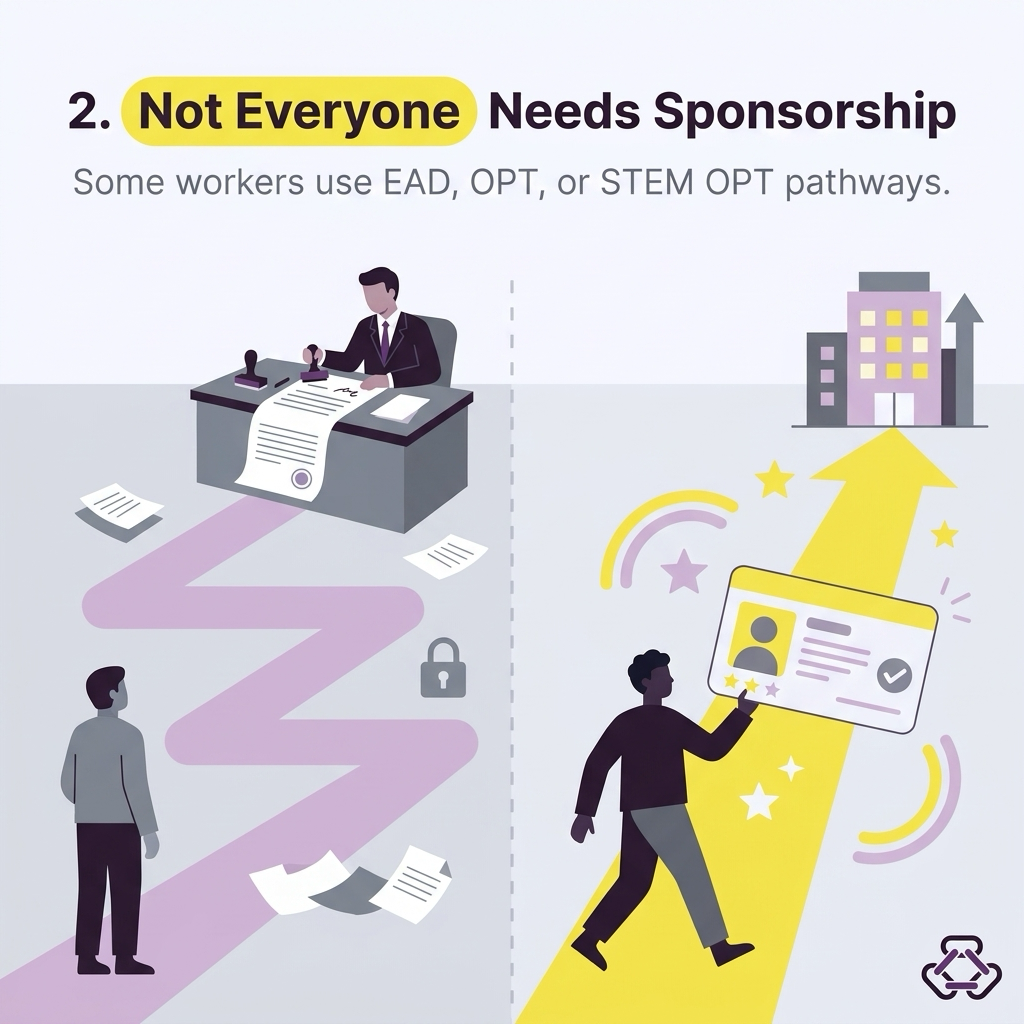
2. Does Every Foreign Professional Need Employer Sponsorship To Work In The U.S.?
No. Some foreign professionals work in the U.S. without classic employer sponsorship, while others do require it.
For example, USCIS explains that some people can work based on an Employment Authorization Document (EAD) rather than an employer-filed petition. Others may work through student pathways like OPT or STEM OPT, where the individual files for work authorization and the employer does not submit the visa petition itself (USCIS employment authorization, USCIS STEM OPT, USCIS STEM employment pathways).
Other categories are clearly employer-driven. H-1B, L-1, O-1 in many situations, and numerous employment-based green card categories typically involve a U.S. employer or agent filing on the worker’s behalf (USCIS L-1B, USCIS O-1, USCIS employment-based green cards).
That distinction matters because many professionals assume any company that says “we hire international candidates” is prepared to sponsor. Sometimes that really means the company hires people who already have independent work authorization.
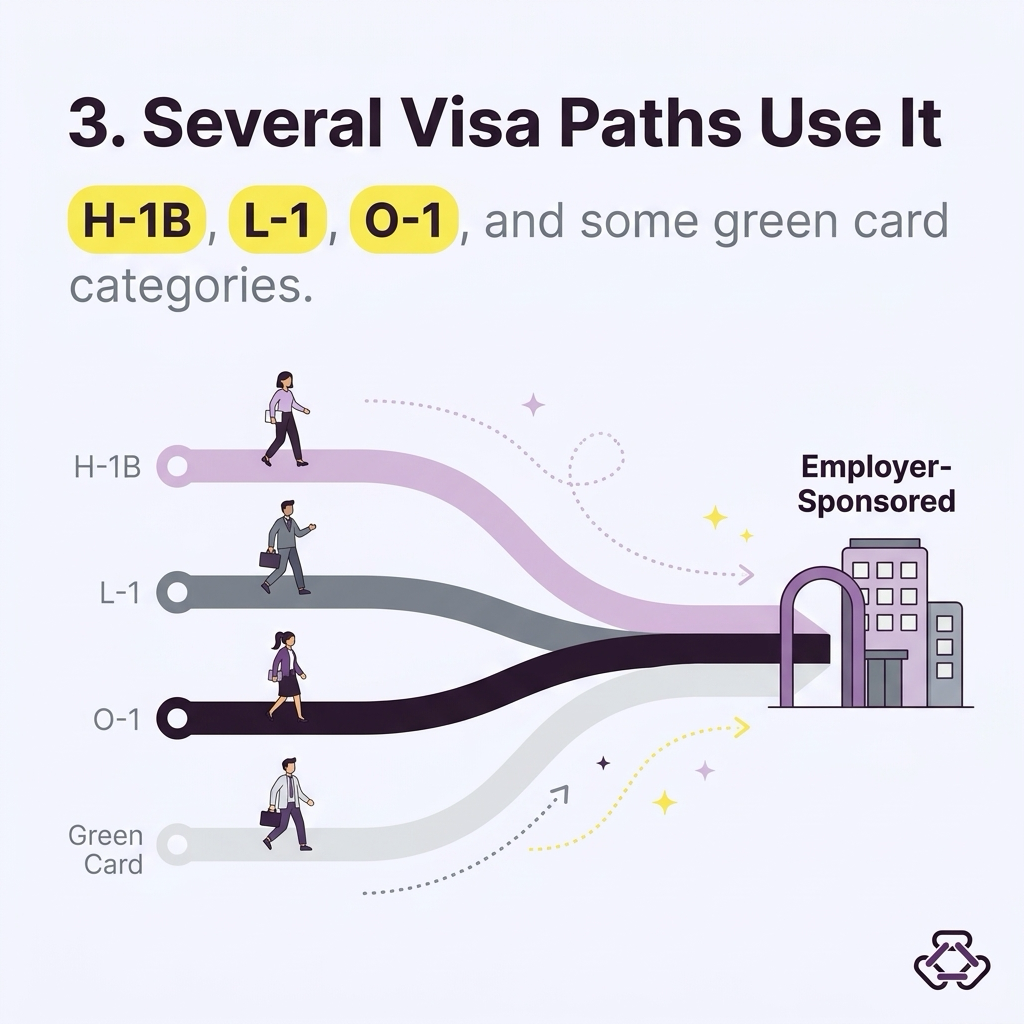
3. Which Visas Usually Involve Employer Sponsorship?
The most common employer-sponsored paths for professionals include:
- H-1B for specialty occupations
- L-1 for intracompany transferees
- O-1 for individuals with extraordinary ability or achievement
- Certain employment-based green card categories, often through PERM and Form I-140
- In some industries, other employer-linked categories may also come into play
USCIS describes the H-1B cap process as an employer registration and petition system, including electronic registration for cap-subject cases and filing eligibility only after selection. For the FY 2026 H-1B cap season, USCIS said the registration period ran from March 7, 2025, to March 24, 2025, with a $215 registration fee per beneficiary, and selections were made under the beneficiary-centric process (USCIS H-1B cap notice, USCIS H-1B cap season).
L-1 cases are different because they generally depend on an existing qualifying relationship between related companies and prior employment abroad. O-1 cases can be employer- or agent-filed and often depend heavily on the worker’s credentials and documentary record. Employment-based green card sponsorship often takes longer and may involve prevailing wage, recruitment, labor certification, and then an immigrant petition (USCIS L-1B, USCIS O-1, DOL foreign labor).
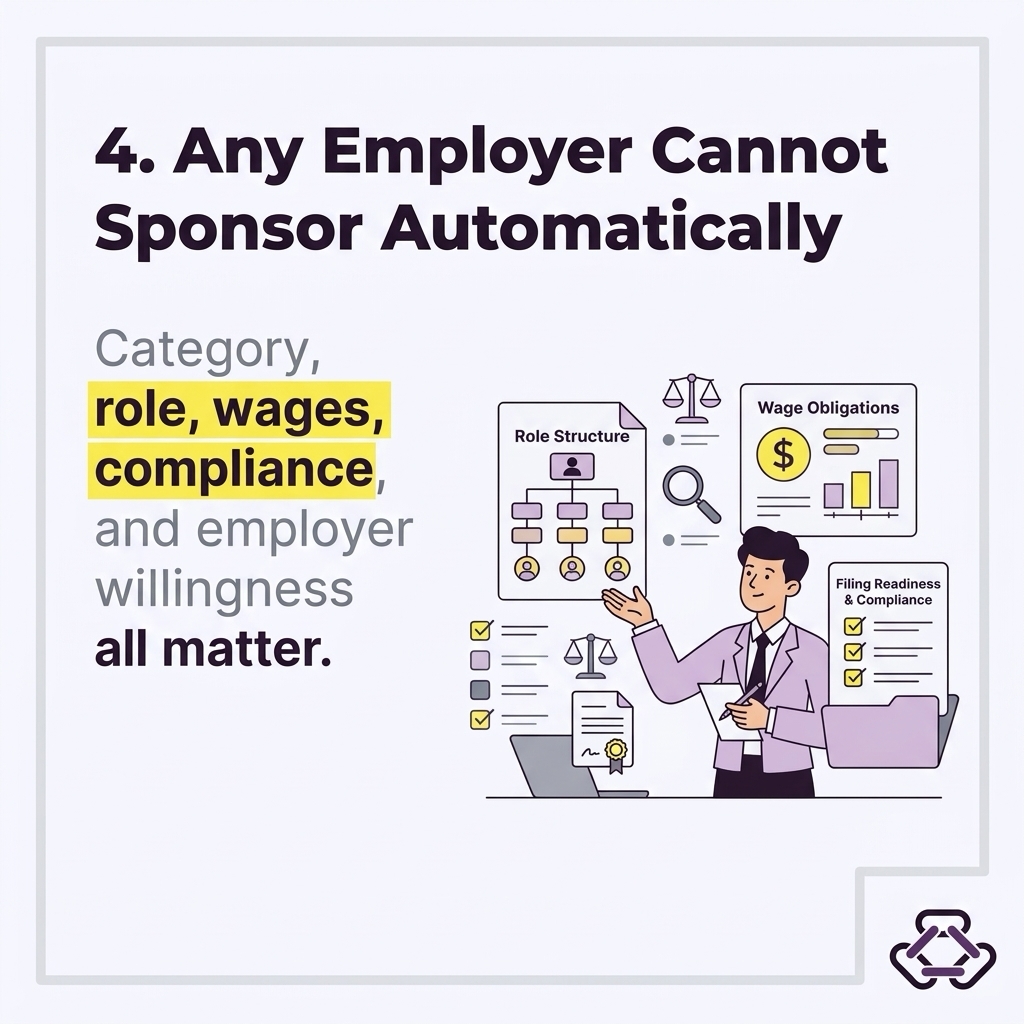
4. Can Any Employer Sponsor Me?
Not automatically. Sponsorship depends on the visa category, the company’s structure, the role being offered, wage and compliance requirements, and whether the employer is willing to file and support the case.
For H-1B cases, the employer generally files the petition and is subject to labor-condition requirements tied to wages and working conditions. The Department of Labor explains that foreign labor certification programs are designed to help ensure that hiring foreign workers does not adversely affect the job opportunities, wages, and working conditions of U.S. workers (DOL foreign labor overview, DOL OFLC).
For permanent sponsorship through PERM, the employer often plays an even larger role because it may need to obtain a prevailing wage determination, complete recruitment steps, and file labor certification paperwork before moving to the immigrant petition stage (DOL OFLC, USCIS I-140).
In practical terms, employers often ask questions like:
- Is this role eligible for the visa type?
- What are the filing costs and timelines?
- Is the role long-term enough to justify sponsorship?
- Are there compliance or wage issues?
- Is there cap uncertainty, especially with H-1B?
- If the person is already in the U.S., can the case be filed as a transfer, extension, or amendment?
Those are business and legal questions at the same time, which is one reason employer sponsorship often moves more slowly than candidates expect.
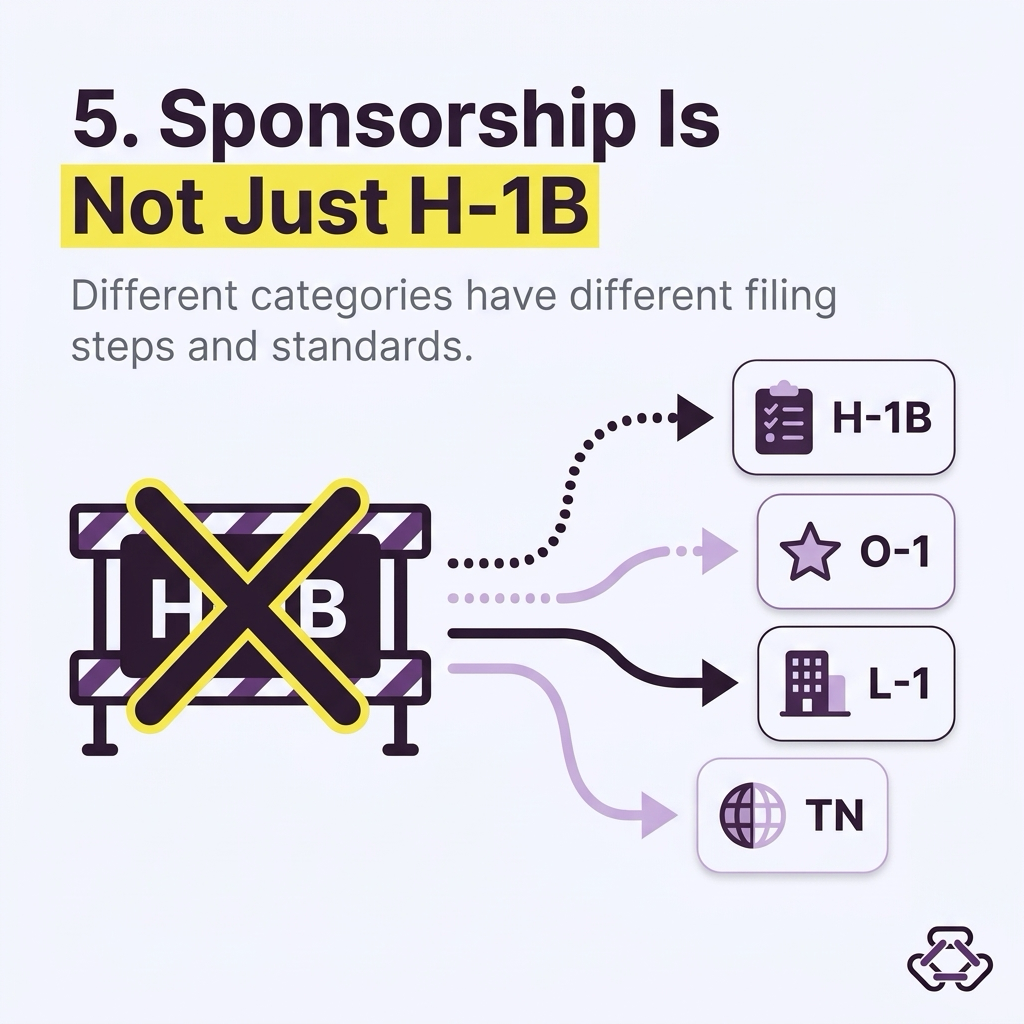
5. Is Sponsorship The Same Thing As An H-1B?
No. H-1B is only one form of employer sponsorship.
This is one of the most common misunderstandings. A job posting that says “no sponsorship available” often means no H-1B or no employment-based immigration support generally. But legally, sponsorship can refer to many different processes.
For example:
- An H-1B petition may involve registration, LCA filing, and Form I-129
- An L-1 case may depend on a multinational company relationship
- An O-1 may be filed by a U.S. employer or agent
- A green card through employment may involve PERM and Form I-140
- A worker on OPT may not require the employer to petition immediately
USCIS and the State Department both make clear that temporary worker categories are not interchangeable, and different categories involve very different filing mechanics and evidentiary standards (USCIS temporary workers pages, State Department temporary worker visas).
That’s why professionals often benefit from thinking in terms of “Which immigration path fits this job and this background?” rather than “Can this company do H-1B?”
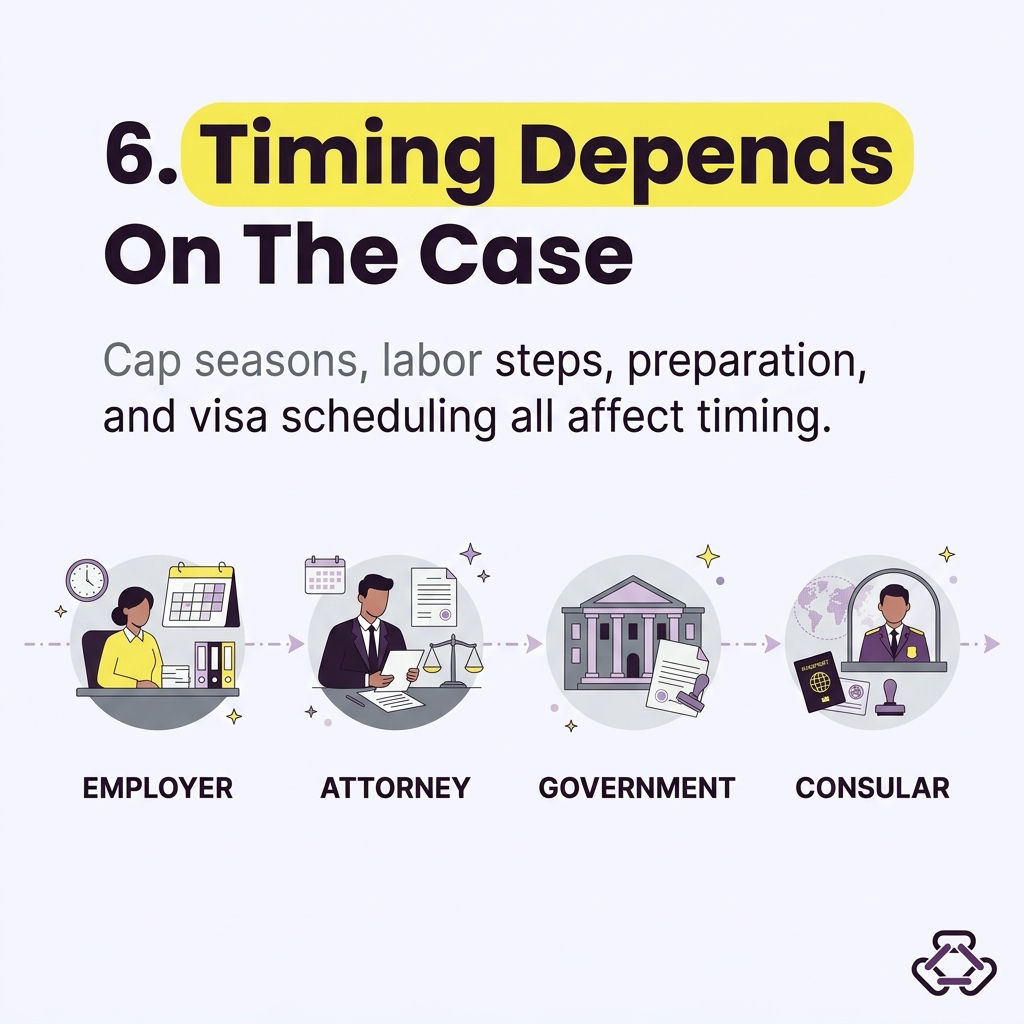
6. How Long Does Employer Sponsorship Take?
The timeline depends on the type of case.
An H-1B case may move on a fixed annual cap timeline if it is cap-subject. USCIS reached the FY 2026 H-1B cap and confirmed that only selected beneficiaries could move forward in that cycle, while cap-exempt or previously counted workers can be a different story (USCIS H-1B cap reached).
A permanent sponsorship case is often much longer. The Department of Labor’s foreign labor system includes prevailing wage and labor certification steps, and USCIS notes that many I-140 filings depend on an approved labor certification that remains valid for only a limited period after approval (DOL OFLC, USCIS I-140).
Premium processing may speed up certain USCIS adjudications, but it does not erase every part of the overall timeline. USCIS explains that premium processing is requested through Form I-907 for eligible filings, including certain I-129 and I-140 cases, but the case still has to be eligible and document-ready before it gets to that stage (USCIS premium processing, USCIS I-907).
In day-to-day terms, the total timeline often depends on four moving parts:
- Employer decision-making time
- Attorney preparation time
- Government filing windows and processing times
- Consular scheduling or visa stamping, if travel is involved
That is one reason many professionals look for help early when they’re preparing for an H-1B or employer-sponsored case. A timing issue that seems minor at the start can become the entire case later. If you’re also trying to understand job changes during the process, it helps to read about switching employers without putting status at risk.
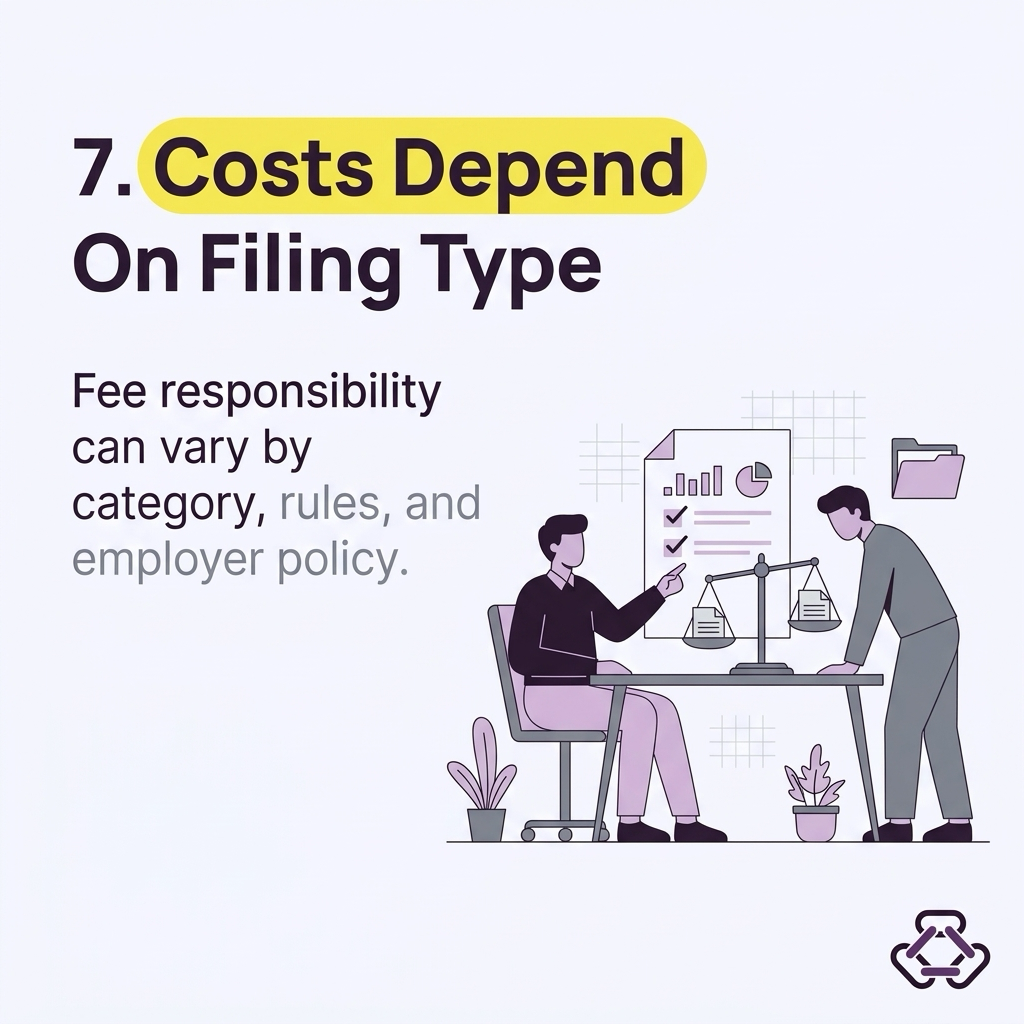
7. Who Pays For Employer Sponsorship?
The answer depends on the visa type, the filing involved, and the employer’s policies.
Some fees are commonly paid by the employer, particularly in categories with employer obligations tied to labor filings. USCIS maintains filing fee guidance for H and L classifications under Form I-129, including the asylum program fee and other category-specific charges (USCIS I-129 H and L fees).
For PERM-based green card cases, cost allocation can become even more sensitive because labor certification rules and recruitment obligations may affect who pays particular expenses. The legal analysis is often highly fact-specific, especially if an employer offers to cover some costs but not others.
This is one area where foreign professionals often run into informal advice online that is incomplete or outdated. If the employer is asking the employee to pay certain amounts, or to sign unusual repayment language, an immigration attorney may help evaluate whether the arrangement lines up with current requirements and practical risk.
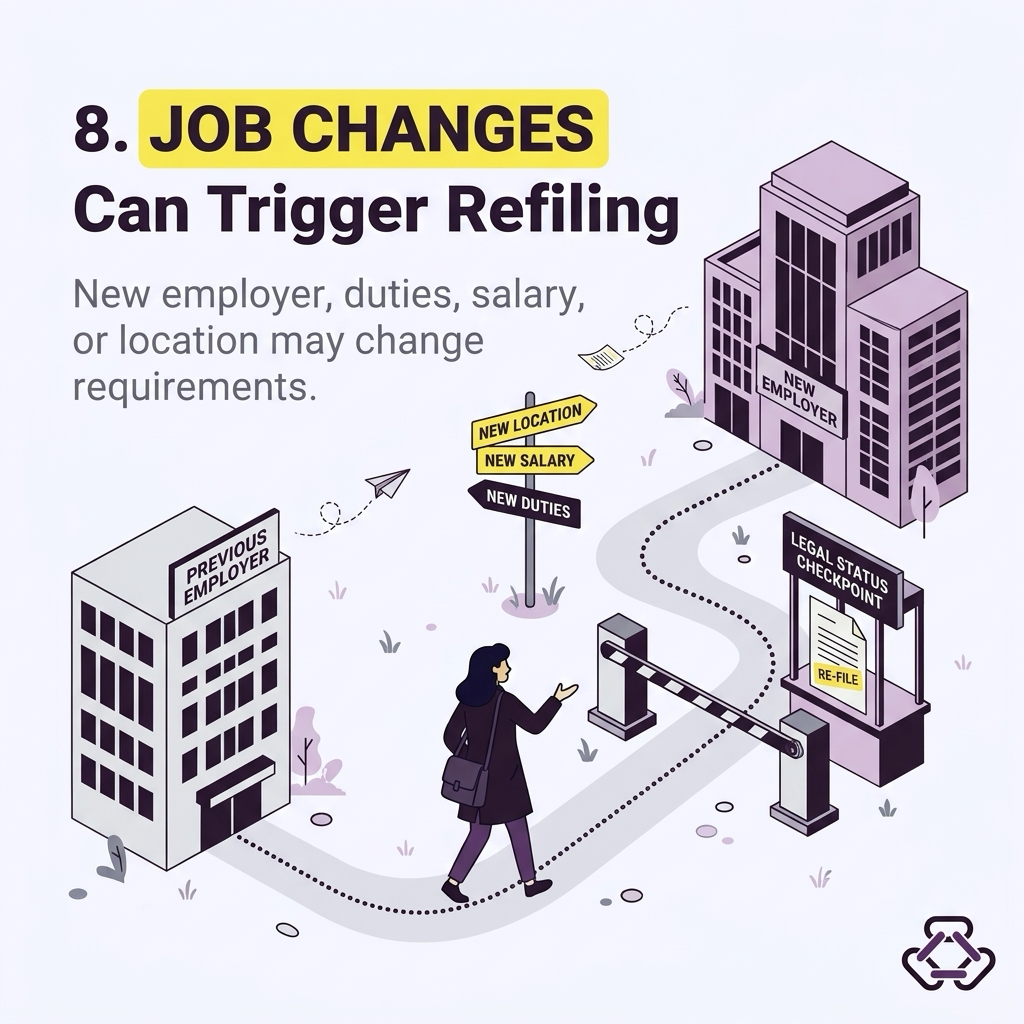
8. What Happens If I Change Jobs?
This is one of the biggest sponsorship questions because many work-authorized foreign professionals eventually receive another offer or see internal changes in title, salary, location, or job duties.
In some categories, a new employer may need to file a new petition. USCIS states that if an O-1 worker wants to change employers, the new employer generally files a new Form I-129, and material changes may require amended filings (USCIS O-1).
For green card applicants already deep into the process, job mobility can become more nuanced. USCIS explains that portability under AC21 may allow certain applicants to change to a same or similar occupational classification, but the analysis is case-specific and based on the totality of the circumstances (USCIS AC21 portability).
This is also where people often confuse “I can work in the U.S.” with “I can work for any employer in any role without refiling.” Those are not always the same thing. Even a favorable job offer can create status issues if the visa category is employer-specific, location-specific, or duty-specific.
That’s why many professionals spend time learning about changing jobs while preserving immigration status before making a move, and why it also helps to understand some of the common work visa mistakes that can create avoidable problems.
9. Can My Employer Sponsor Me For A Green Card Right Away?
Sometimes yes, sometimes no.
An employer may be open to permanent sponsorship early in the relationship, but many employers wait to see how the role develops before starting a PERM-based green card process. Others may sponsor only after a probationary period, after H-1B approval, or after internal budget review.
USCIS explains that employment-based immigrant cases can fall into different preference categories and that some require a job offer and employer petition while others may permit self-petitioning in narrower circumstances. For employer-sponsored cases, Form I-140 is central, and when the petition relies on labor certification, USCIS says it has to be received within the labor certification validity period (USCIS employment-based green cards, USCIS I-140, USCIS EB-1).
The Department of Labor’s current materials also show how active and data-driven the labor certification system remains. OFLC recently released public disclosure data and selected program statistics through Q1 of FY 2026, covering prevailing wage determinations and labor certifications across multiple programs, including PERM and LCAs (DOL OFLC data release).
For many professionals, the better question is not just “Will this company sponsor a green card?” but “When, in what category, and with what case strategy?”
10. When Does It Make Sense To Speak With An Immigration Attorney?
Many foreign professionals talk with an attorney when one of these issues comes up:
- A company says it is “open to sponsorship,” but details are vague
- The role has timing pressure tied to graduation, OPT expiration, travel, or a start date
- There is a pending job change, layoff risk, merger, promotion, or remote work change
- The employer wants reimbursement agreements or unusual fee arrangements
- The worker may qualify for more than one immigration path
- There are questions about consular processing, admissibility, or maintaining status
An attorney may help evaluate the legal fit between the role, the employer, the worker’s timeline, and the available visa or green card categories. That can be especially valuable when the case sits in the gray area between “possible” and “practical.”
For example, the Department of Labor recently announced a proposed rule revising prevailing wage methodology for H-1B and PERM programs, published March 27, 2026. Developments like that can affect planning, budget expectations, and case strategy even before a final rule is in place (DOL proposed rule announcement). Immigration law often changes through policy updates, fee changes, procedural shifts, and adjudication trends, so current guidance matters.
Final Thoughts On Employer Sponsorship
Employer sponsorship is not one single form, one single visa, or one single timeline. It’s a legal process that depends on the visa category, the employer’s willingness to participate, the nature of the offered role, the worker’s background, and current government procedures.
For foreign professionals, the hardest part is often not filling out forms. It’s figuring out what kind of sponsorship is actually being discussed, whether the employer is prepared for it, how timing affects status, and what risks may come with a job change or delayed filing.
When those questions become personal instead of theoretical, many people look for an attorney with documented experience in highly similar matters, not just general immigration familiarity. Visit ReferU.AI to get matched with an attorney who has demonstrable experience in cases like yours — for free.
