Table of Contents
- How to Prepare for an H-1B or Employer-Sponsored Immigration Case
- Why Preparation Matters In Employer-Sponsored Cases
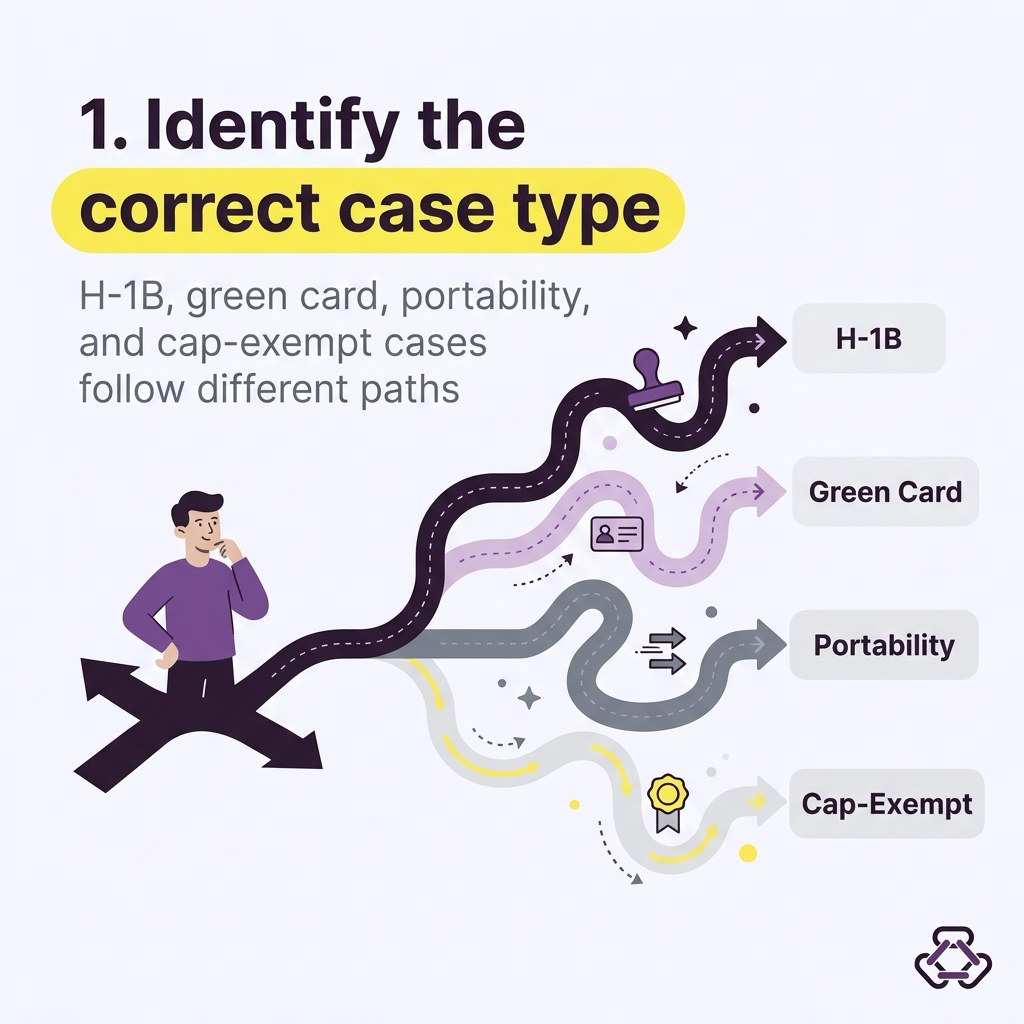
- Step 1: Identify What Kind Of Employer-Sponsored Case You Actually Have
- Step 2: Confirm Whether The Case Is Cap-Subject Or Cap-Exempt
- Step 3: Build A Clear And Defensible Job Description
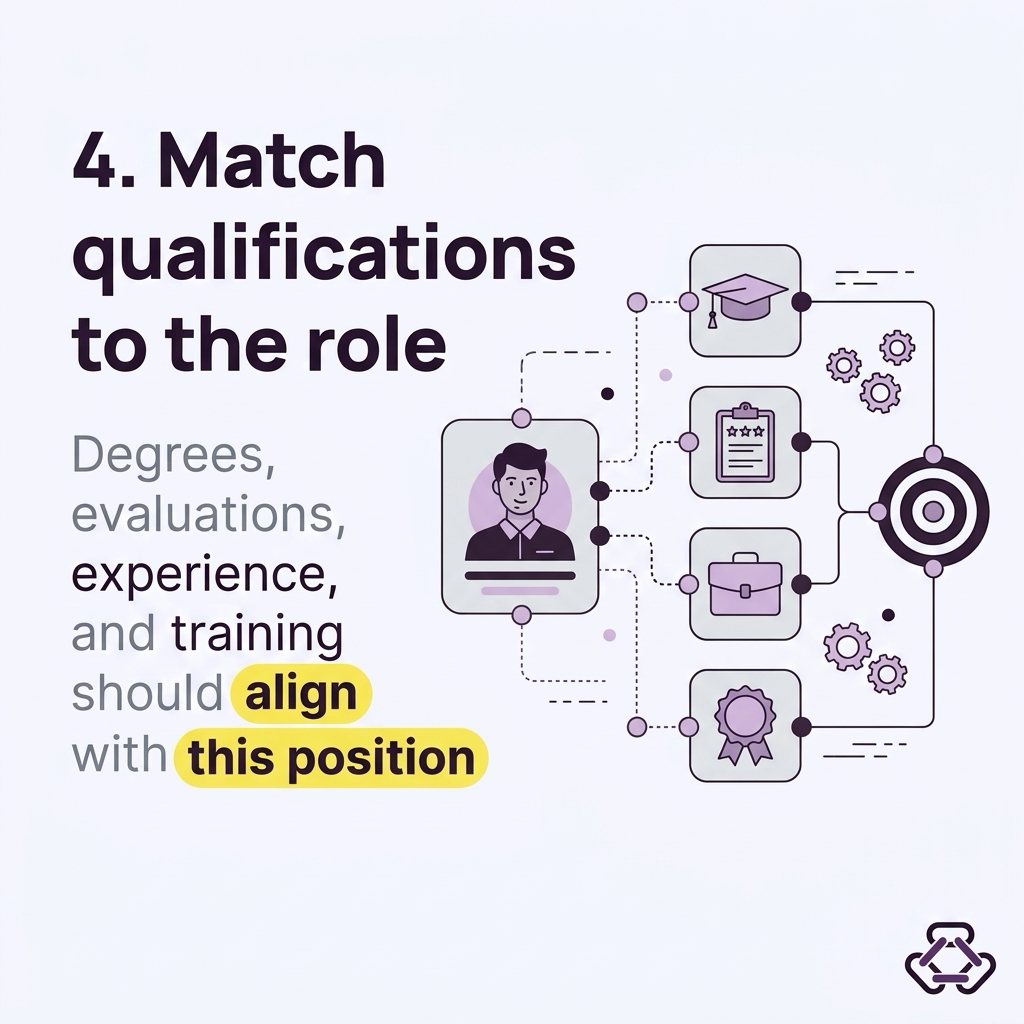
- Step 4: Match The Worker’s Qualifications To The Position
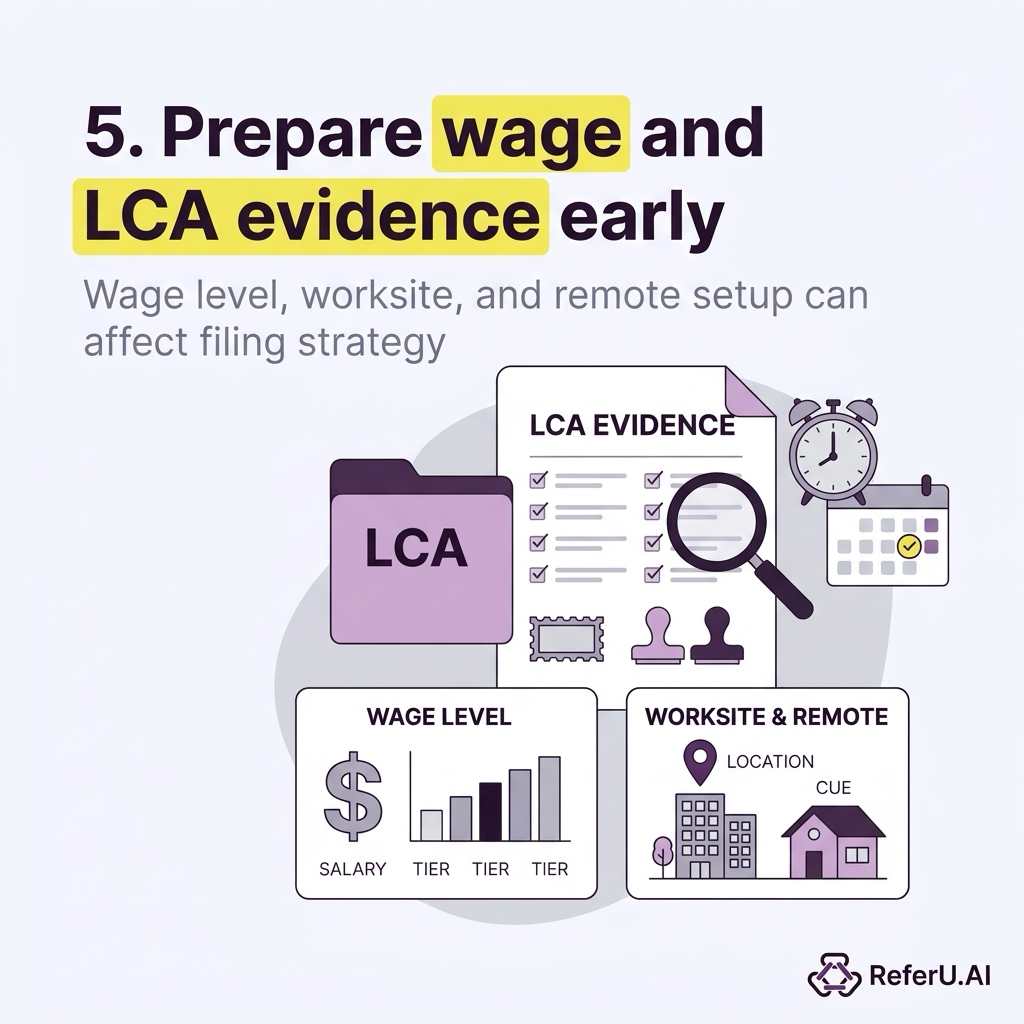
- Step 5: Prepare The Wage And Labor Condition Evidence Early
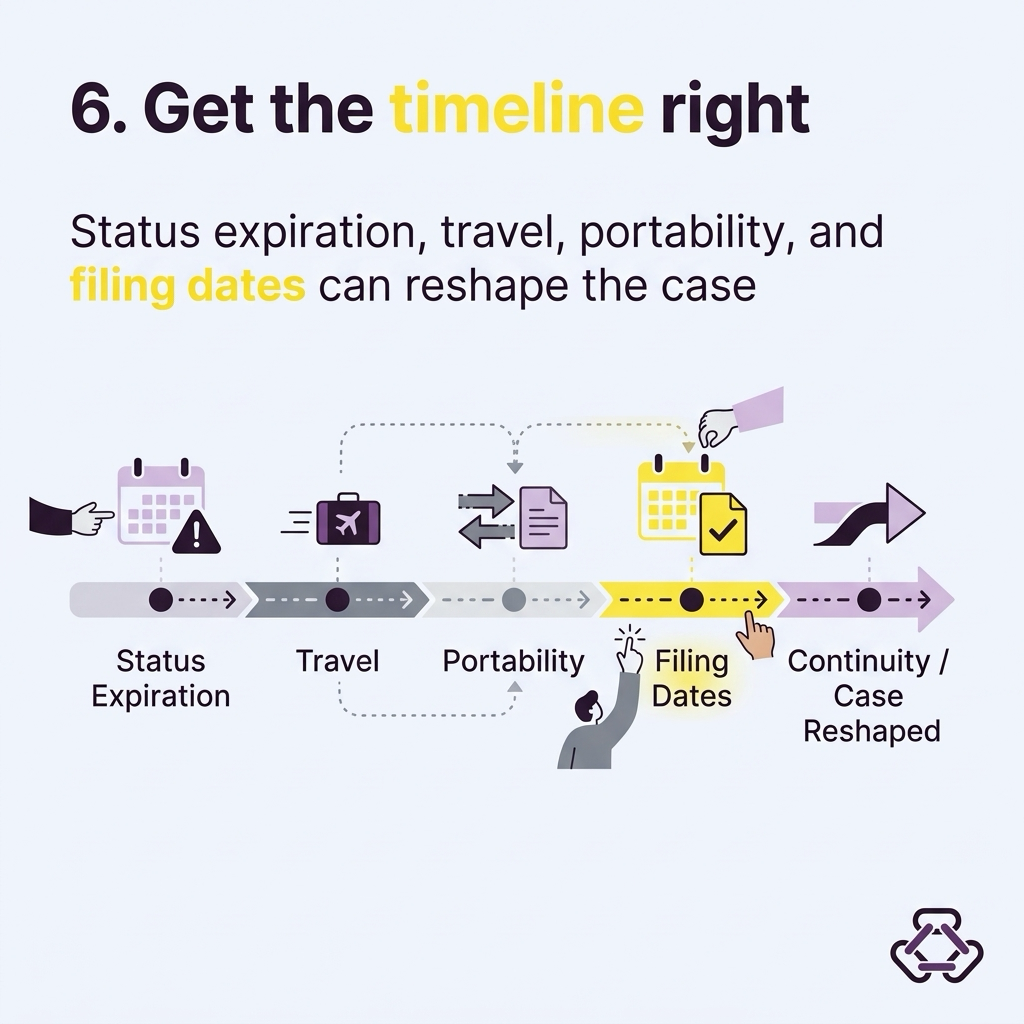
- Step 6: Get The Timeline Right
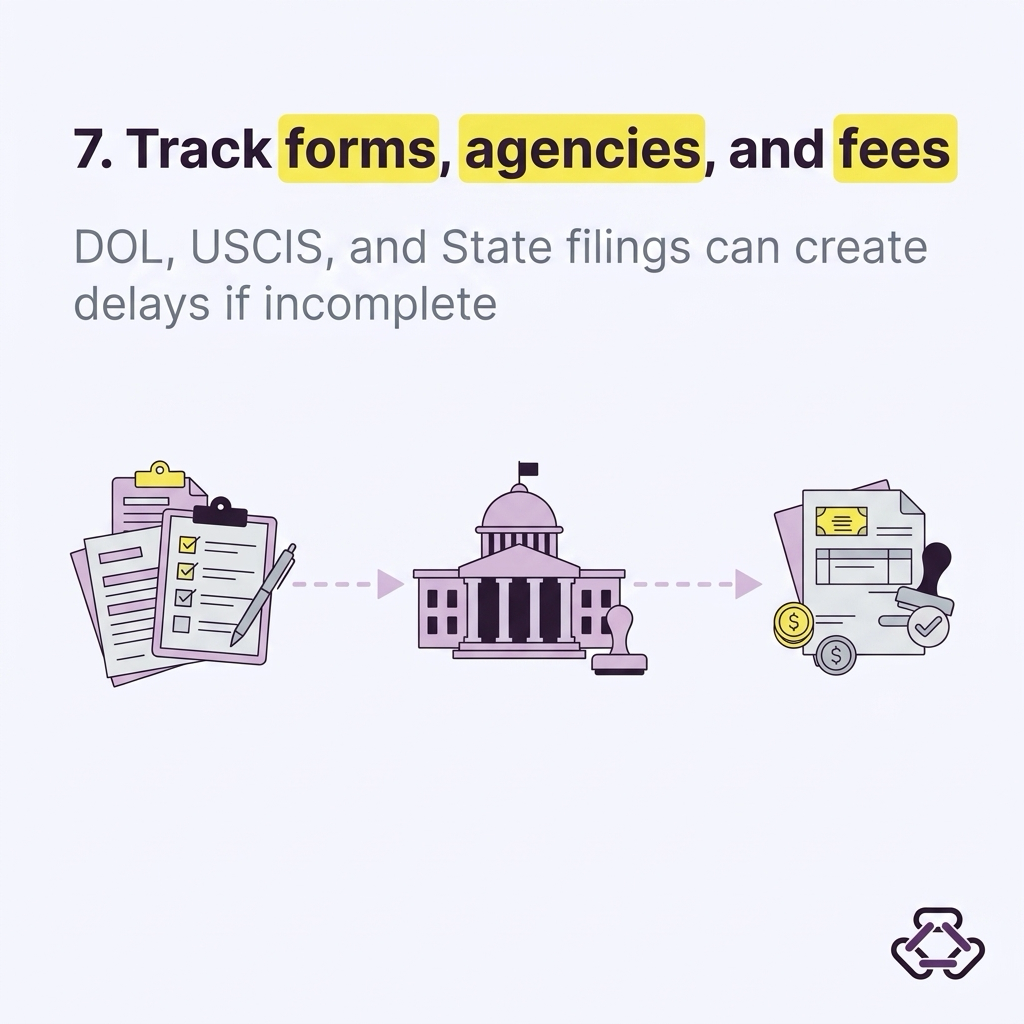
- Step 7: Understand Which Government Forms And Agencies Are Involved
- Step 8: Prepare For The Green Card Track Even If The First Filing Is “Just” H-1B
- Step 9: If Adjustment Of Status May Be Coming, Collect The Right Civil And Medical Documents
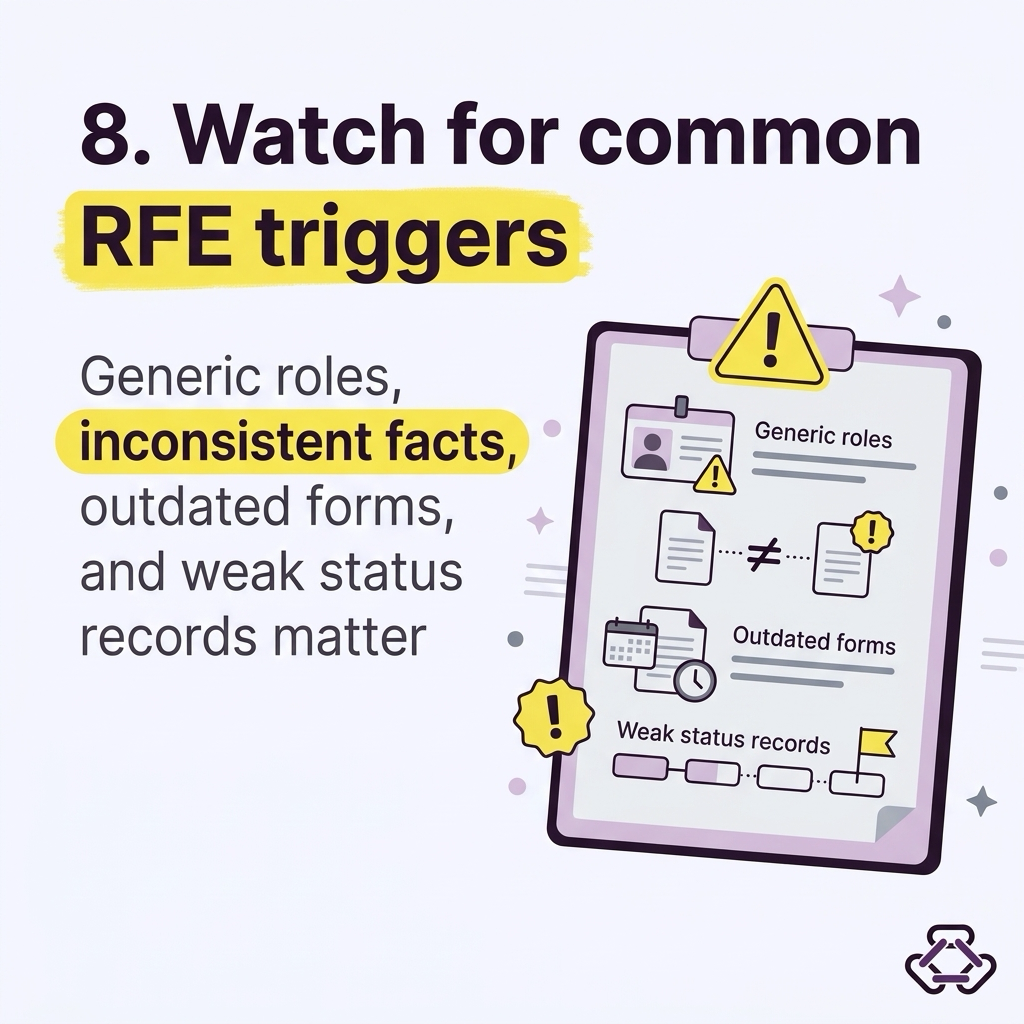
- Step 10: Watch For Red Flags That Often Trigger Delays Or RFEs
- Step 11: Organize Your File Like A Case, Not Like A Pile Of Documents
- Step 12: Work With Counsel Who Understands The Specific Type Of Case
- A Short Summary

Type
Great Grandchild
Status
Approved
Title (YouTube)
Images Failed (Social)
Images Failed (Social)
Do not index
Publish Date (TikTok)
Apr 26, 2027 14:15
Videos Post IDs (Social)
Hashtags (Social)
#LegalAdvice #LegalHelp #Immigration #WorkVisas
Caption
Caption X
Cover

OG Image

Alt Image Text
Flat vector illustration of H-1B and employer-sponsored immigration case preparation with an employer and worker reviewing documents, deadlines, and compliance steps.
Images

Videos
Publish Date (Social)
Feb 19, 2027 14:00
Scheduled (Social)
Scheduled (Social)
Images Posted (Social)
Images Posted (Social)
Videos Posted (Social)
Videos Posted (Social)
Featured
Created time
Apr 7, 2026 12:01 AM
Sub-item
Authors
CTA Practice Area (Social)
Immigration
TikTok Failed (Social)
TikTok Failed (Social)
Videos Post Links (Social)
TikTok Post Links (Social)
Images Post IDs (Social)
YT Post ID
Video Pending Manual (Social)
TikTok Posted (Social)
TikTok Posted (Social)
TikTok Post IDs (Social)
Video Cover (Social)
Images Post Links (Social)
First Comment (Social)
Videos Failed (Social)
Videos Failed (Social)
YT Embedded
Images Delete (Social)
Videos Delete (Social)
Carousel Video URL (Social)
How to Prepare for an H-1B or Employer-Sponsored Immigration Case
Employer-sponsored immigration cases can feel deceptively simple at first. A company wants to hire or keep a foreign professional, paperwork gets filed, and the process moves forward. In reality, H-1B and other employment-based immigration matters often involve multiple agencies, strict filing rules, timing issues, wage requirements, and evidence questions that can affect both work authorization and long-term immigration strategy.
That is why preparation matters.
A well-prepared case often starts long before a petition is filed. It usually involves aligning the job description, the worker’s qualifications, the company’s records, the prevailing wage framework, and the timing of filings across the U.S. Department of Labor, U.S. Citizenship and Immigration Services, and sometimes the Department of State. If you are still getting oriented, this broader overview of how employer-driven work visa cases usually fit together can help frame the process.
In this post you’ll learn how to prepare for an H-1B or employer-sponsored immigration case, what documents often matter most, where delays and Requests for Evidence tend to arise, and how an attorney may help identify risks before they become expensive problems.
Scroll to the bottom for every post in this series.
Why Preparation Matters In Employer-Sponsored Cases
H-1B cases are document-heavy, but they are also fact-heavy. USCIS looks at whether the position qualifies as a specialty occupation, whether the worker’s degree is directly related, whether the employer has filed the required Labor Condition Application, and whether the petition is complete and consistent with the governing forms and regulations. USCIS states that an H-1B petition generally requires a certified Labor Condition Application on Form ETA-9035/9035E before Form I-129 is filed, and that FY 2026 cap-subject filings follow the regular 65,000 cap plus the 20,000 advanced degree exemption. USCIS USCIS
Preparation also matters because the government has increased scrutiny around duplicate registrations and filing integrity. USCIS uses a beneficiary-centric H-1B cap selection process and has publicly described that change as part of broader anti-fraud and integrity measures. For FY 2026, the initial registration period ran from March 7, 2025 through March 24, 2025, and USCIS announced on March 31, 2025 that enough registrations had been received to meet the cap, with cap-subject petitions eligible to be filed beginning April 1, 2025 for selected beneficiaries. USCIS USCIS
In practical terms, that often means a case is easier to defend when the employer’s business need is real, the role is clearly defined, the wage records line up, and every filing tells the same story.
Step 1: Identify What Kind Of Employer-Sponsored Case You Actually Have
The phrase “employer-sponsored immigration” covers more than one process.
Some cases are temporary work visa matters, such as H-1B petitions. Others are employment-based green card matters involving PERM labor certification, Form I-140, and eventually Form I-485 adjustment of status or consular processing. USCIS explains that sponsoring a permanent foreign worker may require labor certification from the Department of Labor to confirm that there are not sufficient available, qualified, and willing U.S. workers for the role and that the employment will not adversely affect similarly situated U.S. workers’ wages and working conditions. USCIS
That distinction affects preparation in a major way:
- H-1B cases often center on specialty occupation evidence, degree relevance, cap timing, wage compliance, and employer-employee relationship evidence.
- Employment-based green card cases often involve PERM strategy, long-range timing, immigrant visa category selection, I-140 support, and visa bulletin analysis.
- Portability or change-of-employer cases can involve timing questions about maintaining status and whether work can begin upon filing.
- Cap-exempt H-1B cases may follow a different filing path than cap-subject filings.
An attorney may help separate these paths early, because the supporting evidence and filing sequence are not the same.
Step 2: Confirm Whether The Case Is Cap-Subject Or Cap-Exempt
Many professionals hear “H-1B” and think only about the annual lottery. That is not always the right framework.
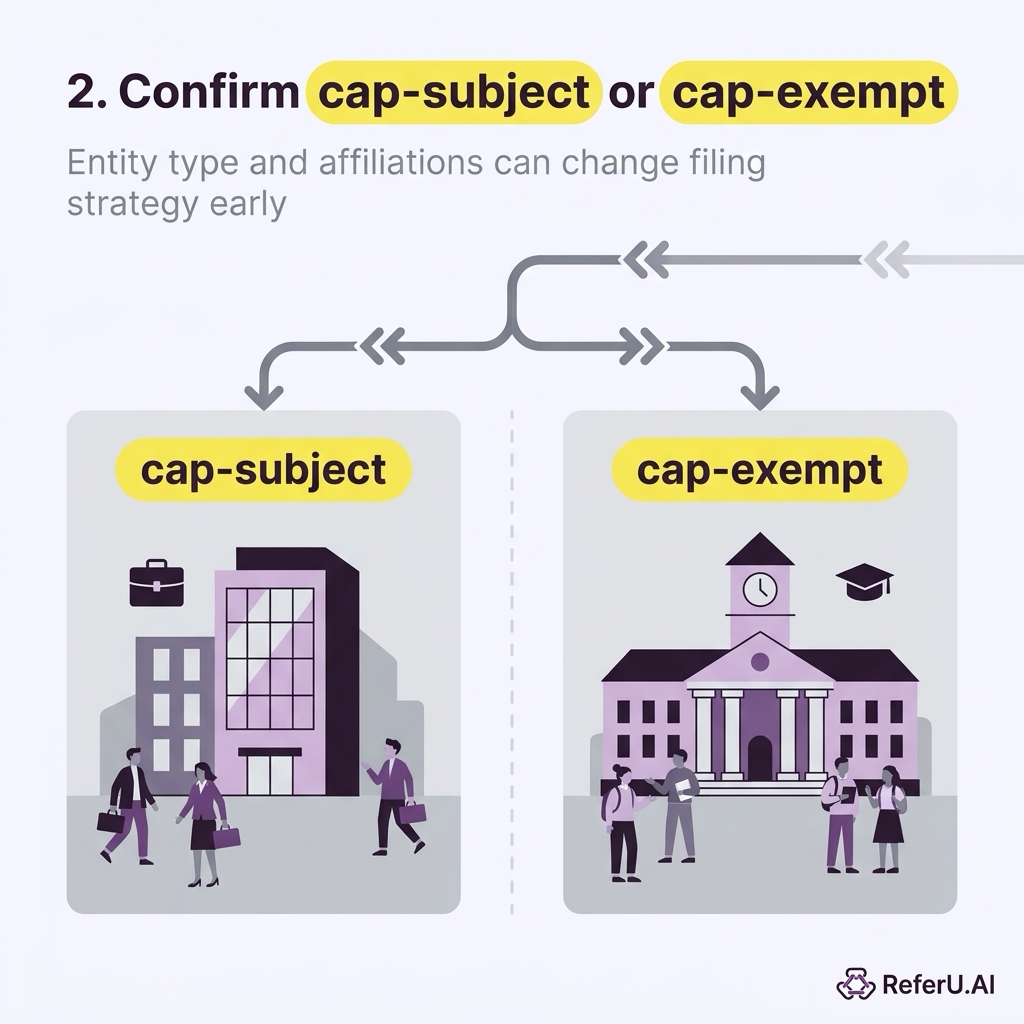
Some H-1B petitions are cap-subject, meaning they go through the registration and selection process. Others are cap-exempt, often involving institutions of higher education, affiliated nonprofit entities, nonprofit research organizations, or governmental research organizations. USCIS materials for Form I-129 and H-1B cap guidance discuss these exemption categories and the documentation used to establish them. USCIS USCIS
This is one of the earliest points where preparation can reshape strategy. A person working with a university, teaching hospital, research entity, or affiliated nonprofit may have options that look very different from a private-sector cap-subject filing.
It is also where business structure and organizational documents can become surprisingly important. The question is not just “Who is hiring?” It is often “What kind of entity is filing, and how is that entity related to any university or research institution involved?”
Step 3: Build A Clear And Defensible Job Description
A vague job description creates problems in both temporary and permanent employer-sponsored cases.
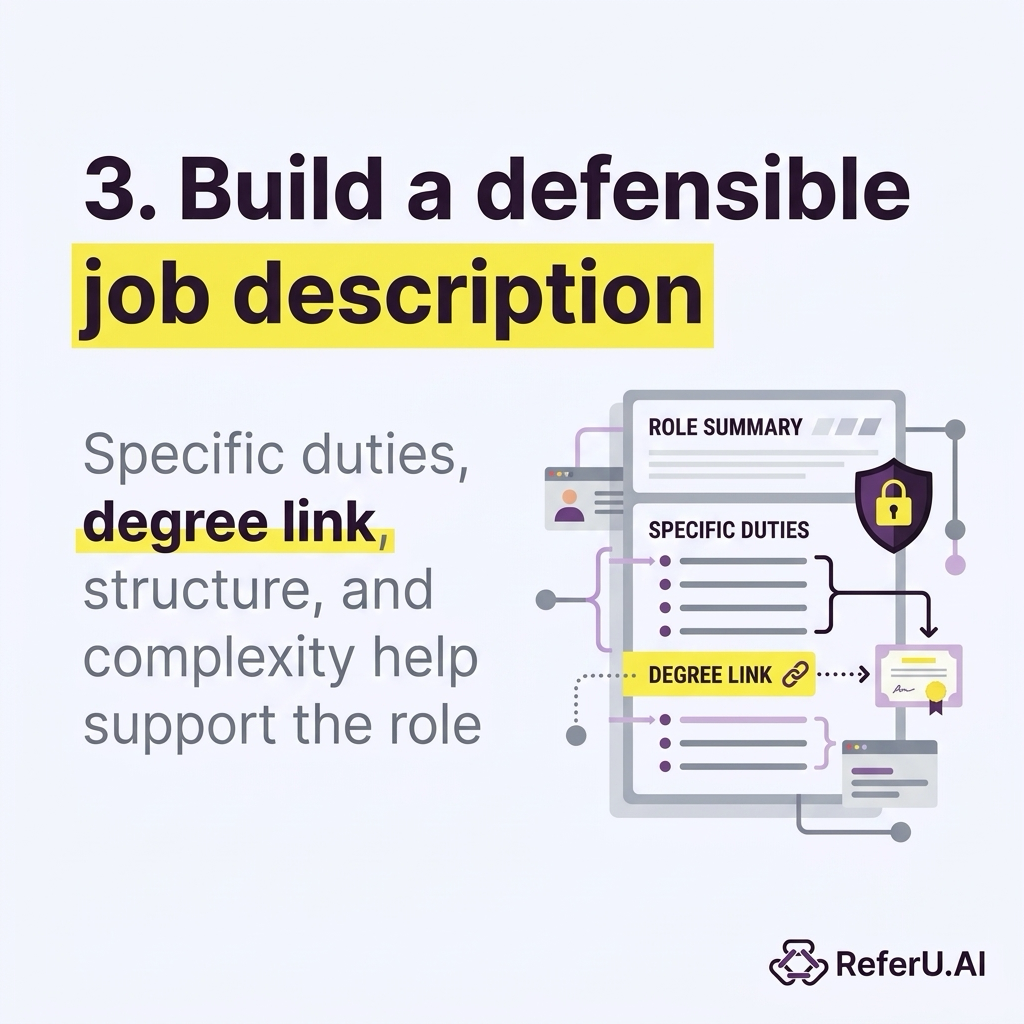
For H-1B filings, USCIS focuses heavily on whether the offered role qualifies as a specialty occupation. The agency describes this as work requiring the theoretical and practical application of highly specialized knowledge and at least a bachelor’s degree or higher in a directly related specific specialty as the normal minimum for entry into the occupation. USCIS
That often makes the job description one of the most important pieces of evidence in the file.
A stronger case file often includes:
- a detailed breakdown of daily duties
- percentage allocations for major tasks
- the tools, systems, or technical methods used
- the degree fields connected to the role
- the reporting structure
- the complexity of the work
- an explanation of why the role is not merely general or administrative
In many cases, the employer’s internal documents matter as much as the formal petition. Offer letters, organizational charts, prior job postings, performance frameworks, statements from managers, and contracts with clients can all help show what the role actually involves.
Step 4: Match The Worker’s Qualifications To The Position
Even a well-written job description may not carry the case by itself. USCIS often looks for a clean connection between the offered role and the beneficiary’s education and experience.
That preparation may include gathering:
- degree certificates and transcripts
- credential evaluations for foreign degrees
- licenses or certifications
- prior employment verification letters
- project summaries
- updated resume or CV
- evidence of specialized training
The goal is not simply to show that the worker is impressive. The goal is to show that the worker is qualified for this specific role, in this specific specialty, with this specific employer.
If the person’s degree title does not obviously line up with the role, an attorney may help frame equivalency, specialized coursework, or progressive experience. That issue comes up often in technology, analytics, engineering, healthcare administration, finance, and interdisciplinary roles.
Step 5: Prepare The Wage And Labor Condition Evidence Early
The Labor Condition Application, or LCA, is a core part of most H-1B filings. The Department of Labor states that employers file Form ETA-9035/9035E through the FLAG system and attest to compliance with H-1B wage and working condition rules. The DOL also states that the required wage rate is the higher of the actual wage or the prevailing wage, and that LCAs are reviewed within seven working days for completeness and obvious errors or inaccuracies. Department of Labor FLAG
That timeline sounds simple, but it often interacts with several practical issues:
- the selected wage level
- the worksite location
- remote or hybrid work arrangements
- job title accuracy
- internal wage comparisons
- public access file compliance
- changes in work location after filing
This part of the process is one reason many employers involve counsel early. A wage issue may not look dramatic at first, but it can affect filing strategy, budgeting, amendments, and long-term green card planning.
Step 6: Get The Timeline Right
In immigration filings, timing problems often become evidence problems later.
For FY 2026, USCIS confirmed that cap-subject H-1B petitions for selected beneficiaries could be filed beginning April 1, 2025, and cap-season guidance states that these petitions must include a requested start date no earlier than October 1 of the relevant fiscal year. USCIS USCIS
Beyond cap cases, timing also affects:
- when a person’s current status expires
- whether a bridge filing is involved
- whether premium processing makes sense
- whether dependent family filings should be bundled
- whether international travel is planned
- whether a change of employer is being considered
USCIS states that eligible H-1B workers may begin working for a new employer as soon as that employer properly files a nonfrivolous H-1B petition requesting an extension or amendment, without waiting for approval, if portability requirements are met. USCIS USCIS
That area can get technical fast, especially when someone is changing employers, navigating a layoff, or trying to avoid gaps in status. Readers dealing with job moves may also find it helpful to review common issues around switching employers without creating status problems.
Step 7: Understand Which Government Forms And Agencies Are Involved
One reason these cases feel overwhelming is that there is rarely just one filing.
Depending on the stage of the matter, the case may involve:
- Department of Labor for the LCA or PERM labor certification
- USCIS for Form I-129, Form I-140, Form I-485, Form I-907, and related applications
- Department of State for visa issuance abroad and employment-based immigrant visa availability
USCIS announced that a revised Form I-129 became effective on January 17, 2025 in connection with the H-1B final rule and other updates. USCIS also provides Form I-907 for premium processing requests in eligible case types. USCIS USCIS
For permanent residence cases, employers and workers often move through PERM, then Form I-140, and later Form I-485 if an immigrant visa number is available. USCIS has also warned that it has rejected a significant number of I-140 filings for incorrect fees and missing information after fee-rule changes, including issues involving the asylum program fee and incomplete responses. USCIS
That is one reason checklists matter. Not because immigration is only administrative, but because small filing defects can create large delays.
Step 8: Prepare For The Green Card Track Even If The First Filing Is “Just” H-1B
A lot of employer-sponsored cases do not stay temporary for long.
Some employers start with H-1B and later sponsor a green card through an employment-based category. USCIS explains that employment-based permanent residence may involve Form I-140, and many applicants later pursue adjustment of status if eligible. USCIS USCIS
That makes early planning useful in several ways:
- preserving consistent job descriptions across stages
- documenting promotions and title changes carefully
- anticipating PERM timing
- analyzing priority date backlogs
- planning around travel and maintenance of status
- preparing dependent family strategy
The Department of State’s April 2026 Visa Bulletin shows that employment-based categories remain current for some chargeability areas and backlogged for others, including significant cut-off dates for India and China in several categories. Department of State
In other words, the temporary case and the permanent case are often connected, even when they are filed months or years apart.
Step 9: If Adjustment Of Status May Be Coming, Collect The Right Civil And Medical Documents
When an employment-based green card case reaches the adjustment stage, personal documentation starts to matter as much as employer documentation.
USCIS currently requires many adjustment applicants to submit Form I-693, Report of Immigration Medical Examination and Vaccination Record, together with Form I-485. USCIS announced this filing approach in connection with the revised I-485 process, and its I-693 page reflects that the medical exam is submitted with the adjustment filing. USCIS USCIS
That often means gathering in advance:
- birth certificates
- marriage certificates, if applicable
- passport biographic pages
- prior immigration approval notices
- I-94 records
- medical exam documentation
- vaccination records
- court records, if there has ever been an arrest or charge
This stage is where “I’ll gather that later” can become a bottleneck.
Step 10: Watch For Red Flags That Often Trigger Delays Or RFEs
Not every difficult case is avoidable, but some patterns appear over and over.
Examples include:
- job descriptions that are too generic
- degrees that do not obviously relate to the role
- wage level choices that conflict with the claimed complexity of the job
- inconsistent worksite information
- missing organizational evidence
- changed job duties after filing
- international travel at the wrong stage
- incorrect fees or outdated forms
- duplicate or questionable cap registration history
- poor documentation of prior status maintenance
USCIS has also emphasized that false attestations or related-entity filings designed to unfairly increase a beneficiary’s selection chances can lead to denial or revocation. USCIS USCIS
For workers, another issue can be confusion about rights during hiring and onboarding. The Department of Justice’s Immigrant and Employee Rights Section states that federal law generally prohibits citizenship status discrimination, national origin discrimination, unfair documentary practices in the Form I-9 and E-Verify process, and retaliation. The EEOC also provides guidance on national origin discrimination affecting immigrant workers. DOJ EEOC
Step 11: Organize Your File Like A Case, Not Like A Pile Of Documents
One of the most practical ways to prepare is to organize everything in a way that tells a coherent story.
That usually means separating records into categories such as:
- immigration history
- identity documents
- education
- employment history
- employer records
- wages and compensation
- job description and org chart
- family documents
- prior filings and receipt notices
- correspondence with HR or counsel
This may sound basic, but it often reduces delays, improves accuracy, and makes attorney review far more efficient. It also helps when a company changes outside counsel, a worker changes employers, or a green card strategy begins years after the first temporary filing.
Step 12: Work With Counsel Who Understands The Specific Type Of Case
Employer-sponsored immigration is not one-size-fits-all. A startup software engineer, university researcher, physician employee, healthcare administrator, financial analyst, and multinational transferee may all appear to have “work visa” issues while actually presenting very different legal and evidentiary questions.
Some attorneys focus heavily on business immigration compliance. Others are more experienced in PERM-heavy matters, cap-exempt university cases, high-volume H-1B practice, adjustment portability, or complex Requests for Evidence. That kind of fit can matter.
It can also help to ask practical questions early, especially if your case involves a job change, layoffs, remote work, amended filings, or green card backlogs. If you are trying to spot common problems in advance, this overview of work visa errors that often put status at risk and this breakdown of the questions foreign professionals often raise about sponsorship can provide additional context.
A Short Summary
Preparing for an H-1B or employer-sponsored immigration case often involves much more than filling out forms. In many cases, the real work is identifying the correct immigration path, confirming cap issues, drafting a defensible job description, aligning the worker’s credentials, preparing wage evidence, tracking dates carefully, and organizing a long-term strategy that accounts for both temporary status and permanent residence.
For many professionals and employers, the hardest part is not finding information online. It is finding an attorney with documented experience in highly similar matters, based on objective criteria and real case history.
Visit ReferU.AI to get matched with an attorney who has demonstrable experience in cases like yours — for free.
