Table of Contents
- Wrongful Death Explained: Liability, Damages, Estate Issues, and What Families Should Expect
- Why Wrongful Death Cases Exist
- What A Family Usually Has To Prove
- Did Someone Owe A Duty Of Care?
- Was That Duty Breached?
- Did The Breach Cause The Death?
- What Losses Resulted?
- Who Can Bring A Wrongful Death Claim?
- Wrongful Death Vs. Survival Action
- Wrongful Death Often Focuses On Survivors’ Losses
- Survival Actions Often Focus On The Decedent’s Own Claim
- What Damages May Be Available?
- Economic Damages
- Non-Economic Damages
- Punitive Damages
- Estate Issues Families Often Do Not Expect
- The Estate May Need A Personal Representative
- Wrongful Death Proceeds And Estate Assets Are Not Always The Same Thing
- Liens And Reimbursement Claims May Appear
- Tax Questions Come Up More Often Than Families Expect
- Liability Can Extend Beyond The Most Obvious Person
- In Vehicle Cases
- In Medical Cases
- In Premises And Security Cases
- In Product Cases
- What Families Commonly Encounter Early In The Case
- Investigation Starts Quickly
- Insurance Contacts May Begin Before The Family Understands The Claim
- Families May Disagree About Goals
- The Criminal Case And Civil Case May Move On Different Timelines
- Common Mistakes That Complicate Wrongful Death Cases
- How Long Do Families Have To File?
- What Settlement And Litigation Often Look Like
- What Families Should Expect Emotionally And Practically
- Final Thoughts

Type
Grandchild
Status
Approved
Title (YouTube)
Images Failed (Social)
Images Failed (Social)
Do not index
Publish Date (TikTok)
Apr 9, 2027 07:15
Videos Post IDs (Social)
Hashtags (Social)
#LegalAdvice #LegalHelp #PersonalInjury #WrongfulDeath
Caption
Caption X
Cover

OG Image

Alt Image Text
Flat vector illustration of wrongful death and estate issues, showing a family, legal liability symbols, damages, and probate-related elements in a minimal modern style.
Images

Videos

Publish Date (Social)
Feb 9, 2027 09:00
Scheduled (Social)
Scheduled (Social)
Images Posted (Social)
Images Posted (Social)
Videos Posted (Social)
Videos Posted (Social)
Featured
Created time
Apr 7, 2026 01:39 PM
Authors
CTA Practice Area (Social)
Personal Injury
TikTok Failed (Social)
TikTok Failed (Social)
Videos Post Links (Social)
TikTok Post Links (Social)
Images Post IDs (Social)
YT Post ID
Video Pending Manual (Social)
TikTok Posted (Social)
TikTok Posted (Social)
TikTok Post IDs (Social)
Video Cover (Social)

Images Post Links (Social)
First Comment (Social)
Videos Failed (Social)
Videos Failed (Social)
YT Embedded
YT Embedded
Images Delete (Social)
Videos Delete (Social)
Carousel Video URL (Social)
Wrongful Death Explained: Liability, Damages, Estate Issues, and What Families Should Expect
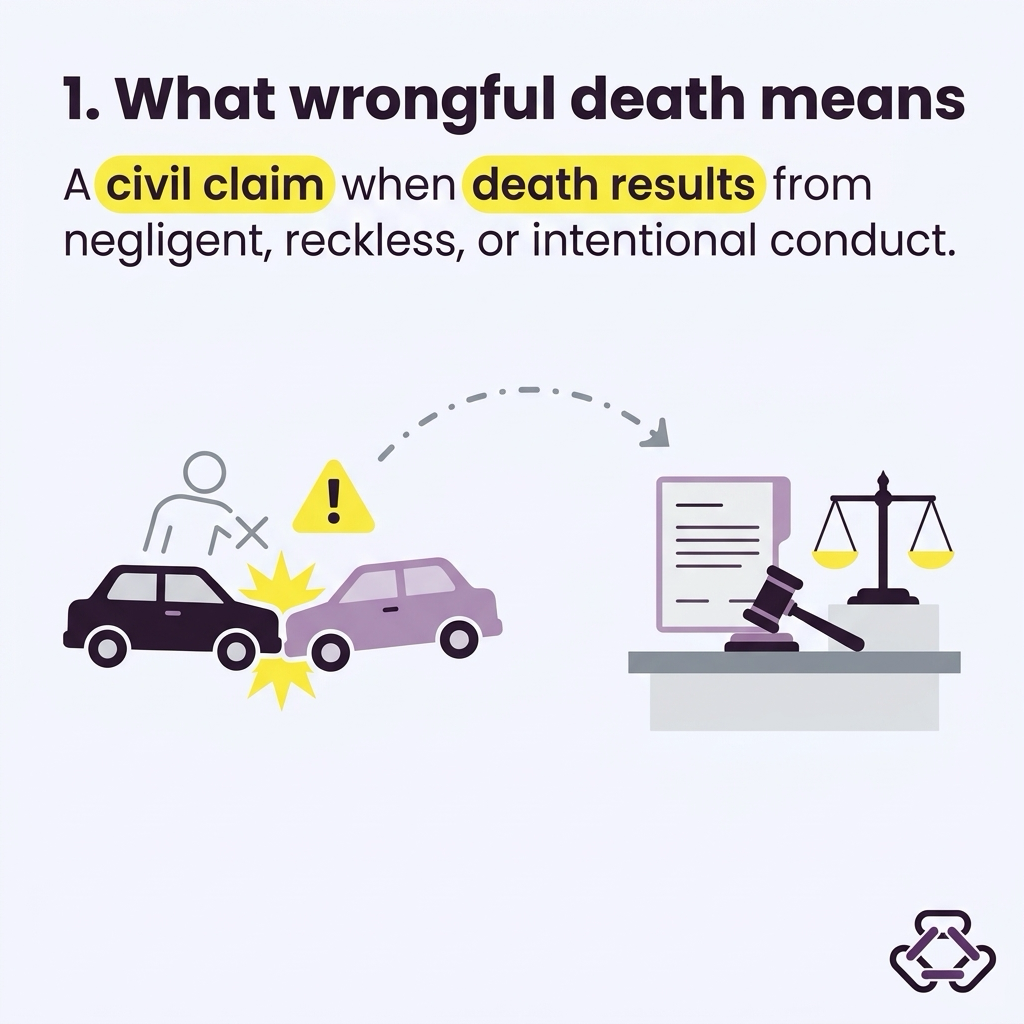
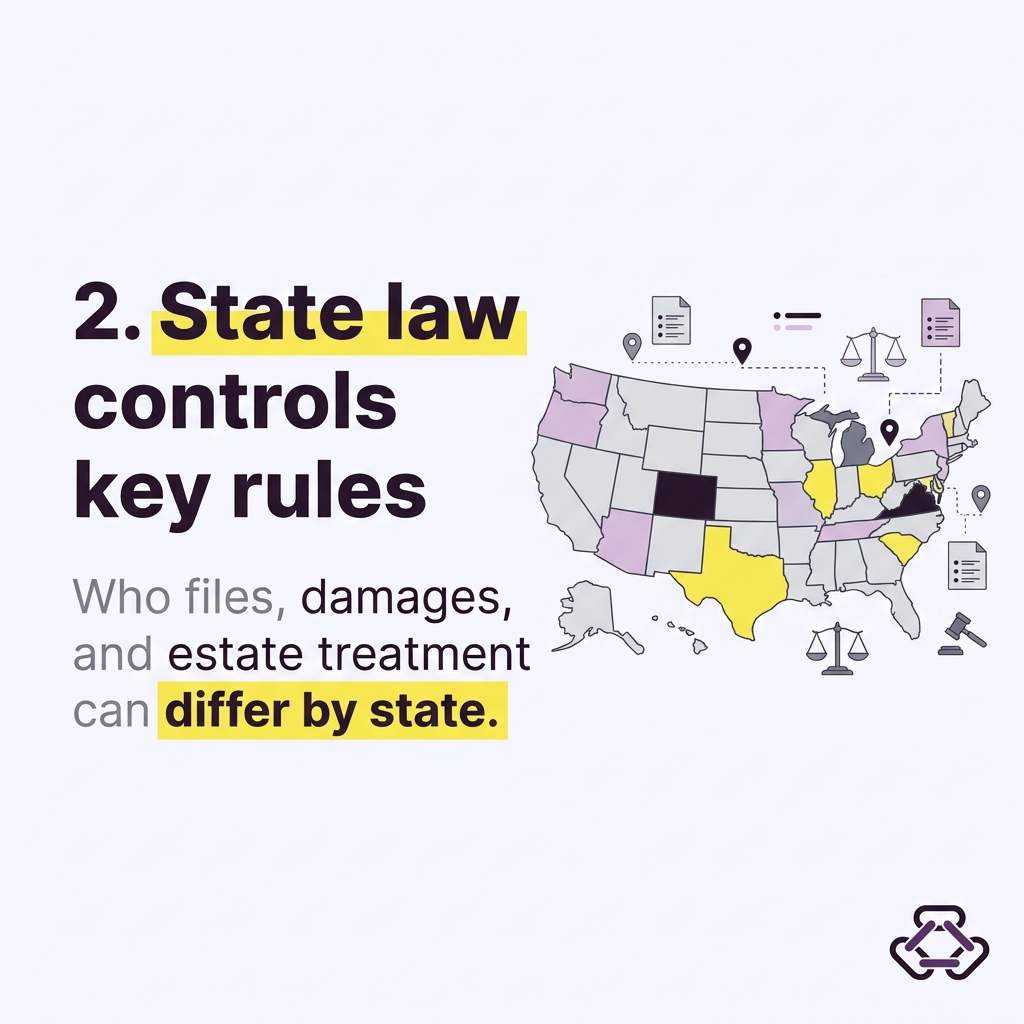
A wrongful death claim is a civil case arising when a person dies because of someone else’s negligent, reckless, or intentional conduct. In general terms, these claims are created by state law, which is why the rules about who can file, what damages are available, and how the claim interacts with the estate can vary in important ways from one state to another. Cornell Legal Information Institute
For families, the legal process can feel disorienting because several issues tend to collide at once: grief, insurance communications, funeral expenses, probate questions, and uncertainty about whether a lawsuit belongs to the family, the estate, or both. In this post you’ll learn how wrongful death liability works, what damages may be available, how estate and probate issues often fit in, and what families commonly encounter after a fatal accident. If you want a broader overview of serious injury and fatality cases, it can also help to start with this guide to high-stakes injury claims and compensation issues.
Scroll to the bottom for every post in this series.
Why Wrongful Death Cases Exist
At common law, personal injury claims often ended when the injured person died. Wrongful death statutes were created to give surviving family members or other legally recognized beneficiaries a way to pursue civil compensation tied to the death. That compensation often focuses on losses suffered by survivors, such as lost financial support, lost services, and loss of companionship, depending on the state. Cornell Legal Information Institute
These cases commonly arise after:
- Car, truck, motorcycle, pedestrian, and bicycle crashes
- Medical malpractice
- Workplace and construction incidents
- Defective products
- Nursing home neglect or abuse
- Violent acts on unsafe property
- Intentional assaults or shootings
Fatal injuries remain a major public-health issue in the United States. The CDC reports that unintentional injury remained one of the leading causes of death nationally, and NHTSA reported 39,254 traffic deaths in 2024 based on its 2024 annual traffic fatality data released on April 1, 2026. CDC provisional mortality reporting and NHTSA’s 2024 annual traffic fatality release
If you’re looking for a more basic overview before diving into the details, this article on fatal accident claims in plain English may be a helpful companion.
What A Family Usually Has To Prove
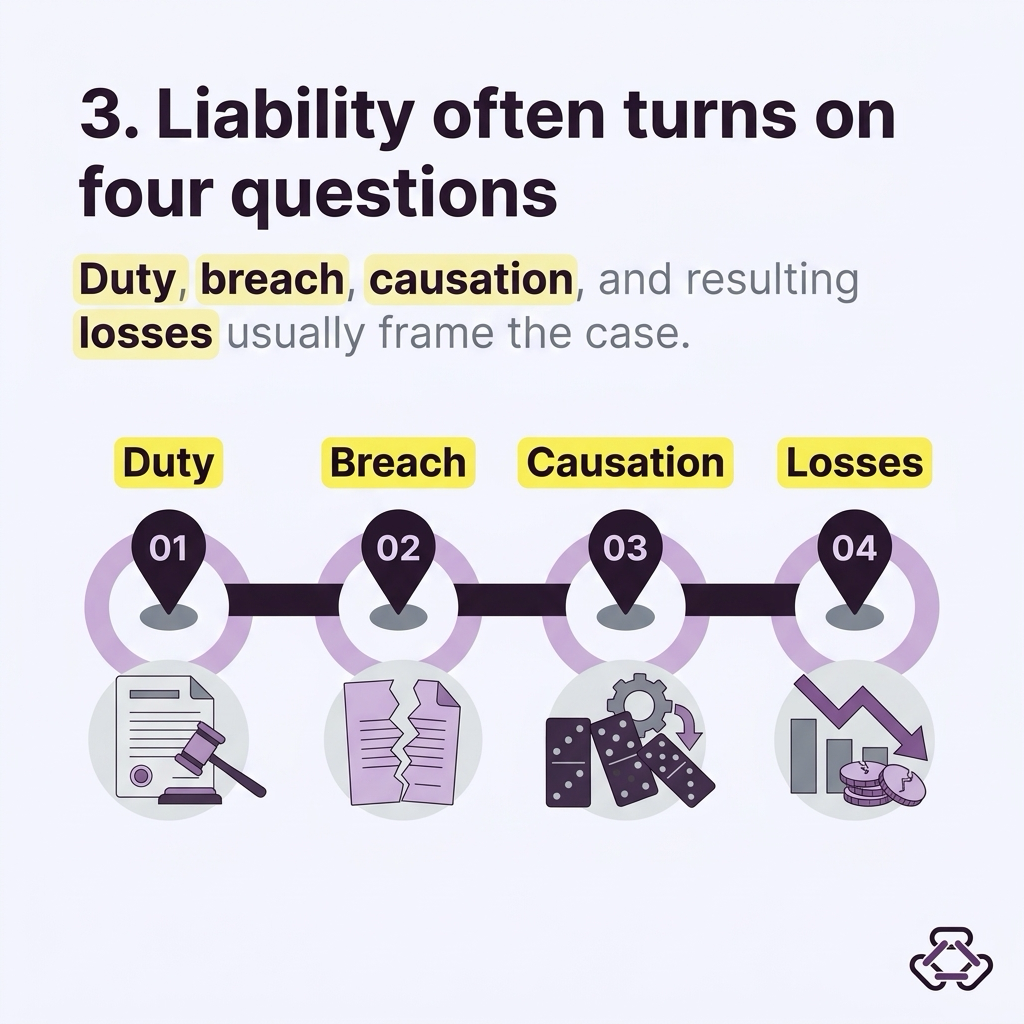
Although the exact elements vary by state and by underlying theory of liability, wrongful death claims often resemble the personal injury claim the decedent could have brought if they had lived. In practical terms, families and their attorneys often work through four basic questions.
Did Someone Owe A Duty Of Care?
A driver owes other road users a duty to operate safely. A doctor owes a patient professional care consistent with the applicable medical standard. A property owner may owe visitors duties related to reasonably safe premises. A manufacturer may owe duties involving product design, manufacturing, and warnings.
Was That Duty Breached?
This is the fault question. A breach could involve speeding, distracted driving, failing to diagnose a dangerous condition, ignoring safety rules, leaving known hazards unaddressed, or selling a product with a dangerous defect.
Did The Breach Cause The Death?
Causation is often the most contested issue. In some cases, liability is clear but the defense argues the death was caused by a preexisting illness, an unrelated later event, or a complex combination of factors. In medical negligence and toxic exposure cases especially, causation may turn on experts, records, and timeline reconstruction.
What Losses Resulted?
Damages in wrongful death cases often include both economic losses and non-economic losses, though the labels and scope differ by state. Some jurisdictions also allow punitive damages in certain circumstances; others restrict them; and some apply caps in particular categories, especially in medical malpractice cases. State statutes control these issues, not a single national rule. Cornell Legal Information Institute
Who Can Bring A Wrongful Death Claim?
This is one of the first major points of confusion. In some states, the claim is brought directly by specified family members. In others, it is brought by the personal representative of the estate for the benefit of survivors and, sometimes, the estate.
For example, Florida’s wrongful death statute states that the action is brought by the decedent’s personal representative, who recovers damages for the benefit of the decedent’s survivors and estate, and the complaint identifies the potential beneficiaries. Florida Statutes §§ 768.20–768.21
Other states define eligible claimants differently. California’s statute, for instance, identifies a group that can include a surviving spouse, domestic partner, children, and in some circumstances others who would inherit by intestate succession or were financially dependent on the decedent. California Code of Civil Procedure § 377.60 overview
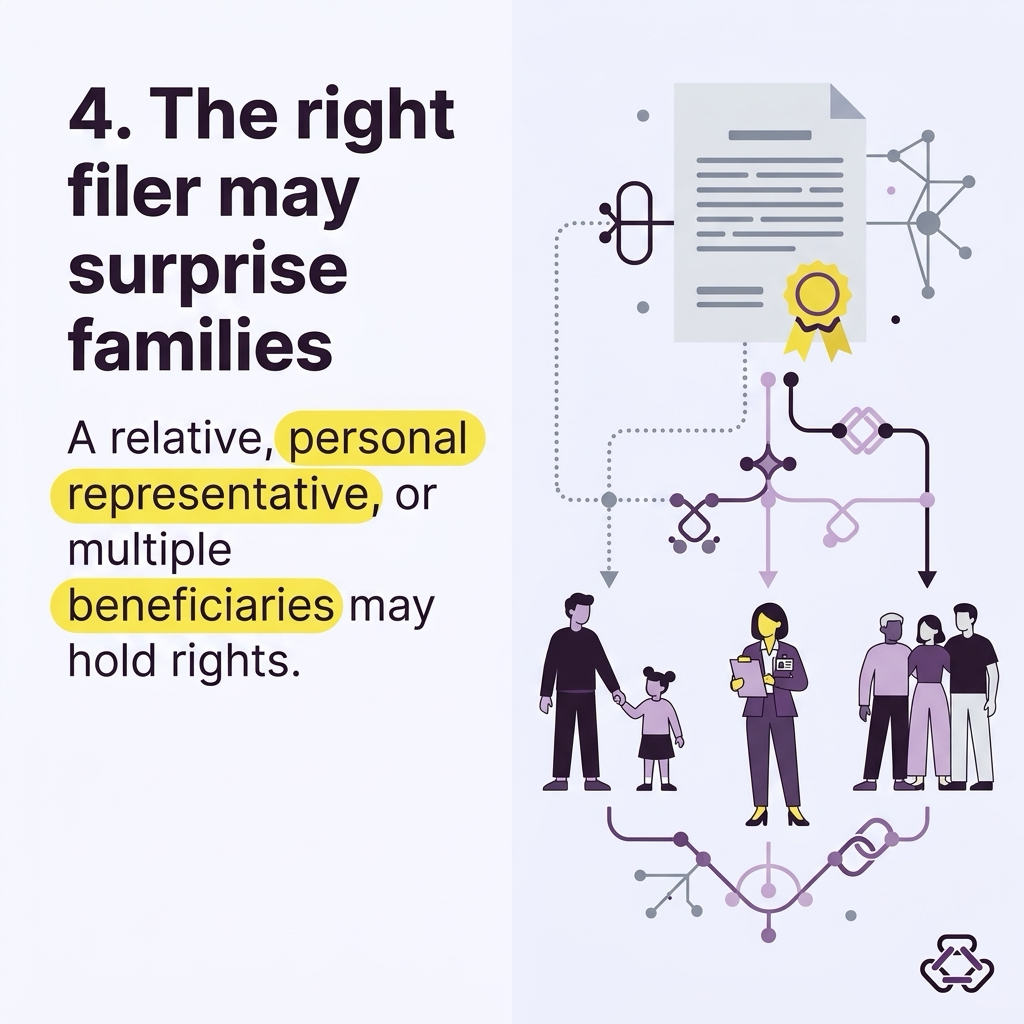
Here’s what families often discover early in the process:
- The right person to file may not be obvious
- Multiple relatives may have rights in the same case
- One relative may not be able to settle around the others
- Probate status can affect who has authority to act
- Deadline rules may run even while the family is still identifying who represents the estate
That is one reason many families spend time learning about how to get a fatal accident case organized from the start.
Wrongful Death Vs. Survival Action
This distinction matters a lot.
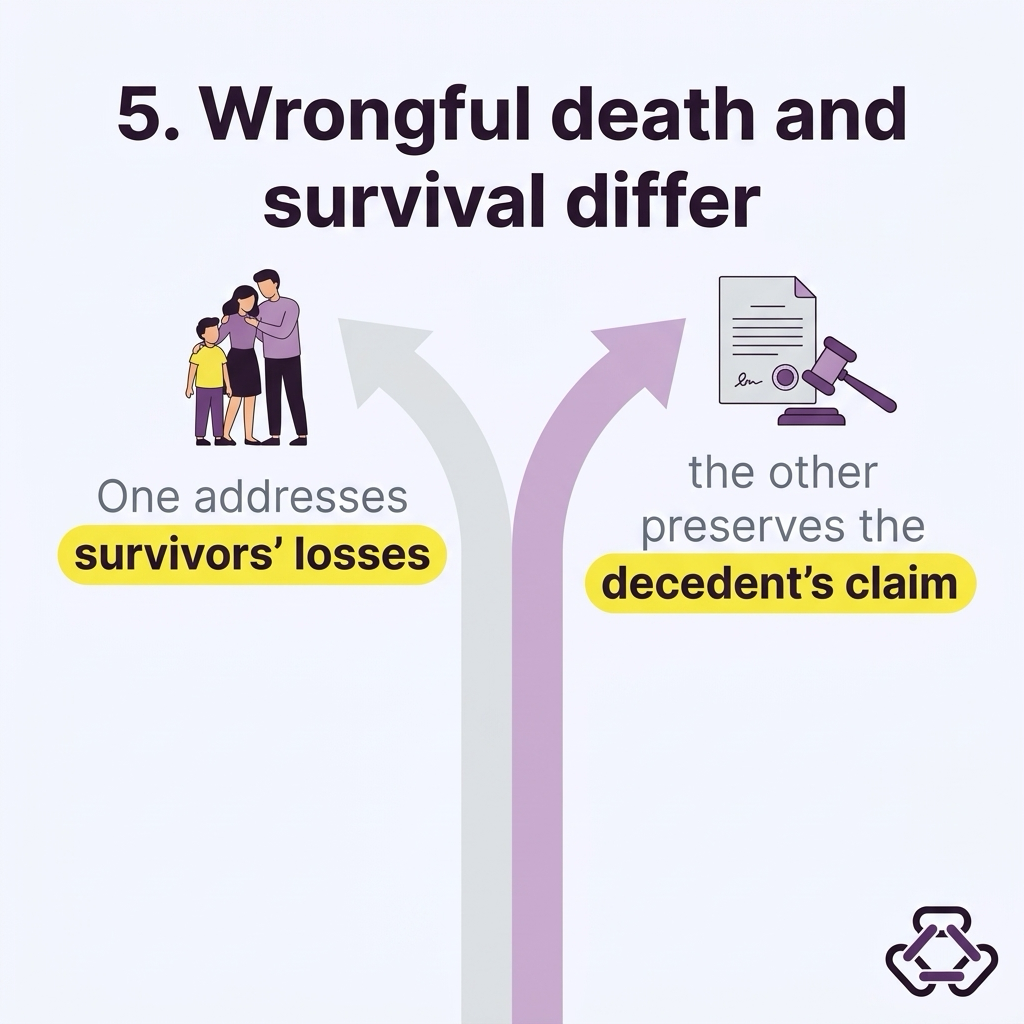
A wrongful death claim generally compensates survivors for losses they suffer because of the death. A survival action, by contrast, generally preserves claims the deceased person had before death and allows the estate to pursue them after death. Courts and statutes treat these as distinct, even when they arise from the same event. A Pennsylvania appellate decision, for example, described wrongful death and survival claims as legally different claims brought by different interests. Pennsylvania courts opinion
In general terms:
Wrongful Death Often Focuses On Survivors’ Losses
These may include:
- Lost financial support
- Lost household services
- Funeral and burial expenses in some states
- Loss of companionship, care, guidance, or consortium where allowed
Survival Actions Often Focus On The Decedent’s Own Claim
These may include:
- Medical expenses incurred before death
- Lost earnings between injury and death
- Pain and suffering before death, where recoverable
- Punitive damages in some jurisdictions
This distinction can affect who receives the money, whether the recovery passes through the estate, and whether creditors may have claims to portions of it. Families are often surprised to learn that a case may involve both tracks at the same time.
What Damages May Be Available?
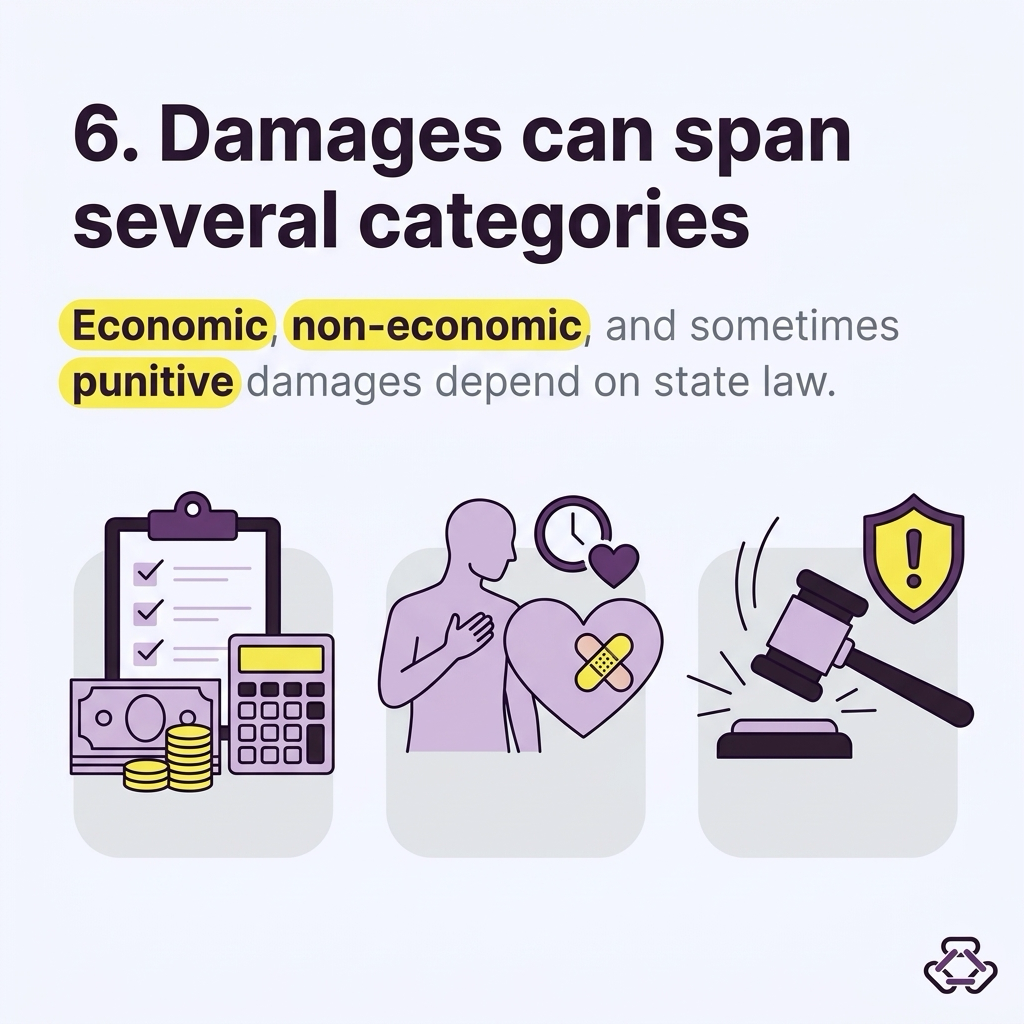
Damages vary by state, but the big categories usually look like this.
Economic Damages
Economic losses are the measurable financial consequences of the death. These can include:
- Medical bills tied to the final injury or illness
- Funeral and burial costs
- Loss of expected earnings
- Loss of benefits, such as health insurance or retirement contributions
- Loss of household services, childcare, transportation, or caregiving contributions
In many cases, attorneys work with economists or forensic accountants to estimate future losses, especially when the decedent supported children, contributed substantial income, or provided essential household services that now have to be replaced.
Non-Economic Damages
These damages are harder to calculate and often vary the most by state. They may include:
- Loss of companionship
- Loss of care, comfort, society, or guidance
- Loss of consortium for a spouse in some jurisdictions
- Emotional losses recognized by statute
Some states limit these categories, and some do not. Medical malpractice wrongful death claims are especially likely to involve state-specific rules and, in some jurisdictions, damage caps. Because these laws change over time, attorneys often confirm the current statute rather than relying on older summaries.
Punitive Damages
Punitive damages are not available in every case. Where allowed, they are generally aimed at especially egregious misconduct rather than ordinary negligence. Drunk driving, intentional violence, extreme corporate misconduct, or conscious disregard for safety may raise punitive-damages issues depending on the jurisdiction and facts.
Estate Issues Families Often Do Not Expect
A wrongful death case often overlaps with probate, but it is not always part of probate in the way people assume.
The Estate May Need A Personal Representative
If state law requires the personal representative to bring the claim, the family may first have to open an estate and obtain formal authority from probate court. In Florida, for example, the wrongful death action is brought by the personal representative on behalf of survivors and the estate. Florida Statutes § 768.20
That can create timing and coordination issues, especially when family members disagree about who will serve.
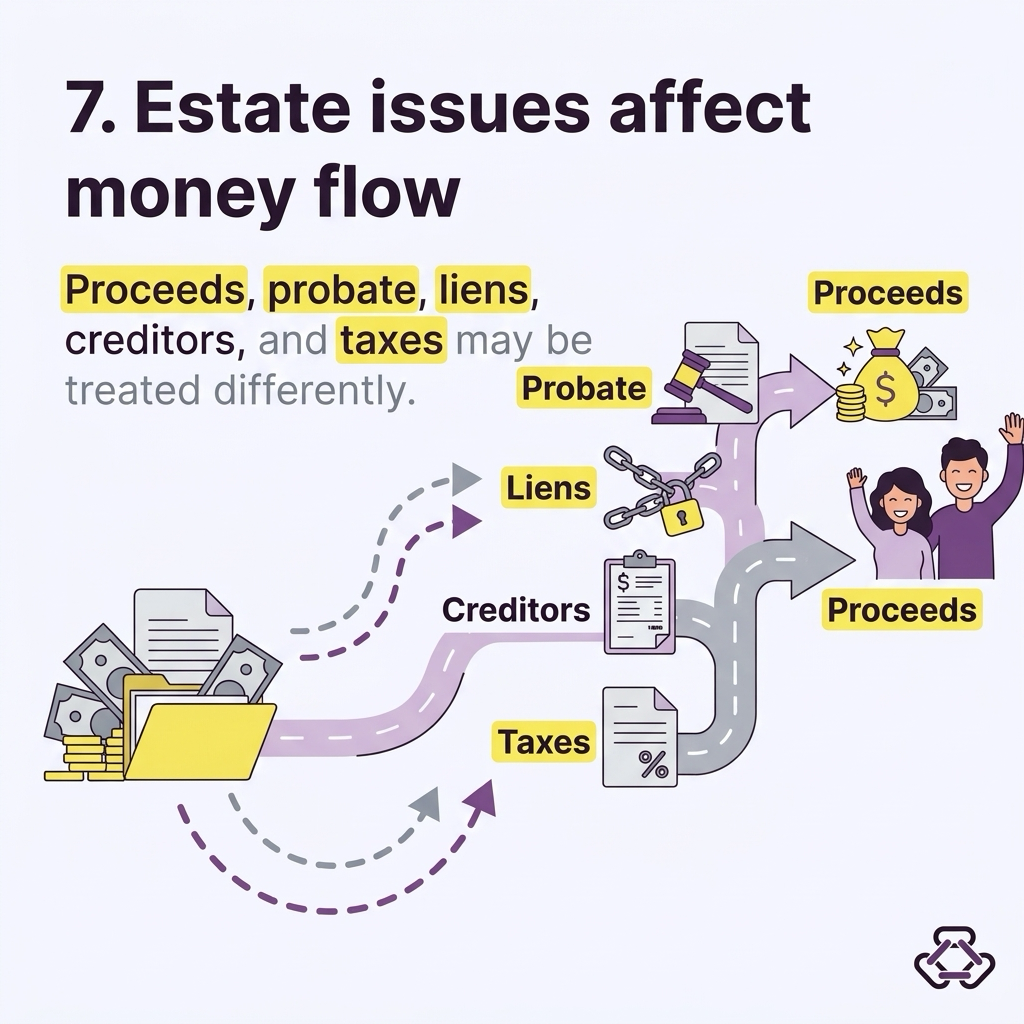
Wrongful Death Proceeds And Estate Assets Are Not Always The Same Thing
One of the most misunderstood issues is whether settlement funds become ordinary estate assets. In many jurisdictions, wrongful death proceeds are intended for statutory beneficiaries rather than becoming part of the general probate estate in the same way as a bank account or house. Survival action proceeds, by contrast, are more often tied to the estate itself. The exact treatment depends on state law and the nature of the recovery. American Bar Association discussion of wrongful death as a beneficiary-focused action and Pennsylvania courts opinion distinguishing survival claims
That difference can affect:
- Distribution among family members
- Creditor exposure
- Probate reporting
- Tax and accounting treatment
- Settlement approval requirements
Liens And Reimbursement Claims May Appear
Medical providers, health insurers, Medicare, Medicaid, ERISA plans, or workers’ compensation carriers may assert reimbursement or lien claims depending on the facts. Those issues can be technical and often intersect with how the settlement is allocated between wrongful death damages, survival damages, and other categories.
Tax Questions Come Up More Often Than Families Expect
The IRS explains that the tax treatment of settlements depends on the nature of the claim. Damages received on account of personal physical injuries or physical sickness are often excluded from taxable income under Internal Revenue Code Section 104, while punitive damages are generally taxable unless a narrow statutory exception applies. IRS guidance on settlements and judgments and IRS Publication 525
That does not answer every estate-tax or income-tax issue in a wrongful death matter, but it does show why families often loop in both litigation counsel and tax professionals before final distribution.
Liability Can Extend Beyond The Most Obvious Person
Families often begin with one suspected wrongdoer, then discover other parties may share legal responsibility.
In Vehicle Cases
A claim may involve:
- The at-fault driver
- The driver’s employer
- A trucking company
- A vehicle owner
- A bar or establishment in dram shop jurisdictions
- A manufacturer if a defect contributed to the death
- A public entity if road design or maintenance played a role
NHTSA’s continuing fatality data is one reminder that roadway deaths remain a large category of preventable harm, even as totals have declined from pandemic-era highs. NHTSA 2024 annual traffic fatality release
In Medical Cases
Potential defendants may include:
- Physicians
- Hospitals
- Nurses or staff
- Practice groups
- Urgent care centers
- Nursing homes
- Laboratories or pharmacies
These cases frequently turn on chart review, expert testimony, and state-specific pre-suit rules.
In Premises And Security Cases
A death caused by an assault, shooting, fall, drowning, fire, or other dangerous condition may raise questions about:
- Prior similar incidents
- Security staffing
- Lighting, locks, and surveillance
- Code violations
- Maintenance records
- Property management contracts
In Product Cases
Liability may involve:
- Designers
- Manufacturers
- Parts suppliers
- Distributors
- Retailers
The key issue is often whether the product was defectively designed, improperly manufactured, or sold without adequate warnings.
What Families Commonly Encounter Early In The Case
The first weeks after a fatal event are often a blur. Even so, the early phase can shape the quality of the claim.
Investigation Starts Quickly
Evidence may disappear fast. Vehicles get repaired or salvaged. Electronic data can be overwritten. Surveillance footage may be deleted. Scene conditions change. In medical cases, internal reviews begin early, and records may be spread across several providers.
That is part of why some families focus first on preserving a case after a fatal accident and keeping evidence, bills, and family documents in one place.
Insurance Contacts May Begin Before The Family Understands The Claim
Insurers may ask for statements, authorizations, or broad document access. Sometimes those requests are routine; sometimes they can shape later defenses involving causation, dependency, or damages.
Families May Disagree About Goals
One person may want quick closure. Another may want a full investigation. Another may be worried about probate control, money distribution, or whether a criminal case is also pending. These tensions are common and often intensify when the law gives different people different procedural roles.
The Criminal Case And Civil Case May Move On Different Timelines
A death caused by DUI, assault, abuse, or other criminal conduct can produce both a criminal prosecution and a civil wrongful death claim. Those are separate proceedings with different burdens of proof and different purposes.
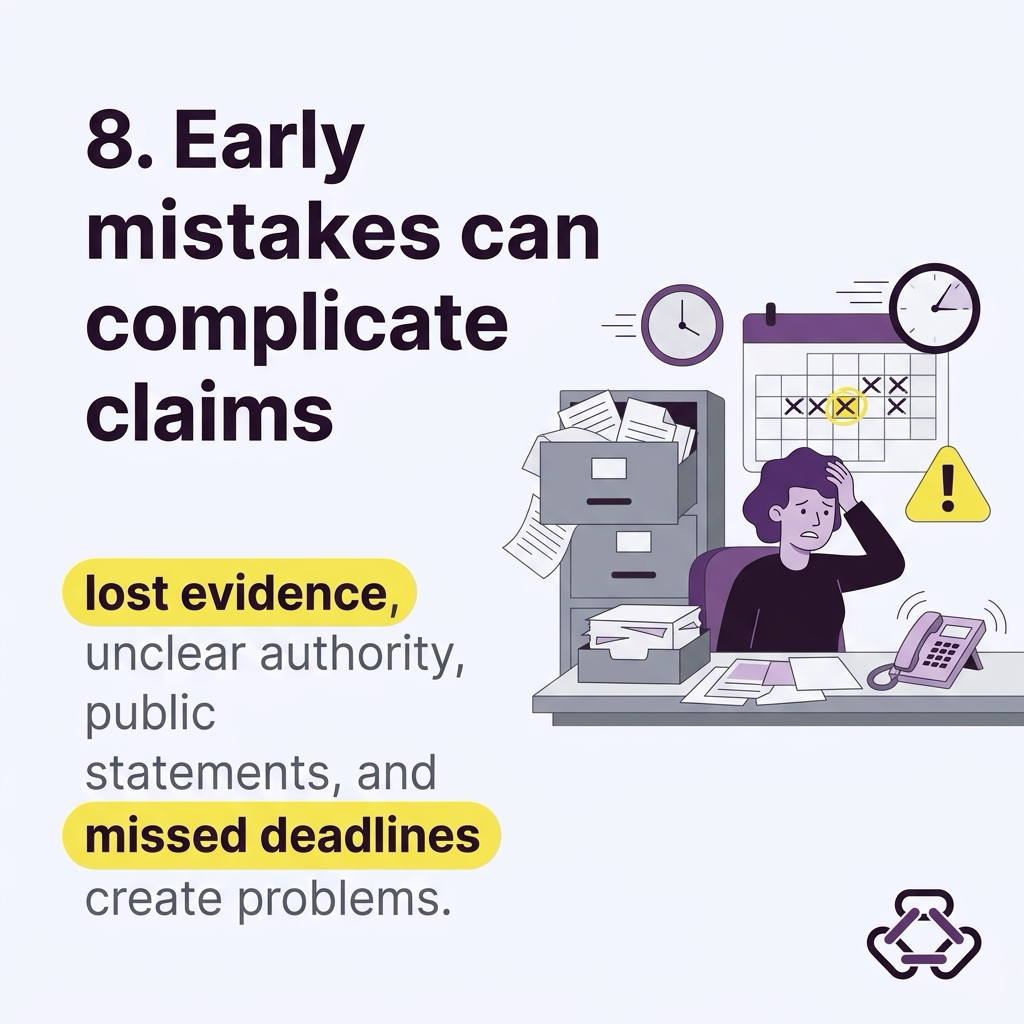
Common Mistakes That Complicate Wrongful Death Cases
Families are often balancing grief with paperwork, deadlines, and conflicting advice. A few patterns come up again and again:
- Waiting too long to identify who has legal authority to act
- Assuming the insurance company will gather all relevant evidence
- Failing to preserve phones, texts, social media posts, or photographs
- Overlooking employment records, benefit records, and tax documents
- Confusing wrongful death damages with estate assets
- Leaving out family members whose rights may be affected
- Speaking publicly before the facts are clear
If you want a deeper look at these patterns, this breakdown of early pitfalls families often run into may be useful.
How Long Do Families Have To File?
There is no single nationwide deadline. Wrongful death deadlines are set by state statute of limitations, and shorter notice rules may apply when a government entity is involved. Medical malpractice deaths can involve additional timing rules. Discovery-rule issues, minority status of beneficiaries, and probate timing can complicate the analysis.
This is one area where exact dates matter. A deadline measured from the date of death, the date of injury, or the date a claim accrued under a specific statute can change the analysis substantially. Attorneys often map the dates immediately because a filing problem can end the claim regardless of its merits.
What Settlement And Litigation Often Look Like
Many families wonder whether a wrongful death case automatically goes to trial. In reality, these claims may resolve through insurance negotiations, mediation, or formal litigation, depending on liability disputes, damages issues, available coverage, and whether multiple defendants are involved.
The process often includes:
- Initial factual investigation
- Probate or representative appointment issues
- Record collection and damage analysis
- Expert review where needed
- Insurance claims and negotiations
- Filing suit if resolution does not occur
- Discovery, depositions, and motion practice
- Mediation or trial
- Court approval or allocation proceedings in some cases
- Distribution of proceeds
Families who are already in the middle of a claim often have practical concerns about timing, control, communication, and distribution. This FAQ-style overview of what comes up after the case gets underway can help frame those questions.
What Families Should Expect Emotionally And Practically
Wrongful death litigation is often described as a legal claim, but for families it is also an administrative burden layered onto grief. The case may involve records from hospitals, employers, funeral homes, police agencies, insurers, and probate court. There may be disputes over guardianship issues, beneficiary status, or family relationships. Even where liability seems obvious, the defense may still contest the value of support, companionship, household contributions, or life expectancy.
In general terms, families often expect a simple negligence case and then discover something much more layered:
- A liability case
- A damages case
- A probate matter
- A tax and lien issue
- A family coordination issue
- Sometimes a criminal matter running in parallel
That complexity is one reason families often look for counsel with documented experience in highly similar matters, not just general familiarity with injury law.
Final Thoughts
Wrongful death law sits at the intersection of tort law, probate procedure, insurance practice, evidence preservation, and family loss. The central questions are usually straightforward: who is legally responsible, who may bring the claim, what losses are compensable, and how does the recovery get handled? But the answers are usually state-specific and fact-specific.
For many families, the hardest part is not understanding that a claim may exist. It is understanding how liability, damages, beneficiaries, estate administration, and timing all fit together after a fatal accident.
Visit ReferU.AI to get matched with an attorney who has demonstrable experience in cases like yours — for free.


