Table of Contents
- How to Preserve Records, Deadlines, and Issues for a Probate Appeal
- Why Preservation Matters So Much In Probate Appeals
- Step 1: Identify The Exact Order You May Be Appealing
- Step 2: Calendar The Deadline Immediately And Verify The Trigger Date
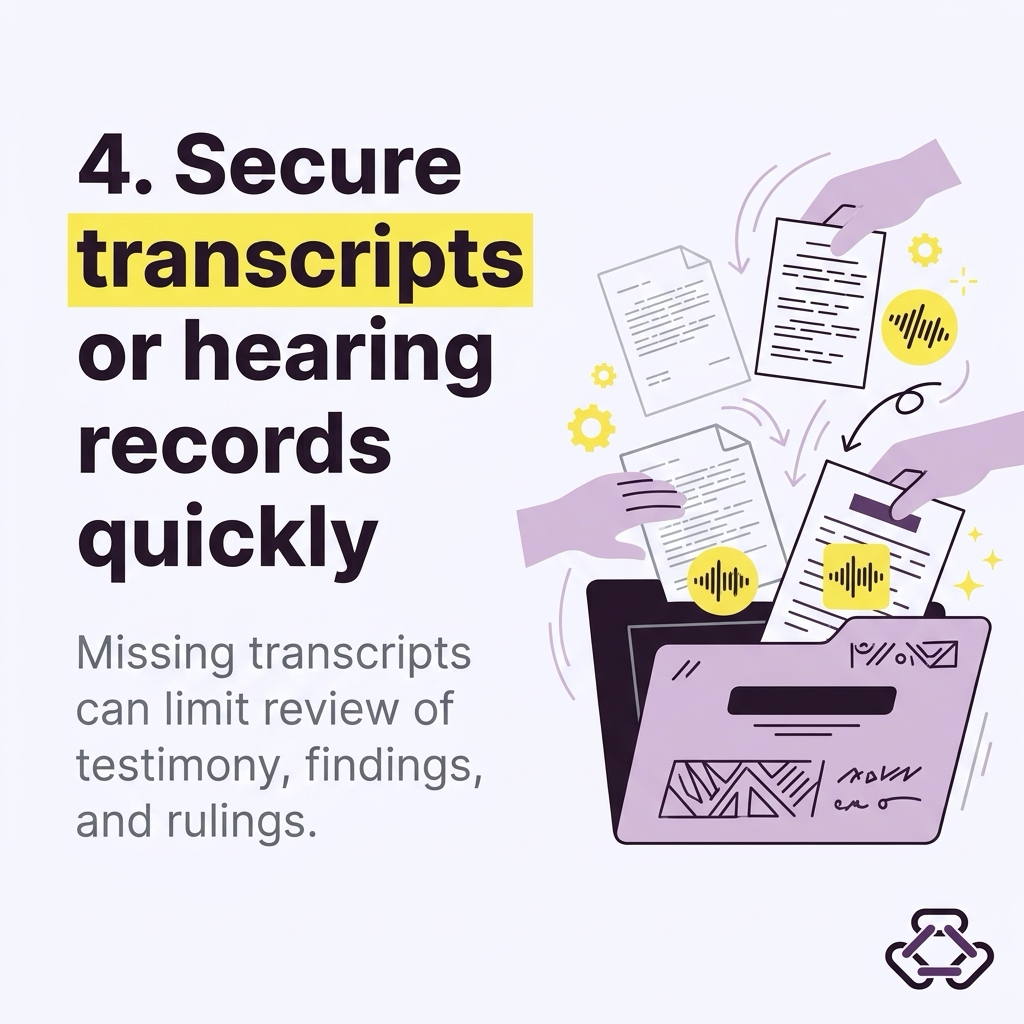
- Step 3: Secure The Transcript Or Hearing Record Right Away
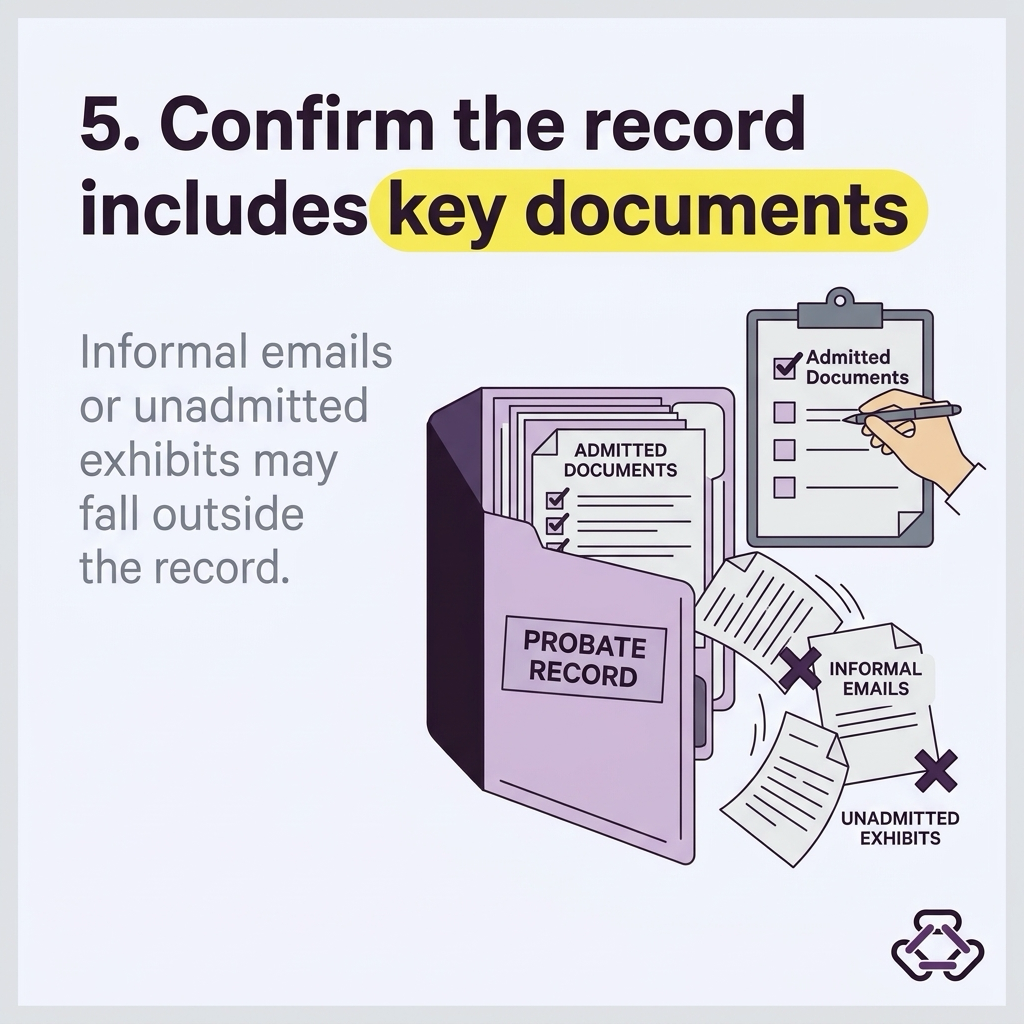
- Step 4: Make Sure The Record Contains The Documents That Actually Matter
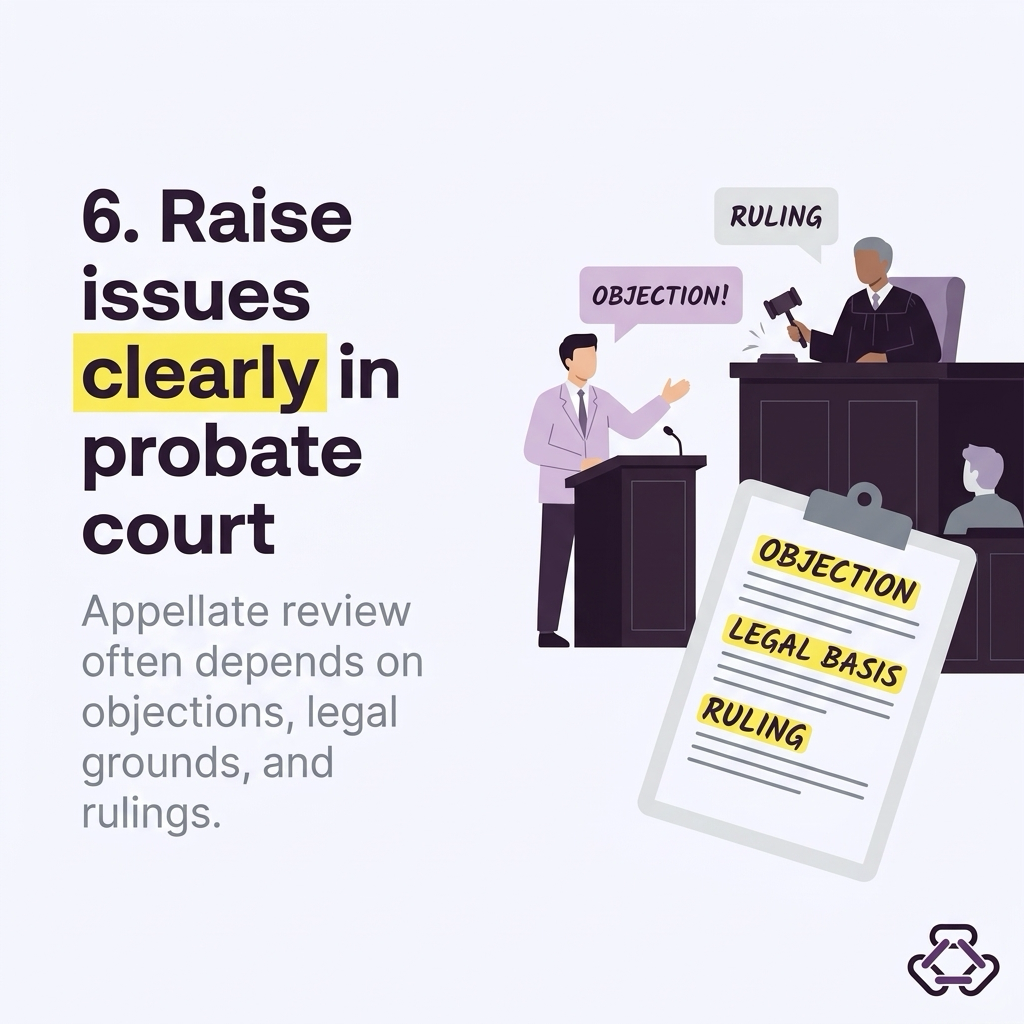
- Step 5: Preserve Issues By Raising Them Clearly In The Probate Court
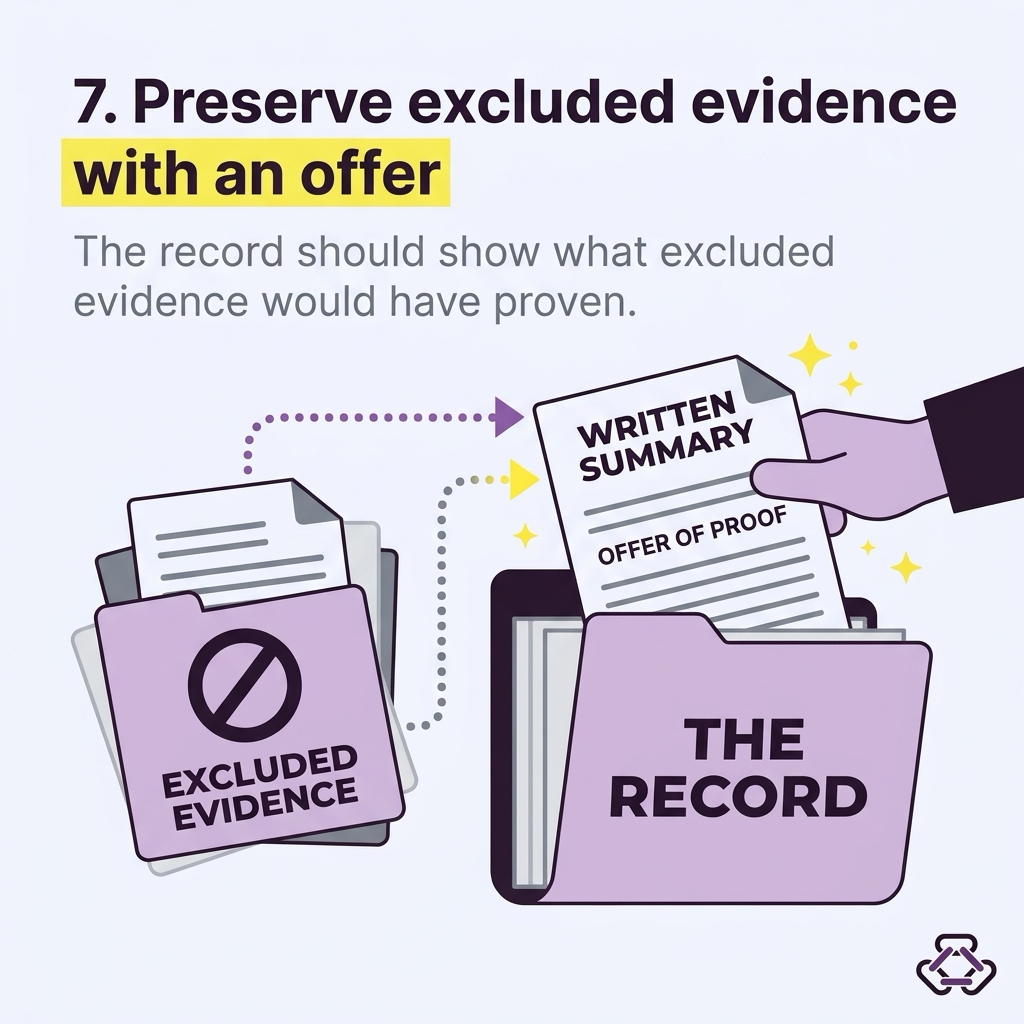
- Step 6: If Evidence Is Excluded, Preserve What The Evidence Would Have Shown
- Step 7: Watch For Post-Judgment Motions That Affect The Appeal Clock
- Step 8: Preserve The Docket History And Service Trail
- Step 9: Understand That New Evidence Usually Does Not Repair An Old Record
- Common Preservation Mistakes In Probate Appeals
- Why Early Appellate Review Can Change The Entire Strategy
- The Bottom Line

Type
Great Grandchild
Status
Approved
Title (YouTube)
Images Failed (Social)
Images Failed (Social)
Do not index
Publish Date (TikTok)
Feb 21, 2027 13:15
Videos Post IDs (Social)
Hashtags (Social)
#LegalAdvice #LegalHelp #ProbateLitigation #ProbateAppeals
Caption
Caption X
Cover

OG Image

Alt Image Text
Minimal flat vector illustration of probate appeal preparation with legal documents, a courthouse, a calendar, file folders, and review icons in muted purple, yellow, gray, and white.
Images

Videos
Publish Date (Social)
Jan 13, 2027 08:00
Scheduled (Social)
Scheduled (Social)
Images Posted (Social)
Images Posted (Social)
Videos Posted (Social)
Videos Posted (Social)
Featured
Created time
Apr 8, 2026 06:05 PM
Sub-item
Authors
CTA Practice Area (Social)
Probate Litigation
TikTok Failed (Social)
TikTok Failed (Social)
Videos Post Links (Social)
TikTok Post Links (Social)
Images Post IDs (Social)
YT Post ID
Video Pending Manual (Social)
TikTok Posted (Social)
TikTok Posted (Social)
TikTok Post IDs (Social)
Video Cover (Social)
Images Post Links (Social)
First Comment (Social)
Videos Failed (Social)
Videos Failed (Social)
YT Embedded
Images Delete (Social)
Videos Delete (Social)
Carousel Video URL (Social)
How to Preserve Records, Deadlines, and Issues for a Probate Appeal
Losing an important ruling in probate court can feel like the ground just shifted under an already difficult family situation. Questions tend to pile up fast: Can this order be appealed? What deadline applies? What paperwork matters? What if the hearing was never transcribed? In probate matters, those questions often arrive while people are also dealing with grief, family conflict, fiduciary disputes, or concerns about how an estate or trust is being handled.
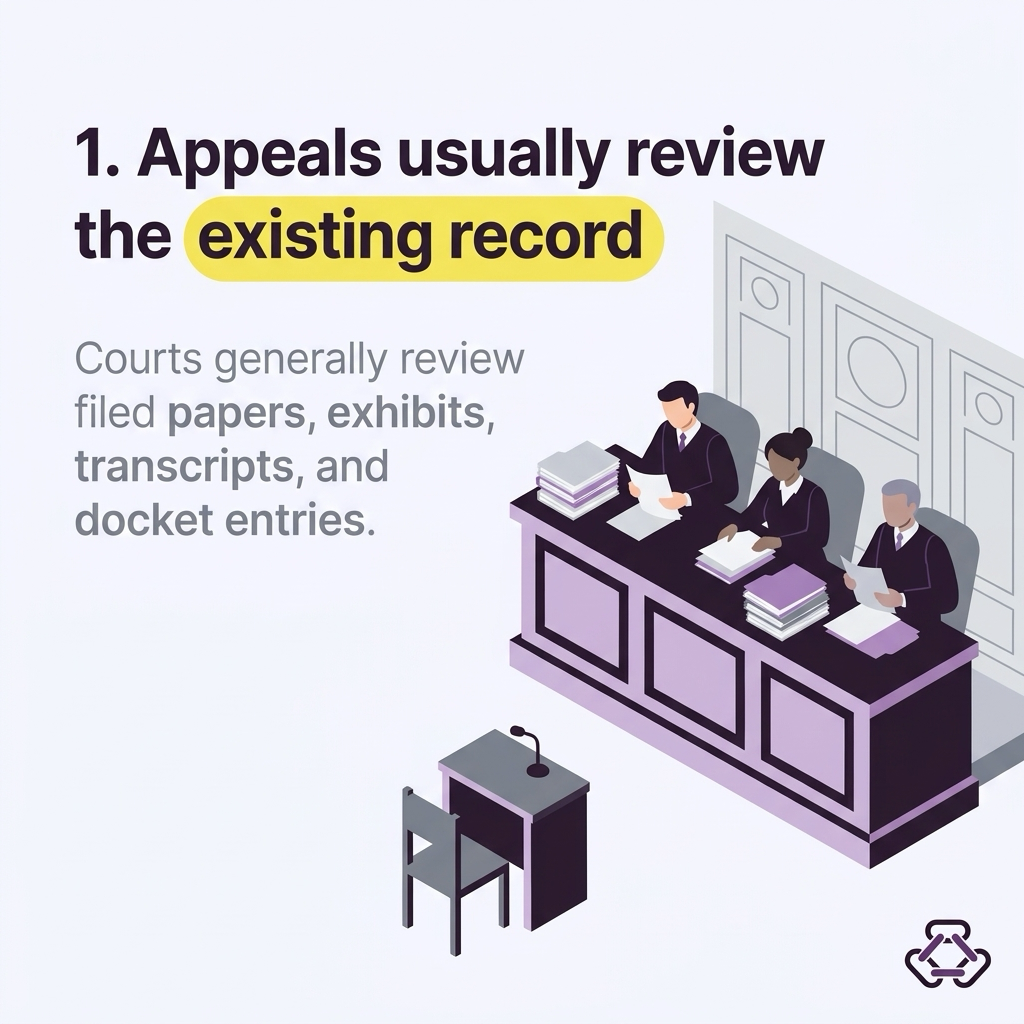
That is part of what makes probate appeals so unforgiving. Appellate courts usually review the record that already exists. They typically do not start over, re-hear witnesses, or consider entirely new evidence. In general terms, that puts enormous weight on three things: what got filed, what got said on the record, and when each step happened. The Legal Information Institute’s summary of Federal Rule of Appellate Procedure 10 explains that the record on appeal generally consists of the original papers and exhibits, the transcript, and the docket entries. The Federal Rules of Evidence also reflect a familiar preservation principle: objections and offers of proof often matter because appellate review depends on what was actually presented to the trial court.
If you want the bigger framework first, it may help to start with this overview of probate appeal basics and post-judgment strategy. This post narrows in on the practical side: how people preserve deadlines, records, and issues so an appeal is not weakened before briefing even begins.
In this post you’ll learn how probate appeal preservation usually works, what commonly goes wrong, and why many people look for appellate counsel early in the process.
Scroll to the bottom for every post in this series.
Why Preservation Matters So Much In Probate Appeals
A probate appeal is usually not about telling the appellate court that the result felt unfair. It is more often about showing that the lower court made a reviewable legal error, abused its discretion, or entered a ruling that is unsupported under the governing standard of review. That is one reason preservation is so important.
The appellate court generally looks backward, not outward. It reviews the material that was before the probate court and the arguments that were actually raised there. Under Federal Rule of Appellate Procedure 10, the record is built from the filed papers, exhibits, transcripts, and docket. Under Rule 11, the appellant has responsibilities to do what is necessary so the record can be assembled and forwarded. That same logic appears across many state systems, even though probate appeal rules vary by jurisdiction.
In probate litigation, preservation problems can show up in disputes involving:
- wills and trusts
- fiduciary misconduct claims
- accountings
- guardianships and conservatorships
- creditor claims
- heirship and beneficiary disputes
- surcharge orders
- fee awards
- removal or appointment of personal representatives or trustees
In any of those settings, the appeal may rise or fall on details that seem small at the time: a missing transcript request, an exhibit never admitted, an objection not made clearly enough, or a notice of appeal filed after the deadline.
Step 1: Identify The Exact Order You May Be Appealing
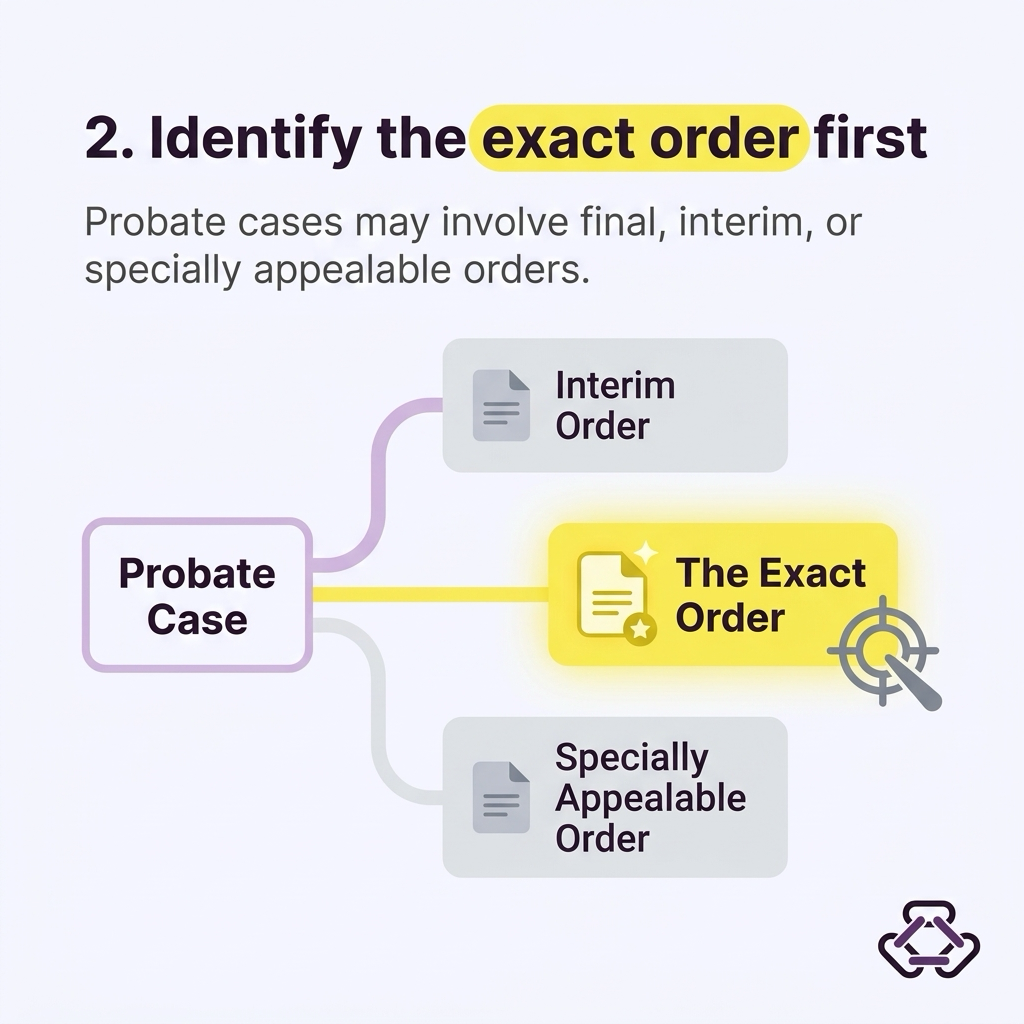
The first preservation problem in many probate appeals is surprisingly basic: what order is actually being appealed?
Probate proceedings are unusual because they can involve multiple orders over time. Some are final and appealable. Others are interim, partial, or procedural. The answer can change by state, and some probate orders are treated as immediately appealable even when the estate administration itself is ongoing. The District of Columbia Probate Rule on appeals, for example, expressly discusses finality and gives examples of probate orders that may not be final absent further determination. Similarly, state probate and appellate systems often carve out special appeal treatment for certain estate, trust, guardianship, and protective proceedings.
This is where people often get tripped up. They may focus on the hearing date instead of the signed order date, or assume the overall estate remains open so nothing is appealable yet, or the opposite—they treat a nonfinal ruling as if the appellate clock already started.
An attorney might help determine:
- whether the ruling is final, interlocutory, or specially appealable
- whether post-judgment motions affect the appeal deadline
- whether the appeal runs from entry of judgment, notice of entry, mailing, or service under local rules
- whether separate notices are required for separate orders
That first classification issue is foundational. If the wrong order is identified, later steps involving transcripts, issue statements, and briefing may be built on the wrong timeline.
Step 2: Calendar The Deadline Immediately And Verify The Trigger Date
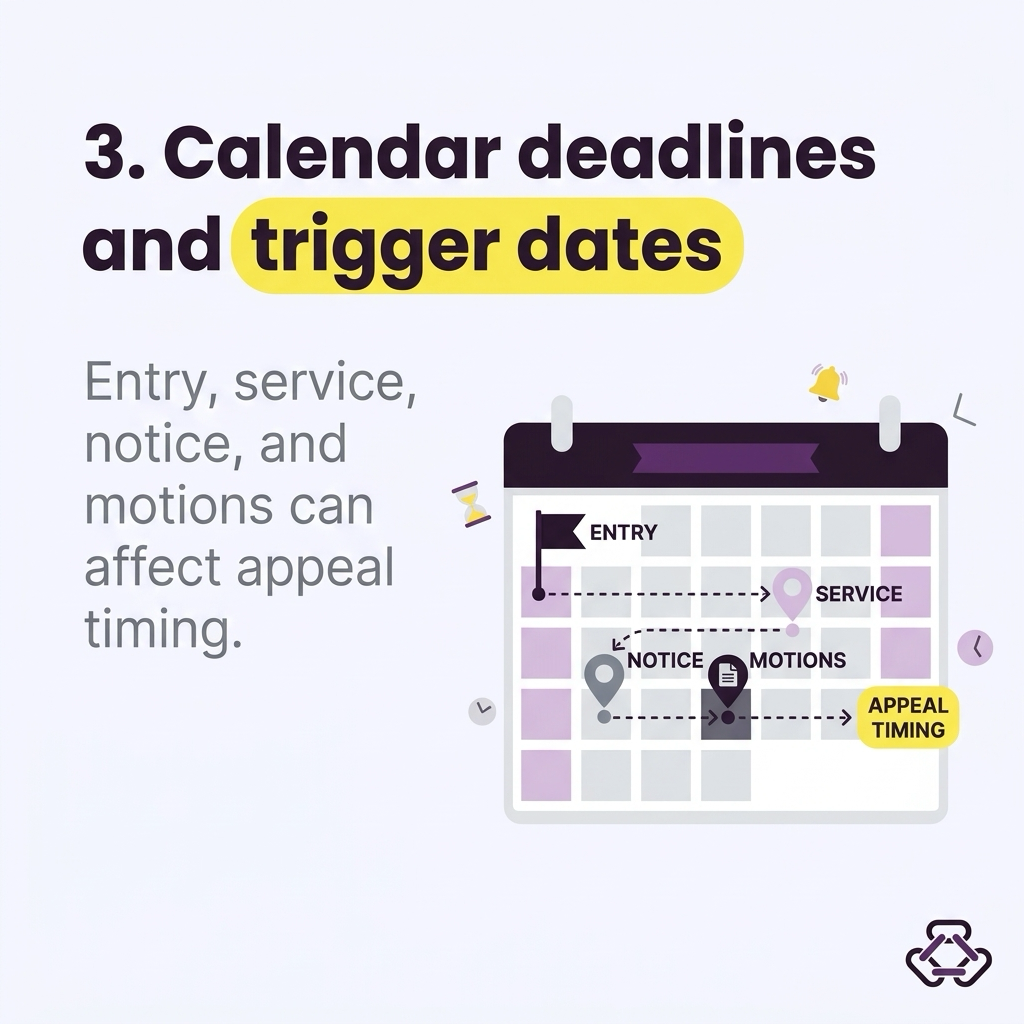
Appeal deadlines are often the harshest part of the process. In civil appeals, a timely notice of appeal is commonly treated as jurisdictional. The Legal Information Institute’s version of Federal Rule of Appellate Procedure 4 states that, in most federal civil cases, the notice of appeal is filed within 30 days after entry of the judgment or order appealed from, subject to specified exceptions. Courts repeatedly describe timeliness as a threshold requirement for appellate jurisdiction.
Probate appeals often follow state-specific deadlines, not one universal national rule. In some jurisdictions it may be 30 days. In others it may be 42 or 45 days, or tied to service of notice rather than simple entry. Some post-judgment motions pause or restart the appeal period; others do not. The Ohio probate clerk guide notes that certain post-judgment filings can affect when the time to file the notice of appeal begins to run. Maine’s probate appeal form likewise reflects that probate appeals to the Law Court are governed by appellate rules and can require a transcript order with the notice of appeal packet, depending on the circumstances, as shown in the official form.
In practical terms, people often preserve deadlines by creating multiple calendar entries for:
- the order entry date
- service or notice date, if relevant in that state
- the notice of appeal deadline
- transcript designation deadlines
- deadlines for post-judgment motions
- dates for settling or correcting the record
- briefing deadlines after the record is filed
A common problem is assuming the court will send reminders. Appellate systems generally place the burden on the parties. If there is any uncertainty about the trigger date, many litigants consult appellate counsel quickly because even a short miscalculation can close the door to review.
Step 3: Secure The Transcript Or Hearing Record Right Away
In many probate appeals, the transcript is where preservation either becomes possible or becomes difficult.
If the appeal challenges factual findings, discretionary rulings, evidentiary rulings, oral findings, or what happened during witness testimony, the transcript often becomes indispensable. Federal Rule of Appellate Procedure 10(b) states that if an appellant intends to argue that a finding or conclusion is unsupported by or contrary to the evidence, the record must include the transcript of all evidence relevant to that finding or conclusion. Rule 11 also places responsibility on the appellant to take steps necessary for record assembly.
That principle carries over strongly in probate matters. Courts and clerks in multiple states specifically address transcript requests in probate appeals. For example:
- the Colorado Judicial Branch includes transcript request materials for district civil, family, and probate appeals
- Michigan court rules provide special transcript provisions for certain probate appeals
- Connecticut Probate Court Rules address transcripts as part of the official record in appealed probate matters
- the Wayne County Probate Court transcript FAQ specifically discusses obtaining a hearing record for appeal preparation
Why act quickly? Because recordings, reporter availability, costs, formatting requirements, and filing procedures can all create delays. Some courts use official reporters; others rely on audio recordings that later have to be transcribed. If no transcript is ordered on time, the appeal may proceed with an incomplete record, which can narrow what the appellate court is willing to review.
Step 4: Make Sure The Record Contains The Documents That Actually Matter
A probate file can get large fast. That does not always mean the appellate record is complete.
The record on appeal commonly includes filed pleadings, motions, responses, admitted exhibits, orders, and docket entries. But parties often learn too late that items they considered central were never formally filed, never admitted, or never designated for inclusion. Federal Rule of Appellate Procedure 10 describes the record’s core components, and courts frequently require parties to review whether everything relevant is included before transmittal.
In probate disputes, the missing items may include:
- accountings and supporting schedules
- trust instruments, codicils, and amendments
- medical records relied on in capacity disputes
- financial ledgers or bank records
- fee petitions and billing entries
- inventories and appraisals
- written objections
- hearing exhibits
- proposed findings or trial briefs
This is one reason appellate lawyers often start by pulling the entire docket and comparing it against what was actually used at hearings. A paper may have been emailed informally to chambers, handed up during a hearing, referenced in argument, or attached in a way that did not make it into the official record. If it is not part of the record, the appellate court may treat it as outside the case.
Some jurisdictions also allow procedures to correct or supplement the record where something material was omitted. But those procedures usually do not function as a second chance to add evidence that was never properly before the probate court in the first place.
Step 5: Preserve Issues By Raising Them Clearly In The Probate Court
Many people think an appeal is where they first get to make the legal argument in full. In reality, preservation often begins in the trial court.
The general appellate principle is straightforward: if an issue was not presented to the lower court in a way that gave the judge a chance to address it, review may be limited or unavailable. The ABA’s discussion of preservation rules emphasizes a familiar point in appellate practice: the objection or complaint ordinarily has to appear in the record. Federal Rule of Evidence 103 similarly explains that claims of evidentiary error usually depend on a timely objection or offer of proof.
In probate court, issue preservation may involve:
- objecting to inadmissible testimony or documents
- identifying the legal basis for the objection
- making an offer of proof if evidence is excluded
- filing written objections to reports, accountings, or petitions
- seeking rulings on disputed points
- raising statutory interpretation arguments before judgment
- preserving constitutional or due process objections in the probate court itself
A frequent problem is that people “object” in a conversational sense but do not state the legal ground clearly enough for the record. Another is that lawyers and self-represented litigants sometimes move on after a tentative oral exchange without obtaining a definitive ruling. Appellate courts often look for whether the point was raised, whether the lower court ruled on it, and whether the record is concrete enough to review it.
Step 6: If Evidence Is Excluded, Preserve What The Evidence Would Have Shown
Excluded evidence creates a special preservation issue. If the probate judge keeps out testimony, an exhibit, or a document, the appellate court may be unable to evaluate harm unless the record shows what the excluded material actually was.
That is where an offer of proof often matters. Under Federal Rule of Evidence 103, a party may preserve an evidentiary issue by informing the court of the substance of the evidence unless it was apparent from context. The ABA has also noted in trial-practice guidance that an adequate offer of proof generally states both the theory of admissibility and the content of the excluded evidence, as discussed in Business Law Today’s trial practice update.
In a probate setting, this can matter in disputes over:
- testamentary capacity evidence
- undue influence witnesses
- valuation evidence
- fiduciary accounting objections
- expert testimony about mental state or damages
- prior drafts of estate planning documents
Without that record, the appellate court may see only that the judge excluded something, not whether the exclusion affected the outcome.
Step 7: Watch For Post-Judgment Motions That Affect The Appeal Clock
After a probate ruling, parties sometimes file motions to reconsider, amend findings, vacate, or seek relief from judgment. Those filings can be strategically important, but they can also complicate timing.
In some systems, certain timely post-judgment motions suspend the running of the appeal period until the motion is resolved. In others, a mislabeled or unauthorized motion may not toll anything at all. Federal Rule of Appellate Procedure 4 identifies categories of motions that alter the appeal timeline in federal civil cases. State probate systems often follow similar concepts but with different motion titles, deadlines, and consequences.
This is one of the easiest places for a party to lose track of the appellate deadline. A person may assume a “motion to reconsider” automatically stops the clock. Depending on the jurisdiction, that assumption may be wrong. Another common issue is partial relief: the court changes one part of an order but leaves the rest intact, creating fresh questions about what deadline now governs.
Because probate dockets can involve multiple related orders, this timing question may become even more tangled than in ordinary civil litigation.
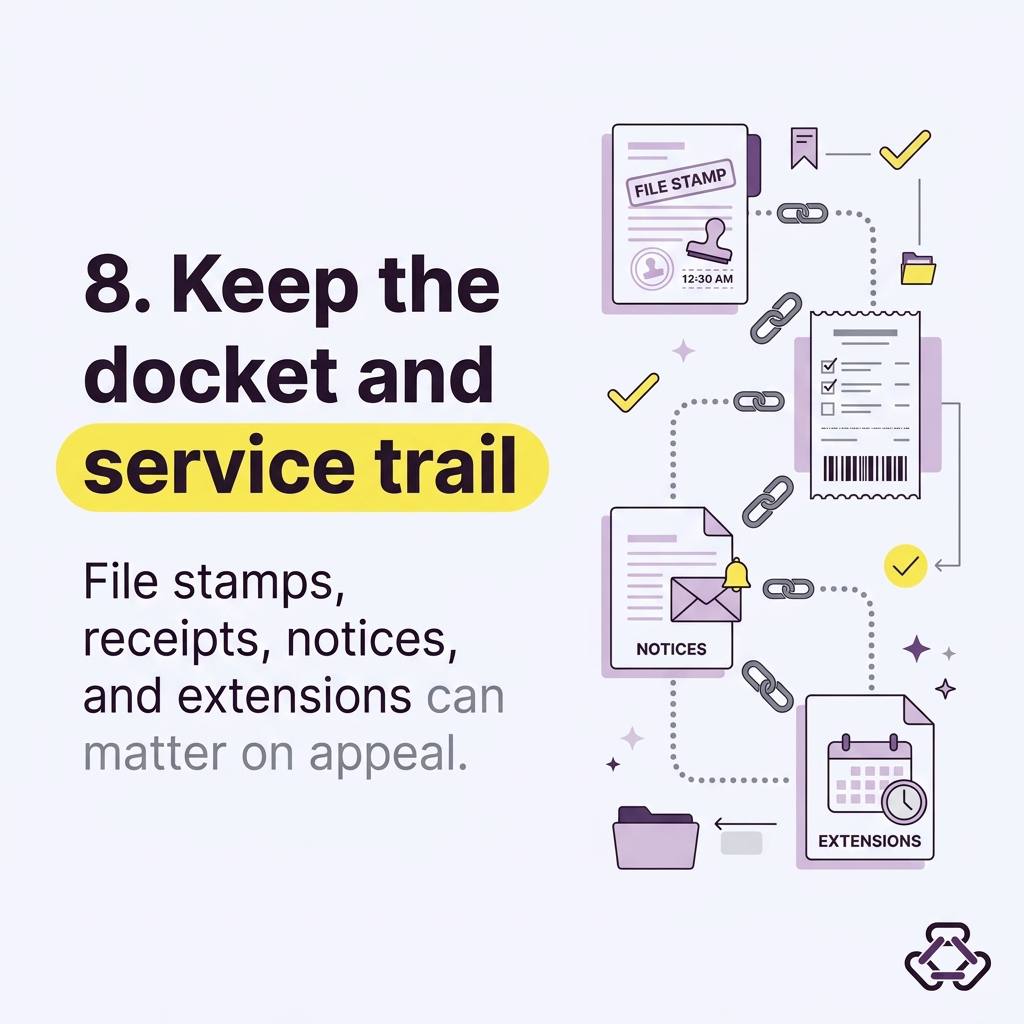
Step 8: Preserve The Docket History And Service Trail
Sometimes the difference between a viable appeal and a dismissed one is not the legal argument at all. It is proof of what was filed, when it was filed, and how notice was given.
That is why experienced appellate counsel often preserve more than the order itself. They preserve:
- the file-stamped order
- the docket sheet
- notice-of-entry documents
- service certificates
- e-filing receipts
- transcript order confirmations
- payment receipts for record preparation
- email notices from the clerk
- any extension orders
The reason is simple: appellate litigation can generate disputes about timeliness, record designation, and whether a document actually made it into the official file. The Alaska court self-help guidance on the superior court record underscores that the record and appeal briefs are often the information the reviewing court relies upon in deciding the appeal.
In probate matters, where several family members, fiduciaries, or counsel may be receiving notices, keeping the service trail organized can become especially important.
Step 9: Understand That New Evidence Usually Does Not Repair An Old Record
One of the hardest parts of appellate practice for nonlawyers is realizing that the appeal is usually not the place to introduce fresh evidence that was never presented below.
If the probate court record is incomplete, the appellate court may allow correction of omissions in limited circumstances. But that is different from creating a whole new evidentiary case. As a general rule, appellate review is tied to the existing record. That is built directly into the concept of the record on appeal under Rule 10.
For probate litigants, this can be frustrating. New bank statements may surface. A witness may later be willing to talk. A family member may finally reveal information about a decedent’s capacity or a fiduciary’s conduct. Those developments may matter in some procedural posture, but not always in a straightforward direct appeal.
That is why preserving the issue early in probate court often matters more than people initially realize.
Common Preservation Mistakes In Probate Appeals
A few mistakes appear again and again in probate appeal consultations:
- Using the wrong date for the appeal clock
People often count from the hearing date instead of the entered order, or they overlook a state rule tied to service or notice.
- Assuming every probate order is immediately appealable
Probate cases can produce many orders, but not all of them are reviewed the same way.
- Failing to order the transcript
This is especially damaging when the appeal turns on oral findings, testimony, or evidentiary rulings.
- Relying on documents that were never made part of the record
If it was not filed, admitted, or designated, it may not help on appeal.
- Making broad objections without legal grounds
Preservation often depends on whether the issue was raised specifically enough for the probate judge to rule.
- Filing post-judgment motions without understanding tolling rules
Some motions affect the appeal deadline. Others may not.
- Waiting too long to involve appellate counsel
By the time briefing starts, some preservation opportunities are already gone.
If you are also trying to sort out whether the ruling is even appealable in the first place, people often compare this issue with broader guides on identifying appealable probate orders before moving deeper into the record-preservation process.
Why Early Appellate Review Can Change The Entire Strategy
Probate appeals are not only about drafting a brief. They often begin with a triage exercise:
- What is the appealable order?
- What deadline controls?
- What standard of review may apply?
- What was preserved?
- What is missing from the record?
- Is there a path to supplement or correct it?
- Did any post-judgment motion change the timeline?
- Is the issue legal, factual, discretionary, or mixed?
That front-end review can shape everything else. Sometimes the better move is a direct appeal. Sometimes related post-judgment proceedings matter first. Sometimes the real issue is not the merits, but whether the record can support review at all.
For families dealing with estate disputes, trustee conflicts, or guardianship litigation, this phase can be particularly stressful because probate conflict tends to overlap with grief, money, and fractured relationships. A lawyer with documented experience in highly similar matters may be able to assess not only the law, but also how the court record lines up with the issues a reviewing court is likely to consider.
The Bottom Line
Preserving a probate appeal usually starts long before the appellate brief is written. It often starts with identifying the right order, calculating the deadline correctly, securing transcripts, confirming the record, and making sure the issues were actually raised in the probate court. Once the record closes, many lost opportunities are difficult to recreate.
That does not mean every adverse probate ruling is appealable, or that every problem in the record can be fixed later. It often means the earliest days after the ruling are the most important for figuring out what exists, what is missing, and what the appellate court may realistically be able to review.
Visit ReferU.AI to get matched with an attorney who has demonstrable experience in cases like yours — for free.
