Table of Contents
- 6 Probate Appeal Mistakes That Cost Review Rights
- Why Probate Appeals Go Sideways So Often
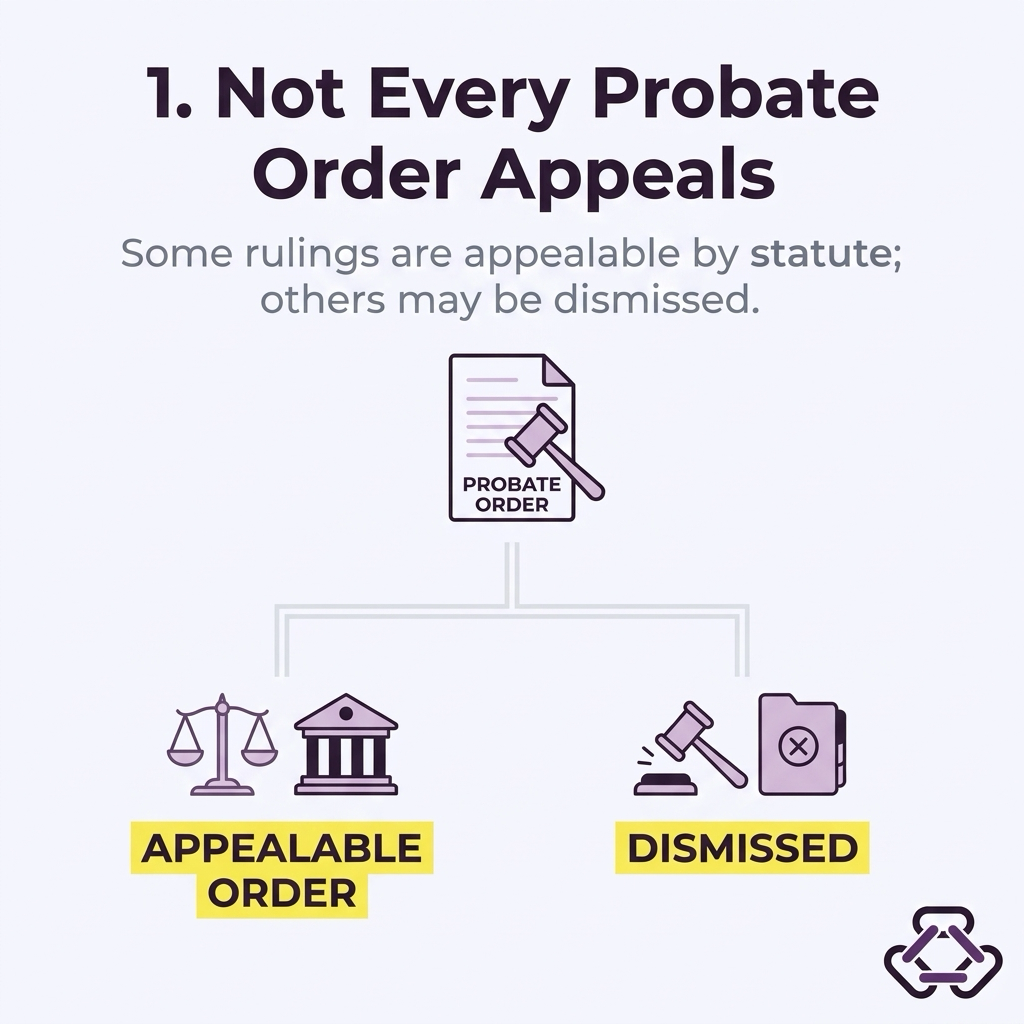
- 1. Assuming Every Probate Ruling Can Be Appealed Immediately
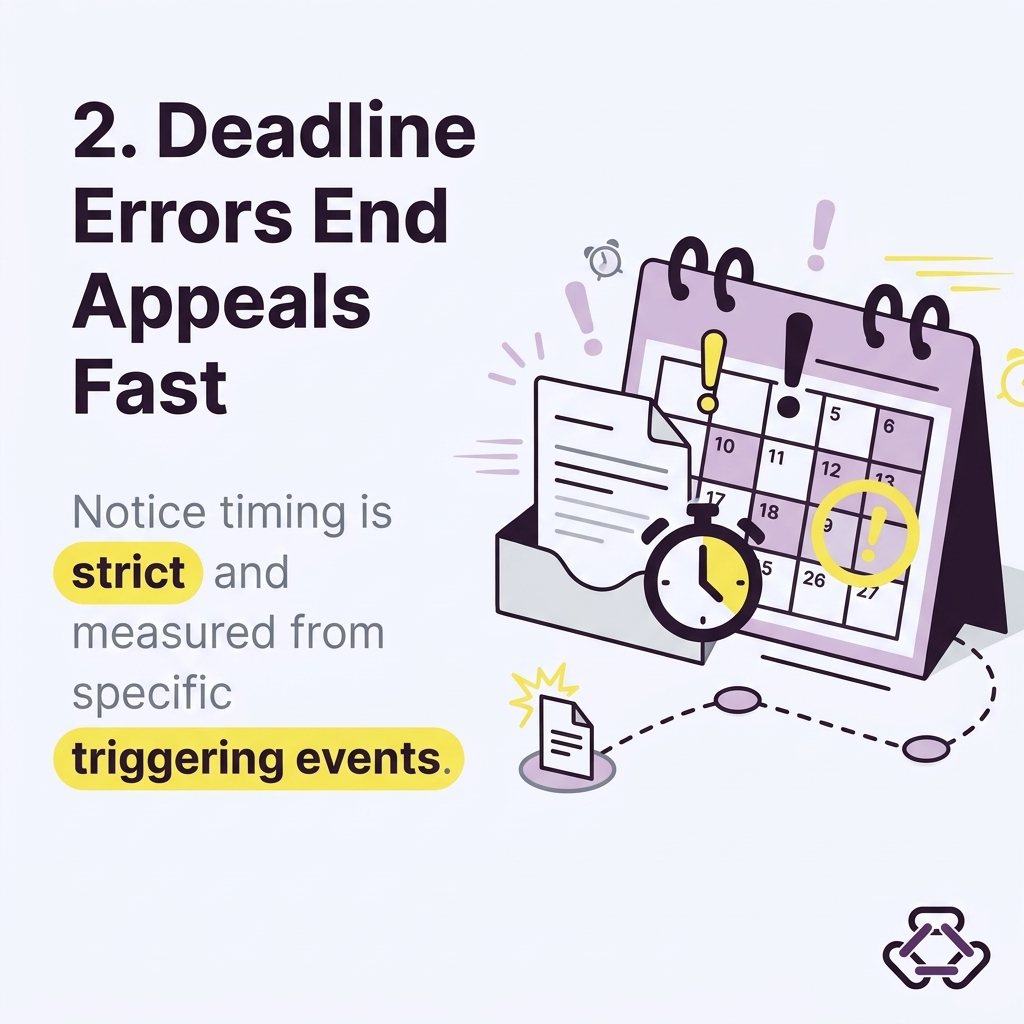
- 2. Missing The Notice Of Appeal Deadline
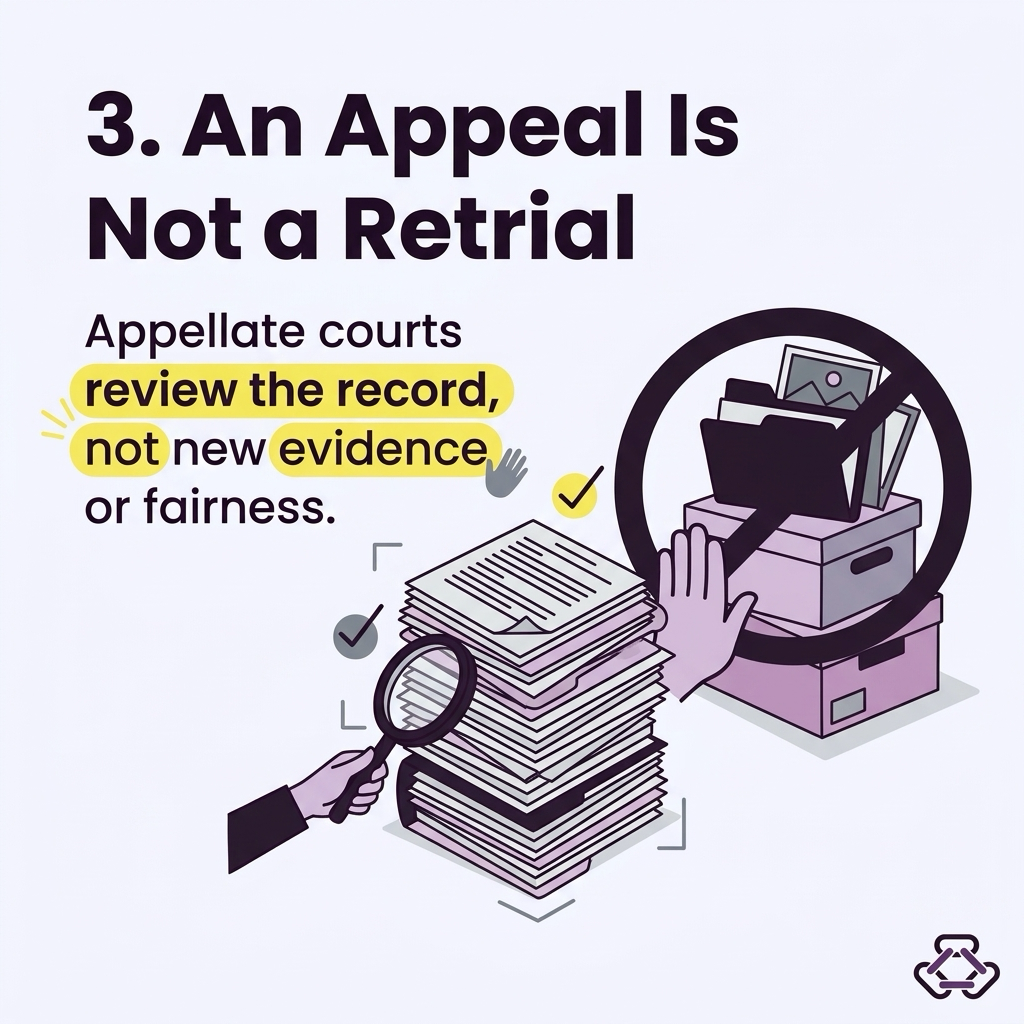
- 3. Treating A Probate Appeal Like A New Trial
- 4. Failing To Preserve The Issue Before The Appeal Starts
- 5. Ordering The Wrong Record Or An Incomplete Record
- Missing Transcripts Can Block Review
- Missing Exhibits Can Distort The Issue
- Missing Orders Can Create Jurisdiction Problems
- 6. Assuming The Appeal Automatically Stops Probate Enforcement
- A Final Problem: Waiting Too Long To Get Appellate-Specific Help
- The Bottom Line On Probate Appeal Mistakes

Type
Great Grandchild
Status
Approved
Title (YouTube)
Images Failed (Social)
Images Failed (Social)
Do not index
Publish Date (TikTok)
Feb 21, 2027 12:15
Videos Post IDs (Social)
Hashtags (Social)
#LegalAdvice #LegalHelp #ProbateLitigation #ProbateAppeals
Caption
Caption X
Cover

OG Image

Alt Image Text
Minimal flat vector illustration of a probate appeal concept with a courthouse, legal documents, calendar, clock, and a closing path symbolizing lost review rights due to procedural mistakes.
Images

Videos
Publish Date (Social)
Jan 13, 2027 07:30
Scheduled (Social)
Scheduled (Social)
Images Posted (Social)
Images Posted (Social)
Videos Posted (Social)
Videos Posted (Social)
Featured
Created time
Apr 8, 2026 06:05 PM
Sub-item
Authors
CTA Practice Area (Social)
Probate Litigation
TikTok Failed (Social)
TikTok Failed (Social)
Videos Post Links (Social)
TikTok Post Links (Social)
Images Post IDs (Social)
YT Post ID
Video Pending Manual (Social)
TikTok Posted (Social)
TikTok Posted (Social)
TikTok Post IDs (Social)
Video Cover (Social)
Images Post Links (Social)
First Comment (Social)
Videos Failed (Social)
Videos Failed (Social)
YT Embedded
Images Delete (Social)
Videos Delete (Social)
Carousel Video URL (Social)
6 Probate Appeal Mistakes That Cost Review Rights
Probate appeals can look deceptively simple from the outside. A judge signs an order, someone disagrees, and the next step seems to be “file an appeal.” In real life, probate appeals are much narrower, more technical, and far less forgiving than many families expect. One missed deadline, one incomplete record, or one mistaken assumption about what the appellate court can review may close the door before the merits are ever discussed.
That is part of what makes probate litigation so stressful. Probate disputes often involve grief, family tension, fiduciary conflict, accountings, trustee or personal representative conduct, and fights over who gets what from an estate. By the time an order is entered, people are often emotionally exhausted. That is also when procedural mistakes tend to happen.
In this post you’ll learn about six probate appeal mistakes that often cost people review rights, delay meaningful appellate review, or weaken an appeal before briefing begins. If you want a broader foundation on final orders, standards of review, and what happens after judgment, this deeper overview of how probate appeals generally work from a strategy standpoint helps put these issues in context.
Scroll to the bottom for every post in this series.
Why Probate Appeals Go Sideways So Often
Probate law has a feature that surprises many non-lawyers: not every bad ruling is immediately appealable, and not every probate order is treated the same way as an order in ordinary civil litigation. In California, for example, some probate orders are specifically made appealable by statute, and if there is no appealable judgment or order, the Court of Appeal may dismiss the case without reaching the substance of the dispute. The California Courts’ self-help materials say exactly that in plain language: if there is no appealable order or judgment, the appeal may be dismissed. See the California Courts’ appeals FAQ. The statutory list of appealable probate orders appears in California Probate Code sections 1300 through 1304, available through the California Legislature’s official code site.
At the same time, appellate deadlines are notoriously strict. California Rule of Court 8.104 sets the outside deadlines for many civil appeals, including how the 60-day and 180-day time periods are measured, and it includes a probate-specific rule for the entry date of a decree of distribution. The rule is published by the Judicial Branch of California here. County court materials also emphasize that late notices of appeal are rarely excused; for example, the San Luis Obispo Superior Court’s probate page notes that late filing permission is rarely given and that filing an appeal does not automatically stay enforcement of the order, which you can review here.
Against that backdrop, these six mistakes come up again and again.
1. Assuming Every Probate Ruling Can Be Appealed Immediately
This is one of the most common traps. A party loses a hearing, receives an unfavorable probate ruling, and assumes any adverse result is instantly appealable. In probate, that is often not how things work.
Some probate orders are appealable because a statute says they are. Others are not. Some interim rulings may only be reviewable later, if at all. California’s Probate Code identifies categories of appealable orders, including certain orders relating to administration, fiduciary matters, conservatorships, guardianships, and trust proceedings, in Probate Code sections 1300 to 1304. The California Courts’ self-help site also notes that probate cases include exceptions to the ordinary final-judgment rule and that some probate orders can be appealed even without a single final judgment in the usual civil sense, as described in the statewide appeals FAQ.
Here’s what this often means in practice: the question is not just whether the judge ruled against you. The question is whether the ruling is the kind of order the appellate court has authority to review right now.
A lot of people discover this too late. They spend time and money preparing an appeal from a nonappealable ruling, only to face dismissal. Others wait because they assume they can challenge everything later, then learn that a particular probate order had its own immediate appeal window and is now final.
People in this position often benefit from reading about how to evaluate whether a probate ruling is actually appealable and how records, issues, and deadlines get preserved for review before deciding on the next step. Even a sophisticated litigant can get tripped up by the line between an appealable order and a nonappealable one.
2. Missing The Notice Of Appeal Deadline
If there is one probate appeal mistake that ends cases before they begin, it is missing the filing deadline for the notice of appeal.
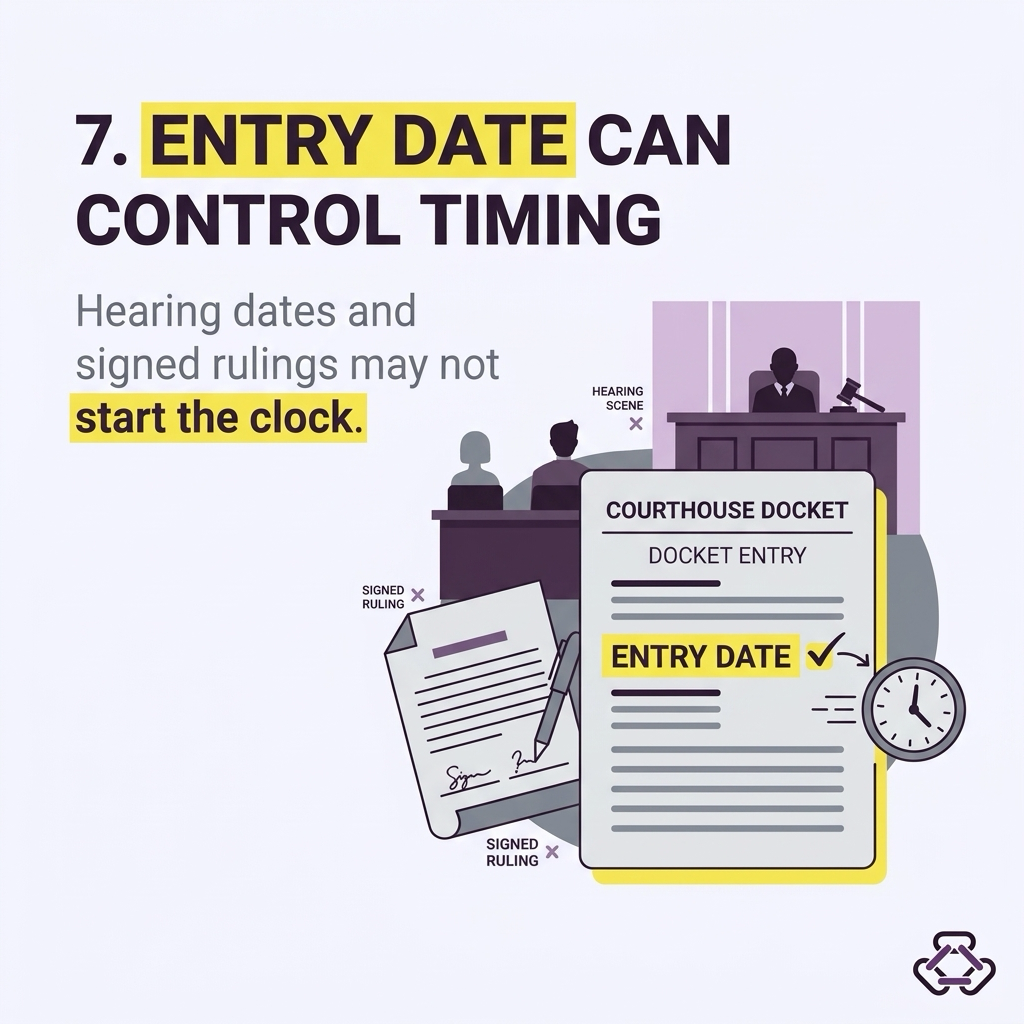
California Rule of Court 8.104 provides that the deadline is generally the earliest of 60 days after a party or the clerk serves a notice of entry or file-endorsed copy of the judgment or appealable order, or 180 days after entry if no such notice is served. The rule also explains that the entry date for a decree of distribution in a probate proceeding is the date it is entered at length in the judgment book or other permanent court record. You can review the text of the rule on the Judicial Branch site here.
That sounds straightforward until real life gets involved. Parties often calculate from the hearing date instead of the entry date. They assume an emailed ruling, tentative ruling, or minute order works the same way as a signed appealable order. They rely on informal conversations about when “the clock starts.” Or they believe a post-hearing motion automatically extends the time, when that may or may not be true depending on the motion and the governing rules.
County court guidance reinforces how unforgiving the deadline can be. The San Luis Obispo Superior Court explains that on a Superior Court decision, the notice of appeal generally must be filed within 60 days after mailing or personal service of notice of entry, or 180 days after entry if no notice is served, and adds that permission to file late is rarely given. That page is available here.
This is where calendar discipline matters. A probate appeal can be lost even when the underlying issue is substantial, simply because the notice was filed on day 61 instead of day 60. An attorney handling probate appeals can often help identify the triggering event, the correct deadline, and whether any post-order motion affects the timetable.
3. Treating A Probate Appeal Like A New Trial
A probate appeal is not a do-over. That misunderstanding leads to bad strategy from the very beginning.
Appellate courts generally review what happened in the trial court based on the record and the applicable standard of review. They do not retry witness credibility, hear new evidence, or decide what outcome seems fairest in the abstract. California’s self-help materials explain that an appeal is about whether the trial court made a legal mistake that affected the result, not whether the appellate court would have decided the case differently. Kern County’s court materials summarize that point here.
This matters because arguments built around outrage, family unfairness, or new factual detail often miss the appellate target. If the issue is abuse of discretion, substantial evidence, interpretation of a will or trust instrument, fiduciary accounting procedure, or jurisdiction, the framing of the issue can shape the whole appeal.
A common version of this mistake looks like this:
- the appellant focuses on facts that were never properly made part of the trial record,
- ignores the standard of review,
- assumes the appellate court will “see what really happened,” and
- underestimates the deference often given to probate court fact-finding.
That is one reason broader appellate strategy matters. If you want a more complete picture of how finality and standards of review affect probate appeals, this article on the bigger procedural framework after a probate ruling is a helpful companion.
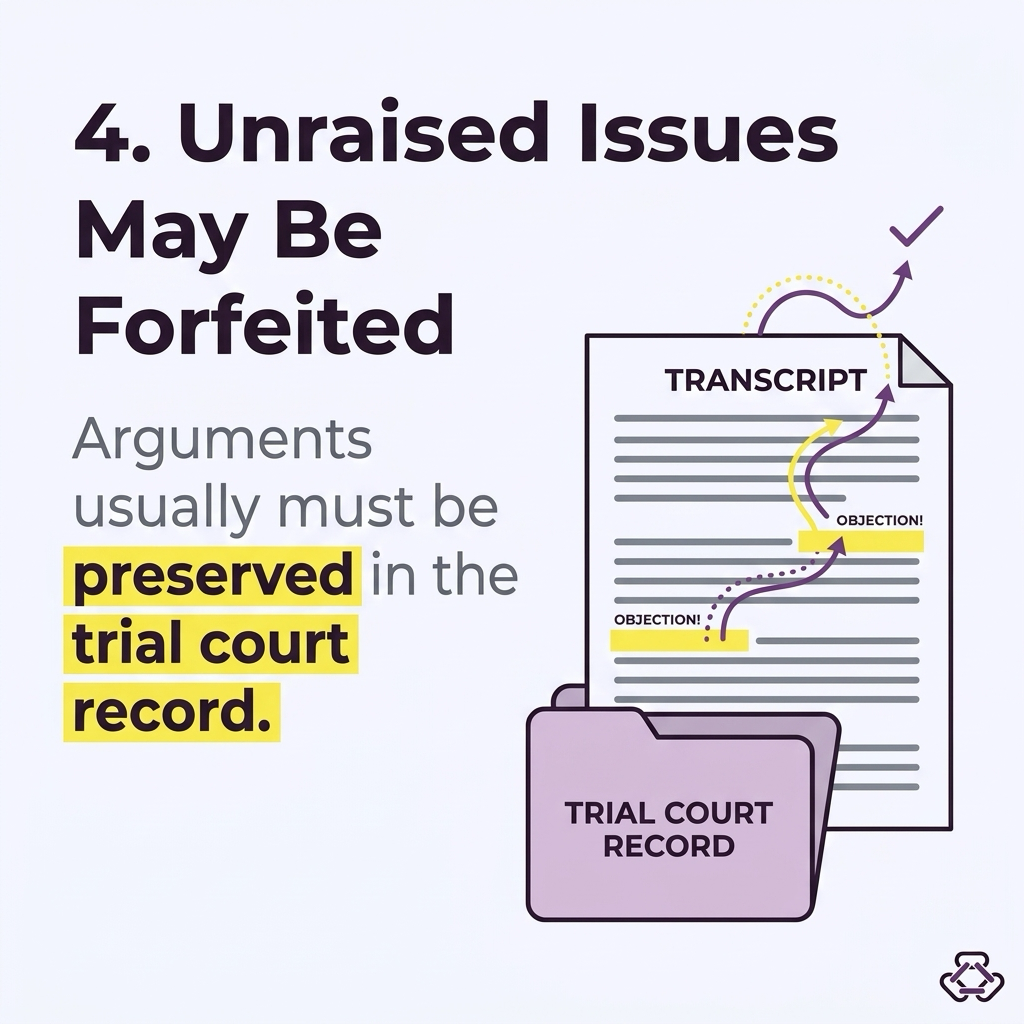
4. Failing To Preserve The Issue Before The Appeal Starts
Many appeal problems begin before the notice of appeal is ever filed. An appellate court usually reviews issues that were properly raised, argued, objected to, or otherwise preserved in the trial court record. If an argument was never presented below, it may be treated as forfeited.
The American Bar Association has published practical guidance on preservation, explaining that building the record and properly preserving objections can determine whether an issue is available for appellate review later. See the ABA article Making Your Record and Preserving Issues for Appeal.
In probate litigation, preservation issues often involve:
- objections to evidence,
- challenges to accountings,
- requests for findings,
- arguments about notice or due process,
- fiduciary removal grounds,
- interpretation issues involving the will, trust, or court order,
- and post-hearing motions that clarify what the trial court actually decided.
The hard part is that many people do not realize an issue has to be preserved until after they lose. By then, the transcript may show silence where an objection should have been, or an appellate brief may try to raise a theory the probate judge never had a chance to address.
That gap between trial-level preservation and appellate review is exactly why some families look into what it takes to preserve deadlines, records, and issues in a probate appeal before they decide whether appellate review is realistic.
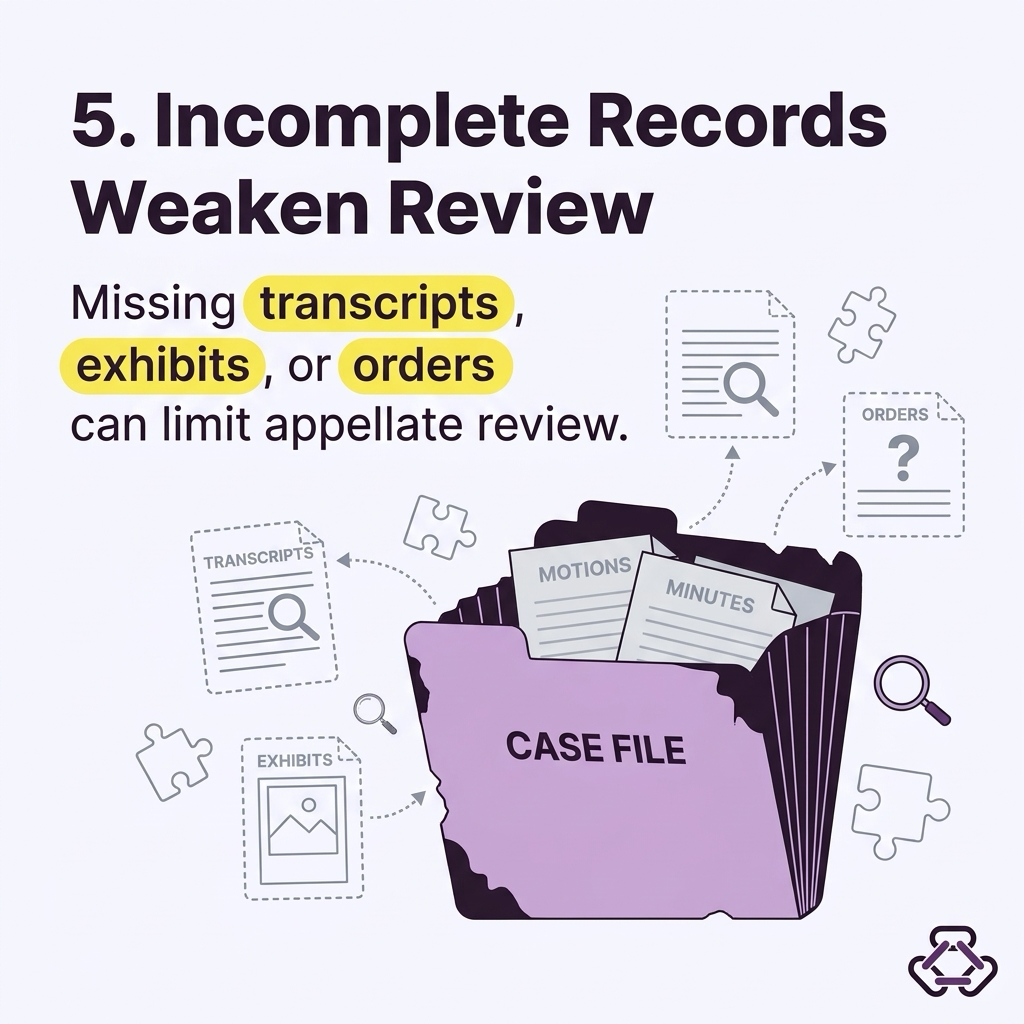
5. Ordering The Wrong Record Or An Incomplete Record
An appeal lives or dies on the record. If the appellate court does not have the material needed to evaluate the claimed error, the appellant often loses the benefit of the doubt.
Federal and state appellate materials alike make this point clearly. Federal Rule of Appellate Procedure 10 states that when an appellant argues a finding is unsupported by or contrary to the evidence, the record must include the transcript of all evidence relevant to that issue. The Fourth Circuit’s published version of Rule 10 is available here. In California, the statewide self-help guide explains the process for designating the record on appeal, including clerk’s transcripts, reporter’s transcripts, appendices, and the appellant’s responsibility for requesting what the Court of Appeal will actually need. See Step 3: Designating the Record.
This is a major probate-appeal pitfall because probate matters often involve a long procedural history: petitions, objections, accountings, exhibits, minute orders, written rulings, and oral hearings spread across months or years. It is easy to request too little. It is also easy to request the wrong hearings, omit key exhibits, or overlook whether a court reporter was present in a probate proceeding at all. Ventura County’s court reporting page notes that civil, family, and probate proceedings may involve specific policies about the availability of an official reporter, and that transcripts are often central once an appeal is pending; that page is here.
An incomplete record creates several problems at once:
Missing Transcripts Can Block Review
If the alleged error happened during oral argument, an evidentiary hearing, or the judge’s oral findings, the transcript may be indispensable. Without it, the appellate court may presume the order is correct.
Missing Exhibits Can Distort The Issue
Probate appeals often turn on documents: a will, trust amendment, accounting schedules, medical records, deeds, notices, creditor claims, or fee petitions. If those materials are absent from the record, the appellate court cannot evaluate them in context.
Missing Orders Can Create Jurisdiction Problems
If the notice of appeal identifies one order but the real dispute involves another, or the filed order is not included, the court may struggle to determine what is actually being reviewed.
California appellate procedures also allow parties to address omissions in some circumstances. The California Courts’ self-help page on additional filings explains that if items are missing from the transcript because of trial-court error, a party can file a notice of omission with the trial court. That guidance appears here.
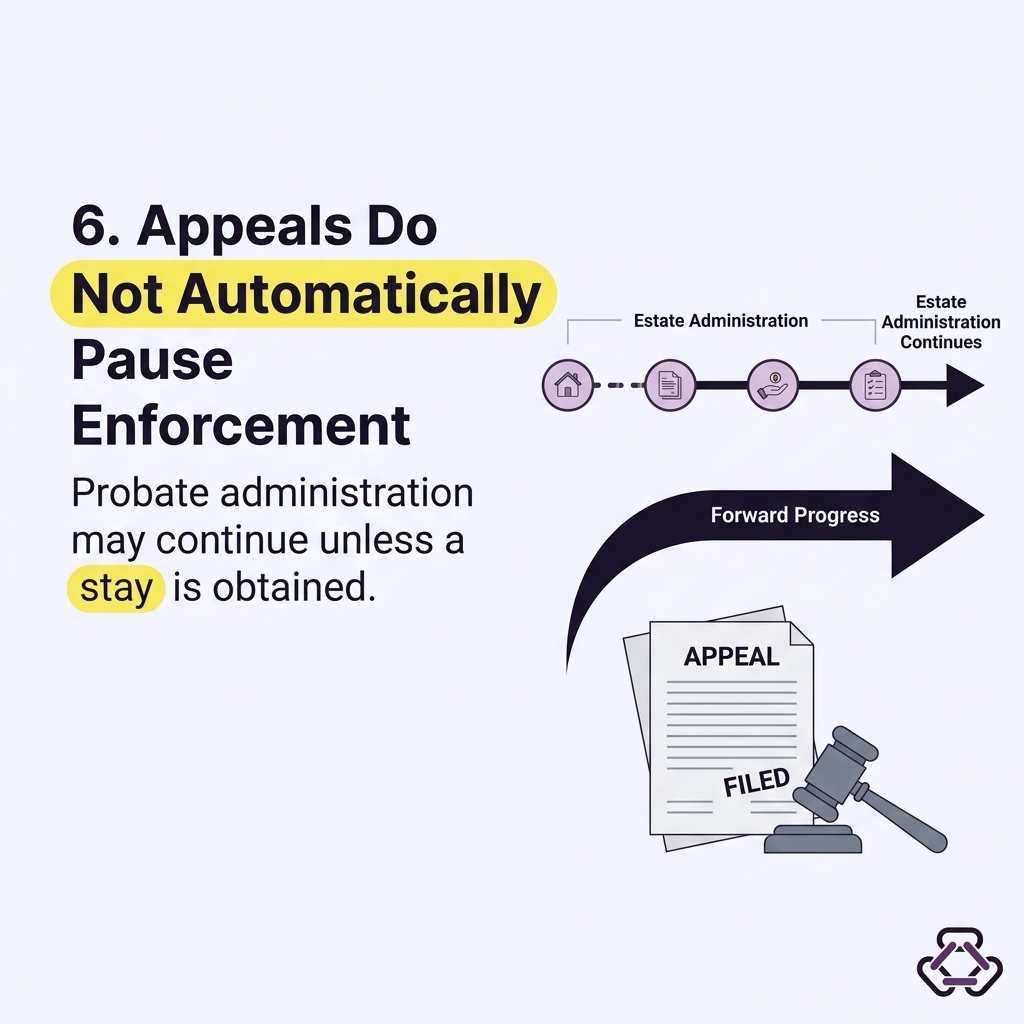
6. Assuming The Appeal Automatically Stops Probate Enforcement
Another costly mistake is believing that filing a notice of appeal freezes everything in the probate case.
In many probate disputes, that assumption is wrong. Depending on the order, enforcement or implementation may continue unless a stay is obtained through the proper procedure. County court guidance in California states this plainly: filing a notice of appeal does not stop enforcement of the judgment. The San Luis Obispo Superior Court says so on its probate appeals page here.
That issue can be especially serious in probate because estate administration often keeps moving. Assets may be distributed. A fiduciary may continue acting. Sales may proceed. Fees may be paid. Control of records or property may change hands. If someone assumes the appeal itself preserves the status quo, they may later discover that the contested order has already been carried out in whole or in part.
In general terms, the stay question is separate from the merits question. A party may have an appeal, but not an automatic pause. Whether a stay is available, what bond or undertaking issues may exist, and how that interacts with the probate order at issue are questions an appellate attorney often evaluates immediately after the order is entered.
This is also where timing and strategy intersect. Some people focus so intensely on filing the appeal that they overlook practical relief needed during the appeal.
A Final Problem: Waiting Too Long To Get Appellate-Specific Help
Probate appeals are not just “probate plus paperwork.” They are a specialized form of review governed by jurisdictional deadlines, preservation rules, record rules, and standards of review that can differ sharply from trial-court practice.
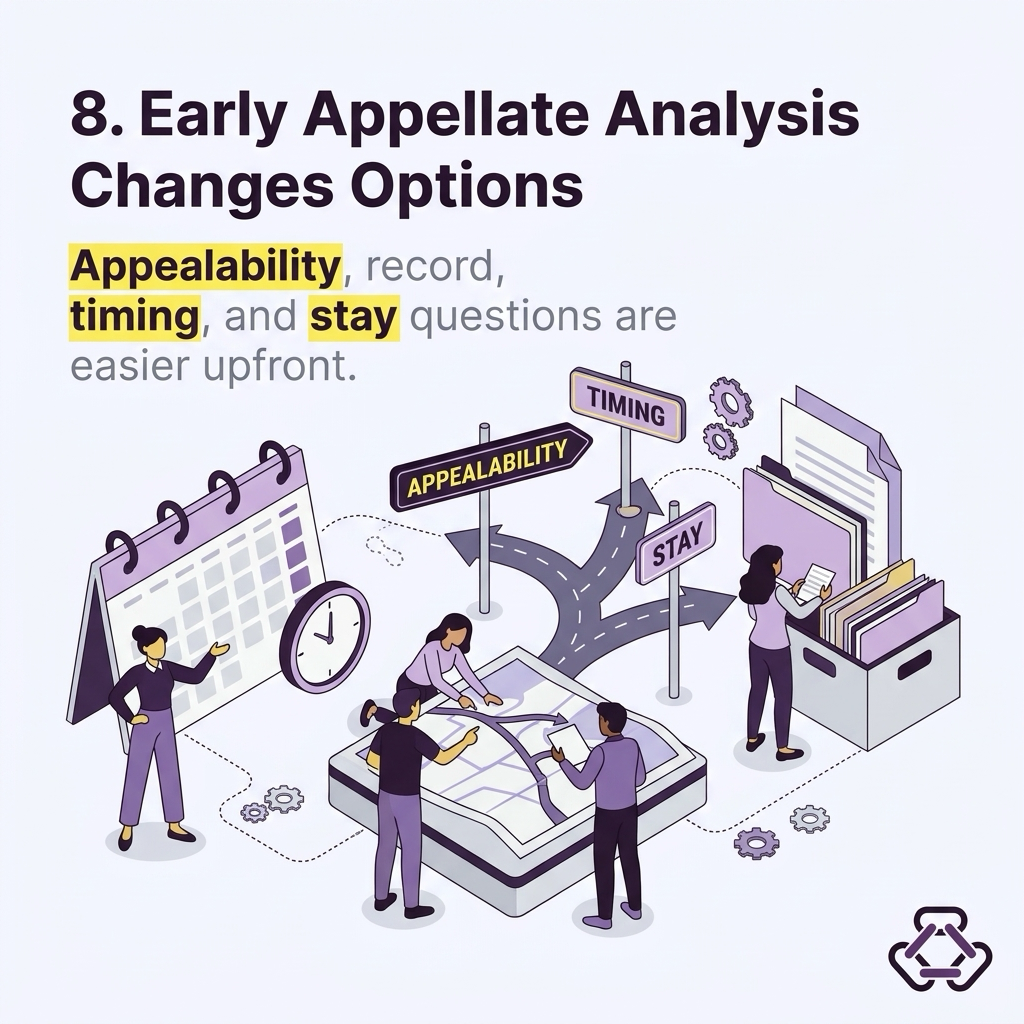
That does not mean every probate loss is appealable, or that every appeal makes strategic sense. It does mean early analysis tends to matter. Families often have questions like:
- Is this order appealable now?
- What is the exact deadline?
- Does a motion for reconsideration or new trial affect timing?
- What record needs to be designated?
- Is there a stay issue?
- Were the key issues preserved below?
- Is the better path an appeal, writ, settlement discussion, or post-judgment motion?
Those questions are much easier to sort out at the front end than after a notice deadline passes or the record is already incomplete. People also tend to benefit from reading practical follow-up material, including common questions people ask after losing a probate hearing, because the confusion after an adverse ruling is often procedural as much as emotional.
The Bottom Line On Probate Appeal Mistakes
The six mistakes above share a common theme: probate appeals are driven as much by procedure as substance. A party may have a serious concern about a fiduciary, distribution order, accounting ruling, surcharge decision, or interpretation issue and still lose review rights through a technical error.
The biggest trouble spots are usually these:
- assuming the ruling is appealable when it is not,
- missing the notice of appeal deadline,
- treating the appeal like a new trial,
- failing to preserve issues in the probate court,
- creating an incomplete record,
- and assuming the appeal automatically halts enforcement.
If you are dealing with a probate ruling and trying to understand whether meaningful review is still available, a lawyer with documented appellate and probate experience may be able to evaluate the deadlines, order type, record, and strategic options based on objective case details.
Visit ReferU.AI to get matched with an attorney who has demonstrable experience in cases like yours — for free.
