Table of Contents
- Immigration Law: A Beginner’s Guide to Green Cards, Visas, Removal Defense, and Citizenship
- What Immigration Law Covers
- What The Difference Is Between A Visa And A Green Card
- What Temporary Immigration Options Often Look Like
- How Family-Based Immigration Usually Works
- Marriage-Based Cases
- What Adjustment Of Status Means
- What Consular Processing Means
- How Employment-Based Immigration Fits In
- What Asylum And Other Protection-Based Cases Involve
- What Removal Proceedings Are
- What Immigration Detention And Bond Mean
- What Inadmissibility And Waivers Are
- What Happens If A Case Is Denied
- How Citizenship Usually Works
- Why Immigration Cases Often Benefit From Attorney Guidance
- A Short Summary For Beginners

Type
Child
Status
Approved
Title (YouTube)
Images Failed (Social)
Images Failed (Social)
Do not index
Parent item
Publish Date (TikTok)
Apr 29, 2027 15:15
Videos Post IDs (Social)
Hashtags (Social)
#LegalAdvice #LegalHelp #Immigration
Caption
Caption X
Cover

OG Image

Alt Image Text
Flat vector illustration of immigration law showing pathways for visas, green cards, removal defense, and citizenship in a beginner-friendly legal process overview.
Images

Videos

Publish Date (Social)
Feb 21, 2027 12:30
Scheduled (Social)
Scheduled (Social)
Images Posted (Social)
Images Posted (Social)
Videos Posted (Social)
Videos Posted (Social)
Featured
Featured
Created time
Apr 7, 2026 12:00 AM
Authors
CTA Practice Area (Social)
Immigration
TikTok Failed (Social)
TikTok Failed (Social)
Videos Post Links (Social)
TikTok Post Links (Social)
Images Post IDs (Social)
YT Post ID
Video Pending Manual (Social)
TikTok Posted (Social)
TikTok Posted (Social)
TikTok Post IDs (Social)
Video Cover (Social)

Images Post Links (Social)
First Comment (Social)
Videos Failed (Social)
Videos Failed (Social)
YT Embedded
YT Embedded
Images Delete (Social)
Videos Delete (Social)
Carousel Video URL (Social)
Immigration Law: A Beginner’s Guide to Green Cards, Visas, Removal Defense, and Citizenship
Immigration law can feel overwhelming because it often involves multiple agencies, different timelines, changing policies, and very personal stakes. A person may be thinking about a work visa, a marriage-based case, a green card interview abroad, a court hearing, or the final step toward U.S. citizenship — and each path comes with its own rules and paperwork.
The good news is that immigration law becomes much easier to understand once you break it into a few core ideas: temporary status, permanent residence, protection-based relief, removal defense, and naturalization. In this post you’ll learn what each of those categories generally involves, how they connect, and where people often run into delays, confusion, or legal risk.
Scroll to the bottom for every post in this series.
What Immigration Law Covers
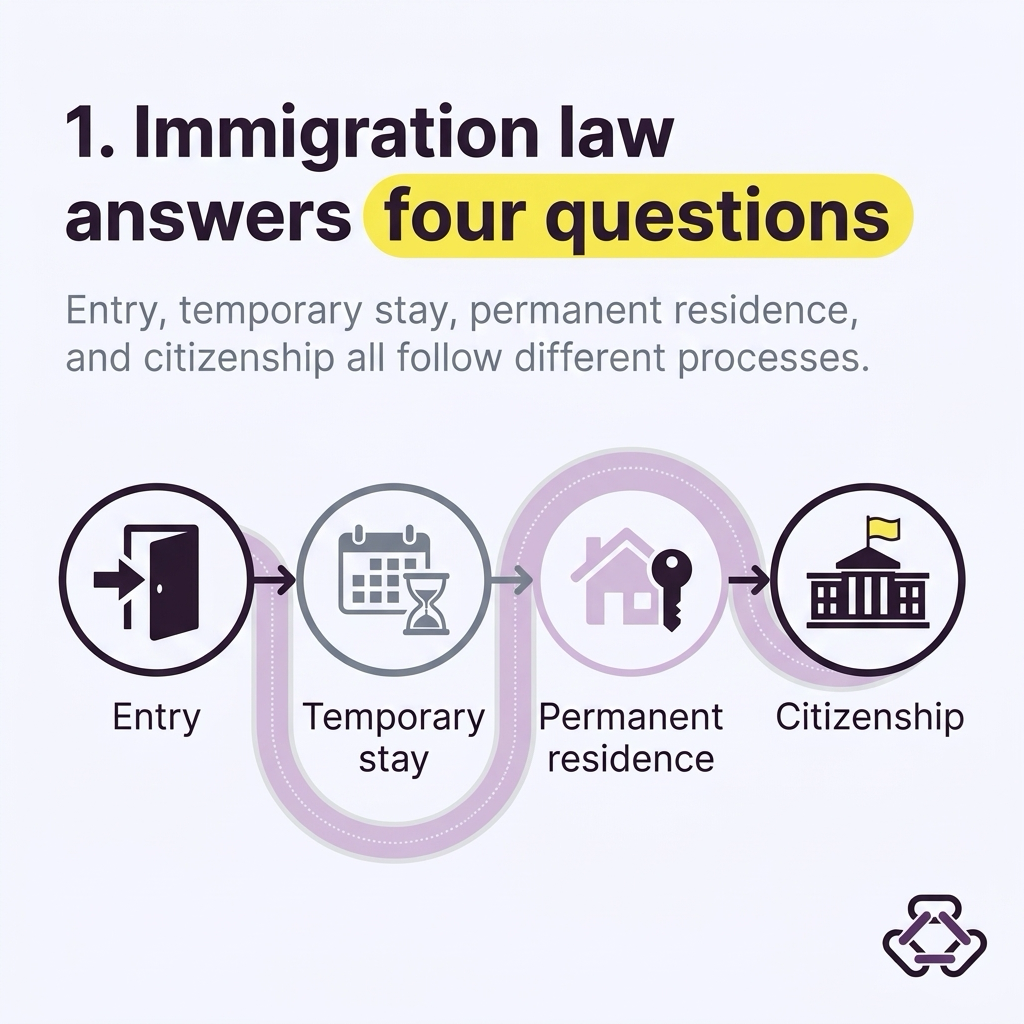
At a high level, U.S. immigration law deals with four big questions:
- Who can enter the United States
- Who can stay temporarily
- Who can become a lawful permanent resident
- Who can become a U.S. citizen
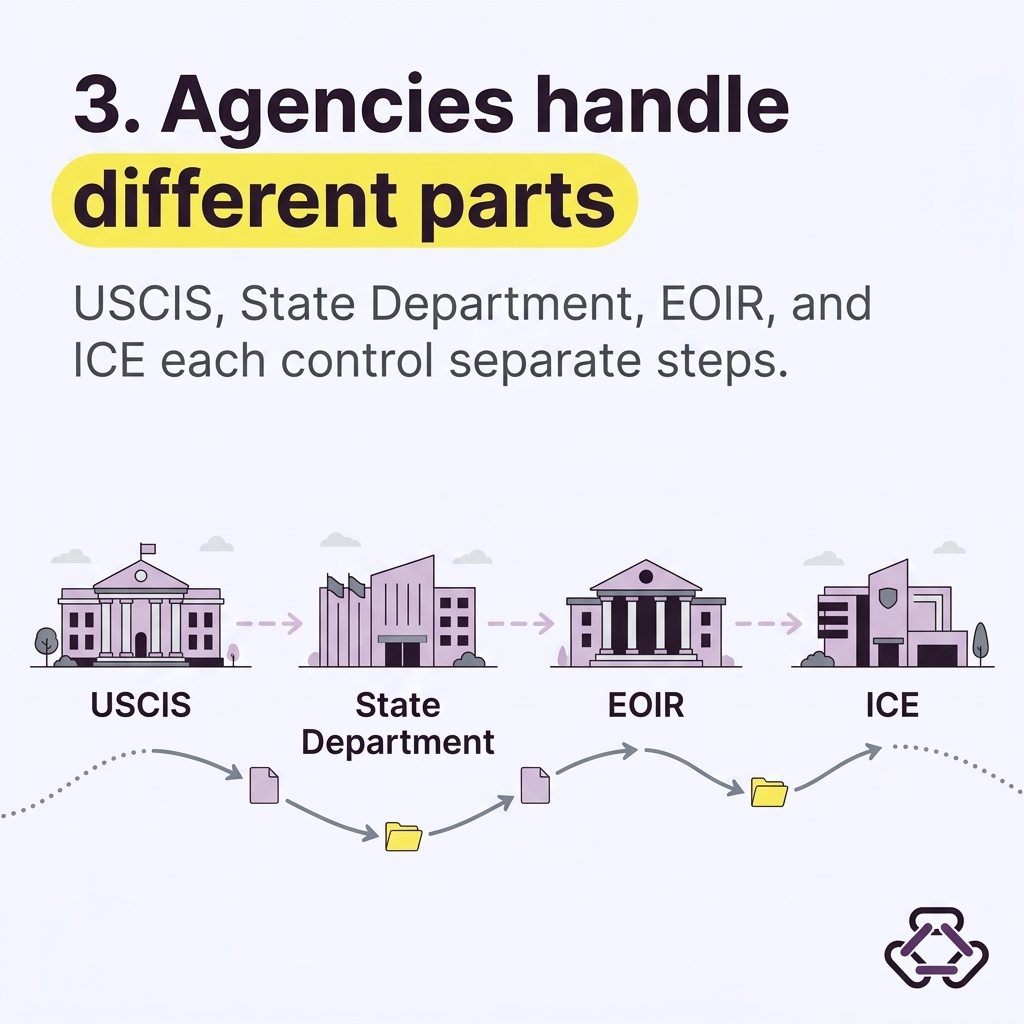
Different agencies handle different parts of the system. U.S. Citizenship and Immigration Services (USCIS) handles many applications filed inside the United States, the Department of State handles visa processing at embassies and consulates, and the Executive Office for Immigration Review (EOIR) runs the immigration courts. ICE is involved in detention and enforcement matters. The official system is spread across all of them, which is one reason cases can feel hard to track. USCIS, State Department, and EOIR each publish guidance on their own processes.
What The Difference Is Between A Visa And A Green Card
This is one of the most common sources of confusion.
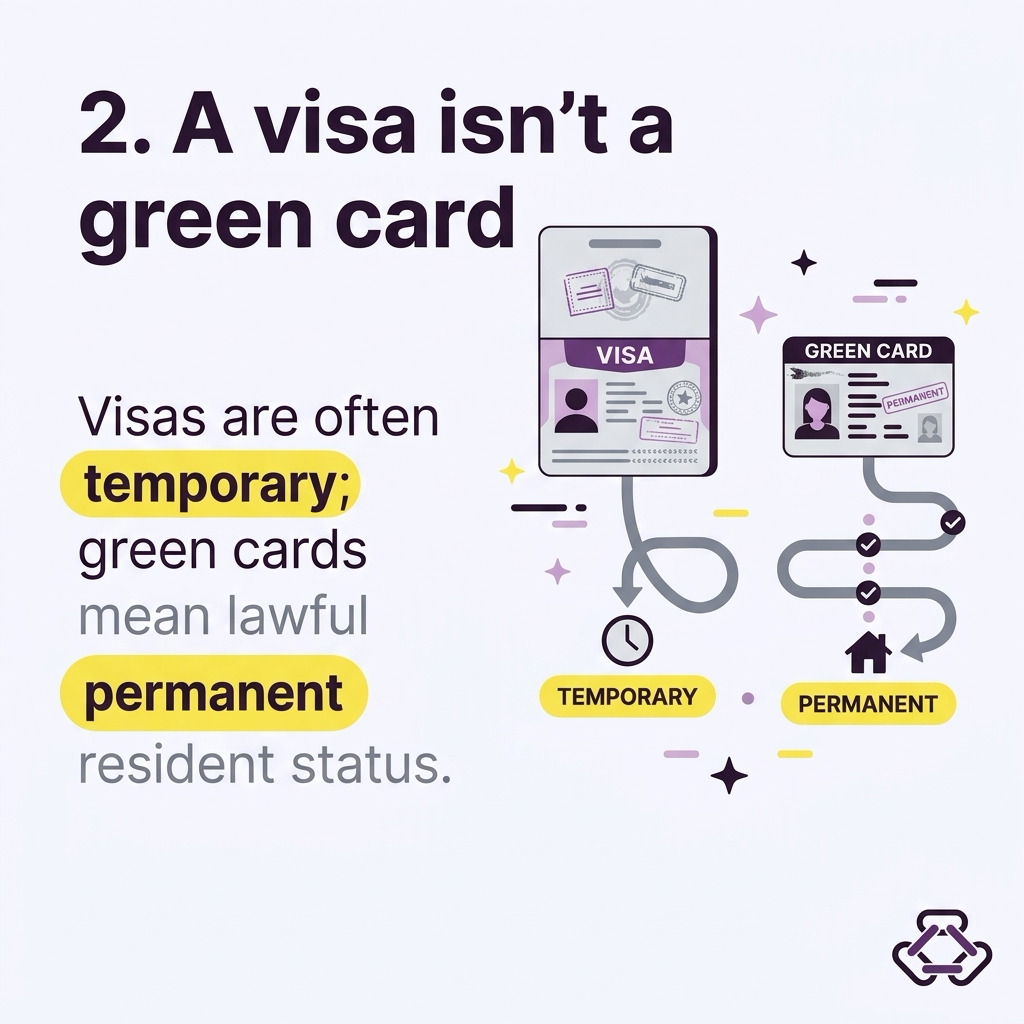
A visa is generally a document or status connected to entering the United States for a particular purpose, often temporarily. A person may come for work, study, tourism, or as a fiancé(e), depending on the category. A green card means lawful permanent resident status, which gives a person the right to live and work in the United States permanently, subject to the immigration laws and possible later issues such as abandonment, removability, or criminal consequences. USCIS lists many green card eligibility categories, including family-based, employment-based, humanitarian, and other special categories, each with its own rules and filing path. USCIS’s green card eligibility overview
In practical terms, some people begin with a temporary visa and later pursue permanent residence. Others apply directly through an immigrant visa process abroad or through a humanitarian route.
What Temporary Immigration Options Often Look Like
Temporary immigration categories vary widely. Some are tied to an employer, some to a family relationship, and some to urgent protection-based circumstances.
For employment, many people first encounter the immigration system through employer-sponsored visa categories. If you want a deeper look at job-based temporary options, this guide on work authorization through employer sponsorship and H-1B issues covers the basics in more detail.
For family cases, some people enter through a fiancé(e) route and later pursue residence after marriage. If that is the issue you are exploring, it may help to read more about bringing a fiancé(e) to the United States and what happens after the wedding.
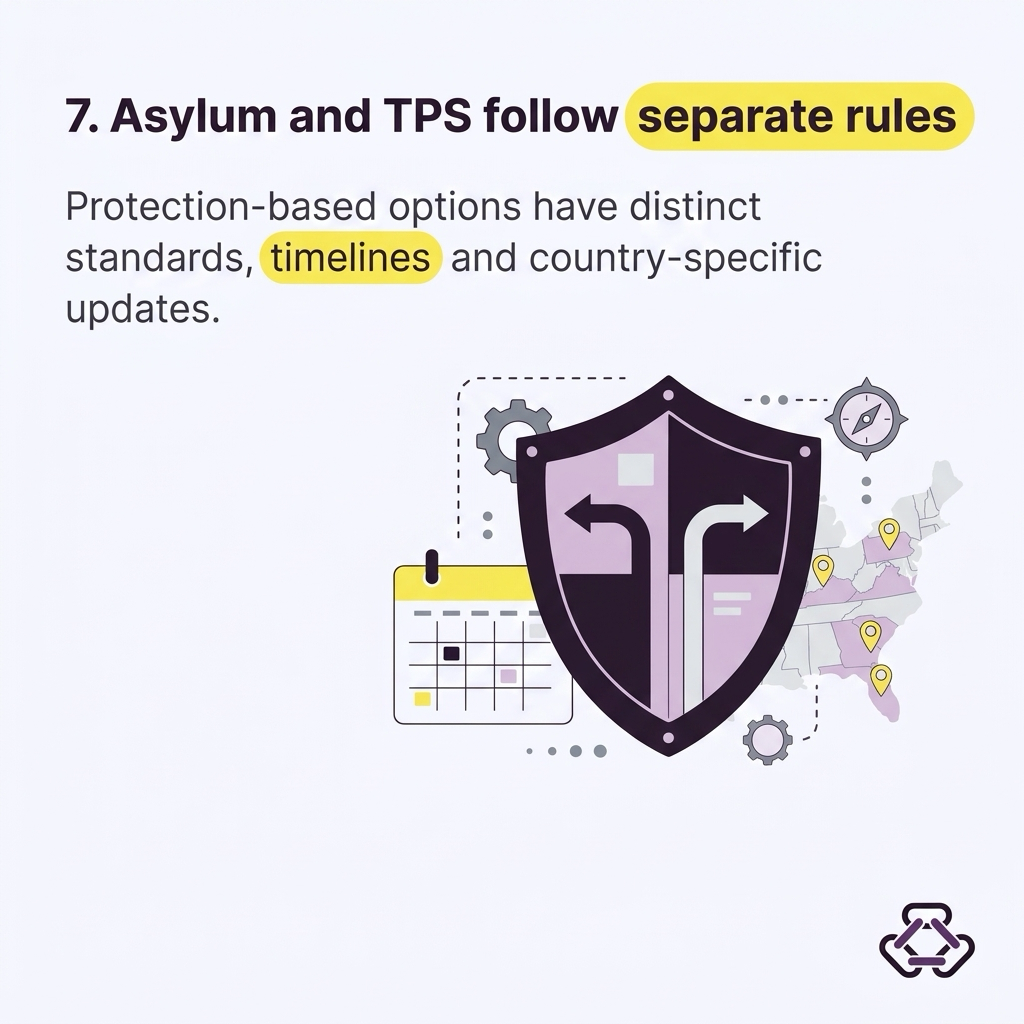
Temporary protection can also come from humanitarian programs. Temporary Protected Status (TPS) is one example. USCIS explains that TPS may be available to eligible nationals of designated countries when conditions such as armed conflict, environmental disaster, or other extraordinary temporary conditions make return unsafe. TPS is temporary by design, and country designations, extensions, and terminations can change over time, which makes current country-specific guidance especially important. USCIS TPS overview As of early 2026, USCIS’s TPS pages reflect active changes involving certain countries, including notices about Venezuela, Syria, and Haiti, which shows how dynamic this part of immigration law can be. USCIS TPS country updates, USCIS Syria TPS page, USCIS Haiti TPS update
If that topic is relevant to your situation, this more focused explanation of temporary protected status, renewals, travel questions, and related risks may be useful.
How Family-Based Immigration Usually Works
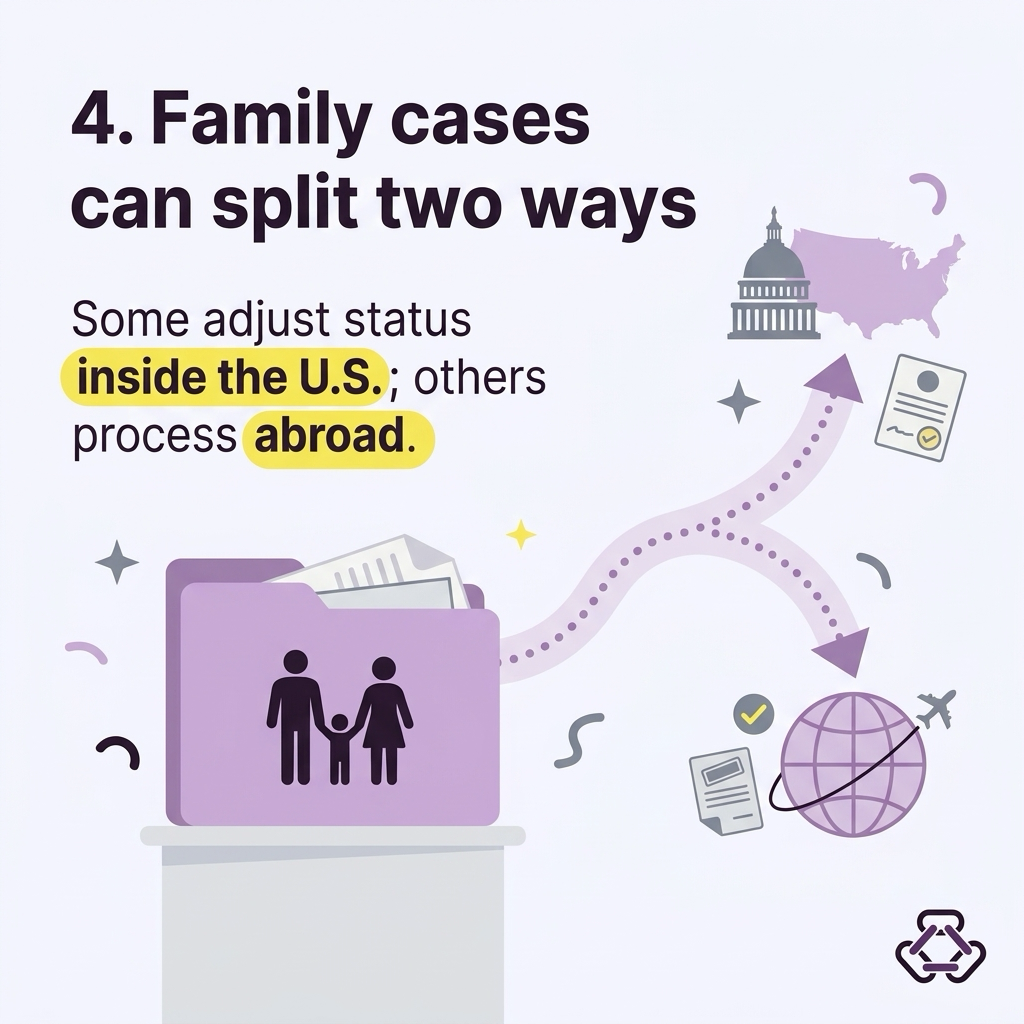
Family-based immigration is one of the most common ways people pursue lawful permanent residence. In broad terms, a qualifying relative files a petition, the government reviews the family relationship, and then the case proceeds either through adjustment of status inside the United States or consular processing abroad.
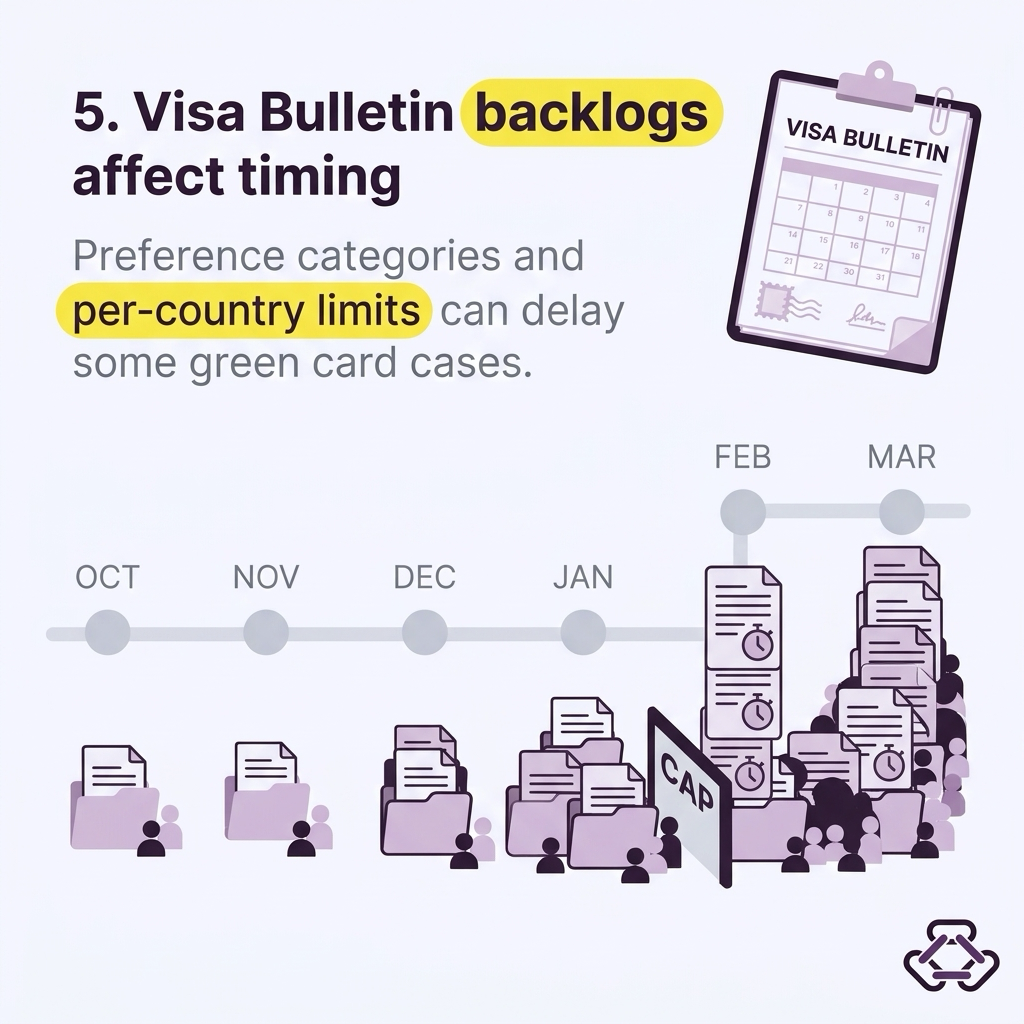
USCIS explains that immediate relatives of U.S. citizens include spouses, unmarried children under 21, and parents of U.S. citizens who are at least 21. Other family members may fall into preference categories, which can involve waiting for a visa number to become available. USCIS family-based green card categories The Department of State’s monthly Visa Bulletin tracks availability for numerically limited family-sponsored and employment-based categories. In April 2026, the official bulletin continues to show category-based backlogs and per-country limits for many applicants. April 2026 Visa Bulletin
If your question is broader than one petition, this overview of family sponsorship categories and common filing issues goes deeper into who can petition for whom and where delays often appear.
Marriage-Based Cases
Marriage-based immigration gets special attention because it often combines personal evidence, interview preparation, and status issues. USCIS recognizes spouses of U.S. citizens as immediate relatives, which can create a different timeline than preference-category family cases. USCIS green card categories
For readers dealing with a spousal case, this breakdown of marriage-based filings, supporting evidence, interviews, and status questions may help connect the dots.
What Adjustment Of Status Means
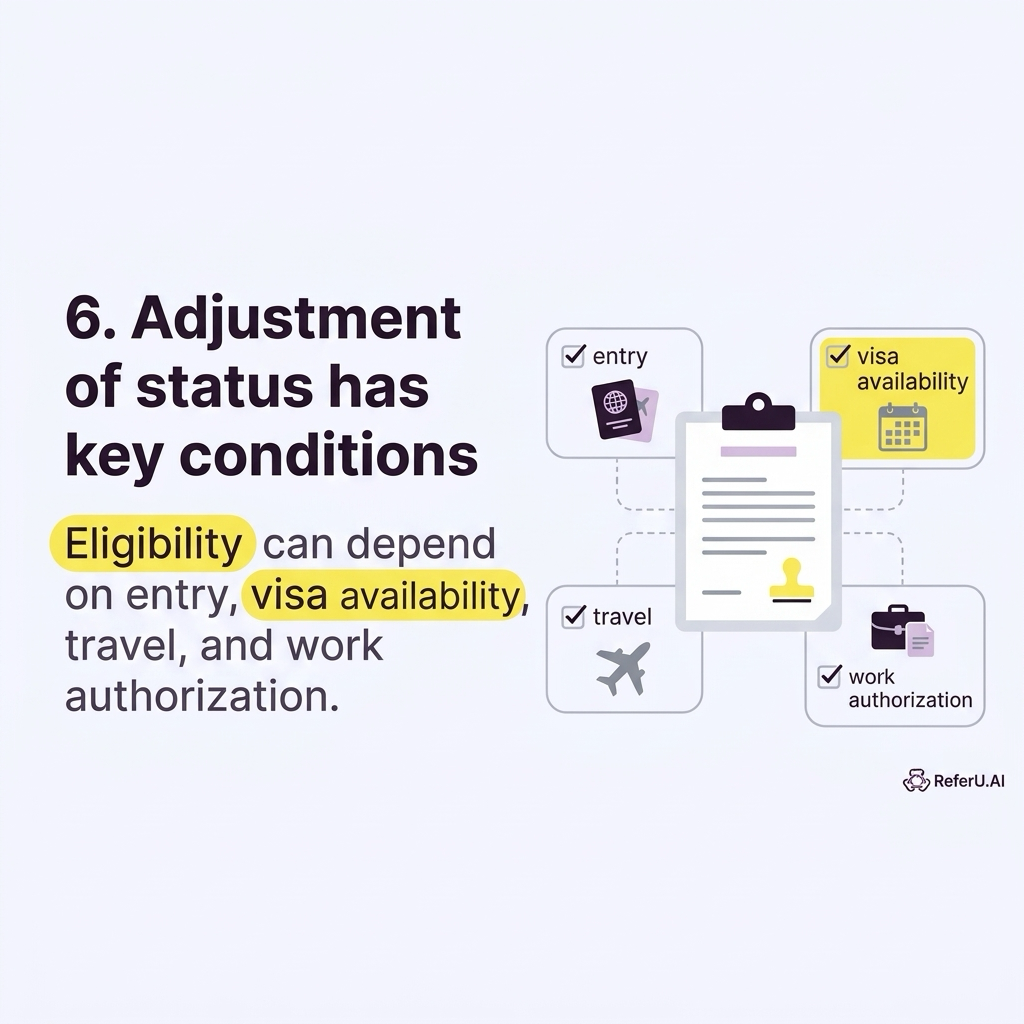
Adjustment of status is the process of applying for a green card from inside the United States, usually by filing Form I-485 if an immigrant category and visa availability line up. USCIS explains that if a person is in the United States and eligible, adjustment may allow the green card process to happen without departing for an immigrant visa interview abroad. USCIS adjustment of status overview
This process often raises practical questions about:
- current lawful entry or inspection
- visa availability
- whether concurrent filing is possible
- work authorization
- travel while the case is pending
- medical exams
- interview expectations
USCIS’s I-485 page also notes important filing and form updates, including revised editions and fee-related distinctions depending on when a case was filed. USCIS Form I-485 page, USCIS revised I-485 alert
If your situation centers on applying from within the U.S., this article about eligibility to adjust status, filing strategy, work permits, travel documents, and interview concerns gets into the details.
What Consular Processing Means
When a person cannot or does not pursue a green card inside the United States, the case may go through consular processing. That usually means the approved petition moves through the National Visa Center and then to a U.S. embassy or consulate for an immigrant visa interview abroad.
The Department of State publishes the official visa process and also provides a scheduling tool that lets applicants compare when their case became documentarily complete with the interview scheduling month at specific posts. State Department immigrant visa resources, IV scheduling status tool In late 2025, the Department also announced that immigrant visa applicants generally must interview in the consular district for their place of residence or, in some cases, country of nationality, with limited exceptions. State Department consular district interview policy
If you are comparing that path with filing inside the United States, this guide on how immigrant visa processing abroad works, including interview prep and U.S. entry may help frame the decision points.
How Employment-Based Immigration Fits In
Employment-based immigration often starts with a temporary status and may later transition to permanent residence. Some green card categories depend on job classification, labor certification, priority dates, and visa bulletin movement. The Department of State’s Visa Bulletin remains a key source for understanding when certain employment-based categories are current and when long waits remain in place for particular countries. April 2026 Visa Bulletin
If you are sorting through permanent options tied to work, this overview of employment-based green card categories, timing issues, and filing strategy may be a strong next read.
What Asylum And Other Protection-Based Cases Involve
Asylum is a form of protection for people who fear persecution in their home country on protected grounds under U.S. law. USCIS explains that a person filing affirmatively or defensively generally uses Form I-589, and the filing deadline is often within one year of arrival in the United States, although exceptions may exist in some cases. USCIS asylum overview, USCIS Form I-589 page
This area of law is highly fact-specific. Cases often turn on issues like:
- credibility
- country conditions
- corroborating evidence
- prior entries or prior immigration history
- whether the case is before USCIS or the immigration court
- timing problems, including the one-year filing rule
USCIS also notes that asylum applicants with pending I-589 applications filed after October 1, 2024 may encounter the newer Annual Asylum Fee if the application remains pending for 365 days and the fee requirement applies. USCIS Form I-589 page, USCIS asylum page
For a more detailed walk-through, this article on asylum deadlines, proof, credibility issues, and protection claims digs into the practical side of these cases.
What Removal Proceedings Are
Removal proceedings are immigration court cases that determine whether a person may remain in the United States or will be ordered removed. These proceedings usually begin with a Notice to Appear and are handled by EOIR, not USCIS. EOIR also maintains the Respondent Access Portal, where respondents can review information, file certain submissions, and update contact details. EOIR states that contact changes generally must be reported quickly through the proper channels. EOIR Respondent Access FAQ, EOIR Respondent Access portal
Immigration court remains a large, pressured system. In September 2025, EOIR announced that it had completed more than 722,000 cases during the first 11 months of fiscal year 2025 and reduced the pending caseload from more than 4.18 million to under 3.75 million since January 20, 2025. Even with that reduction, the court system is still operating at an enormous scale. EOIR court milestones announcement
People in proceedings may seek different forms of relief depending on their history and eligibility — asylum, adjustment, cancellation, waivers, or other remedies. This is where legal representation can become especially important because court cases often move on deadlines, evidence rules, and procedural issues that are harder to fix later.
If that describes your situation, this explanation of what happens after a notice to appear, how immigration court works, and what defense options may exist may be worth reading.
What Immigration Detention And Bond Mean
Some people in removal cases are also held in ICE detention. That creates a separate set of urgent issues involving custody, bond eligibility, detention conditions, family access, and attorney access.
ICE provides information about posting immigration bonds and notes that bonds can be posted at designated ERO bond acceptance offices. ICE also describes attorney access resources, including virtual attorney visitation at some facilities. ICE bond information, ICE attorney information and resources
Because detention can affect court preparation, document collection, and family stability, timing often becomes a major concern. If you are trying to understand that process, this guide to custody, bond hearings, release issues, and detention-related strategy offers a more focused overview.
What Inadmissibility And Waivers Are
A person can qualify for a family or employment petition and still run into a separate issue called inadmissibility. That term refers to legal grounds that can block a visa, admission, adjustment of status, or another immigration benefit.
USCIS explains that unlawful presence can trigger 3-year or 10-year bars after departure in certain situations, and that other grounds of inadmissibility may also apply depending on the facts. In some cases, a waiver may exist; in others, the legal path may be narrower. USCIS unlawful presence and inadmissibility overview
Two forms people often hear about are:
- Form I-601, for certain waivers of inadmissibility
- Form I-601A, a provisional unlawful presence waiver for some applicants
USCIS notes that a person with a final order of removal generally can pursue a provisional unlawful presence waiver only if Form I-212 has already been approved before filing the I-601A. USCIS Form I-601 page, USCIS provisional unlawful presence waivers page
For a fuller explanation of hardship-based arguments, unlawful presence bars, and waiver case planning, this post about inadmissibility waivers and how people approach those issues may help.
What Happens If A Case Is Denied
A denial does not always end the matter, but the options depend heavily on the type of case, the procedural posture, and the reason for denial. In some situations, there may be an appeal, a motion to reopen, a motion to reconsider, or a new filing. In immigration court matters, the Board of Immigration Appeals may become part of the picture.
If you are trying to understand what comes after an unfavorable decision, this article on appeals, BIA review, motions to reopen, and next steps after a setback may provide a useful framework.
How Citizenship Usually Works
For many lawful permanent residents, the long-term goal is naturalization. USCIS explains that under the general rule, many applicants look to the five-year residence path, while some spouses of U.S. citizens may qualify under a three-year path if they meet the statutory requirements. USCIS continuous residence and physical presence requirements
Naturalization usually involves several distinct concepts:
- continuous residence
- physical presence
- residence in the relevant USCIS district or state
- good moral character
- English and civics requirements, subject to exceptions or accommodations in qualifying cases
USCIS policy explains that absences of more than six months but less than one year may create a presumption of breaking continuous residence, while longer absences can create even greater problems. USCIS also states that applicants under the general five-year rule usually must show at least 30 months of physical presence in the United States, while qualifying spouses under the three-year rule usually look to 18 months. USCIS Policy Manual, continuous residence, USCIS Policy Manual, physical presence
Naturalization testing also changed recently. USCIS states that the 2025 Naturalization Civics Test applies to applicants who filed Form N-400 on or after October 20, 2025. USCIS 2025 civics test page, USCIS test update notice USCIS also provides accommodations and exceptions for eligible applicants. USCIS exceptions and accommodations
If citizenship is the stage you are approaching, this guide to N-400 eligibility, interview prep, civics testing, and the oath process goes much deeper.
Why Immigration Cases Often Benefit From Attorney Guidance
Immigration law can look simple from the outside because many forms are publicly available. But a form is only one piece of a case. The larger question is often which path fits the facts, whether a filing creates risk somewhere else, whether there is a timing problem, and whether one agency’s record may affect another agency’s decision.
That is especially true when a case involves:
- prior overstays or unlawful presence
- a removal order or pending court case
- consular processing after time in the U.S.
- criminal history
- prior denials
- entry without inspection
- conflicting timelines between family, work, and court-based relief
- urgent detention issues
In general terms, these are the kinds of situations where a lawyer may help connect the procedural dots, identify hidden eligibility issues, and spot avoidable problems before they grow.
A Short Summary For Beginners
If you are new to immigration law, here is the simplest way to think about it:
- Visas are often temporary ways to enter or stay for a defined purpose
- Green cards are permanent residence
- Adjustment of status is the inside-the-U.S. path to residence in qualifying cases
- Consular processing is the abroad-based immigrant visa path
- Asylum and TPS are protection-based forms of relief with different rules and timelines
- Removal defense involves immigration court and can overlap with many other forms of relief
- Citizenship is a later stage available to eligible permanent residents who meet residence, presence, and character requirements
The hard part is rarely just filling out paperwork. The hard part is understanding which legal path actually fits your history and whether the person helping you has documented experience with highly-similar matters.
Visit ReferU.AI to get matched with an attorney who has demonstrable experience in cases like yours — for free.


